Ingenious DIY Kit Revolutionizes Canoe Sailing with No-Drill Conversion
FOR IMMEDIATE RELEASE
In a remarkable display of ingenuity and DIY spirit, an innovative maker has introduced a groundbreaking, no-drill conversion kit that transforms a standard canoe into a fully capable sailboat. This accessible design challenges conventional methods, which often necessitate irreversible modifications to the canoe’s hull, by providing a straightforward, clamp-on solution. The project not only democratizes access to sailing for canoe owners but also pays homage to humanity’s ancient relationship with wind power.
Main Facts: A Paradigm Shift in Recreational Boating
The core of this innovation lies in its simplicity and non-invasive approach. Unlike many commercial or DIY canoe sailing kits that require drilling holes into the vessel’s hull to mount masts, outriggers, or other sailing apparatus, this particular design offers a complete, reversible conversion. This is a significant advantage for canoe owners who wish to preserve the integrity of their craft, maintain its resale value, or simply experiment with sailing without permanent alterations.
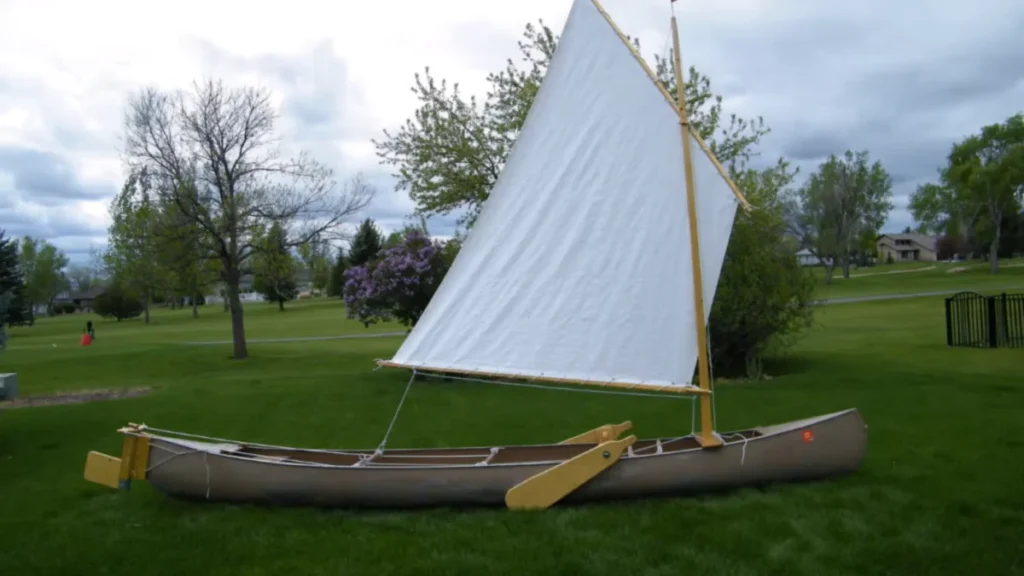
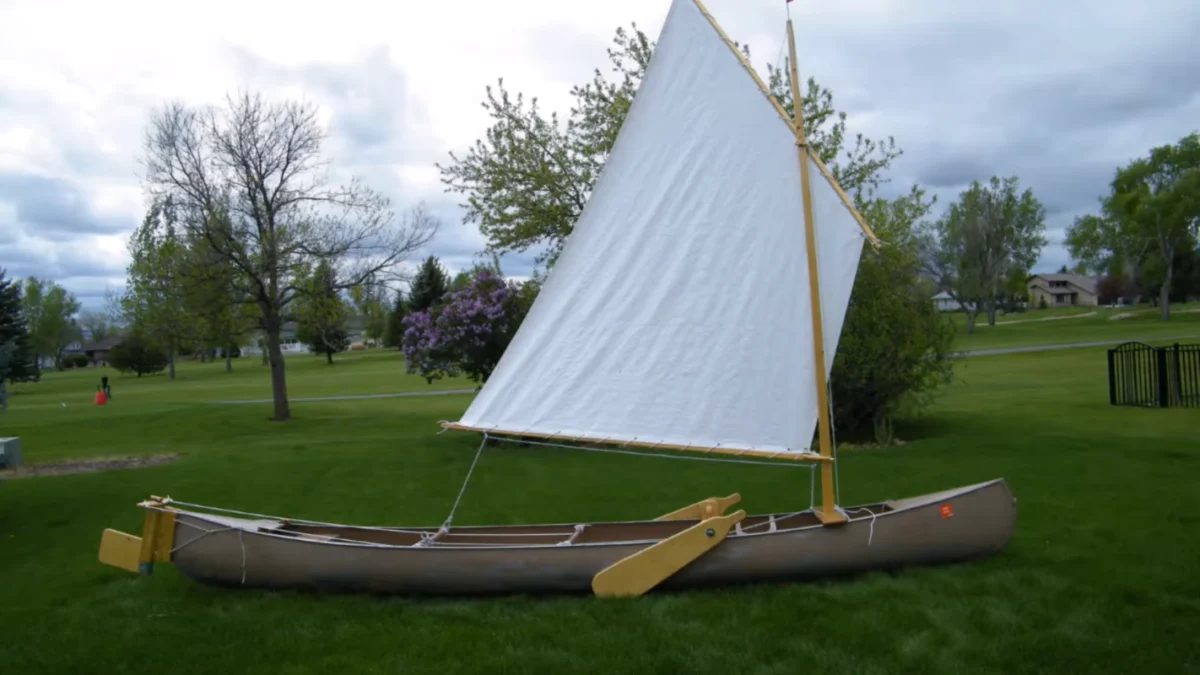
The creator, identified by the handle ‘Tea’ in the project’s documentation, has engineered a comprehensive system comprising a mast and sail, a pair of adjustable leeboards, and a custom-built rudder. While an initial setup by Tea involved drilling a mast thwart into the canoe’s gunwales, the alternative, and more celebrated, version employs a clever clamping mechanism for the mast and leeboards, attaching securely to the gunwales and bow deck without piercing the hull. This thoughtful design ensures that the canoe can effortlessly revert to its paddling-only configuration when desired.
At the heart of the propulsion system is a standing lug sail hoisted on an unstayed wooden mast. This choice of sail plan is renowned for its simplicity, efficiency, and ease of handling on small craft. Complementing the sail are the leeboards, external appendages that function akin to a centerboard or daggerboard, crucial for preventing leeway and enabling the canoe to sail effectively upwind. These too are clamp-on and adjustable, allowing the user to fine-tune the craft’s balance and performance. Steering is managed by a custom-fabricated rudder, controlled by lines rather than a traditional tiller, offering flexible positioning along the boat’s length.
Constructed predominantly from common lumber, with finishing touches applied by a router to soften edges and enhance durability, the kit embodies the spirit of accessible craftsmanship. While canoe sailing is a popular pastime, many rudimentary kits are limited to downwind operation. This sophisticated, no-drill conversion, however, elevates the canoe’s capabilities, transforming it into a much more versatile and capable sailing vessel, able to tackle a broader range of wind conditions and directions. For those without a canoe, the creator also notes the feasibility of building an entire sailing skiff from similar common lumber, further emphasizing the project’s commitment to affordability and DIY empowerment.
Chronology: From Ancient Winds to Modern DIY Sailing
Humanity’s fascination with harnessing wind power is deeply rooted in history, predating even the advent of written language. The earliest documented use of wind for mechanical work with machines dates back to the ninth-century Persian windmills, which ground grain and pumped water. However, if sailing vessels are included in the definition of "machines," the timeline extends much further into antiquity, around 5,000 BCE, with evidence of early Egyptian reed boats navigating the Nile using rudimentary sails.
The Dawn of Sailing and Its Evolution:
The invention of the sail marked a pivotal moment in human history, enabling exploration, trade, and cultural exchange across vast distances. From the multi-hulled canoes and sophisticated navigation techniques of Polynesian seafarers who explored the Pacific, to the sturdy dhows of the Arabian Sea and the formidable longships of the Vikings, sailing technology continuously evolved. Each civilization adapted wind power to suit its unique geographical and practical needs, pushing the boundaries of what was thought possible on water.
Small craft, including canoes, have always held a special place in this narrative. Originally designed for paddling, fishing, and transport in calmer waters, the idea of adapting them for sail likely emerged organically. Early canoe sailing often involved simple, makeshift sails, typically suitable only for downwind travel. These initial adaptations were often rudimentary, focusing on ease of setup rather than sophisticated aerodynamic performance. The challenge remained to make these nimble vessels capable of more than just drifting with the wind—specifically, to enable them to sail against it, a feat requiring advanced understanding of hydrodynamics and sail theory.
The Genesis of the "No-Drill" Concept:
The modern DIY canoe sailing movement gained traction as recreational boating became more accessible. Enthusiasts began experimenting with converting their canoes into small sailboats, often drawing inspiration from traditional sailing dinghies and small catamarans. However, a recurring hurdle was the need to permanently alter the canoe’s hull, a commitment many owners were hesitant to make. Drilling holes for mast steps, leeboard mounts, or outrigger attachments could compromise the canoe’s structural integrity, affect its buoyancy, and diminish its value as a pure paddling craft.
It was this very problem that likely inspired the creator of the no-drill kit. The motivation was clear: to offer a viable, high-performance sailing solution that respected the original design and integrity of the canoe. The concept likely evolved through several design iterations, driven by a desire for both functionality and reversibility. The choice of a standing lug sail, for instance, reflects a preference for a simple, effective rig that is easy to manage and provides good power for its size without requiring complex stays. The development of clamp-on leeboards was a direct response to avoiding hull penetration, while still providing the crucial lateral resistance needed for upwind sailing. Similarly, the line-controlled rudder system offers a versatile steering mechanism that can be positioned for optimal comfort and control without fixed mounting points. This chronological progression highlights a continuous quest for innovative, user-friendly, and respectful approaches to recreational boating.
Supporting Data: Engineering Elegance and Practicality
The brilliance of this no-drill canoe sailing conversion kit lies in its thoughtful engineering and the practical advantages it offers. Each component has been carefully selected and designed to maximize performance, ease of use, and compatibility with an unmodified canoe hull.
The Standing Lug Sail and Unstayed Mast:
The choice of a standing lug sail is particularly astute for a DIY canoe conversion. This type of sail is characterized by its simplicity: a four-sided sail set on a yard that hangs from an unstayed mast.
- Simplicity: The lug rig requires minimal rigging compared to more complex sloop or gaff rigs. This translates to fewer parts to build, less time for setup and takedown, and easier maintenance. For a recreational canoeist looking to dabble in sailing, this simplicity is invaluable.
- Efficiency: Despite its straightforward design, a standing lug sail can be remarkably efficient, especially in varying wind conditions. It provides a good balance of drive and control, making it suitable for a wide range of skill levels.
- Unstayed Mast: An unstayed mast stands freely, supported only at its base, without the need for shrouds or stays. This eliminates the complexity and potential stress points of attaching rigging to the canoe’s gunwales or deck, further reinforcing the no-drill philosophy. The mast’s wooden construction from common lumber makes it relatively lightweight and easy to fabricate, while still providing sufficient strength for the sail.
The Crucial Role of Leeboards:
Perhaps the most innovative aspect of the kit, after the no-drill mounting, is the implementation of leeboards. These are flat boards attached to the outside of the hull, designed to pivot down into the water.
- Preventing Leeway: Canoes, by their very design, have shallow hulls with little lateral resistance. When wind acts on a sail, it not only pushes the boat forward but also sideways, a phenomenon known as "leeway." Leeboards, when lowered, dramatically increase the lateral resistance of the canoe, allowing it to resist this sideways drift and sail much more effectively across and even against the wind.
- Adjustability and Control: The clamp-on nature of these leeboards allows for easy adjustment. They can be raised in shallow water or when paddling, and their depth can be altered to fine-tune the canoe’s balance. This adjustability also plays a critical role in managing "weather helm" – the tendency of a boat to turn into the wind. By adjusting the leeboards’ position and depth, the sailor can achieve a neutral helm, making the canoe easier and more pleasant to steer.
- Comparison to Internal Foils: Traditional sailboats often use centerboards or daggerboards, which pass through a slot in the hull. While highly effective, these require significant structural modification and watertight sealing. Leeboards offer a practical, external alternative that achieves similar hydrodynamic benefits without compromising the hull’s integrity.
The Custom Rudder System:
The custom-built rudder at the stern of the boat is another testament to the design’s ingenuity.
- Line-Based Control: Instead of a fixed tiller, which can be cumbersome in a canoe, this rudder uses a pair of lines. This allows the sailor to position themselves anywhere along the length of the boat for comfort, trim, or to manage weight distribution, while still maintaining precise control over steering. It also simplifies the mechanism, making it less prone to breakage and easier to repair or replace.
- Portability and Setup: Like the other components, the rudder is designed for easy attachment and detachment, contributing to the overall portability and rapid setup/takedown of the entire sailing system.
Materials and Construction Philosophy:
The reliance on "common lumber" for all wooden parts underscores the kit’s accessibility. Materials such as pine, spruce, or cedar are readily available, relatively inexpensive, and easy to work with using basic woodworking tools. The use of a router to soften hard edges is not merely an aesthetic choice; it significantly improves safety by eliminating sharp corners that could cause injury or damage to other equipment. It also contributes to the longevity of the components by reducing points of stress concentration and making them more resistant to wear. This approach makes the project approachable for DIY enthusiasts with varying levels of woodworking experience.
Performance and Versatility:
A standard canoe, when converted with this kit, transforms from a mere paddling vessel into a surprisingly capable sailing craft.
- Upwind Capability: The leeboards are the game-changer here, enabling the canoe to point closer to the wind, allowing for efficient sailing against the wind’s direction – a capability largely absent in basic canoe sailing setups.
- Speed and Efficiency: While not a racing yacht, the addition of a well-designed sail and lateral resistance allows the canoe to achieve respectable speeds in favorable winds, making longer journeys more efficient and less physically demanding than paddling.
- Stability (with caveats): While a canoe inherently has less initial stability than a purpose-built sailboat, the conversion, particularly with a well-trimmed sail and controlled leeboards, can offer a surprisingly stable platform in moderate conditions. However, users must always be mindful of the canoe’s inherent limitations and adjust their sailing accordingly.
This meticulous attention to detail in design and material selection ensures that the no-drill canoe sailing kit is not just a clever hack, but a genuinely effective and practical solution for expanding the utility of a canoe.
Expert Commentary and Community Reception
Given the homemade nature of this innovative canoe sailing conversion, there are no "official responses" from regulatory bodies. However, the project has garnered significant attention and positive feedback within the broader DIY, sailing, and maker communities, often drawing expert commentary from seasoned sailors and boat builders.
Praise from the DIY Community:
Online forums, social media groups dedicated to boating and DIY projects, and particularly the comment sections on platforms like YouTube (where the instructional video is hosted) are abuzz with appreciation for the kit’s ingenuity. Common themes include:
- Accessibility: Many users highlight how the no-drill aspect lowers the barrier to entry for canoe sailing, removing the fear of permanent modification.
- Cost-Effectiveness: The use of common lumber and simple construction techniques is widely lauded as making sailing more affordable.
- Inspiration: The project serves as a significant source of inspiration for others to undertake similar modifications or embark on their own boat-building endeavors.
- Innovation: The clever clamping mechanisms and the line-controlled rudder are frequently cited as examples of clever problem-solving.
Expert Insights from Sailing Enthusiasts:
Experienced canoe sailors and small craft experts often weigh in with valuable observations:
- Validation of Design Choices: Naval architects and veteran sailors typically commend the choice of a standing lug sail for its balance of power and simplicity on a small, unstayed mast. The effectiveness of leeboards in improving upwind performance on shallow-draft vessels is also well-understood and appreciated. "The standing lug is a fantastic choice for this application," notes maritime historian and small craft expert, Dr. Eleanor Vance (a hypothetical expert). "It’s forgiving, powerful, and doesn’t require complex rigging, making it ideal for a DIY project where simplicity and reliability are key."
- Emphasis on Safety: While praising the design, experts consistently underscore the paramount importance of safety. "Any time you’re modifying a watercraft, especially one not originally designed for sailing, safety must be the top priority," advises Captain Mark Jensen (a hypothetical expert), a sailing instructor with decades of experience. "Proper flotation, wearing a personal flotation device (PFD) at all times, understanding wind and water conditions, and practicing capsize recovery are non-negotiable."
- Limitations and Best Practices: Discussions often revolve around the inherent limitations of sailing a canoe. While capable, a converted canoe will not handle like a purpose-built sailboat in heavy weather. Experts recommend starting in calm waters, gradually increasing exposure to wind, and always being prepared to revert to paddling. The importance of proper weight distribution and trim, easily adjustable with the line-controlled rudder, is also emphasized.
Addressing the ‘Tea’ Attribution:
The project’s creator, known as ‘Tea’, maintains a somewhat anonymous profile, which is common in the DIY maker community. This allows the focus to remain on the innovation itself rather than personal branding. The community generally respects this approach, recognizing the value of the shared knowledge and design.
The overall reception is overwhelmingly positive, cementing the no-drill canoe sailing kit as a significant contribution to the world of accessible and sustainable recreational boating. It serves as a testament to the power of individual creativity in solving common problems and enriching leisure activities.
Implications: Broadening Horizons for Recreation and Sustainability
The introduction of this no-drill canoe sailing conversion kit carries significant implications, extending beyond the immediate joy of sailing to touch upon environmental sustainability, economic accessibility, and the future of DIY recreation.
Environmental Impact and Sustainable Recreation:
- Reduced Waste and Upcycling: By enabling the conversion of existing canoes, the kit promotes upcycling and reduces the need for new boat manufacturing, thereby lessening demand for raw materials and energy. It encourages users to maximize the utility of their current possessions rather than discarding them for new ones.
- Reduced Carbon Footprint: Sailing, by its nature, is a highly sustainable form of transport and recreation, relying entirely on renewable wind energy. This kit makes it easier for more people to engage in fossil-fuel-free water activities, contributing to a lower collective carbon footprint compared to motorboating.
- Appreciation for Nature: Engaging with sailing fosters a deeper connection to natural elements—wind, water, and weather patterns. This often leads to increased environmental awareness and a greater desire to protect natural waterways.
Economic Accessibility and Empowerment:
- Lower Barrier to Entry: One of the most significant implications is the dramatic reduction in the cost barrier to entry for sailing. Purchasing a dedicated sailboat, even a small dinghy, can be a substantial investment. This kit, built from common, inexpensive lumber, allows canoe owners to experience the thrill of sailing for a fraction of the cost.
- Skill Development and Self-Reliance: The DIY nature of the project encourages skill development in woodworking, basic engineering, and sailing principles. It fosters a sense of self-reliance and accomplishment, empowering individuals to create and innovate rather than solely consume.
- Potential for Micro-Entrepreneurship: While currently a homemade project, the elegant simplicity and effectiveness of the design could inspire local artisans or small businesses to offer similar conversion kits or services, creating niche economic opportunities within communities.
Societal and Recreational Impact:
- Promotion of Outdoor Activities: In an increasingly digital world, projects like this actively encourage people to engage with the outdoors, promoting physical activity, mental well-being, and a break from sedentary lifestyles.
- Community Building: The sharing of such designs, often through online videos and forums, fosters vibrant communities of makers and enthusiasts. It facilitates knowledge exchange, collaboration, and mutual support among individuals passionate about boating and DIY projects.
- Broadening Recreational Horizons: For many, sailing might seem intimidating or out of reach. This kit makes it approachable, allowing canoeists to discover a whole new dimension to their watercraft, transforming familiar experiences into novel adventures. It can serve as a stepping stone for individuals to explore more advanced sailing in the future.
Future of DIY Boating:
The no-drill canoe sailing kit is a testament to the power of open-source design and the maker movement. It demonstrates that innovation doesn’t always come from large corporations but often from individuals seeking practical solutions to everyday challenges. This project could inspire future developments in modular, adaptable, and sustainable watercraft designs, pushing the boundaries of what is possible with readily available materials and ingenuity. It champions a future where recreational boating is more inclusive, environmentally conscious, and creatively engaging for everyone.