Innovating Audio Personalization: How Spotify Leverages Reinforcement Learning and TensorFlow Agents

In the hyper-competitive world of digital streaming, the difference between a satisfied subscriber and a churned user often comes down to a single, fleeting moment: the selection of the next song. For Spotify, the global leader in audio streaming, the challenge of music recommendation is not merely a static classification problem—it is a complex, sequential decision-making process. To master this, Spotify’s machine learning engineers have turned to the power of Reinforcement Learning (RL), building a sophisticated simulation ecosystem using TensorFlow and TF-Agents to refine how the platform crafts personal listening experiences.
Main Facts: The Intersection of RL and Audio Discovery
At its core, Spotify’s recommendation engine aims to provide users with an ordered set of items—tracks, podcasts, or albums—that align with their current intent and taste. While traditional machine learning models excel at predicting a single "next-best" song, they often struggle with the long-term, sequential nature of a listening session.
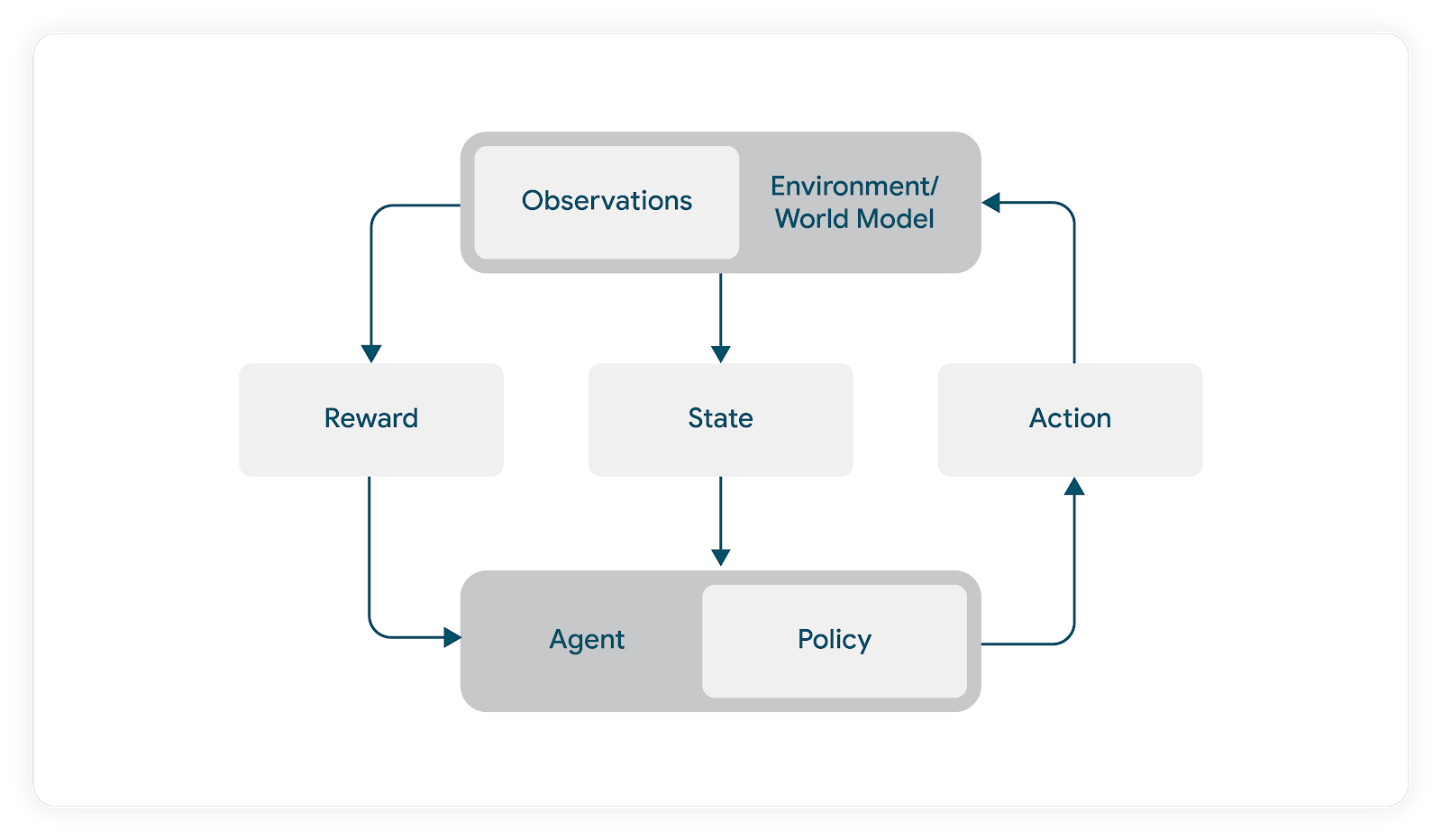
To bridge this gap, a team of Spotify engineers—Surya Kanoria, Joseph Cauteruccio, Federico Tomasi, Kamil Ciosek, Matteo Rinaldi, and Zhenwen Dai—implemented a Reinforcement Learning framework. RL agents learn by interacting with an environment, receiving feedback (rewards) based on their actions, and adjusting their internal policies to maximize cumulative satisfaction.

The technical cornerstone of this initiative is the use of TensorFlow Agents (TF-Agents). By integrating this library into their existing production stack, which relies heavily on the broader TensorFlow ecosystem (including TFX and TensorFlow Serving), Spotify ensured that their experimental research could seamlessly transition into production-grade systems. The team’s primary objective was to move away from "live testing" on real users—which carries the risk of degrading the user experience—and toward a high-fidelity, offline simulation environment.
Chronology: Building a Digital Laboratory
The development of this system was a multi-stage process that prioritized safety, modularity, and scalability.
Phase 1: The Need for an Offline Simulator
Initially, the team identified a critical technological gap: the lack of an offline environment that could simulate the nuances of a Spotify listening session. Without this, training an RL agent would require exposing real-time users to unoptimized algorithms, a scenario that is both risky and inefficient. The team opted for a model-based RL approach, utilizing Keras to build a "user model" that predicts how a listener might respond to a sequence of tracks.

Phase 2: Architecting the Environment
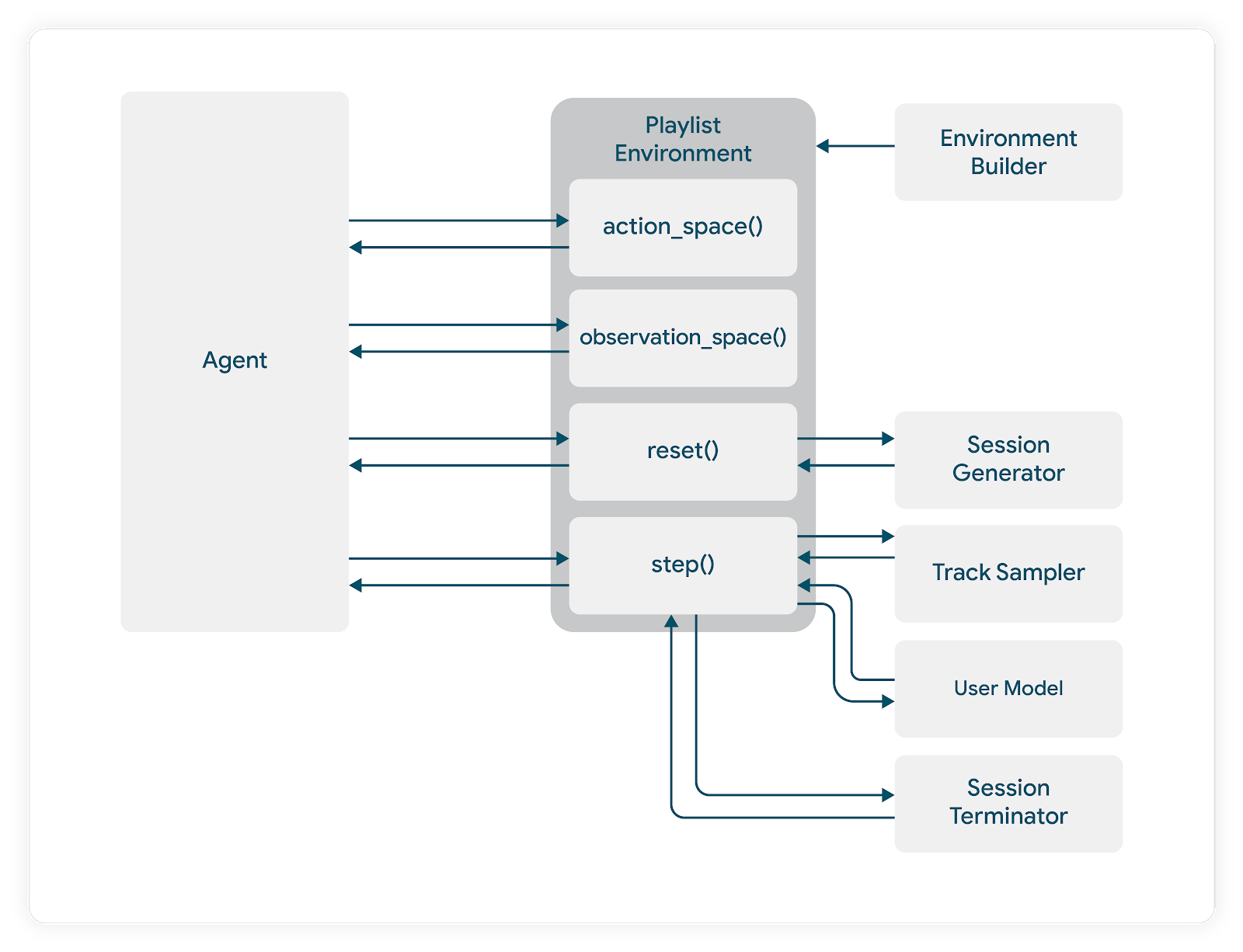
The team leveraged the core primitives of TF-Agents to build a modular simulation. They defined an AbstractEnvironment that handles the crucial components of a listening session:
- The User Model: Predicting responses to specific content.
- The Track Sampler: Translating the agent’s abstract actions into concrete song recommendations.
- The Episode Tracker: Managing session state and termination criteria.
Phase 3: Developing the Action-Head DQN (AH-DQN)
Standard RL models often struggle with the "slate" problem, where a system must recommend multiple items simultaneously. Spotify’s researchers developed a modified Deep Q-Network known as the Action-Head DQN (AH-DQN). This architecture evaluates each potential track against the current state of the session, iteratively building the "slate" (the playlist) by selecting items with the highest Q-values until the list is complete.
Phase 4: Validation and Deployment
The final step involved closing the loop between offline simulation and online reality. By comparing the performance of their RL-trained agents against heuristic and non-RL models in real-world environments, the team confirmed that their offline metrics were highly correlated with actual user engagement. This validation paved the way for scaling RL across Spotify’s various recommendation surfaces.
Supporting Data: Engineering Precision
The efficacy of the system is best understood through its ability to mimic human behavior within a controlled, digital sandbox.
Simulator Dynamics
The environment is designed to reflect the empirical realities of Spotify usage. For instance, the team analyzed historical data to determine that roughly 92% of listening sessions conclude after a specific number of sequential track skips. By encoding these session termination dynamics into the simulator, the agents are trained to prioritize user retention, learning when to pivot the playlist before a user loses interest.
The AH-DQN Efficiency
The Action-Head DQN solves a massive combinatorial challenge. In a standard recommendation scenario, the number of possible playlists is astronomical. By treating the playlist generation as an iterative, step-by-step decision process, the AH-DQN reduces the computational overhead while maintaining high-quality recommendations. The agent essentially "watches" the user react to the first track, updates its internal state, and then tailors the second track accordingly, mimicking the fluid, responsive nature of a human DJ.

Performance Correlation
A key finding from the team’s KDD 2023 presentation was the "directional alignment" between simulated rewards and online metrics. As shown in their experimental charts, policies that performed well in the TF-Agents environment consistently outperformed baseline policies in live A/B tests. This success metric is vital, as it confirms that the simulation is not just an academic exercise but a reliable proxy for human behavior.
Official Perspectives: The Spotify Team’s Vision
The engineers behind this project emphasized that their work was a collaborative endeavor, drawing from the collective expertise of their peers. "Many of our music recommendation problems involve providing users with ordered sets of items that satisfy users’ listening preferences and intent at that point in time," the team noted in their technical disclosure.
The decision to use TensorFlow was not arbitrary. It was a strategic choice to minimize friction. By using an ecosystem they were already invested in, the researchers could prototype, test, and deploy with significantly less technical debt. Furthermore, the team expressed profound gratitude to the open-source community, specifically acknowledging the TF-Agents developers who provided the foundational library that made this research possible.

The team’s paper, presented at KDD 2023, stands as a testament to the fact that modern recommendation systems are moving away from simple "if-this-then-that" logic toward complex, autonomous agents that understand the temporal, ever-evolving nature of human taste.
Implications: The Future of Personalized Audio
The implementation of Reinforcement Learning at this scale has profound implications for the future of digital media.
1. The Death of the "Static" Playlist
Traditionally, playlists were often static, curated by humans or simple algorithms. With RL-driven agents, every playlist becomes a "living" entity. The agent doesn’t just know what a user likes; it knows how the user’s taste shifts during a commute, a workout, or a study session. The playlist essentially "listens" to the user as much as the user listens to the music.
2. Safer Model Iteration
The most significant takeaway for the broader AI industry is the success of the model-based simulation. Companies in sensitive sectors—such as finance, healthcare, and streaming—can learn from Spotify’s approach: build a high-fidelity digital twin of the user base before deploying active learning agents. This "simulation-first" strategy drastically reduces the cost of failure and accelerates the cycle of innovation.
3. Cross-Platform Scalability
While the current focus is on music, the framework developed by the Spotify team is inherently transferable. The same architecture could be applied to podcast recommendations, personalized advertising, or even the layout of the Spotify interface itself. As the technology matures, we can expect the "intelligence" behind the app to become increasingly proactive, anticipating user needs before they even search for new content.
4. A New Standard for RL Research
Finally, by publishing their methodology at KDD, Spotify has provided a blueprint for the industry. The clear, modular design of their AbstractEnvironment classes sets a standard for how companies can organize their RL workflows. It demonstrates that transparency and systematic design are the keys to unlocking complex AI applications in production.

As Spotify continues to refine its algorithms, the goal remains the same: to foster a deeper, more meaningful connection between artists and listeners. By leveraging the advanced capabilities of TensorFlow and the structural rigor of Reinforcement Learning, the company is ensuring that the "next track" is never just a random guess—it is a calculated, personalized discovery.