PINE64 Challenges the Smart Speaker Status Quo with the Privacy-First "PineVoice"
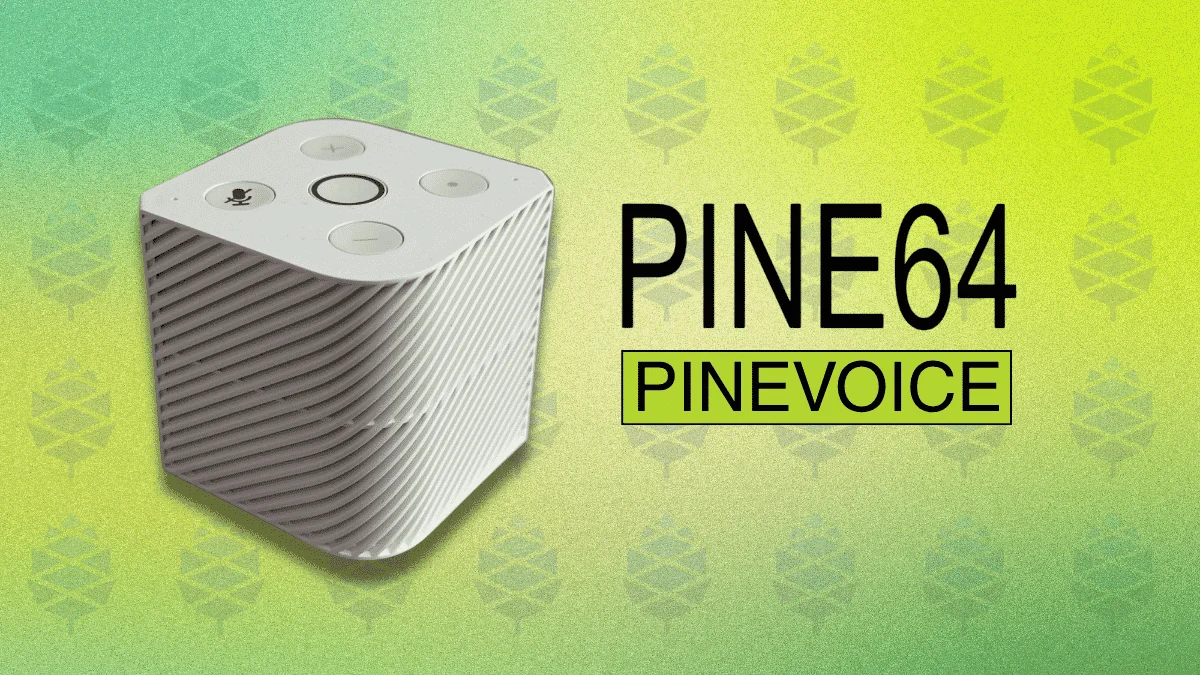
For years, the smart home market has been dominated by a handful of tech giants—Amazon, Google, and Apple—who treat the living room as a data-mining frontier. Consumers seeking to automate their homes have historically been forced to choose between convenience and privacy. However, a new contender has emerged from the open-source hardware community that promises to flip this narrative. PINE64, the organization long celebrated for its budget-friendly ARM and RISC-V devices, has officially entered the smart speaker arena with the "PineVoice."
Unlike the ubiquitous devices from Silicon Valley, the PineVoice is not a standalone assistant. Instead, it is a specialized, privacy-centric "voice satellite" designed to work exclusively with the Home Assistant ecosystem. By keeping data local and removing the cloud from the equation, PINE64 is making a bold statement about the future of domestic automation.
A Legacy of Open-Source Hardware
To understand the significance of the PineVoice, one must look at the trajectory of PINE64. Founded in 2015 following the success of the original PINE A64 single-board computer on Kickstarter, the community-driven outfit has consistently prioritized user agency and transparency.
Over the past decade, PINE64 has become a cornerstone of the open-source hardware movement. Their catalog has expanded significantly, encompassing the PinePhone (a Linux-based smartphone), the ROCK series of single-board computers, and the pioneering Ox64 RISC-V development board. Each release has stayed true to the mission: providing affordable, hackable hardware that doesn’t lock the user into a proprietary software walled garden. The PineVoice is the latest evolution of this ethos, applying the lessons learned from mobile and computing hardware to the specialized field of IoT audio.
The Technology Under the Hood: RISC-V Power
The PineVoice distinguishes itself from the cheap, "disposable" smart speakers often found at big-box retailers through its sophisticated internal architecture. At its heart lies the Bouffalo Lab BL606P, a powerful RISC-V System-on-Chip (SoC) that offers a high degree of efficiency and performance for edge computing.
The SoC utilizes a tri-core configuration designed to handle the complex, low-latency requirements of voice processing:
- A 480 MHz 64-bit T-Head C906 core: Handles the heavy lifting of local signal processing.
- A 320 MHz 32-bit T-Head E907 core: Manages peripheral communication and secondary tasks.
- A 150 MHz 32-bit T-Head E902 core: An ultra-low-power controller for background processes.
This hardware is complemented by 32 MiB of pSRAM and 788KB of SRAM, ensuring that the device can buffer audio data and maintain responsiveness without needing to offload processing to an external server. Storage is managed via 16 MiB of XSPI NOR flash, which holds the firmware and the lightweight, highly efficient operating system. Wireless connectivity is provided by 802.11 b/g/n WiFi and Bluetooth 5.2 (including BLE), allowing the device to integrate seamlessly into modern mesh networks and smart home setups.
Privacy by Design: The Wyoming Protocol
The most disruptive aspect of the PineVoice is its rejection of the "cloud-first" model. Most smart speakers act as a bridge: they capture your audio, send it to a server in a remote data center, process it through proprietary AI models, and return a command. This creates a massive privacy vulnerability.

The PineVoice, by contrast, operates as a satellite for Home Assistant. By leveraging the Wyoming Protocol, the device offloads the heavy processing to a local server—usually a home-hosted instance of Home Assistant—rather than a corporate cloud.
Crucially, wake word detection is performed locally. Using the "Hey Jarvis" model developed by the ESPHome community via the MicroWakeWord project, the PineVoice listens for the trigger word on the device itself. If it doesn’t hear the trigger, no audio is recorded or transmitted. This architecture ensures that the "always-listening" aspect of smart speakers is constrained by hardware-level limitations, providing a level of peace of mind that Amazon’s Echo or Google’s Nest cannot fundamentally offer.
Ergonomics and Hardware Design
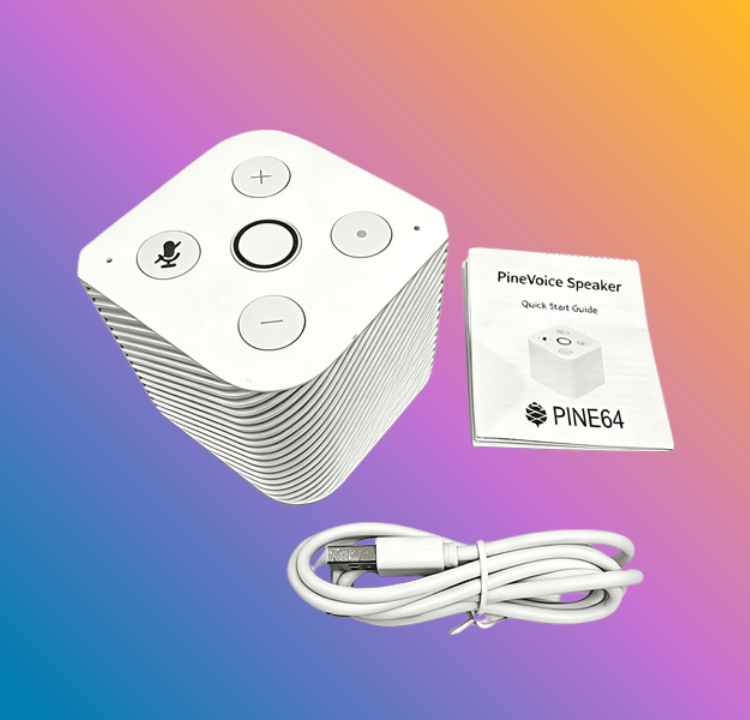
Despite its technical complexity, the PineVoice is physically compact, measuring 65 mm x 65 mm x 66 mm. Its aesthetic is utilitarian, prioritizing functionality over fashion. The device features:
- Dual Microphone Array: Optimized for beamforming to ensure accurate voice capture even in noisy environments.
- Integrated Speaker: Capable of delivering status updates and audio feedback.
- Tactile Controls: Physical buttons for volume and a dedicated hardware switch for microphone muting. This physical kill-switch provides the ultimate assurance that the device is not capturing audio when you don’t want it to.
- LED Feedback Ring: A central light array indicates the device’s status. PINE64 has opted for a visual-first interface, using light patterns to signal processing, listening, or error states, effectively reducing the need for the speaker to "talk back" to the user.
Connectivity is handled through a single, versatile USB-C port, which manages both power and data, keeping the cable clutter to a minimum.
Implications for the Smart Home Industry
The launch of the PineVoice has significant implications for the broader Internet of Things (IoT) industry.
1. The Death of the "Cloud Dependency"
For years, manufacturers have argued that smart assistants require massive cloud infrastructure to function. The PineVoice proves this is false. By demonstrating that high-quality, reliable voice interaction can be achieved locally, PINE64 is challenging the business models of companies that rely on user data for advertising and market analysis.
2. Standardization via Open Protocols
By supporting the Wyoming Protocol, PINE64 is contributing to a more modular smart home ecosystem. When devices are not tethered to a specific brand’s cloud, they become interoperable. A user can swap their voice satellite without having to replace their entire smart home hub, fostering a competitive market where quality and features win over platform lock-in.
3. Lowering the Barrier to Entry for Open Source
At a price point of $49.99 (community price), the PineVoice is positioned as an accessible entry point for DIY enthusiasts. By offering the source code on Codeberg and providing comprehensive documentation on their portal, PINE64 invites the community to audit, modify, and improve the firmware. This is the antithesis of the "black box" approach taken by mainstream tech companies.

Challenges and Future Outlook
PINE64 has been transparent about the fact that the PineVoice is in its early stages. Early adopters should anticipate "snafus"—bugs, firmware quirks, or minor integration challenges. Unlike established tech giants, PINE64 does not have a massive team of support staff or polished, automated onboarding software. The setup process requires a level of comfort with home-assistant-based configurations.
However, for the target audience—the privacy-conscious, the DIY enthusiast, and the open-source advocate—these challenges are often seen as features rather than bugs. The ability to modify the device to suit one’s specific needs is the primary selling point.
The inclusion of a 30-day warranty and the commitment to open-source development suggests that PINE64 intends to support the PineVoice for the long haul. As the firmware matures, we can expect improvements in wake-word accuracy, better integration with various Home Assistant add-ons, and perhaps even community-developed custom models.
Conclusion
The PineVoice is more than just a smart speaker; it is a declaration of independence for the connected home. It serves as a reminder that technology should serve the user, not the corporation that manufactured it. By prioritizing local processing, physical privacy controls, and open-source standards, PINE64 has created a compelling alternative to the status quo.
Whether the PineVoice will achieve widespread mainstream adoption remains to be seen. However, its existence alone shifts the goalposts. It demonstrates that the future of the smart home does not have to be a trade-off between convenience and privacy. For those willing to venture outside the ecosystem of the tech giants, the PineVoice offers a path toward a smarter, more private, and truly autonomous home.
As we look toward the future of domestic computing, devices like the PineVoice provide a glimmer of hope that the era of ubiquitous surveillance might finally be meeting a formidable, community-driven opponent. The journey from a Kickstarter project to a sophisticated, privacy-respecting hardware provider is a testament to the power of the open-source community, and the PineVoice is, perhaps, their most significant achievement yet.