Precision Engineering Revives Vintage Graphics: The Evolving Fix for 3dfx Voodoo’s Overly Bright Picture
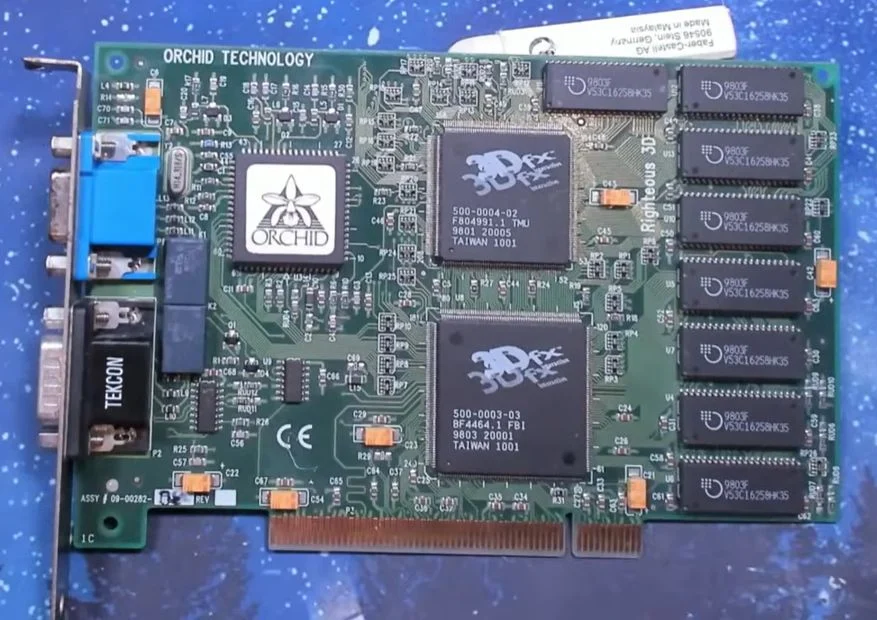
In the intricate world of vintage computing, where digital preservation meets hands-on restoration, a seemingly minor visual anomaly on a classic 3dfx Voodoo graphics card has sparked a significant discussion on precision engineering. What began as a straightforward solution to an overly bright display has evolved into a meticulous refinement, underscoring the critical importance of component stability and robust design in maintaining legacy hardware. The journey, spearheaded by the renowned electronics enthusiast known as [Bits und Bolts], highlights not only the enduring appeal of 3dfx technology but also the collaborative spirit and high standards of the retro-computing community.
Main Facts
The saga began with a common issue afflicting some 3dfx Voodoo graphics cards: an abnormally bright picture output, indicative of a fault within the card’s Random Access Memory Digital-to-Analog Converter (RAMDAC). Initially, [Bits und Bolts] proposed a seemingly elegant fix: the addition of a simple resistor to one of the RAMDAC’s pins, aimed at correcting its internal voltage reference (Vref). While effective in the short term, this solution faced constructive criticism from the community, primarily concerning the potential for "component drift" over time.
Responding to this expert feedback, [Bits und Bolts] embarked on an improved iteration of the repair. His updated approach, meticulously documented in a recent video, replaces the static resistor with a dynamic and more stable solution: an adjustable AMS1117 voltage regulator. This modification aims to provide a precisely regulated 1.235V to the RAMDAC’s external Vref pin, thereby ensuring long-term brightness stability and mitigating the risks associated with varying component characteristics. This innovative revision not only addresses the immediate visual defect but also sets a new standard for thoughtful, durable repairs within the vintage hardware community, preserving the functionality and aesthetic integrity of these iconic graphics accelerators.
Chronology
The narrative of this particular 3dfx Voodoo card’s restoration is a testament to iterative design and community-driven improvement, unfolding in distinct phases from initial problem identification to refined engineering.
The Genesis of a Glitch
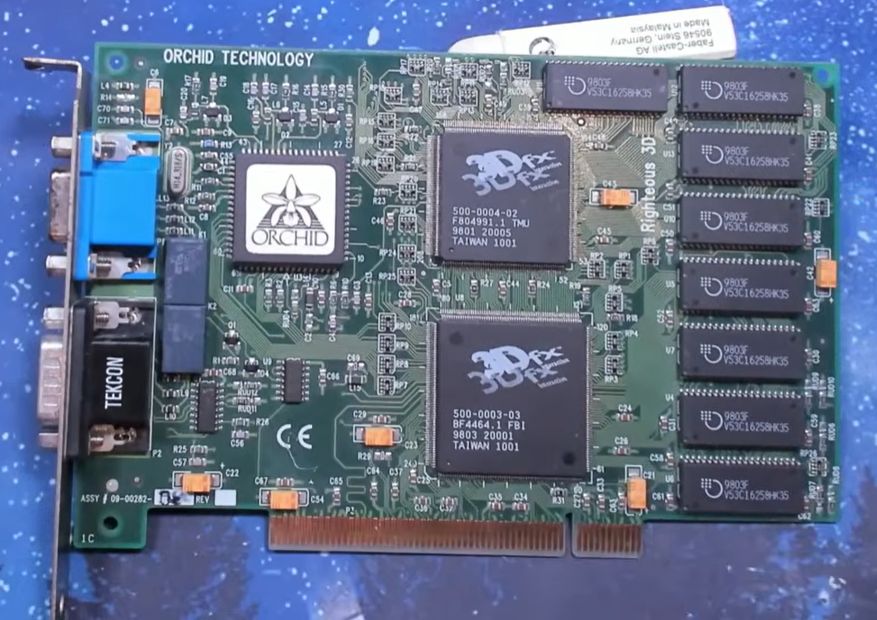
The journey commenced with the identification of an "overly bright picture" emanating from a vintage 3dfx Voodoo graphics card, specifically an Orchid-branded model. For enthusiasts and collectors, the proper functioning of such a historical artifact is paramount, and visual fidelity is a core component of that experience. The culprit was quickly pinpointed to the card’s RAMDAC, the ICS5342. This critical component is responsible for converting the digital image data processed by the Voodoo chipset into an analog signal compatible with traditional CRT monitors. A faulty internal Voltage Reference (Vref) within the RAMDAC was diagnosed as the root cause of the excessive brightness, disrupting the delicate balance required for accurate color and luminance output.
The First Attempt: A Resistor’s Tale
Driven by a desire for a swift and effective remedy, [Bits und Bolts] initially devised a repair involving the strategic placement of a simple resistor. The principle was straightforward: by introducing a specific resistance, the internal Vref of the RAMDAC could be nudged back into its intended operating range, thereby normalizing the brightness level. This initial fix, while appearing successful in preliminary tests and offering a direct solution to the voltage discrepancy, embodied a common approach in quick electronic repairs where simplicity often takes precedence. The method was practical, required minimal components, and seemed to restore the card’s visual output to an acceptable standard.
Community Scrutiny and the Call for Precision
However, the retro-computing community, a vibrant collective of experts and aficionados, quickly offered valuable feedback. The primary concern raised was the phenomenon of "component drift." This refers to the gradual change in an electronic component’s characteristics (such as resistance) over time, influenced by factors like temperature fluctuations, aging, and environmental stress. A fixed resistor, while accurate at the time of installation, could potentially drift from its nominal value, leading to the recurrence of the original brightness issue or even introducing new anomalies as its resistance varied. This critique underscored the community’s commitment to not just fixing problems, but fixing them robustly and for the long term.
The Evolution of a Solution: Embracing Regulation
Acknowledging the validity of the community’s insights, [Bits und Bolts] committed to an improved, more resilient solution. The decision was made to abandon the static resistor in favor of an active, regulated voltage source. This pivot marked a significant upgrade in the repair’s sophistication, moving from a passive adjustment to an actively maintained voltage reference. The goal was to provide a truly constant and reliable 1.235V to the RAMDAC’s external Vref pin, irrespective of minor environmental changes or component aging. This approach promised a much higher degree of stability and longevity for the fix.
Implementation: Surgical Precision on Vintage Hardware
The heart of the refined solution is the AMS1117-ADJ, a widely available and adjustable Low Dropout (LDO) voltage regulator. This chip was chosen for its ability to deliver a stable, precise voltage output. The ICS5342 RAMDAC on the Orchid Voodoo card fortunately features an external Vref pin, which, when unused, is typically connected to ground via a 0.1 microFarad capacitor. This crucial detail meant that the necessary pin was routed to easily accessible pads on the PCB, simplifying the integration of the new voltage regulator.
The modification involved careful planning: identifying suitable power sources, determining the optimal placement for the AMS1117-ADJ chip and its associated resistors, and meticulously routing the necessary connections on the vintage PCB. Although the AMS1117-ADJ’s 0.8A current rating is significantly over-spec for the minimal current draw of a Vref pin, its stability and adjustability made it an ideal candidate. With the supplied input voltage, the LDO could reliably output around 1.25V, perfectly within the RAMDAC’s specified 1.10 – 1.35V Vref range. The meticulous process of soldering, testing, and verifying the new voltage reference culminated in the successful elimination of the brightness issue, demonstrating a refined approach to vintage hardware restoration.
Supporting Data
Understanding the technical underpinnings of this repair requires delving into the specifics of the components involved and the principles of electronics that govern their behavior.
The Anatomy of the Problem: RAMDAC and Vref
At the core of the 3dfx Voodoo card’s visual output lies the RAMDAC, or Random Access Memory Digital-to-Analog Converter. In graphics cards of this era, the RAMDAC’s primary function is to translate the digital pixel data generated by the graphics processor into an analog signal that can be displayed on a CRT monitor. This conversion process is highly dependent on a stable and accurate Voltage Reference (Vref). The Vref acts as a baseline against which all other voltage levels within the DAC are measured, directly influencing the accuracy of the analog output. If the Vref is even slightly off, it can lead to noticeable visual artifacts, such as incorrect colors, poor contrast, or, as in this case, an overly bright picture. The ICS5342 RAMDAC, common in Voodoo cards, relies on this internal or external reference to ensure precise digital-to-analog conversion, making its stability paramount for proper display output.
Understanding Component Drift
Component drift is a critical consideration in long-term electronic design, particularly for analog circuits where precision is key. It refers to the gradual change in an electrical component’s characteristics from its initial specified value. For resistors, factors such as temperature variations, humidity, mechanical stress, and simply the aging process can cause their resistance to fluctuate. In a fixed voltage divider circuit, which a simple resistor-based Vref correction effectively creates, any drift in the resistor’s value directly translates to a drift in the output voltage. Over decades, such minor shifts can accumulate, potentially causing the original problem to re-emerge or new issues to manifest. This phenomenon is why critical applications often employ more stable, active voltage references rather than relying solely on passive components for precise voltage regulation over extended periods.
The AMS1117-ADJ: A Technical Deep Dive
The AMS1117-ADJ is an adjustable Low Dropout (LDO) voltage regulator, a workhorse in modern electronics for its stability, ease of use, and low voltage drop across the device. Its "adjustable" nature means that, unlike fixed-output LDOs, its output voltage can be set by external resistors, offering flexibility for various applications. While its 0.8A current rating is indeed "overkill" for the micro-ampere currents typically drawn by a Vref pin, its advantages lie in its exceptional voltage stability, low noise, and predictable performance across a range of operating conditions. The AMS1117-ADJ can typically output a minimum voltage around 1.25V, which is comfortably within the 1.10V to 1.35V range specified for the ICS5342 RAMDAC’s Vref. Its widespread availability and robust design make it an excellent choice for providing a reliable, long-term voltage reference for sensitive analog circuits, even if its full current capacity isn’t utilized.
The ICS5342 RAMDAC: A Legacy Component
The ICS5342 RAMDAC represents a bygone era of graphics hardware, a component that was standard in many early 3D accelerators, including various iterations of the 3dfx Voodoo cards. Designed for a period when CRT monitors were ubiquitous, its specifications focused on delivering crisp, accurate analog signals. Like any electronic component, especially those from the 1990s, the ICS5342 is susceptible to internal degradation over decades of use and environmental exposure. While the exact failure mechanism leading to the overly bright picture isn’t explicitly detailed, it’s plausible that internal components responsible for generating or maintaining the Vref have drifted or partially failed. The external Vref pin, which the fix utilizes, serves as a bypass, allowing an external, stable voltage source to override the potentially failing internal one, effectively breathing new life into the aging chip without needing to replace it entirely.
Official Responses
In the realm of vintage computing hardware, "official responses" in the traditional sense are often non-existent. Companies like 3dfx Interactive, once a titan in the graphics industry, have long since ceased operations, and original equipment manufacturers (OEMs) who integrated 3dfx chipsets into their cards are no longer providing support for products several decades old. This void, however, creates a unique ecosystem where the collective ingenuity of the retro-computing community becomes the primary source of support, innovation, and preservation.
The Silence of Legacy Manufacturers
For a graphics card like the 3dfx Voodoo, which represents a pivotal moment in PC gaming history, seeking official technical support or replacement parts from the original manufacturers is a futile exercise. 3dfx Interactive filed for bankruptcy in 2000, with many of its assets acquired by NVIDIA. Manufacturers like Orchid, who produced the specific Voodoo card in question, have also moved on or ceased to exist in their original form. This silence from the corporate past underscores the unique challenge and motivation for enthusiasts: if these pieces of history are to survive and function, it falls to the community to make it happen.
The Unofficial Keepers of the Flame
In this environment, individuals like [Bits und Bolts] emerge as the "unofficial keepers of the flame." Their dedication to reverse-engineering problems, devising practical solutions, and sharing their knowledge freely through platforms like YouTube and Hackaday is invaluable. These hobbyists and content creators effectively serve as an extended R&D department for defunct technologies, providing the only viable pathways for diagnosis, repair, and long-term maintenance of vintage hardware. Their work is driven by passion, a commitment to digital heritage, and the intellectual challenge of solving complex technical puzzles with limited resources.
Community Validation and Iteration
The evolution of this particular Voodoo card fix beautifully illustrates the power of community-driven validation. When [Bits und Bolts] initially presented his resistor-based solution, the feedback he received regarding component drift wasn’t a rebuke but a constructive challenge. It was an example of peer review in action, where collective knowledge and experience refined an initial concept into a more robust and enduring solution. This iterative process, fueled by shared expertise and a common goal of preserving computing history, highlights the collaborative and supportive nature of the retro-tech community, where improvements are celebrated and knowledge is freely exchanged for the benefit of all.
Implications
The refined fix for the 3dfx Voodoo card’s overly bright picture carries implications far beyond a single component repair, touching upon the broader landscape of retro-computing, digital preservation, and the enduring spirit of innovation.
Extending the Lifespan of Retro Hardware
Perhaps the most immediate and significant implication of such meticulous repairs is the extension of the operational lifespan of vintage computing hardware. As components age, they inevitably drift from their original specifications or fail outright. Without the expertise and dedication of individuals like [Bits und Bolts], many of these historical artifacts would slowly succumb to entropy, rendering them inoperable. By addressing these issues with carefully engineered solutions, enthusiasts are not merely fixing a card; they are actively preserving a tangible piece of technological history, ensuring that future generations can experience and study the foundational technologies that shaped modern computing. This effort is crucial for collectors, museums, and anyone passionate about the evolution of digital technology.
The Value of Precision in Retro-Tech Repair
This incident also serves as a potent reminder of the value of precision and thoroughness in electronics repair, even in a hobbyist context. The initial resistor fix, while functional, lacked the long-term stability required for a truly robust solution. The community’s feedback, highlighting component drift, underscored that an effective repair isn’t just about restoring functionality but about doing so in a way that considers future reliability. The shift to an adjustable voltage regulator demonstrates a higher level of engineering thought, emphasizing that for critical analog signals, active regulation often trumps passive correction for enduring stability. This sets a valuable precedent for others engaged in similar restoration projects.
Inspiring Future Generations of Modders
The detailed documentation of this repair, particularly through video tutorials, acts as a powerful educational tool and source of inspiration. It demystifies complex electronic issues and demonstrates practical problem-solving techniques. For aspiring modders, electronics enthusiasts, and even professional engineers, watching a problem being systematically diagnosed, initially addressed, and then refined based on expert feedback provides invaluable insight. It encourages a deeper understanding of electronics, fosters critical thinking, and inspires individuals to tackle their own hardware challenges, contributing to a vibrant ecosystem of innovation and learning within the tech community.
The Enduring Appeal of 3dfx Voodoo
The significant attention and effort dedicated to repairing a 3dfx Voodoo card speak volumes about its enduring appeal. In the late 1990s, 3dfx was synonymous with cutting-edge 3D graphics, delivering an unparalleled gaming experience that captivated an entire generation. These cards hold a nostalgic significance for many, representing a golden age of PC gaming and a pivotal moment in the transition to hardware-accelerated 3D. The commitment to keeping these cards operational is not just about functionality; it’s about preserving a cultural icon and reliving cherished memories, cementing the Voodoo’s place in the pantheon of influential computer hardware.
Beyond the Fix: A Testament to Ingenuity
Ultimately, the journey from a simple resistor fix to a sophisticated voltage regulator solution is more than just a repair; it’s a testament to human ingenuity, the collaborative power of online communities, and an unwavering passion for technology. It showcases the iterative nature of problem-solving, where initial ideas are tested, critiqued, and refined to achieve optimal outcomes. This ongoing dedication to mastering and maintaining legacy hardware ensures that the rich history of computing remains accessible, functional, and appreciated for years to come, illustrating that true innovation often lies in the persistent pursuit of perfection, even for components deemed obsolete by the mainstream.