Precision Redefined: Michael Rechtin Unveils a Versatile 4-Axis CNC Hot Wire Foam Cutter
FOR IMMEDIATE RELEASE
[Date: July 12, 2026, or current date if assuming future publication]
BERLIN, GERMANY – In a significant development for hobbyists, engineers, and designers working with foam materials, independent innovator Michael Rechtin has officially announced the completion and public release of his highly versatile 4-axis Computer Numerical Control (CNC) hot wire foam cutter. This sophisticated DIY machine promises to elevate the precision and complexity achievable in foam shaping, moving beyond traditional manual methods to offer an automated solution capable of intricate designs, such as aerodynamic airfoils. The project, detailed in a recent video announcement and made openly available via a GitHub repository, represents a compelling intersection of accessible technology and advanced manufacturing principles.
The new cutter distinguishes itself through a meticulous design that integrates readily available components with clever mechanical innovations, ensuring both high performance and replicability within the maker community. Its 4-axis capability allows for unparalleled control over the hot wire’s trajectory, enabling the creation of complex, non-uniform shapes that were previously challenging or impossible for most home workshops. This initiative by Rechtin is poised to empower a new wave of creativity and functional prototyping across various fields, from aerospace modeling to architectural design.
Main Facts: A Deep Dive into Rechtin’s Innovative Design
Michael Rechtin’s CNC hot wire foam cutter is not merely an assembly of off-the-shelf parts; it is a thoughtfully engineered system designed for precision, versatility, and user-friendliness. At its core, the machine functions by passing a precisely heated nickel-chromium (NiCr) wire through foam blocks, melting the material in its path to create clean, accurate cuts. The "hot wire" technique is favored for its ability to produce smooth surfaces without generating significant dust or debris, which are common byproducts of mechanical cutting methods.
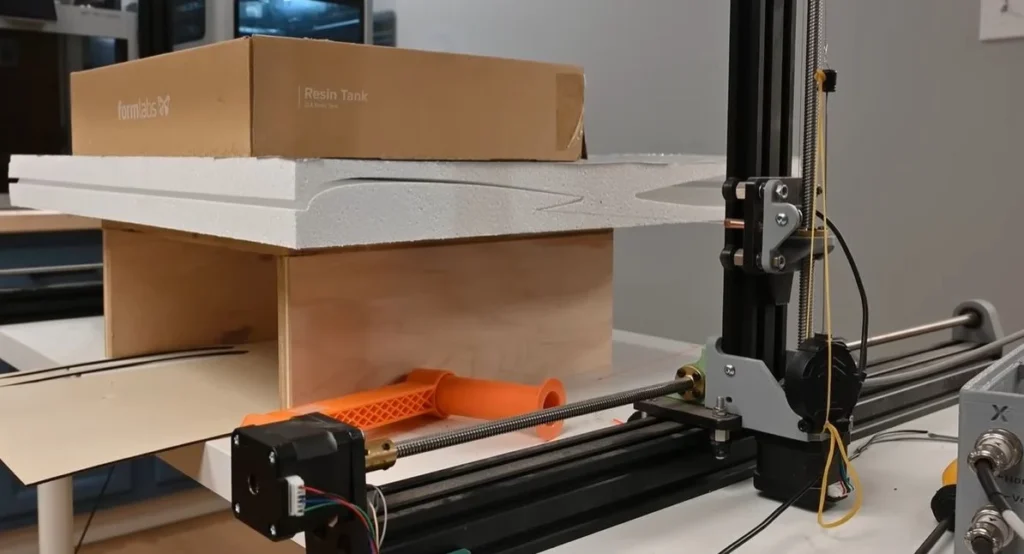
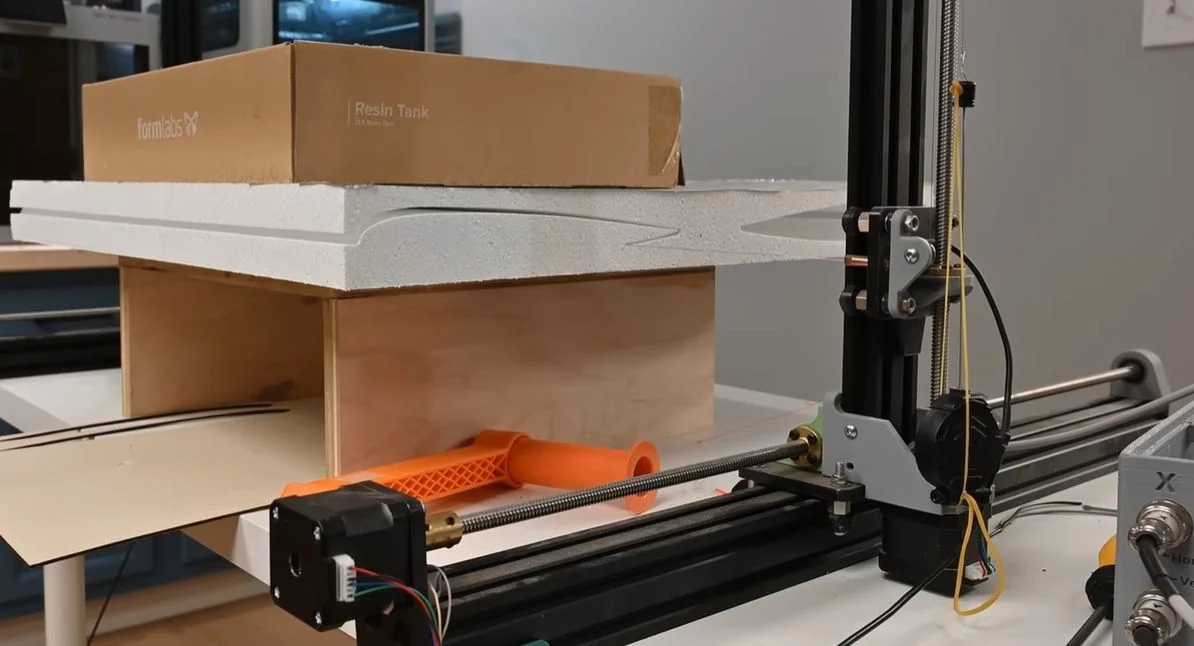
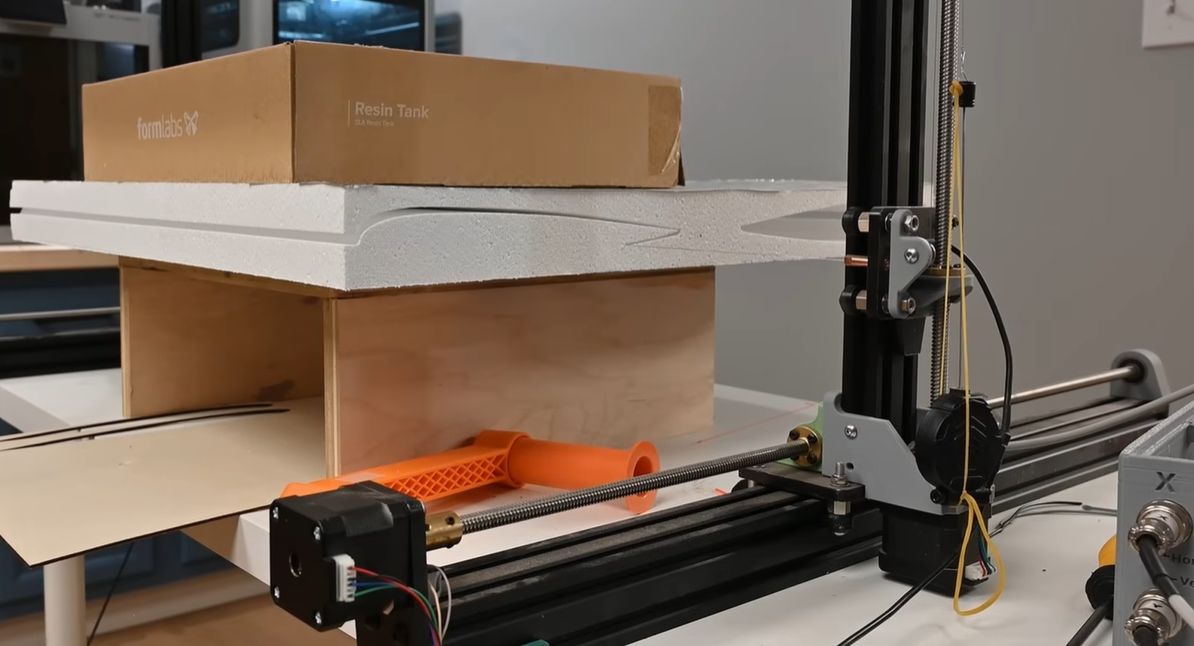
The most prominent feature of Rechtin’s design is its 4-axis control system. Unlike simpler 2-axis or 3-axis cutters that restrict the wire to a single plane or a limited set of movements, the 4-axis configuration allows independent control over both ends of the cutting wire. This means the wire can not only move horizontally and vertically but also rotate or tilt along its length, enabling tapered cuts, twisted geometries, and complex three-dimensional forms like swept wings or turbine blades. This advanced kinematic capability is a game-changer for applications requiring high geometric fidelity.
The machine’s mechanical architecture leverages components commonly found in the burgeoning 3D printing and CNC milling communities. Standard NEMA 17 stepper motors, renowned for their reliability and precise positional control, drive the axes. These motors are integrated with a control board that interprets G-code – the universal language for CNC machines – allowing users to program intricate cutting paths generated from CAD (Computer-Aided Design) software. This reliance on established, affordable hardware significantly lowers the barrier to entry for prospective builders.
However, where Rechtin’s design truly shines is in its unique mechanical refinements. A key innovation is the pulley-based mechanism responsible for tensioning the cutting wire. Maintaining consistent tension is critical in hot wire cutting; a slack wire can lead to inaccurate cuts and wire breakage, while excessive tension can strain the motors or lead to premature wire fatigue. Rechtin’s system addresses this by providing a robust and adjustable tensioning solution, ensuring the NiCr wire remains taut and stable throughout the cutting process.
Another distinctive and elegant design choice is the use of MIG welding tips for current transfer to the hot wire. While simple alligator clips might function, they often suffer from inconsistent contact, localized heating, and an overall less professional aesthetic. MIG welding tips, designed for high current transfer and robust electrical connections, provide a superior interface. They ensure efficient and stable power delivery to the NiCr wire, contributing to more consistent heating and, consequently, cleaner, more reliable cuts. This detail underscores Rechtin’s commitment to both functional excellence and refined engineering.
The project also embraces the principles of open-source hardware, providing all necessary STLs (Standard Tessellation Language files) for the 3D-printed components. This approach democratizes access to advanced manufacturing tools, allowing enthusiasts to replicate, modify, and improve upon the design. Furthermore, the entire assembly is designed to be collapsible into a compact form factor, addressing a common challenge for hobbyists with limited workshop space. This thoughtful design consideration makes the cutter practical for those who do not require daily use but still demand high-precision capabilities. For Michael Rechtin, the primary application for this advanced cutter is the fabrication of airfoils, a critical component in model aircraft, drones, and potentially even smaller-scale wind energy applications.
Chronology: The Evolution of Precision Foam Shaping
The journey toward sophisticated foam cutting machines like Michael Rechtin’s is rooted in decades of innovation, spanning from manual techniques to the advent of computer-controlled automation.
Early Days of Hot Wire Cutting (Mid-20th Century): The concept of using a heated wire to cut through thermoplastic foams emerged in the mid-20th century, primarily driven by the need for efficient and clean shaping of materials like expanded polystyrene (EPS) and extruded polystyrene (XPS). Initially, these were largely manual operations, involving simple jigs and hand-held wires. Craftsmen would carefully guide the wire, often heated by a simple power supply, along templates to create basic shapes for insulation, packaging, or theatrical props. While effective for simple profiles, achieving complex or identical parts was arduous and highly dependent on operator skill.
Introduction of Early Automation (1970s-1980s): The late 1970s and 1980s saw the first forays into automating hot wire cutting. As early industrial robots and rudimentary CNC systems became available, manufacturers began experimenting with integrating hot wires onto automated gantry systems. These early machines were often custom-built for specific industrial applications, such as cutting foam cores for composite aircraft wings or large architectural elements. They were expensive, proprietary, and largely inaccessible to individuals or small businesses.
The Rise of CNC and the Personal Computer Revolution (1990s-2000s): The widespread adoption of personal computers and the proliferation of affordable stepper motors and control electronics in the 1990s catalyzed the "democratization" of CNC technology. This era saw the emergence of desktop CNC routers and laser cutters, and concurrently, the first DIY CNC hot wire foam cutters began to appear in hobbyist communities. These early DIY machines were often 2-axis or 3-axis, controlled by parallel port interfaces and rudimentary CAM (Computer-Aided Manufacturing) software. While a significant leap from manual cutting, they still presented challenges in achieving consistent tension, precise temperature control, and complex multi-axis movements.
The Open-Source Hardware Movement and 3D Printing (2010s-Present): The last decade has witnessed an explosion in the open-source hardware movement, fueled by platforms like Arduino, Raspberry Pi, and the widespread availability of affordable 3D printers. This ecosystem has enabled makers to design, share, and build increasingly sophisticated machines with off-the-shelf components. The development of robust, open-source G-code interpreters and CAD/CAM software has further empowered individuals to tackle complex projects. Michael Rechtin’s CNC hot wire foam cutter stands as a prime example of this evolution, building upon decades of incremental improvements and leveraging the collaborative spirit of the modern maker community. His project represents a significant refinement, addressing common pain points like wire tensioning and power transfer with innovative, yet accessible, solutions.
Supporting Data: Technical Nuances and Application Spectrum
The technical brilliance of Rechtin’s hot wire foam cutter is evident in its detailed engineering and the broad spectrum of applications it enables.
The Science of Hot Wire Cutting: At its core, hot wire cutting relies on the principle of resistive heating. An electrical current passed through a high-resistance wire (typically nickel-chromium, or NiCr, due to its high melting point and resistance to oxidation) causes it to heat up. When this heated wire comes into contact with foam, the foam material melts and vaporizes at the point of contact, allowing the wire to pass through smoothly. The key to a good cut is the precise control of wire temperature, which is a function of the current supplied and the wire’s resistance, combined with the cutting speed. If the wire is too cool, it will drag, producing a rough cut or even tearing the foam. If it’s too hot, it will create an excessively wide kerf (the width of the cut) and potentially burn the foam, releasing noxious fumes. Rechtin’s system implicitly aims for optimal current control, either through pre-calibration or potential future dynamic adjustment, ensuring a gentle slice rather than an aggressive burn.
4-Axis Kinematics Explained: The 4-axis configuration is the technological cornerstone of this machine. In a standard 2-axis system, the wire moves in an XY plane. A 3-axis system might add Z-depth control. Rechtin’s 4-axis setup typically means there are two independent X and Y axes, one for each end of the wire. This allows the wire to be skewed, twisted, or tapered as it moves through the foam. For instance, to cut an airfoil with varying chord lengths or twist along its span (a common feature in advanced wing designs), the two ends of the wire can follow different 2D paths simultaneously. This capability is crucial for generating complex aerodynamic shapes, intricate architectural elements, or highly customized packaging inserts.
Component Synergy:
- NEMA 17 Stepper Motors: These motors are workhorses in desktop CNC. They offer high torque for their size, excellent positional accuracy, and are relatively inexpensive. Their integration ensures smooth and precise movement across all four axes.
- G-code Control Board: The use of a standard control board capable of interpreting G-code ensures compatibility with a vast ecosystem of CAD/CAM software. Users can design their parts in programs like Fusion 360, SolidWorks, or open-source alternatives like FreeCAD, generate the G-code path, and feed it directly to the cutter. This standardization simplifies the workflow for users.
- Pulley-based Tensioning System: This mechanism is critical. As the wire heats and cools, its length changes due to thermal expansion and contraction. A well-designed tensioning system compensates for these changes, preventing slackness that would compromise cut accuracy or cause the wire to snag. A constant tension also helps to minimize wire vibration, further enhancing cut quality.
- MIG Welding Tips: Beyond aesthetics, the functional benefit of MIG tips for electrical contact is significant. They provide a secure, low-resistance connection, minimizing power loss and ensuring that the maximum possible current reaches the NiCr wire for consistent heating. This reduces the risk of arcing or localized overheating at the contact points, which can degrade wire performance and longevity.
Broadening the Application Horizon: While Rechtin’s primary use case is airfoils for model aircraft and potentially larger drones, the implications extend far beyond:
- Aerospace and RC Modeling: Precision airfoils, fuselage sections, wing cores for composite construction.
- Architecture and Design: Scale models, intricate facade elements, custom insulation panels.
- Prototyping and Product Development: Rapid iteration of product designs, ergonomic prototypes.
- Art and Sculpture: Creating complex three-dimensional forms from foam, which can then be coated or used as molds.
- Theatrical and Film Production: Props, set pieces, specialized costume elements.
- Signage and Display: Custom lettering, logos, and promotional displays.
- Packaging: Tailored foam inserts for sensitive equipment or products.
The open-source nature of the project also means that the community can adapt it for specific needs, potentially integrating sensors for real-time temperature feedback or developing specialized software for niche applications.
Official Responses: The Creator’s Vision and Community Engagement
While "official responses" typically refer to corporate statements or government decrees, in the context of an open-source DIY project, this category translates to the creator’s explicit intentions, the project’s documentation, and the anticipated engagement from the broader maker community.
Michael Rechtin’s Intent and Invitation: Michael Rechtin’s decision to not only build this sophisticated machine but also to document it extensively and release it on GitHub speaks volumes about his philosophy. His video announcement serves as the primary "official" communication, showcasing the machine’s capabilities and walking viewers through its design principles. The explicit invitation to the community – "if you want to give it a shake yourself" – highlights his desire for collaboration and dissemination of knowledge. Rechtin’s focus on airfoils as his main application also provides a clear use case for others who might share similar interests in aerospace or RC modeling. By providing the STLs and a detailed project repository, he empowers others to replicate his work, learn from it, and even contribute improvements. This open-source approach fosters a vibrant ecosystem of innovation.
Community Reception and Potential Impact: While direct community feedback on the project’s announcement is still nascent, the platform of Hackaday and YouTube ensures a wide reach within the global maker and engineering communities. The project is likely to be met with significant enthusiasm, given its blend of advanced functionality and accessible construction. Anticipated responses include:
- Praise for Innovation: Recognition for the clever design choices, particularly the pulley-based tensioning and the use of MIG tips, which are often overlooked but critical details.
- Requests for Clarification/Support: As with any complex DIY project, users attempting to replicate it will likely seek further clarification on build steps, calibration, or troubleshooting, fostering a collaborative dialogue within the GitHub repository.
- Modifications and Enhancements: The open-source nature encourages users to adapt the design. This could lead to modifications for different sizes, integration of advanced sensors (e.g., for wire temperature feedback), or alternative control systems.
- Educational Adoption: The project’s detailed documentation and practical application make it an excellent resource for educational institutions looking to teach CAD/CAM, mechatronics, and advanced manufacturing principles.
Rechtin’s project exemplifies the power of individual initiative amplified by the open-source ethos, creating a ripple effect of learning and innovation across the global maker community.
Implications: Reshaping the Landscape of Prototyping and Education
Michael Rechtin’s 4-axis CNC hot wire foam cutter carries significant implications across several domains, from individual hobbyists to small-scale industries and educational institutions.
Democratization of Advanced Manufacturing: Perhaps the most profound implication is the further democratization of advanced manufacturing techniques. Historically, multi-axis CNC machines were prohibitively expensive, placing them out of reach for most individuals and small businesses. Rechtin’s project, by leveraging accessible components and an open-source design, makes high-precision, 4-axis foam cutting achievable for a fraction of the cost of commercial alternatives. This enables hobbyists to pursue more ambitious projects, allows small startups to rapidly prototype complex designs without significant capital investment, and empowers independent designers to bring intricate visions to life.
Catalyst for Innovation in Niche Fields: For specialized fields like model aviation, drone development, and small-scale wind energy, the ability to precisely cut complex airfoils and aerodynamic shapes is invaluable. This cutter significantly lowers the barrier to experimentation and optimization of such designs. Engineers and enthusiasts can now iterate on wing profiles, propeller blades, or turbine components with unprecedented speed and accuracy, potentially accelerating innovation in these niche sectors.
Educational Tool and STEM Engagement: The project serves as an exceptional educational platform. Students and educators can use the design to learn about:
- Mechatronics: The integration of mechanical, electronic, and control systems.
- CAD/CAM: The process of designing parts digitally and generating toolpaths for manufacturing.
- Electronics: Understanding stepper motor control, power supplies, and G-code interpretation.
- Material Science: The properties of foam and NiCr wire, and the principles of thermal cutting.
- Open-Source Principles: The value of collaboration, documentation, and community contribution.
The hands-on experience of building and operating such a machine can significantly enhance STEM (Science, Technology, Engineering, and Mathematics) education, making abstract concepts tangible and engaging.
Economic Impact for Small Businesses and Prototyping: Small businesses and entrepreneurs often face high costs and long lead times when seeking external prototyping services for complex geometries. An in-house, affordable CNC foam cutter can dramatically reduce these overheads, allowing for faster design iterations, bespoke product creation, and even small-batch production of foam components. This fosters agility and competitiveness in markets that demand customization and rapid response.
Future Trajectories and Community Evolution: The open-source nature of Rechtin’s project ensures a dynamic future. The community will likely contribute enhancements such as:
- Software Integrations: Development of more user-friendly CAM interfaces specifically for hot wire cutting.
- Sensor Integration: Adding temperature sensors for real-time wire temperature control, or force sensors for adaptive cutting speeds.
- Scalability: Adapting the design for larger or smaller cutting envelopes.
- Material Versatility: Exploring optimal settings for different foam types or even other cuttable materials.
This collaborative evolution could lead to a robust and widely adopted open-source hot wire cutting platform, continually refined by a global network of makers.
In conclusion, Michael Rechtin’s 4-axis CNC hot wire foam cutter is more than just a piece of machinery; it is a testament to the power of individual innovation within an open-source framework. By providing a sophisticated, yet accessible, tool for precision foam shaping, Rechtin has not only solved a common problem for many but has also laid the groundwork for future advancements in accessible manufacturing and creative design. Its implications will resonate across a diverse spectrum of users, empowering them to transform ambitious ideas into tangible realities.