Revolutionizing Low-Cost Motor Control: A Deep Dive into Tony Goacher’s BLDC Enhancements
FOR IMMEDIATE RELEASE
[Date of Publication] – In an era where technological innovation often comes with a hefty price tag, one independent engineer, Tony Goacher, has spearheaded a groundbreaking project aimed at democratizing high-performance motor control. Goacher’s work focuses on significantly enhancing the capabilities of widely available, low-cost brushless DC (BLDC) motor controllers, particularly in challenging low-speed scenarios. By introducing a clever signal interceptor solution, he has tackled persistent issues like jerkiness, throttle dead spots, and inconsistent torque delivery, offering a practical and affordable alternative to expensive, high-end control systems.
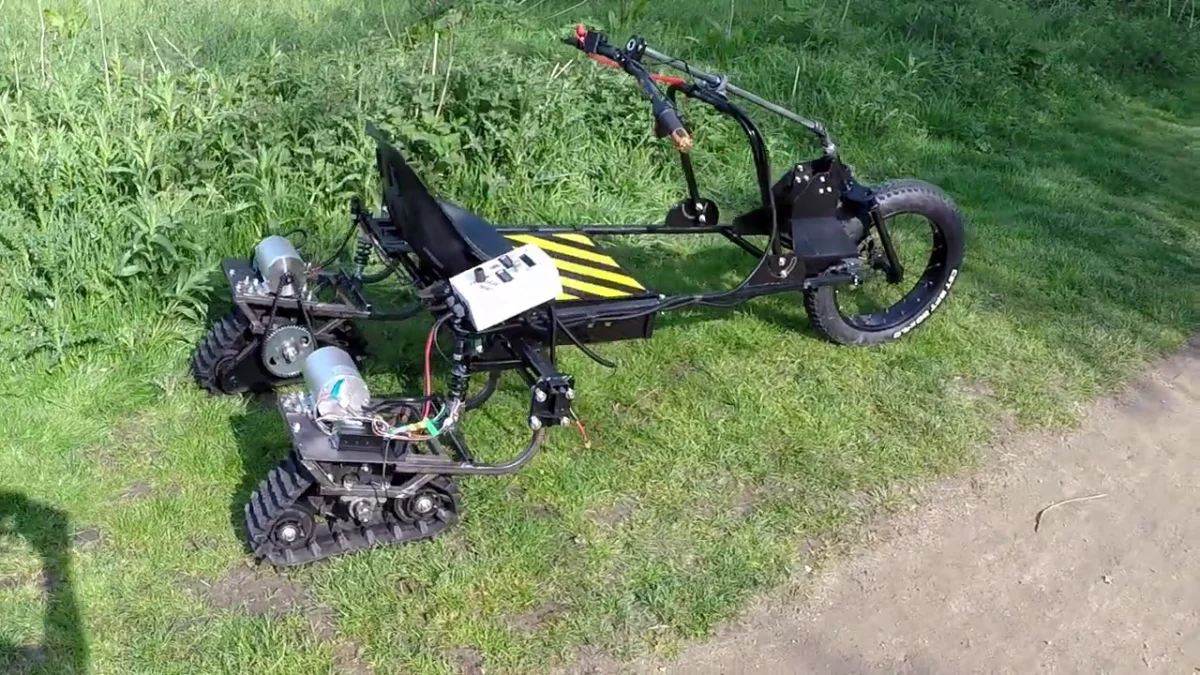
This ingenious approach, demonstrated through a custom-built, dual-motor vehicle dubbed "TrakTrike," promises to unlock new potential for hobbyists, small-scale manufacturers, and developers working with electric propulsion systems. The core of his innovation lies in an Arduino Nano-based intermediary device that intelligently processes throttle inputs before they reach the motor controllers, effectively transforming their performance for a fraction of the cost of specialized units.
The Core Challenge: Bridging the Performance Gap in BLDC Control
Brushless DC (BLDC) motors are ubiquitous in modern technology, powering everything from drones and electric vehicles to industrial machinery, owing to their efficiency, reliability, and compact design. However, the controllers that drive these motors vary dramatically in sophistication and cost. While high-end controllers often employ advanced algorithms like Field-Oriented Control (FOC) to achieve smooth, precise operation across all speed ranges, their cheaper counterparts, particularly those mass-produced in certain regions, frequently cut corners. These cost-saving measures often manifest as significant performance limitations, especially when operating at low speeds or under variable loads.
Tony Goacher, with extensive experience working with these cost-effective Chinese-made BLDC controllers, identified a recurring set of problems. "They can be very cost-effective," Goacher notes, "but sometimes limited in performance or capability, particularly when it comes to low-speed operation." The primary issues he encountered included noticeable jerkiness during acceleration and deceleration, unresponsive "dead spots" in the throttle range, and an overall inconsistent torque delivery at lower RPMs. These deficiencies, while perhaps tolerable in some light-duty applications, become critical impediments in scenarios requiring precise control, such as navigating heavy vehicles or intricate robotic movements. The greater inertia associated with heavier loads tends to amplify these minor control anomalies, rendering vehicles undriveable or at least extremely challenging to operate smoothly.
Goacher’s project, aptly titled "Making Cheap BLDC Controllers Better," directly addresses these performance shortcomings. His solution bypasses the internal limitations of the cheap controllers by inserting an intelligent signal interceptor between the user’s throttle input and the motor controller itself. This intermediary device effectively "refines" the throttle signal, compensating for the inherent flaws of the underlying hardware without requiring costly modifications or replacements of the motor controllers.
A Chronology of Innovation: From Frustration to Functional Solution
Tony Goacher’s journey to enhance inexpensive BLDC controllers is a classic tale of engineering problem-solving, born out of practical necessity and fueled by a desire for better performance.
Early Encounters with Controller Limitations: Goacher’s initial experiences with cheap BLDC motor controllers highlighted their significant appeal – their low price point made ambitious projects more financially feasible. However, this cost-effectiveness came with a clear trade-off in control fidelity. He frequently observed the aforementioned issues: the motors would stutter at low speeds, respond erratically to subtle throttle changes, and generally lack the finesse required for applications beyond simple on/off operation or high-speed cruising. These observations formed the foundational understanding of the problem he sought to solve.
The TrakTrike Catalyst: A High-Stakes Test Bed: The true impetus for developing a robust solution arose during the construction of his unique demo vehicle, the TrakTrike. Conceived for EMF Camp 2022, the TrakTrike is an innovative bicycle-half-track hybrid, a substantial machine that placed considerable demands on its propulsion system. Initially, Goacher experimented with more expensive, "nicer" motor controllers, but these ultimately failed under the strain of the TrakTrike’s demanding operational profile, leading to their "blowing up." This setback necessitated a pivot towards more readily available and significantly cheaper parts, sourced from platforms like AliExpress, to keep the project moving forward.
Exacerbated Problems with Dual Motors and Inertia: The adoption of these cheaper controllers on the TrakTrike immediately brought the low-speed control issues into sharp focus. The vehicle, being heavy and utilizing a dual-motor setup (one for each track), dramatically magnified the controllers’ deficiencies. Goacher encountered several critical problems:
- Terrible Low-Speed Control: The vehicle struggled to move smoothly at low speeds, exhibiting pronounced jerkiness.
- Throttle Dead Spots: There were sections of the throttle’s physical range where no motor response occurred, followed by sudden, abrupt acceleration.
- Inconsistent Dual Motor Response: Crucially, the two cheap motor controllers did not respond identically to the same throttle input. This disparity caused the TrakTrike to constantly "steer" or "crab" sideways, even when attempting to drive in a straight line, making precise maneuvering nearly impossible and the vehicle difficult and frustrating to operate.
Conceiving the Interceptor Solution: Faced with these operational challenges, Goacher realized that directly modifying the internal firmware of the cheap, proprietary controllers was impractical or impossible. Instead, he envisioned an external device that could "intercept" the raw throttle signal, process it intelligently, and then output a refined signal to the motor controllers. This approach offered a non-invasive, hardware-agnostic solution.
Implementation with an Arduino Nano: The choice of the Arduino Nano as the core of this interceptor was strategic. Its low cost, compact size, and robust open-source ecosystem made it an ideal platform for rapid prototyping and deployment. The Arduino Nano was physically integrated after the main throttle input and before the two individual motor controllers. This setup allowed the Arduino to receive a single, raw throttle signal and then generate two independently tailored output signals for the left and right motors.
Developing Key Features for Enhanced Control: Goacher then programmed the Arduino Nano to implement several critical functionalities:
- Throttle Output Calibration: The Arduino allows for precise calibration of the throttle’s input range, effectively eliminating dead spots and ensuring a linear, predictable response across the entire physical throw of the throttle.
- Individual Motor Tuning: This was a breakthrough for the TrakTrike. The Arduino was programmed to individually tune the output signals for the left and right motors, compensating for manufacturing variances or calibration differences between the two cheap controllers. This crucial feature directly addressed the "crabbing" issue, allowing the vehicle to drive straight and predictably.
- Custom Acceleration and Deceleration Curves: To combat jerkiness, Goacher implemented custom software-defined acceleration and deceleration curves. Instead of a sudden jolt, the motors now ramp up and down smoothly, providing a much more natural and controllable feel.
- Precise Crawling Speed: A dedicated feature was developed to enable a consistent, extremely low "crawling speed," essential for delicate maneuvering or navigating tight spaces without sudden stops or starts.
Validation and Open-Sourcing: The implementation of these features on the TrakTrike yielded immediate and dramatic improvements. The vehicle became vastly more controllable, smoother, and predictable at low speeds. With the successful demonstration on the TrakTrike, Goacher committed to making his work accessible to the wider maker community, publishing the design files and code on GitHub. This open-source approach empowers others to replicate, adapt, and further develop his solution, fostering a collaborative spirit of innovation.
Supporting Data and Technical Underpinnings
Goacher’s solution, while seemingly simple in its hardware implementation, is underpinned by clever software logic that addresses fundamental challenges in BLDC motor control. To fully appreciate its impact, it’s helpful to understand the technical context.
Understanding BLDC Motor Control Basics: BLDC motors operate by electronically commutating coils, meaning the direction of current in the stator windings is precisely switched to create a rotating magnetic field that pulls the rotor along. Cheap BLDC controllers often use "trapezoidal" commutation, which is simpler to implement but can lead to torque ripple, especially at low speeds. More advanced controllers use "Field-Oriented Control" (FOC), which provides sinusoidal current waveforms and precise control of the magnetic field, resulting in much smoother operation. However, FOC requires more computational power and sophisticated sensor feedback or estimation, making it more expensive.
The "Why" of Cheap Controllers and Their Limitations: Manufacturers of low-cost BLDC controllers prioritize affordability and basic functionality. They often omit or simplify components and algorithms that contribute to high-fidelity control, particularly at low RPMs where back-EMF (electromotive force generated by the motor) is minimal, making sensorless commutation challenging. This leads to:
- Limited Resolution: The internal mapping from throttle input to motor speed might have coarse steps, creating dead spots and sudden jumps.
- Lack of Filtering/Smoothing: Raw throttle signals, especially from potentiometers, can be noisy. Without proper filtering, this translates directly to erratic motor behavior.
- No Compensation for Motor/Controller Variance: In multi-motor setups, slight differences in manufacturing tolerances or calibration between individual cheap controllers are not accounted for, leading to unequal power delivery.
- Absence of Advanced Algorithms: Features like acceleration/deceleration ramps, which require predictive control, are typically absent.
The Arduino Nano as an Intelligent Gateway: Goacher’s signal interceptor, powered by an Arduino Nano, effectively acts as a "smart proxy." Here’s how it leverages the Arduino’s capabilities:
- Analog-to-Digital Conversion (ADC): The Arduino receives the analog voltage signal from the throttle potentiometer. Its built-in ADC converts this analog signal into a digital value, typically ranging from 0 to 1023.
- Input Mapping and Calibration: The Arduino code allows for software-defined mapping of this raw digital input. Instead of directly passing the value, Goacher implemented a calibration routine. The user can define the minimum and maximum physical throttle positions, allowing the Arduino to map this specific range to the full desired output range (e.g., 0-255 for PWM output). This precisely eliminates physical dead spots and ensures a consistent response curve.
- Filtering and Smoothing: The Arduino can apply digital filters (e.g., moving average, exponential smoothing) to the throttle input. This removes signal noise, preventing erratic motor responses caused by minor fluctuations in the throttle input or potentiometer wear.
- Custom Response Curves (Software-Defined Acceleration/Deceleration): This is a key enhancement. Instead of a linear relationship between throttle position and motor speed, the Arduino can implement non-linear curves. For example, a slow ramp-up during the initial throttle movement, followed by a quicker response at mid-throttle, and then another gentle curve towards maximum speed. This is achieved by calculating the rate of change of the throttle input and adjusting the output signal incrementally over time, rather than instantaneously. A proportional-integral-derivative (PID) like control can be used for sophisticated ramp control, ensuring smooth transitions.
- Independent Dual-Motor Output Generation: For multi-motor systems like the TrakTrike, the Arduino takes the single processed throttle input and then generates two separate output signals. Crucially, these signals can be individually offset or scaled to compensate for performance differences between the left and right motor controllers. If the left motor controller is inherently slightly weaker or less responsive, the Arduino can send it a slightly higher signal for the same desired speed, thus equalizing the output torque and preventing unwanted steering.
- Pulse Width Modulation (PWM) Output: The Arduino communicates with most cheap BLDC controllers using PWM signals. The Arduino’s ability to generate precise PWM signals (with adjustable duty cycles) allows it to effectively emulate the desired throttle input for the controllers.
Quantifiable Improvements (Qualitative Impact):
- Elimination of Dead Spots: This translates to immediate and predictable motor response from the very beginning of the throttle’s movement, significantly improving user control.
- Balanced Torque Delivery: Individual motor calibration ensures that multi-motor vehicles track straight, reducing driver fatigue and improving safety and precision.
- Smooth Acceleration/Deceleration: The custom curves remove abrupt jerks, providing a more professional and comfortable driving experience, particularly beneficial for passengers or delicate cargo.
- Precise Crawling Speed: The ability to maintain a consistent, very low speed is invaluable for maneuvering in confined spaces, docking, or precise robotic tasks, where even minor speed fluctuations can cause errors.
Cost-Benefit Analysis: The primary appeal of Goacher’s solution is its incredible cost-effectiveness. An Arduino Nano typically costs under $10 USD. When combined with minimal passive components, the total cost of the interceptor unit is negligible compared to the price difference between a cheap BLDC controller and a high-end, FOC-enabled controller, which can run into hundreds of dollars. This makes advanced control accessible to a much broader audience.
Comparison to Alternatives: While Field-Oriented Control (FOC) offers the pinnacle of BLDC motor control, it requires significant investment in hardware (powerful microcontrollers, current sensors) and expertise (complex firmware development). Goacher’s solution doesn’t fundamentally change the internal operation of the cheap BLDC controller, but rather optimizes its input, effectively "fooling" it into performing better. It’s a pragmatic middle ground: significantly improving usability without the prohibitive cost and complexity of a full FOC implementation.
Expert Commentary and Industry Context
Tony Goacher’s project resonates deeply within the broader landscape of embedded systems, electric propulsion, and the burgeoning maker movement. His work is not just a clever hack; it represents a practical response to a widespread industry challenge and a testament to the power of open-source collaboration.
The Pervasiveness of BLDC Motors and Control Challenges: The global market for BLDC motors is expanding rapidly, driven by demand in electric vehicles (e-bikes, scooters, cars), drones, robotics, home appliances, and industrial automation. With this growth comes an increased need for effective motor control solutions. While large corporations can invest in custom, high-performance controllers, small-to-medium enterprises (SMEs), startups, and individual hobbyists often face a dilemma: compromise on performance with cheap controllers or incur significant costs for premium ones. Goacher’s project directly addresses this gap.
The Value of Community-Driven Solutions: In many technical fields, community-driven projects like Goacher’s, hosted on platforms like Hackaday.io and GitHub, play a crucial role in disseminating knowledge and fostering innovation. Such projects provide tangible, open-source solutions that often outpace the development speed and accessibility of proprietary industrial offerings. They empower individuals to build, experiment, and customize, rather than being locked into vendor-specific ecosystems. This "maker" ethos promotes learning and practical application of engineering principles.
Impact on Various Sectors:
- DIY Electric Vehicles: Enthusiasts building custom e-bikes, scooters, or small electric cars can now achieve much smoother and more predictable control, enhancing safety and ride comfort.
- Robotics: For robotic platforms, especially those requiring precise low-speed maneuvering or heavy lifting, consistent torque and smooth motion are critical. Goacher’s solution can enable more sophisticated robot behaviors without expensive control hardware.
- Industrial Automation (Small Scale): Small-scale conveyors, automated guided vehicles (AGVs), or custom machinery in workshops could benefit from improved BLDC control for better process efficiency and reliability.
- Education: The project serves as an excellent educational tool, demonstrating real-world applications of microcontrollers, signal processing, and control theory in an accessible manner.
The Broader Implications for Open Hardware: Goacher’s decision to open-source his files on GitHub is a significant contribution. It not only allows others to replicate his success but also encourages further development and adaptation. This aligns with the growing trend of open hardware, where designs and code are freely shared, fostering innovation and reducing barriers to entry for new developers and businesses. The ability to customize and adapt an off-the-shelf Arduino Nano for such a critical function highlights the power and versatility of programmable microcontrollers in modern engineering.
Far-Reaching Implications and Future Potential
Tony Goacher’s project transcends a mere technical fix; it carries significant implications for the future of DIY electronics, small-scale manufacturing, and the accessibility of advanced technology.
Empowerment of the Maker Community: The most immediate implication is the empowerment of makers and hobbyists. By providing a low-cost, open-source method to overcome a common performance bottleneck, Goacher enables more ambitious and refined projects. It lowers the entry barrier for individuals wishing to experiment with electric propulsion and sophisticated motion control, fostering a new wave of innovation from the grassroots. No longer are hobbyists constrained by the crude performance of budget components or forced to break the bank for premium solutions.
Economic Impact and Sustainability: This solution has a tangible economic benefit. By extending the usability and performance of inexpensive BLDC controllers, it reduces the need to purchase more expensive alternatives. This can lead to cost savings for individuals and small businesses, making projects that were once financially prohibitive now viable. Furthermore, by making existing "cheap" hardware perform better, it subtly promotes a form of technological sustainability, squeezing more value out of readily available components rather than always demanding newer, more expensive ones.
Educational Value and Skill Development: Goacher’s work offers an invaluable educational resource. It provides a clear, practical example of how embedded systems (like the Arduino Nano) can be used to solve real-world engineering problems. It touches upon concepts such as signal processing, control algorithms, sensor interfacing, and programming. For students and aspiring engineers, dissecting and adapting this project can provide hands-on experience in critical areas of mechatronics and control systems.
Towards Greater Customization and Adaptability: The project underscores a broader trend in technology: the move towards highly customizable and adaptable electronic systems. In a world of increasingly complex and often proprietary devices, solutions like Goacher’s demonstrate that significant performance gains can be achieved through intelligent software layering and hardware interception, rather than solely through internal hardware redesigns. This approach paves the way for a future where users have greater control over the behavior of their devices, tailoring them precisely to their unique needs.
Beyond the TrakTrike: Diverse Applications: While demonstrated on the TrakTrike, the principles of Goacher’s signal interceptor are broadly applicable. Imagine:
- Electric Scooters and Bikes: Smoother throttle response, eliminating jerky starts and allowing for more controlled low-speed navigation in pedestrian areas.
- Warehouse Robotics: AGVs and other industrial robots could achieve more precise docking and maneuvering, improving efficiency and reducing collision risks.
- Camera Sliders/Gimbals: While often using specialized controllers, for DIY film equipment, this solution could enable incredibly smooth, slow camera movements.
- Custom Conveyor Systems: Ensuring consistent, vibration-free movement of goods.
A Call to Action for Innovators: Goacher’s project concludes with an invitation to the community: to explore the GitHub repository, attempt the hack, and contribute to the ongoing discussion. He acknowledges that other approaches exist, such as diving into the complexities of Field-Oriented Control (FOC). However, his work presents a compelling argument for a more accessible, immediate, and cost-effective path to improved BLDC motor control. It challenges engineers and makers alike to consider how simple, intelligent interventions can dramatically elevate the performance of readily available, budget-friendly hardware. The conversation, now open to speculation and further development in online forums and comments sections, promises to drive even more creative solutions in the realm of electric propulsion.