Scaling DevOps in the Age of AI: AWS Unveils Autonomous Release Management
In an era where generative AI is accelerating code production to unprecedented speeds, development teams are facing an existential bottleneck: the "review queue." As developers push code faster than ever, the traditional human-centric model of code review and manual testing is buckling under the pressure. Today, Amazon Web Services (AWS) is addressing this systemic challenge with the announcement of new release management capabilities for the AWS DevOps Agent, now available in preview.
By integrating autonomous release readiness reviews and intelligent release testing directly into the development lifecycle, AWS is positioning its DevOps Agent not merely as a helper, but as an always-available, context-aware member of the engineering team capable of bridging the gap between high-velocity coding and production stability.
The New Frontier: Main Facts of the AWS DevOps Agent Update
The AWS DevOps Agent was originally launched to handle post-deployment operations, specializing in autonomous incident investigation, root cause analysis (RCA), and the mitigation of production anomalies. The latest update significantly expands the agent’s scope, moving it "left" into the development pipeline.
Key Capabilities Introduced:
- Release Readiness Review: An automated governance layer that evaluates code changes against production requirements, dependency safety, and custom-defined standards.
- Autonomous Release Testing: A dynamic testing engine that generates and executes change-specific test plans for web and API applications in production-like, isolated environments.
- Natural Language Standards: Organizations can define their unique compliance, security, and infrastructure best practices in plain English, which the agent then enforces across all pull requests.
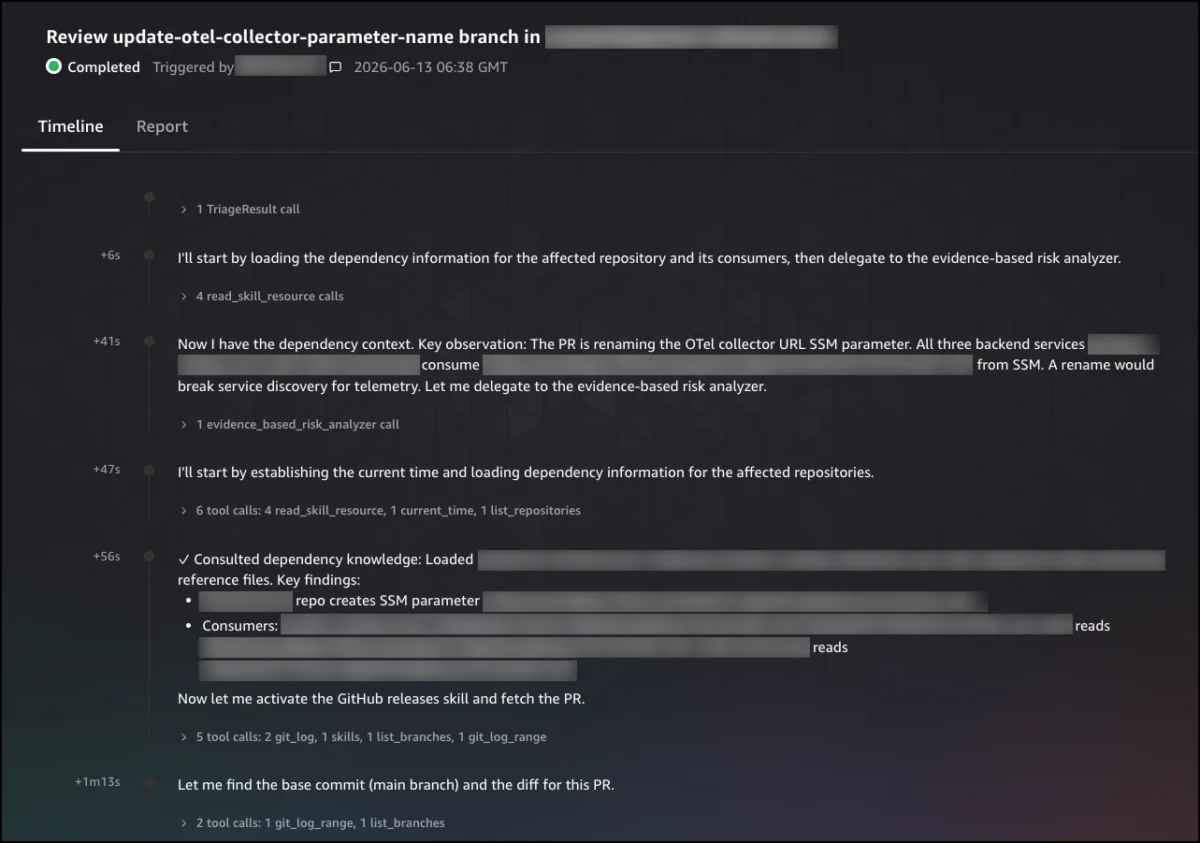
- Cross-Repository Intelligence: The agent maintains a "knowledge graph" of dependencies, allowing it to predict how a change in one repository might adversely impact downstream services or cloud infrastructure.
Chronology: From Reactive Operations to Proactive Governance
To understand the significance of this release, one must look at the evolution of the AWS DevOps Agent’s feature set over the past year.
- Initial Launch (General Availability): The Agent debuted as a reactive tool, focused on the "Day 2" operations of software—monitoring production, diagnosing incidents, and suggesting fixes once a problem occurred.
- The "AI Coding" Inflection Point: As AI-assisted coding tools became ubiquitous, the volume of code generated by teams exploded. This created a paradoxical situation: while features were being built faster, the delivery of those features slowed down because human reviewers could not keep pace with the influx of pull requests.
- The Current Preview (June 2026): AWS is bridging the gap between code generation and production. By enabling the Agent to intervene during the review phase, it ensures that only "production-ready" code enters the deployment pipeline, effectively creating a high-speed, high-trust automated gatekeeper.
The Bottleneck: Supporting Data and Industry Context
The necessity for this technology is rooted in empirical observations of modern software engineering. According to industry data, the primary friction point in modern CI/CD pipelines is the "review lag."
The Cost of Review Fatigue
When development teams are pressured to maintain speed, the quality of human reviews often degrades. Developers, suffering from cognitive overload, may approve changes without deep examination. This leads to two critical failure modes:

- "Configuration Drift": Environments used for testing become increasingly dissimilar to actual production environments, rendering tests ineffective.
- Compliance Silos: Security and compliance standards—such as those defined by the AWS Well-Architected Framework—are often ignored or misunderstood during the heat of a sprint.
AWS DevOps Agent addresses this by utilizing the agent’s ability to process vast amounts of telemetry, logs, and configuration data simultaneously—tasks that are computationally trivial for the agent but cognitively expensive for humans.
Implications: A Shift in Engineering Culture
The introduction of these tools marks a profound shift in how engineering teams operate. Rather than viewing the "Agent" as a replacement for human judgment, AWS is positioning it as a tool that offloads the drudgery of compliance and verification, allowing human engineers to focus on architectural design and business logic.
1. Shift-Left Compliance
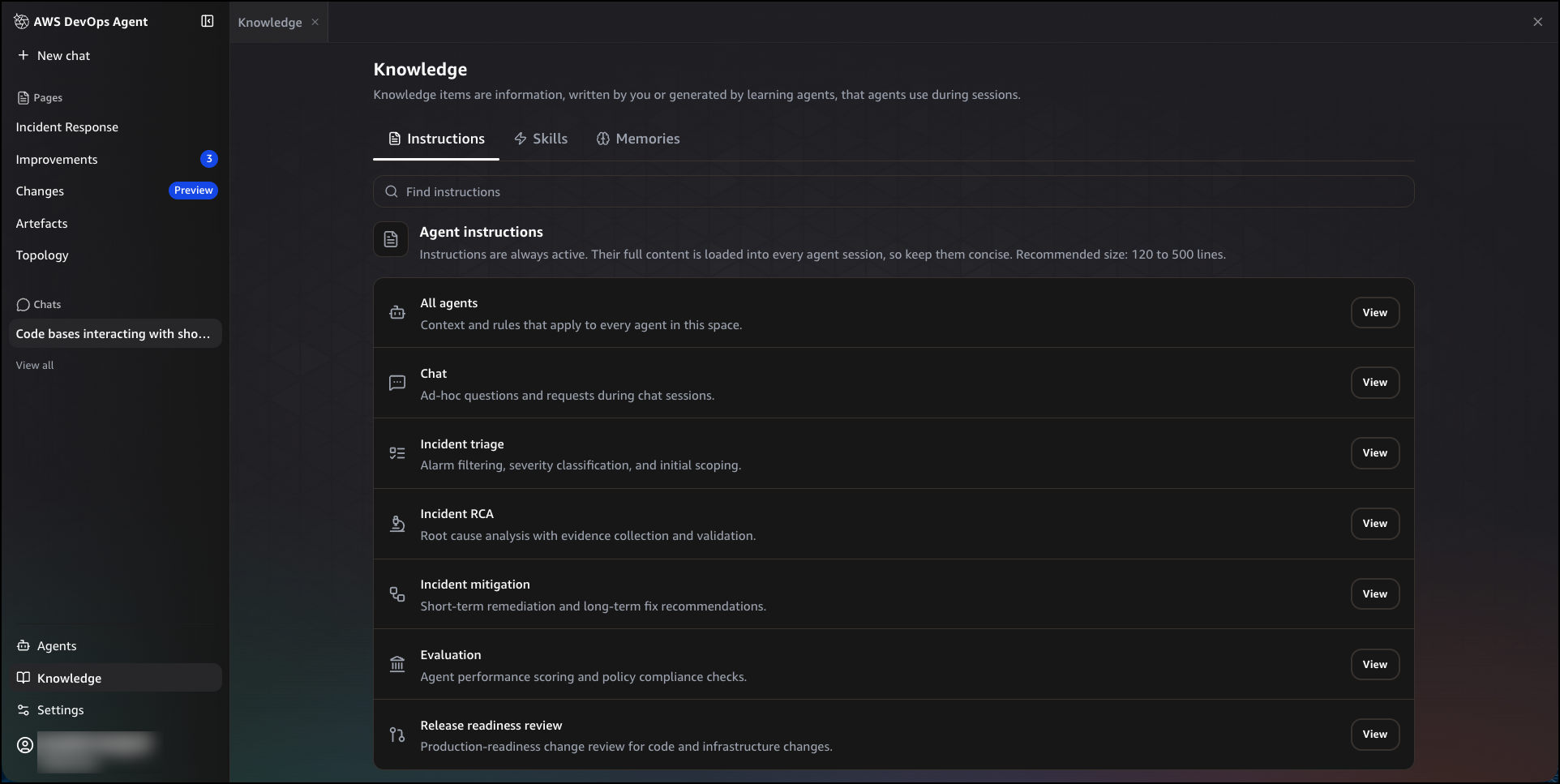
By allowing teams to define "Instructions" (e.g., encryption requirements, network access rules, or logging standards) in plain English, the Agent turns static documentation into live, automated enforcement. If a developer attempts to merge code that violates these standards, the Agent provides an immediate, actionable report on what is wrong and how to fix it.
2. Context-Aware Testing
Traditional testing is often static, relying on pre-written scripts that grow stale. The AWS DevOps Agent’s approach to "reasoning" about a change is a breakthrough. By analyzing the nature of the change, the agent constructs a test plan tailored to that specific commit. This ensures that the testing surface is broad enough to catch regressions but focused enough to remain efficient.
3. The "Block/Proceed/Caution" Framework
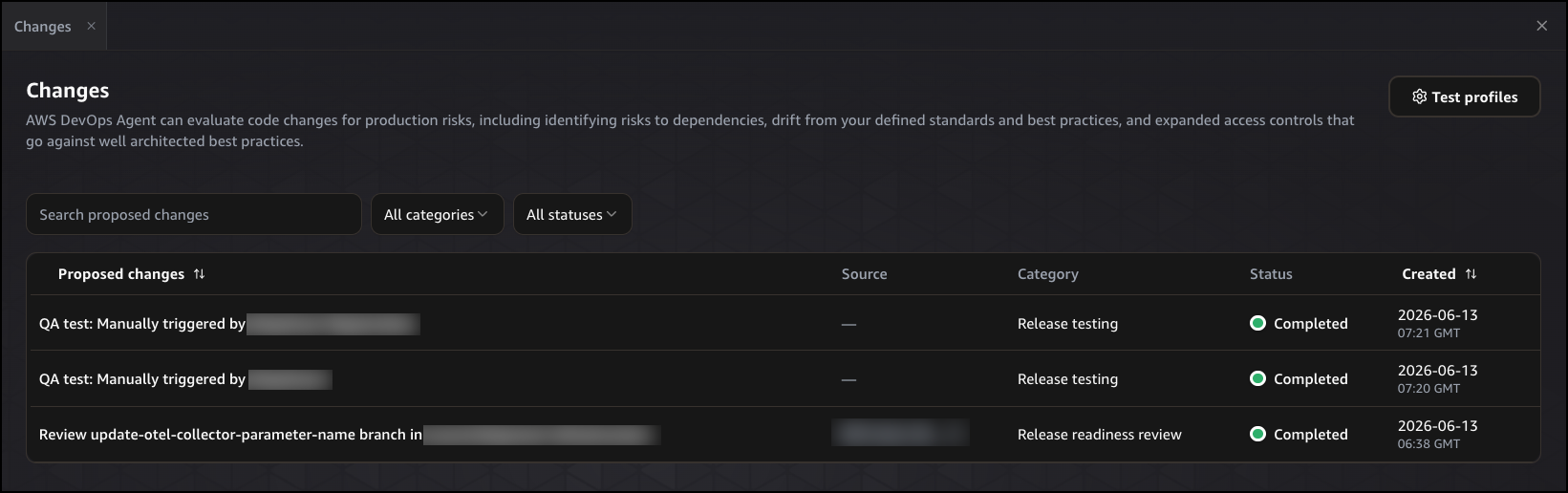
The Agent provides a clear, objective assessment for every change, categorizing it as BLOCK, Proceed with Caution, or Safe to Release. This categorization removes the ambiguity from the review process, providing a consistent standard that is independent of individual human bias or time-of-day fatigue.
How to Get Started: A Practical Guide
For teams looking to integrate the Agent into their workflows, the process is streamlined to minimize overhead.
Initial Configuration
- Connection: Connect your GitHub or GitLab repositories to the Agent Space via the AWS console.
- Indexing: The Agent automatically indexes your repositories, building a dependency map.
- Instruction Setting: Under the "Knowledge" tab, define your internal standards. You can set global instructions for all agents or specific ones for "Release readiness reviews."
Executing a Review
Developers can interact with the agent in three ways:
- Pull Requests: Simply submit a PR; the agent automatically comments on it.
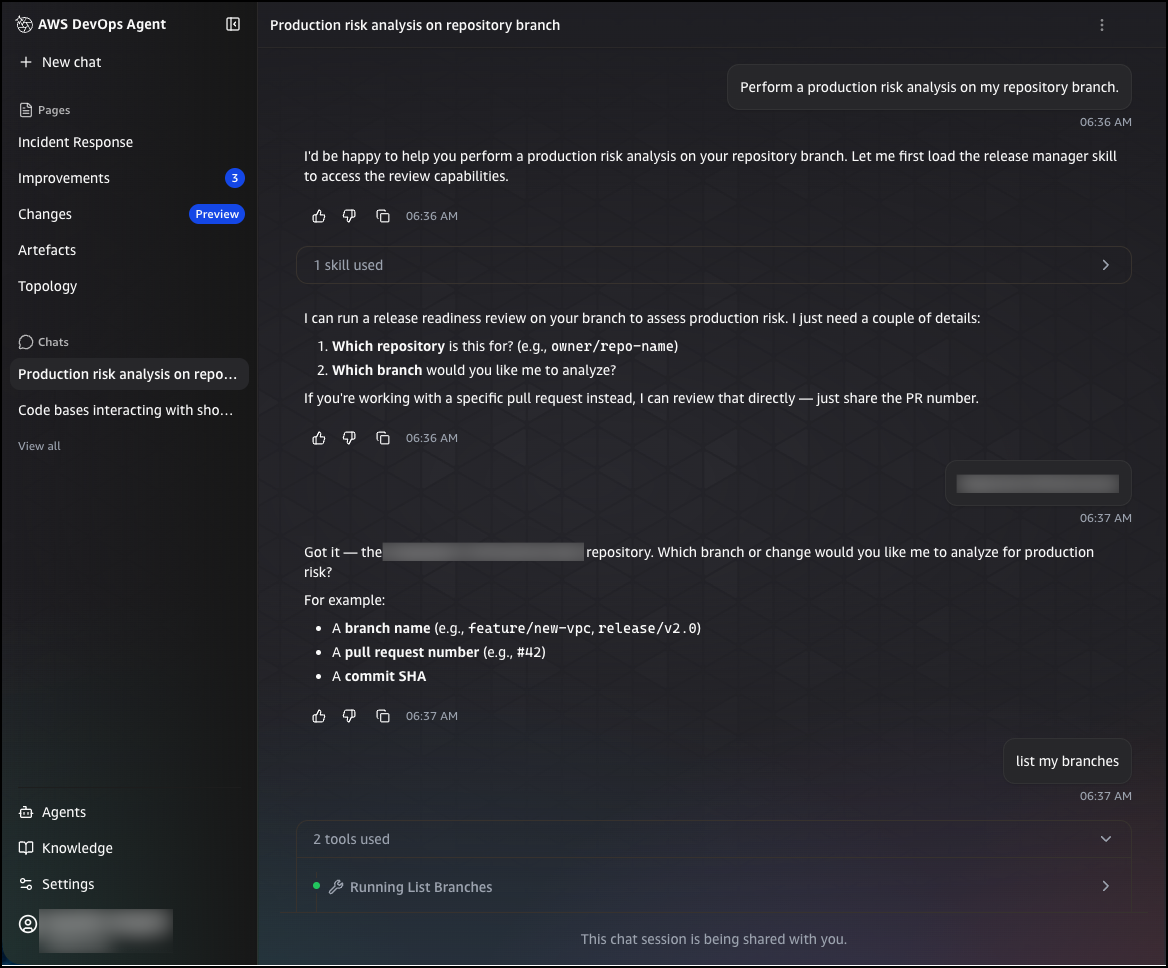
- Chat Interface: Use natural language commands like, "Perform a production risk analysis on my repository branch [branch-name]."
- IDE Integration: Using Kiro or Claude Code plugins, developers can receive feedback before the code even hits the remote repository, allowing for "inner-loop" remediation.
Official Perspective and Future Outlook
While AWS has not yet disclosed a timeline for the full General Availability of these features, the current preview in the US East (N. Virginia) region signals a major investment in the AI-powered SDLC (Software Development Life Cycle).
The goal, as described by AWS engineers, is to ensure that the speed of AI-generated code does not compromise the stability of production systems. By providing a "structured record" of every test, trace, and metric, the Agent also provides a vital audit trail for regulated industries—proving that compliance was maintained at every stage of the release process.
As the industry continues to grapple with the complexities of multicloud environments and rapid-fire deployment cycles, the AWS DevOps Agent represents a transition toward "Autonomous DevOps." It suggests a future where the developer’s role evolves from "writing and verifying" to "defining standards and reviewing Agent-generated recommendations."
Final Considerations
For organizations currently struggling with high failure rates in production or bogged-down PR queues, this preview represents a significant opportunity to reclaim engineering velocity. As we move further into 2026, the question is no longer whether AI should participate in the software release process, but how quickly organizations can integrate these autonomous agents to keep their systems safe, compliant, and performant.
For more information on configuring your environment, users are encouraged to visit the official AWS DevOps Agent user guide.