The Dawn of the Intelligence System: Android’s AI Evolution at Google I/O 2026
By Editorial Staff
The landscape of mobile computing underwent a seismic shift at Google I/O 2026. For over a decade, Android was defined as an operating system—a platform for applications to interact with hardware and users. However, Google’s latest announcements signal a paradigm shift: Android is no longer just an OS; it is an "Intelligence System."
By integrating agentic capabilities, on-device generative AI, and new developer frameworks, Google is positioning Android as a proactive partner in the user experience. For developers, this transformation requires a fundamental rethink of how applications are built, maintained, and optimized.
Main Facts: The New Architecture of Android
The core mission of Android 2026 is to move beyond passive app launching. Instead, the OS now functions as a conductor for AI agents, allowing models like Gemini to perform complex, multi-step tasks across different applications on the user’s behalf.
Key components of this evolution include:
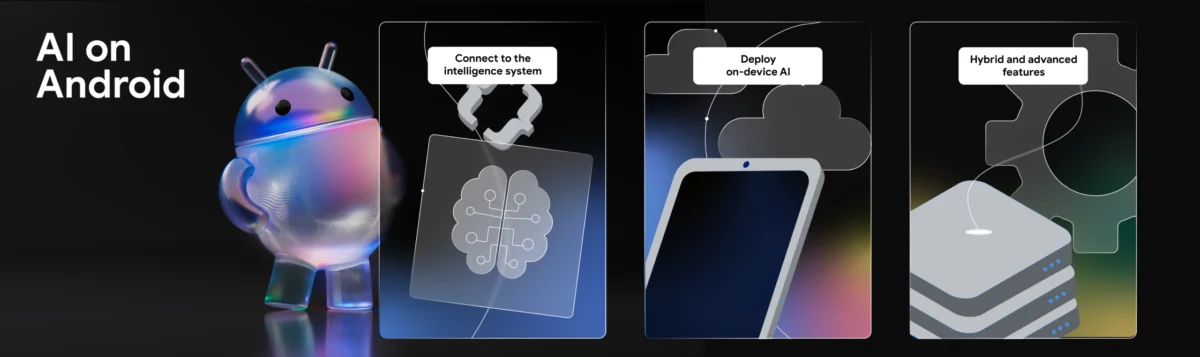
- AppFunctions (Android MCP): A new platform API and Jetpack library that allows developers to expose their app’s capabilities to the Android system, enabling intelligent agents to trigger specific functions without requiring the user to open the app manually.
- Gemini Nano 4: The next generation of Google’s on-device small language model (SLM), offering higher performance and lower latency for privacy-sensitive tasks.
- Hybrid Inference: A sophisticated approach that dynamically balances local, on-device compute with cloud-based intelligence, ensuring that apps remain functional even without a stable internet connection.
- LiteRT-LM: A framework for developers to deploy their own fine-tuned SLMs, offering unparalleled customization for niche business use cases.
Chronology of the Shift
The transition to an intelligence system did not happen overnight. The path to Google I/O 2026 has been marked by a deliberate series of technological milestones:
- 2023–2024 (The Foundation): Google began integrating AI-powered features like "Magic Compose" and basic generative AI search into the Android ecosystem, testing user appetite for proactive assistance.
- Early 2025 (The Model Expansion): The release of the Gemini series brought cloud-connected intelligence to the forefront. Simultaneously, ML Kit began receiving updates to handle more complex on-device ML workloads.
- April 2026 (The Gemma Milestone): The introduction of Gemma 4 set a new benchmark for open-source local agentic intelligence, proving that high-performance models could run effectively on mobile silicon.
- May 2026 (Google I/O): The official unveiling of the Android Intelligence System, transitioning the OS from a container for apps to an agentic platform.
Supporting Data: Why "Intelligence" Matters
The shift toward agentic systems is driven by a stark reality: users are suffering from "app fatigue." With millions of applications available, navigating through silos to perform simple tasks—such as booking a flight, updating a calendar, and notifying a contact—is cumbersome.
According to internal Google telemetry shared at I/O:
- Efficiency Gains: Early testing of AppFunctions shows that users can complete multi-app workflows up to 40% faster when handled by system-level agents compared to manual navigation.
- On-Device Latency: With the introduction of Gemini Nano 4, inference latency for common tasks (such as summarizing text or local intent recognition) has been reduced by 35% compared to the previous generation, thanks to optimized quantization and hardware acceleration.
- Hybrid Efficiency: Systems utilizing hybrid inference report a 60% reduction in server-side API costs for developers, as the majority of routine queries are resolved locally on the user’s device.
Official Responses: The Developer Perspective
Jingyu Shi, Staff Developer Relations Engineer at Google, emphasized that this move is a collaboration between the platform and the ecosystem. "We are putting apps at the center of the intelligence system," Shi stated. "The goal is not to replace the app experience, but to elevate it. When an app becomes ‘agent-ready,’ it moves from being a static icon on a home screen to a dynamic tool that the AI can call upon when the user needs it most."
Developers have expressed cautious optimism. During the What’s New in Android presentation, the consensus among early adopters was that the complexity of implementing AppFunctions is offset by the potential for higher user retention. By enabling "Deep Integration," apps that were previously buried in folders are now surfacing through voice commands or system-wide proactive suggestions.

Implications for the Future of Mobile
The transition to an intelligence system has profound implications for the industry.
1. The Death of the "Silo"
Historically, app developers have prioritized user engagement metrics—keeping users inside their app for as long as possible. In the age of agentic Android, the value lies in utility. Apps that provide clear, easy-to-access functions will be the ones that succeed, as they will be the "tools" that the OS selects to solve a user’s problem.
2. Privacy as a Competitive Advantage
By prioritizing on-device processing via Gemini Nano 4 and LiteRT-LM, Google is leaning into the privacy-first narrative. Users are increasingly wary of cloud-based AI processing their personal data. By allowing fine-tuned models to run locally, Google is providing a pathway for developers to build "Private-by-Design" applications that process sensitive data without ever leaving the device.
3. The New Standard for UI/UX
The UI/UX landscape is moving toward "headless" interactions. While traditional graphical user interfaces (GUIs) remain necessary, the rise of agentic systems means that many interactions will be driven by intent rather than touch. Developers must now consider how their app functions look from the perspective of an AI agent, ensuring that inputs and outputs are structured and discoverable.
Getting Started: A Call to Action
The infrastructure for this new era is already available for developers. The Android AI Hub serves as the central repository for:
- Code Snippets: Implementation guides for AppFunctions.
- Model Zoo: Access to the latest Gemini Nano 4 previews.
- Guidance Frameworks: Best practices for managing hybrid inference to optimize battery life and performance.
For those looking to lead the charge, Google’s Early Access Program for AppFunctions is currently open. Participating in this program allows developers to work directly with the Android engineering team to ensure their apps are "agent-ready" before the wider public rollout.
As we look toward the remainder of 2026 and into 2027, the line between "an app" and "the system" will continue to blur. The developers who thrive in this environment will be those who stop building apps as isolated destinations and start building them as modular components of a larger, intelligent ecosystem.
Google I/O 2026 was not just an update; it was a manifesto. Android is evolving, and it is inviting every developer to help define the next generation of computing. Whether you are a solo indie developer or part of a global enterprise, the tools are ready. The only question remains: what will you build?
For more information, visit the Android AI Developer Hub and review the AI on Android at Google I/O 2026 playlist.