The Evolution of Android: How Google is Transforming Mobile into an Intelligence System
By [Your Name/Journalistic Staff]
The landscape of mobile computing underwent a seismic shift at Google I/O 2026. For years, Android has been defined as an operating system—a platform for launching apps and managing hardware resources. However, this year’s developer conference signaled a definitive pivot. Google is no longer just building an operating system; it is architecting an "intelligence system." This transformation aims to place artificial intelligence at the very core of the user experience, fundamentally changing how developers interact with the platform and how users interact with their devices.
1. Main Facts: The Paradigm Shift
The core takeaway from Google I/O 2026 is the democratization of agentic AI. Google is moving away from passive app environments toward a proactive, intent-driven ecosystem.
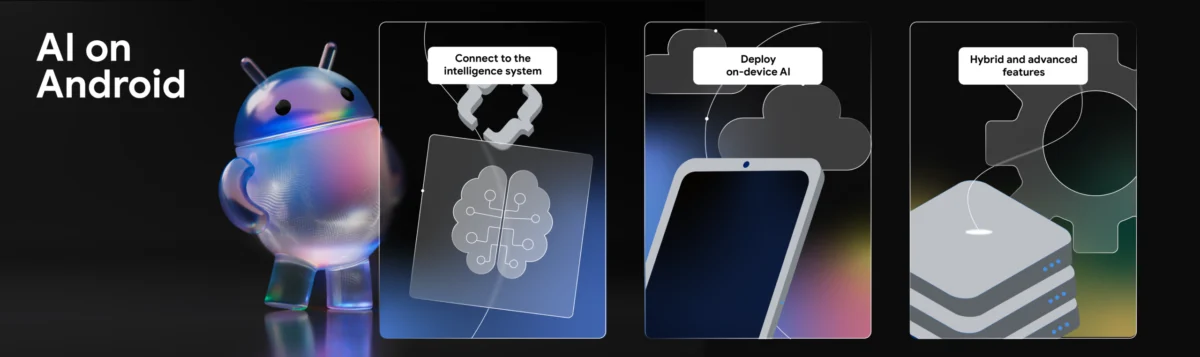
The primary vehicle for this change is the integration of "agentic" capabilities directly into the Android framework. Rather than forcing users to switch between siloed applications, the new Android intelligence system allows AI agents—most notably Gemini—to navigate apps on the user’s behalf. By leveraging new platform APIs, developers can expose their app’s functionality to the system, effectively turning their software into a modular component of a larger, AI-driven assistant.
Key technical pillars introduced during the event include:
- AppFunctions (Android MCP): A framework that allows developers to surface app-specific tasks to system-level AI.
- Gemini Nano 4: The next iteration of Google’s on-device foundation model, designed for high-performance, low-latency local execution.
- Hybrid Inference: A sophisticated architecture that allows apps to intelligently balance workloads between on-device processing and cloud-based resources.
2. Chronology: The Road to Agentic Android
The transition did not happen overnight. It is the culmination of a multi-year strategy to bridge the gap between heavy cloud-based AI and hardware-constrained mobile devices.
- Pre-2025: Android focused on standard ML Kit implementation and cloud-based AI APIs, requiring developers to manually integrate AI features.
- Early 2026 (April): The release of Gemma 4 established a new benchmark for open-model local agentic intelligence, signaling that Google was preparing to move processing power away from the cloud.
- May 2026 (Google I/O): The official unveiling of the Android Intelligence System. This event marked the transition from "AI-enabled apps" to "App-powered Intelligence."
- Post-I/O 2026: Google has initiated an Early Access Program for developers, signaling that the migration to AppFunctions and the adoption of the new Jetpack libraries is the immediate priority for the Android developer community.
3. Supporting Data and Technical Architecture
To understand the technical weight of this shift, one must look at the data handling and API structure. The new AppFunctions (Android MCP) represents a standardized way for developers to map their internal functionality to the system. By using these APIs, developers provide a "map" of their app’s capabilities, which Gemini uses to trigger tasks—such as sending a message, booking a ride, or updating a document—without the user needing to manually open the app interface.
Gemini Nano 4 and Performance
The hardware requirements for modern AI are rigorous. The new Gemini Nano 4 preview, accessible through the AIcore developer preview, is optimized specifically for mobile NPU (Neural Processing Unit) architecture. Unlike previous iterations, Nano 4 is built for reliability.
Developers are now utilizing ML Kit GenAI APIs, which have been overhauled to support more robust production deployments. For those needing extreme customization, the LiteRT-LM (formerly TensorFlow Lite) allows for "Bring Your Own Model" (BYOM) capabilities. This is critical for enterprises that require fine-tuned small language models (SLMs) that operate entirely offline, ensuring user privacy and zero-latency performance.
4. Official Responses and Industry Perspectives
Jingyu Shi, Staff Developer Relations Engineer at Google, emphasized that the goal is not to replace the app experience but to "supercharge" it. "We are moving from a world where users hunt for apps to a world where apps are discovered and utilized by the system exactly when needed," Shi stated.

Google’s position is clear: the success of Android in the coming decade depends on its ability to act as a proactive assistant. The company has launched an extensive suite of documentation, code snippets, and sample projects on the Android AI Hub.
Developers have reacted with a mix of excitement and caution. While the ability to integrate with the system’s AI agent is a massive potential driver for user engagement, it also requires a significant refactoring of existing codebases to expose "functions" in a secure, discoverable way. To address this, Google has launched an Early Access Program, inviting developers to collaborate directly with the Android engineering team to refine these integrations before the broader public rollout.
5. Implications: What This Means for the Future
The implications of an intelligence-based OS are profound for both the tech industry and the end user.
For Developers
The role of an Android developer is evolving. Software engineering for Android will increasingly involve "function-calling" optimization. Developers must now think about how their app looks to an AI agent. If an app’s functions are not clearly defined, it will become invisible to the intelligence system, effectively losing its relevance in an agent-first world. The focus is shifting from "UI-first" design to "API-first" design.
For Privacy and Security
Moving AI on-device via Gemini Nano 4 is a direct response to growing privacy concerns. By running intelligence locally, sensitive user data—such as financial transactions or personal communications—never needs to leave the handset. Hybrid inference further bolsters this by keeping personal context on-device while offloading complex, generalized tasks to the cloud.
For the Consumer
The end user stands to benefit from a vastly more cohesive digital life. The friction of multitasking is expected to decrease significantly. When the OS understands the intent behind a command, the "fragmentation" of Android—where every app feels like a separate island—begins to disappear. The phone becomes a unified tool where the underlying apps act as the engine, and the Intelligence System acts as the driver.
Looking Ahead
The path forward is defined by the AI on Android at Google I/O 2026 playlist, a collection of resources designed to guide developers through the transition. As we move into the latter half of 2026, the industry will watch closely to see which developers are the first to successfully integrate their products into the Android Intelligence System.
The transition is more than a software update; it is a fundamental redesign of the mobile value proposition. By betting on agentic intelligence, Google is positioning Android to remain the most powerful and flexible platform in the AI era, forcing competitors to scramble to define their own answer to the "intelligence system" paradigm.
As Jingyu Shi noted, "We are excited to see what you build." For developers, the message is simple: the intelligence system is here, and the time to start building for the next decade of Android is today.