The Future of Spatial Computing: Google Accelerates Android XR Ecosystem with Major SDK Upgrades and Developer Support
15 June 2026
The boundaries between the digital and physical worlds are becoming increasingly porous. As the Augmented World Expo (AWE) kicks off this week, Google has signaled a massive expansion of its spatial computing strategy, rolling out a suite of powerful updates to the Android XR platform. With the Samsung Galaxy XR already in the hands of consumers, the tech giant is moving aggressively to ensure that developers have the tools, engine support, and hardware access necessary to define the next generation of computing.
Main Facts: The New Frontier of Android XR
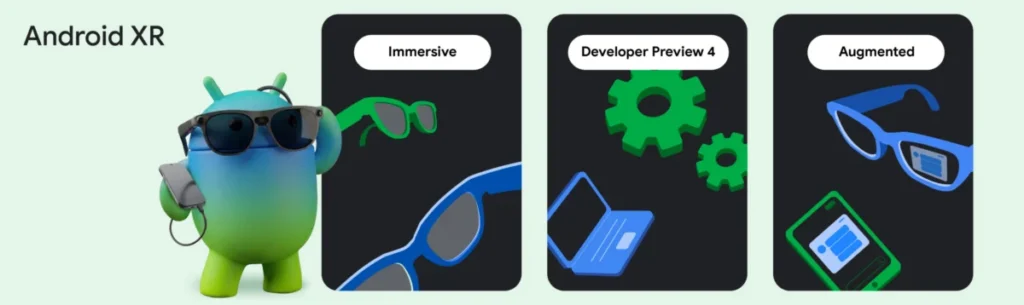
The latest updates from Google, spearheaded by Group Product Manager Stevan Silva and Developer Relations Engineer Vinny DaSilva, represent a pivotal shift in how applications are built for extended reality (XR). The headline news is the release of Developer Preview 4 of the Android XR SDK, which provides a comprehensive toolkit for designing, building, and testing immersive and augmented experiences directly from a standard laptop.
Key features of this update include:
- Streamlined Prototyping: A robust emulator within Android Studio, allowing developers to iterate on code and test complex interactions without the immediate need for physical headsets.
- Jetpack Projected Library: A sophisticated framework that enables mobile developers to "project" existing app experiences onto intelligent eyewear, complete with a new Device Availability API.
- Engine Expansion: Official support for Unreal Engine and Godot, joining the existing Unity integration to provide a multi-engine ecosystem for XR developers.
- The Android XR Engine Hub: A new Windows-based desktop tool that facilitates real-time testing within engine viewports, significantly shortening the development lifecycle.
Chronology: A Roadmap to Immersive Computing
The rapid evolution of Android XR has been a calculated, multi-stage rollout designed to harmonize the mobile ecosystem with the complexities of spatial hardware.
- Early 2026: Initial infrastructure for Android XR is laid, focusing on core APIs and basic ARCore integration.
- Google I/O 2026: Google showcases the vision for a unified XR ecosystem, emphasizing the compatibility of mobile applications with wearable displays.
- June 2026 (AWE Week): The release of Developer Preview 4 marks the transition from "experimental" to "developer-ready," providing the necessary libraries to target both immersive (VR-style) and augmented (AR-style) use cases.
- Ongoing: The roll-out of the Android XR Developer Catalyst Program, aimed at providing pre-release hardware to creators to seed the Google Play store with high-quality spatial content.
Supporting Data: Enhancing the Developer Workflow
Building for XR is notoriously resource-intensive, often requiring specialized hardware and long feedback loops. Google’s latest data and tooling aim to mitigate these barriers.
The Shift to "Projected" Experiences
Google is betting heavily on the idea that users don’t want to abandon their favorite mobile apps when they put on smart glasses. The Jetpack Projected library is the engine of this philosophy. By leveraging standard Android Lifecycle states, apps can now detect when a user is wearing glasses and adjust their UI accordingly.
Furthermore, the introduction of Jetpack Compose Glimmer is a direct response to the specific constraints of optical see-through displays. By optimizing for text legibility and touchpad-driven navigation, Google is providing a design language that ensures mobile-to-XR transitions are not just functional, but comfortable for the end user.
Precision and Perception
For developers moving beyond 2D projections into fully immersive spaces, the update brings a "Kotlin-first" architectural upgrade to perception libraries. Most notably, the integration of the Geospatial API for wired XR glasses—powered by Google’s Visual Positioning System (VPS)—allows for high-precision anchoring of digital assets to real-world coordinates. This capability is expected to be a game-changer for location-based services, from interactive museum guides to city-wide navigation overlays.
Official Responses: A Collaborative Ecosystem
The strategy behind Android XR is explicitly collaborative. By inviting the developers of engines like Unreal and Godot into the fold, Google is avoiding the "walled garden" approach that has historically fragmented the XR market.

"We want you to build using the ecosystems and workflows you already know best," noted Silva and DaSilva in their recent developer blog. This sentiment is echoed by the inclusion of companies like NAVER Papago, which is already demonstrating how language translation tools can be seamlessly moved from a smartphone screen to a persistent AR overlay.
The launch of the Android XR Developer Catalyst Program serves as the company’s official outreach arm. By providing pre-release display glasses and wired XR hardware to accepted applicants, Google is effectively subsidizing the initial risk for independent developers and small studios. This program is not merely about hardware access; it includes dedicated support forums and launch guidance to ensure that when a developer finishes their build, they have a clear pathway to publishing on Google Play.
Implications: The Future of the App Economy
The implications of these updates are profound, signaling a transition from "the smartphone era" to "the spatial era."
Lowering the Barrier to Entry
By emphasizing the Android Studio emulator, Google is dismantling the "hardware gatekeeper" model. Previously, developers needed expensive headsets just to test basic UI interactions. By enabling high-fidelity emulation, Google is democratizing XR development, allowing students, hobbyists, and enterprise teams to enter the market with little more than a laptop.
The Standardization of "Intelligent Eyewear"
The push for Jetpack Projected suggests that Google views "intelligent eyewear" as the natural successor to the smartphone. By treating glasses as an extension of the phone—rather than a replacement for it—Google is encouraging a "companion" ecosystem. This strategy minimizes the friction for users; they can continue using their phone for heavy computation while the glasses handle heads-up displays, notifications, and spatial navigation.
The Competitive Landscape
With the Samsung Galaxy XR already available, the ecosystem is no longer theoretical. The availability of these tools means that the next six months will likely see a surge of "XR-enabled" apps appearing on the Play Store. This creates a feedback loop: as more apps gain XR functionality, the value proposition of owning a pair of smart glasses increases, which in turn incentivizes more developers to build for the platform.
Challenges Ahead
Despite the optimism, significant hurdles remain. The industry must solve the "ergonomic threshold"—the point at which wearing glasses becomes as natural as wearing a watch or carrying a phone. Furthermore, while the software tools are maturing, the cross-engine compatibility (Unity vs. Unreal vs. Godot) must be rigorously maintained to prevent a "build once, debug everywhere" nightmare.
Conclusion
As the industry gathers at AWE, the message from Google is clear: the Android XR platform is open, expanding, and actively seeking talent. Whether through the refined capabilities of Developer Preview 4, the seamless integration of mobile apps via Jetpack Projected, or the direct support offered by the Catalyst Program, the infrastructure for spatial computing is finally falling into place.
For developers, the time to pivot is now. The transition to spatial computing is not merely an incremental update to the mobile experience; it is a fundamental shift in how we interact with information. With the tools now available in Android Studio, the only limit is the creative vision of the developer community. As Google puts it: "The ecosystem is growing rapidly, and the tools are ready for you to explore. We can’t wait to see what you build."