The Linux Handheld Renaissance: Beyond Gaming and Into Open Computing
While the mainstream tech consciousness has been captured by the "gaming handheld" arms race—dominated by the likes of Valve’s Steam Deck, the Lenovo Legion Go, and the ASUS ROG Ally—a quieter, arguably more significant movement has been brewing. Away from the high-wattage gaming performance and aggressive marketing budgets of Silicon Valley’s giants, a new ecosystem of open-hardware handhelds is emerging.
These devices are not designed to squeeze out the highest frame rates in AAA titles. Instead, they are built for developers, tinkers, privacy advocates, and Linux enthusiasts who view the handheld form factor as a canvas for portable, unrestricted computing. From modular kits to fully assembled credit-card-sized Linux terminals, this segment represents a shift toward repairability, transparency, and the democratization of portable hardware.
The Shift Toward Open Hardware
The current market for "enthusiast handhelds" is defined by a philosophical departure from the "black box" model. When you purchase a device from a mainstream manufacturer, you are typically locked into a proprietary ecosystem with limited hardware repairability.
In contrast, the devices highlighted here prioritize open schematics, swappable components, and user-accessible kernels. This trend is fueled by the maturation of Single Board Computers (SBCs) like the Raspberry Pi Compute Module series and specialized industrial chips like the NXP i.MX family. These devices turn the handheld into a "Linux-first" experience, where the user has root access, total control over the software stack, and the ability to modify the hardware to suit specific workflows.

A Chronology of the Open Handheld Movement
The lineage of these devices can be traced back to the early days of hobbyist electronics, but the acceleration we are seeing today began in earnest around 2023.
- 2023: M5Stack introduces the original Cardputer, signaling a demand for tiny, keyboard-equipped devices that bridge the gap between IoT controllers and handheld computers.
- Early 2024: The announcement of the Orange Pi Neo, in partnership with Manjaro Linux, signaled that high-performance open-hardware handhelds were finally targeting the "prosumer" market.
- Mid-2024 to 2026: A wave of specialized hardware hits the scene. Projects like the piBrick PocketCM5 and the Pilet Kickstarter demonstrate that independent creators can successfully crowd-fund sophisticated, modular devices that leverage the Raspberry Pi ecosystem.
- Present Day: The market has branched into two distinct streams: "Bring Your Own Board" (BYOB) kits for the extreme DIY enthusiast, and pre-assembled professional units for those who want a reliable, open-source daily driver out of the box.
The Vanguard: Eight Notable Handhelds
1. CardputerZero: The Credit-Card Computer
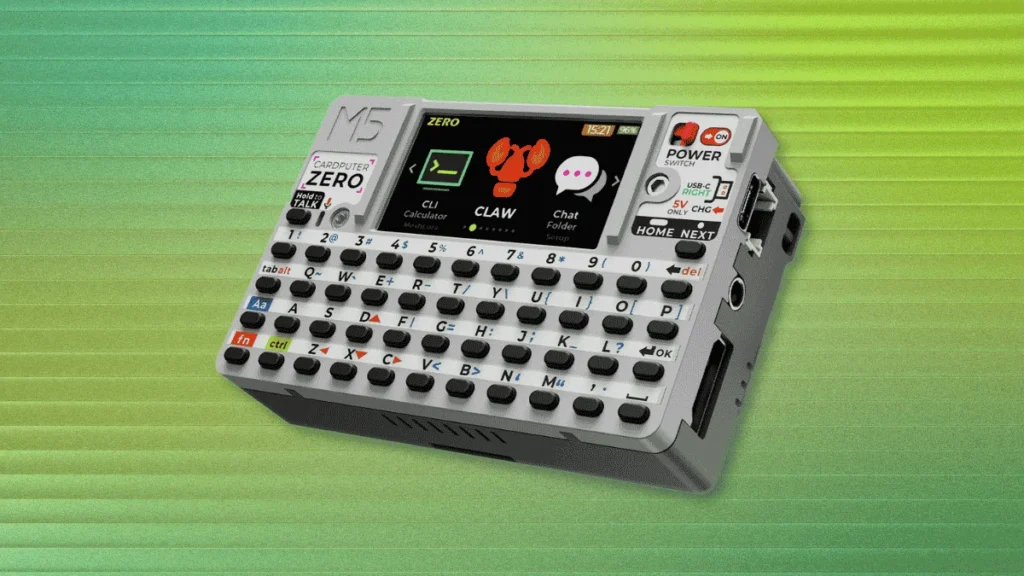
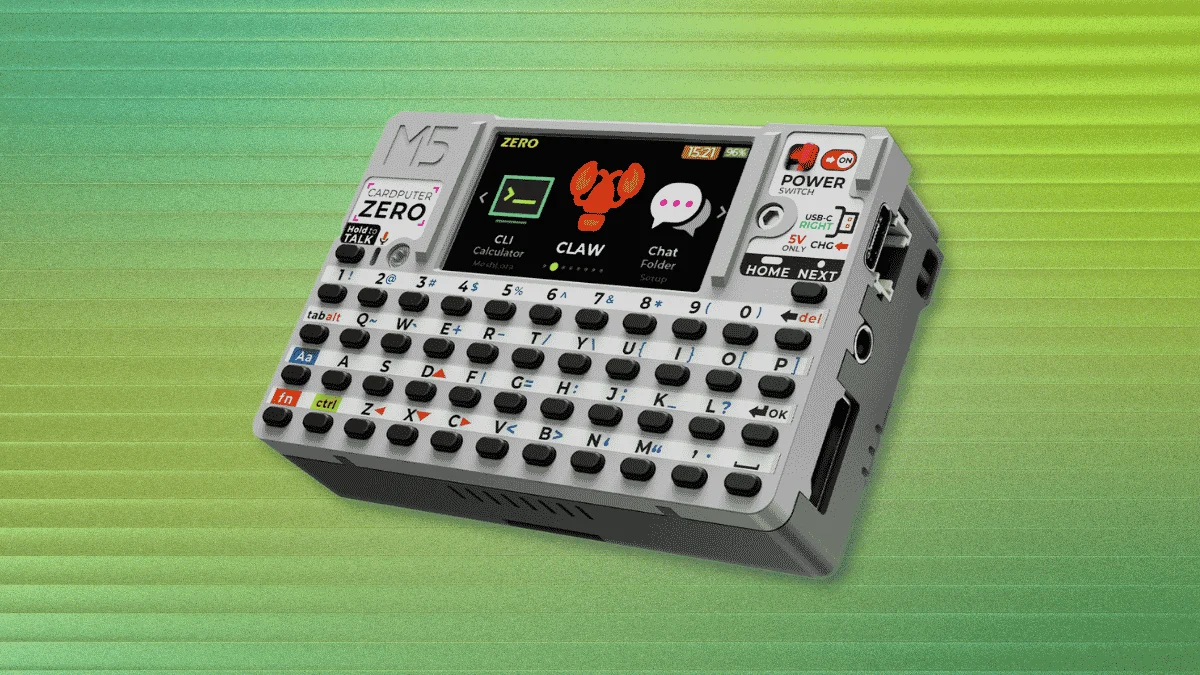
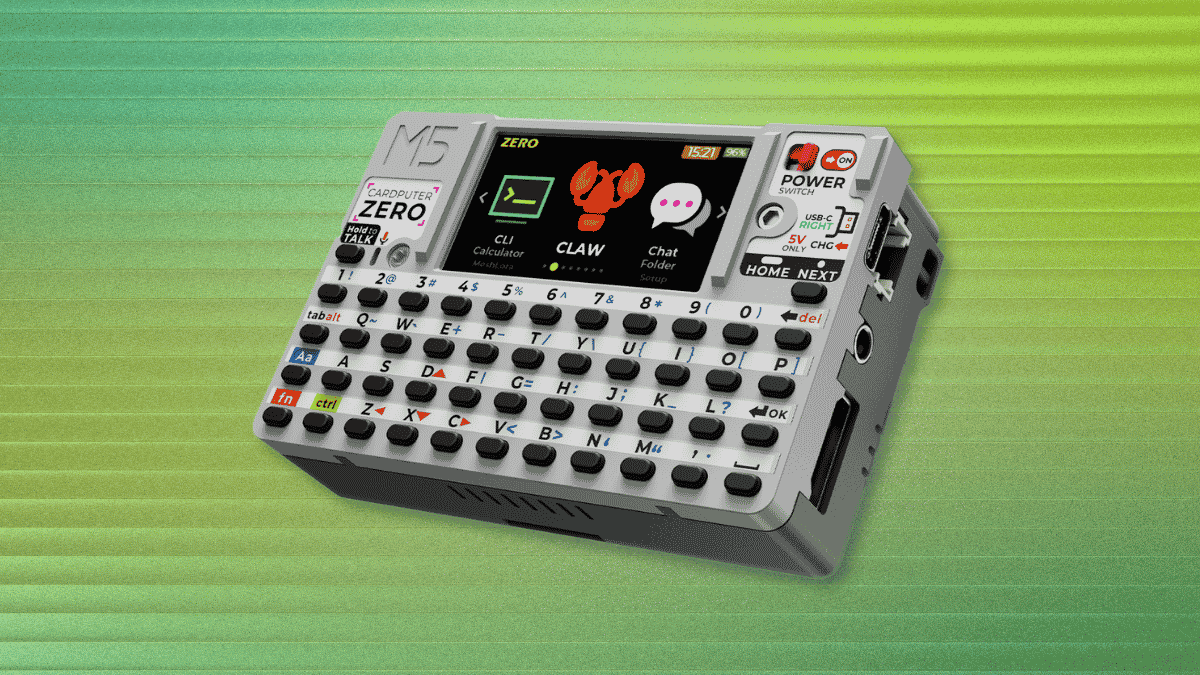
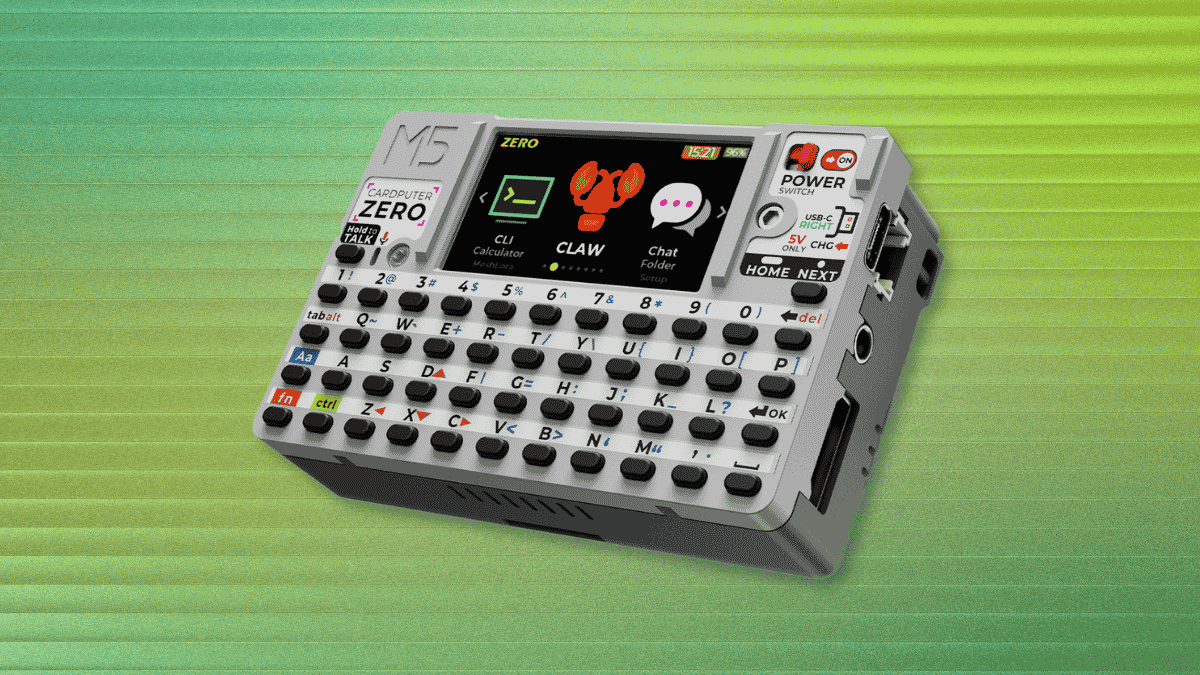
M5Stack’s evolution of the Cardputer line culminates in the CardputerZero. By swapping the ESP32 architecture for a Raspberry Pi Compute Module Zero, this device transitions from a microcontroller-based toy to a genuine, Linux-running computer. Its 1.9-inch display and 46-key keyboard, packed into a shell no larger than a stack of credit cards, make it the ultimate "pocket terminal." Whether in the standard model (with camera and IMU sensors) or the stripped-down Lite version, it remains a testament to the power of compact engineering.
2. Mecha Comet: The Modular Powerhouse
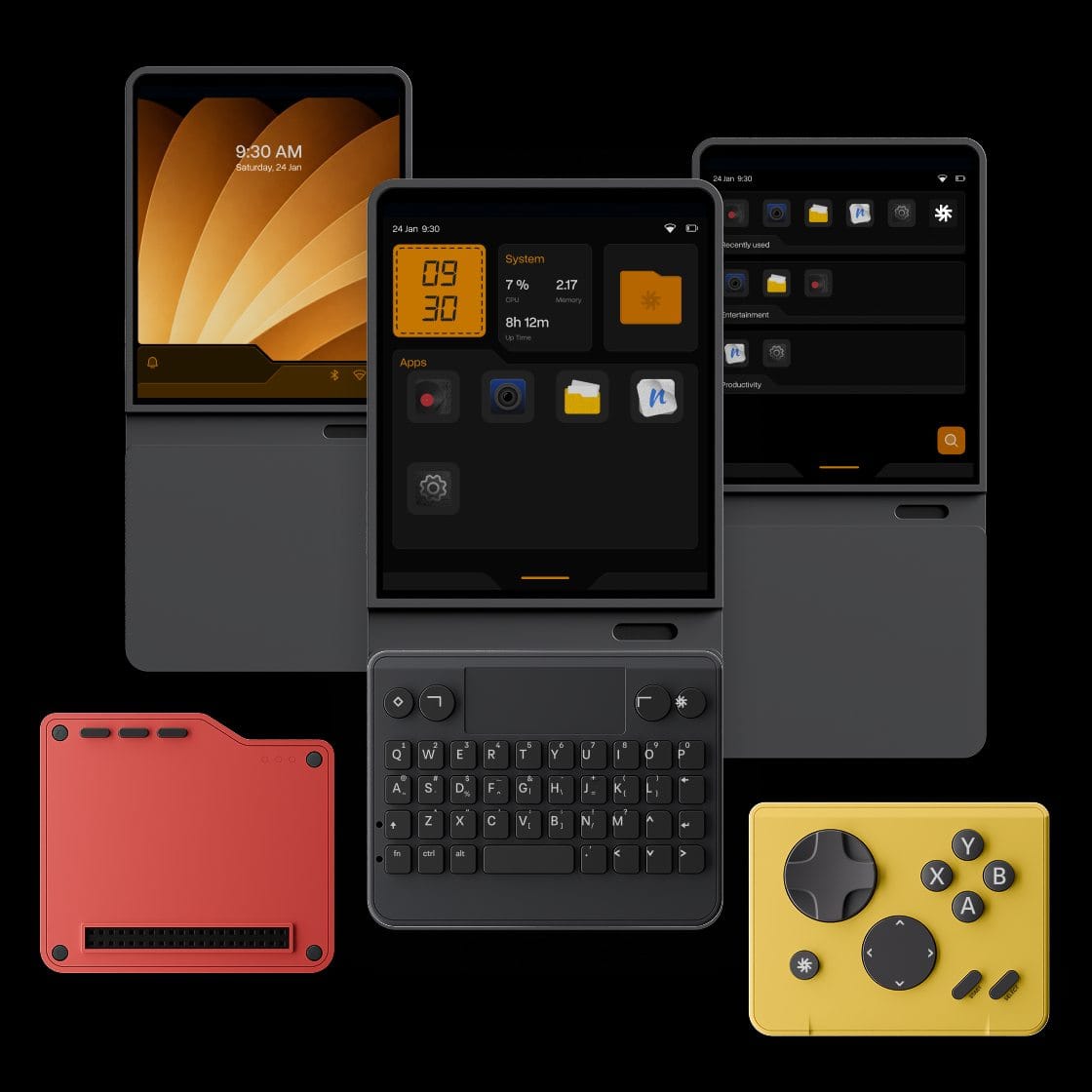
The Mecha Comet challenges the idea that a handheld must have a fixed purpose. With its 40-pin magnetic connector, the Comet can transform from a standard Linux handheld into a GPIO breakout board or a specialized data-entry device in seconds. Running Mechanix—a custom Fedora-based distro—and utilizing NXP’s i.MX 8M Plus or i.MX 95 processors, it offers a robust performance tier that feels more like a mobile workstation than a hobbyist project.
3. Orange Pi Neo: The High-Performance Hopeful
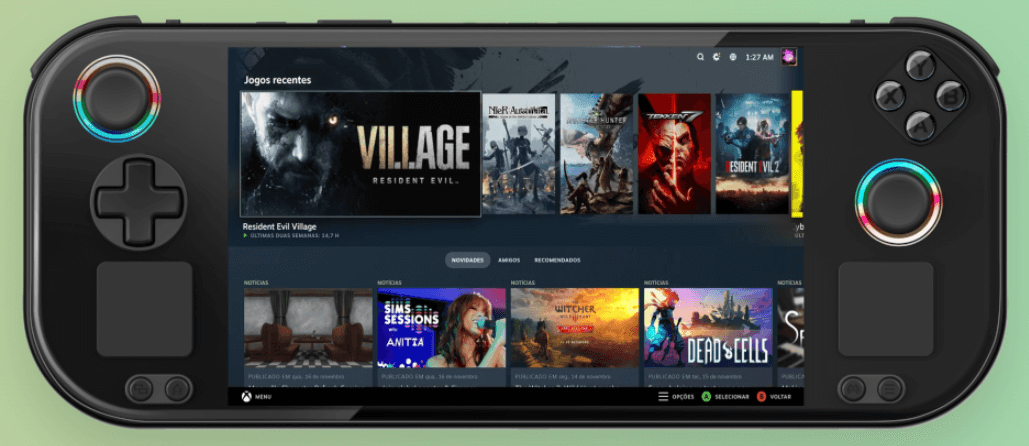
Though currently facing delays—partially due to the volatility in the global semiconductor and memory markets—the Orange Pi Neo remains a critical entry in this list. Developed alongside the Manjaro Linux team, the device promises a Ryzen 7 7840U chip and a 120Hz 7-inch display. Its focus on providing a premium, Linux-native alternative to the Steam Deck makes it a project the community continues to watch with bated breath.

4. PocketTerm35: The Terminal Enthusiast’s Dream
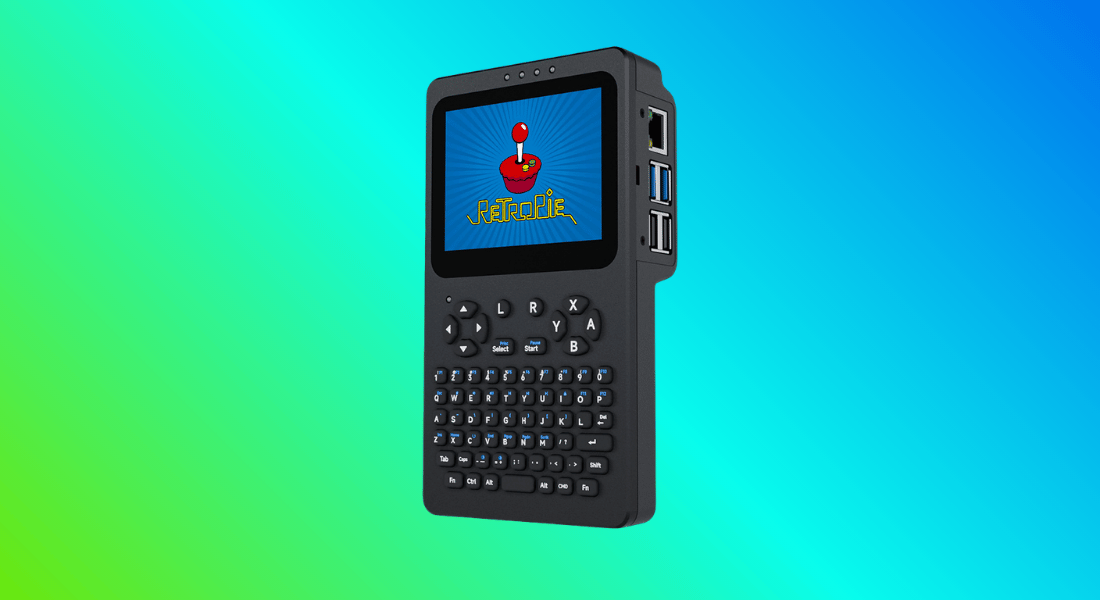
Waveshare’s PocketTerm35 is a masterclass in clean architecture. By offloading keyboard and power management to a dedicated RP2040 microcontroller, the device allows the primary compute board (a Raspberry Pi 4B or 5) to focus entirely on running the Linux desktop. It is a no-nonsense, functional machine that caters to sysadmins who need to SSH into servers from the train or a park bench.
5. piBrick PocketCM5: A Masterpiece of Open Design
Indonesian maker Ahmad Amarullah has created what many consider the "gold standard" for DIY handhelds. The piBrick PocketCM5 uses a BlackBerry-style BBQ20 keyboard and a stunning 3.92-inch AMOLED screen. Because every aspect of the PCB and case is open-source, the community has been able to iterate on the design, ensuring that it remains the most transparent and modifiable device in the current landscape.
6. Pilet: Modular Versatility
The Pilet project, which saw explosive support on Kickstarter, highlights the challenges of modern hardware manufacturing. Despite a pivot from a built-in Raspberry Pi 5 to the CM5 module, the team behind Pilet has maintained momentum. Offering both a 5-inch console-style unit and a 7-inch tablet-style unit, Pilet’s use of KDE Plasma demonstrates that mobile Linux desktops have become surprisingly viable in a handheld form factor.
7. RootBoard: The Minimalist’s Tool
For those who prefer a "bare bones" approach, the RootBoard is a breath of fresh air. It provides the chassis, the screen, and the keyboard, but relies on the user to supply the brains—the Raspberry Pi Zero series. It is an honest piece of hardware, stripping away the bloat and leaving the user with a pure terminal environment that respects the DIY spirit of the Raspberry Pi community.
8. MNT Pocket Reform: Professional-Grade Open Hardware
German firm MNT Research brings a level of industrial polish that is rare in the open-hardware space. The MNT Pocket Reform is a direct descendant of their highly regarded laptop series. With support for swappable CPU modules (including the RK3588 and Qualcomm QCS6490), a mechanical ortholinear keyboard, and a built-in optical trackball, it is designed for longevity. MNT’s commitment to open licenses ensures that this device can be repaired and upgraded for years, if not decades.
Implications for the Future of Personal Computing
The existence of these devices carries profound implications for the tech industry:
- Repairability as a Feature: These devices prove that consumers are hungry for hardware they can fix. The modularity of the MNT Pocket Reform and the BYOB kits from Waveshare demonstrate that "planned obsolescence" is not a requirement for profitability.
- Privacy and Software Control: In a world where mobile operating systems (Android/iOS) are increasingly restrictive, these Linux handhelds offer a safe haven. Users have full control over their kernel, their root filesystem, and the data they share.
- The Democratization of Innovation: Because these devices use standard SBCs, the barrier to entry for developing new hardware is lower than ever. A small team of engineers can design a custom PCB and rely on the existing Linux ecosystem to handle the heavy lifting, rather than building a proprietary OS from scratch.
Conclusion: A Diverse Ecosystem
The "Linux Handheld Renaissance" is not about competing with the performance of the Steam Deck. It is about reclaiming the spirit of the early personal computing era—an era where the user was the owner, the modifier, and the master of their machine.
While some of these projects face the inevitable hurdles of supply chain logistics and manufacturing delays, they represent a vital segment of the tech world. Whether you are a system administrator who needs a mobile terminal, a developer testing code on the go, or simply an enthusiast who believes in the right to repair, these eight devices prove that the future of the handheld is not just about gaming—it is about computing on your own terms.
As these devices continue to evolve, the distinction between "consumer" and "creator" will continue to blur, ushering in a new generation of users who demand that their hardware be as open and flexible as the software they run.