The Next Evolution of the Wrist: Unveiling Wear OS 7 and the Future of Intelligent Wearables
At the Google I/O 2026 developer conference, the company took a significant step forward in its vision for the Android ecosystem by officially unveiling Wear OS 7. Positioning the update as a bridge between high-performance battery management and advanced artificial intelligence, Google is looking to redefine how users interact with their wrists. For developers and consumers alike, the update promises a more proactive, intuitive, and efficient wearable experience.
Main Facts: Efficiency Meets Intelligence
The core of Wear OS 7 rests on two pillars: power optimization and AI-driven intelligence. Google has confirmed that the platform is built on Android 17, marking a shift toward deeper integration with the broader Android ecosystem.

For the average user, the most immediate benefit of the upgrade—transitioning from Wear OS 6—is a projected 10% improvement in battery life. In an era where smartwatches are expected to function as 24/7 health monitors, communication hubs, and payment devices, these marginal efficiency gains represent a critical leap in utility.
Beyond battery life, Wear OS 7 introduces Gemini Intelligence to select devices later this year. This integration aims to move the smartwatch from a reactive notification center to a proactive digital assistant capable of offering personalized, context-aware suggestions.

Chronology: From Concept to Canary
The development of Wear OS 7 has been a tightly orchestrated process designed to ensure stability for third-party developers.
- Early 2026: Google internal testing focuses on battery telemetry and AI integration.
- May 2026 (I/O Conference): Official announcement of Wear OS 7 and the launch of the Wear OS 7 Canary Emulator.
- Late 2026: Rollout of the platform to consumer devices, including the debut of Gemini Intelligence on flagship wearables.
The immediate availability of the Canary Emulator allows developers to stress-test their existing applications against Android 17 APIs. This early-access phase is designed to minimize friction for the app ecosystem, ensuring that by the time the OS hits consumer wrists, the app library is already optimized for new features like "Live Updates" and "AppFunctions."

Supporting Data: The Technical Underpinnings
The architectural changes in Wear OS 7 are substantial, focusing on modularity and cross-platform consistency.
The Rise of Wear Widgets
Google is pivoting away from the proprietary "Tiles" format in favor of Wear Widgets. Powered by Jetpack Glance and the new RemoteCompose framework, these widgets are designed to harmonize the UI between mobile and watch. By supporting 2×1 and 2×2 layouts, developers can now reuse design logic from their Android phone apps, significantly reducing the engineering overhead required to maintain parity across device types.

Live Updates: Real-Time Intelligence
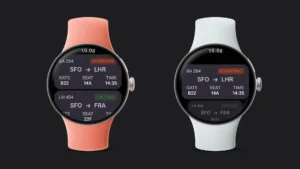
Borrowing a page from the successful mobile notification system, Wear OS 7 introduces Live Updates. This API allows apps to push real-time information—such as ride-sharing status, food delivery updates, or live scores—directly to the watch face without requiring the user to open a specific application. By bridging the gap between mobile notifications and watch-specific UI, Google is ensuring that the "glanceability" of the wearable remains its primary selling point.
Compose for Wear OS 1.6
The developer toolkit receives a massive injection of capability with version 1.6. Key technical highlights include:

- Navigation 3 Integration: A more idiomatic and flexible way to manage navigation flows.
- TransformingLazyColumn Enhancements: Improved list management with new snapping and padding modifiers, allowing for smoother scrolling experiences on circular screens.
- LocalAmbientModeManager: A new class that gives developers granular control over how an app behaves when the watch transitions into ambient (low-power) mode, ensuring that battery-draining high-refresh content is throttled appropriately.
Official Perspectives: Empowering the Developer
John Zoeller, Developer Relations Engineer at Google, emphasized that the platform’s success is inextricably linked to the ease with which developers can build "agentic" experiences.
"We recognize that watches are essential, all-day companions," Zoeller stated during the I/O keynote. "By streamlining our toolkits—such as Wear Compose and the new AppFunctions API—we are removing the technical barriers that keep developers from creating truly intelligent, task-oriented apps."

The company is also addressing the "resource-intensive" nature of building fitness apps from scratch. By introducing the Wear Workout Tracker, Google is providing a standardized framework for heart rate monitoring, media playback, and fitness logging. Early partnerships with industry leaders like ASICS Runkeeper demonstrate a clear move toward a "plug-and-play" model for developers, allowing them to focus on unique value propositions rather than the plumbing of sensor data.
Implications: The Shift Toward Agentic Experiences
The most profound implication of Wear OS 7 is the move toward "Agentic" computing. Through the AppFunctions API, apps are no longer just interfaces; they are services that an AI (like Gemini) can invoke on behalf of the user.

If a user says, "Start tracking my run," the system now has the capacity to bypass the manual navigation of the app’s home screen and directly trigger the workout module. This shift changes the fundamental design philosophy of wearable apps: developers must now consider not just how a user taps an icon, but how an AI agent might programmatically interact with their app’s functions.
The Ecosystem Consolidation
By introducing the Remote Output Switcher and per-app media auto-launch controls, Google is also tightening the integration between the phone and the watch. The ability to seamlessly switch audio output from a phone to a pair of earbuds via the watch interface signifies that Google views the watch as the "remote control" for the entire Android environment.

The Path Ahead
As we look toward the wider rollout in late 2026, the challenge for Google will be twofold: ensuring that legacy devices can handle the processing demands of these new APIs and convincing developers to adopt the new widget architecture.
However, with the introduction of the Canary Emulator and comprehensive documentation for WFF 5 (Watch Face Format version 5), the roadmap is clear. Google is building a future where the smartwatch is not merely a companion to the phone, but a standalone, intelligent hub capable of executing complex tasks through natural language and proactive automation.

For the developer community, the call to action is immediate: begin testing on the Canary Emulator, evaluate the potential of the AppFunctions API, and start planning the migration from traditional Tiles to the more flexible Wear Widgets. The era of the "smart" watch is being supplanted by the era of the "intelligent" watch, and Wear OS 7 is the engine driving that transition.