The State of the Web: Navigating the Latest CSS Evolutions and Browser Innovations
The digital landscape is shifting beneath our feet, and for front-end developers, the pace of change in CSS and web platform features has never been more relentless. Today, we delve into the latest edition of What !important (#18), a comprehensive roundup of the most significant advancements, experimental proposals, and practical implementation strategies that have emerged over the last fortnight. From the evolution of interaction design to the cutting edge of CSS syntax, the following analysis breaks down what these developments mean for your current projects.
The Main Facts: A New Era for UI Interactivity
The industry is currently witnessing a push toward smarter, more native-feeling web components. We have moved beyond simple visual styling into the territory of behavior and logic. The recent discourse surrounding tooltips and user intent highlights a fundamental truth: modern web development is no longer just about "how it looks," but "how it feels."
This period has been defined by three major pillars:
- The Rise of Interest Invokers: Moving away from custom JavaScript-heavy tooltip logic.
- Native Geolocation Handling: Simplifying the often cumbersome process of location-based permissions.
- Performance-Driven Syntax: Novel approaches to syntax highlighting and class selection that prioritize rendering efficiency.
Chronology of Developments
Over the past two weeks, the web development community—spearheaded by experts like Chris Coyier, Dave Rupert, Bramus, and Temani Afif—has published a flurry of insights.
- Mid-August: Discussion peaked around the "delayed-then-instant" tooltip pattern. Abhishek Jakhar pioneered the logic for preventing accidental triggers, while Chris Coyier followed up by applying the emerging Interest Invokers API to solve the problem natively.
- Late August: Attention shifted toward the
<geolocation>element, a major step forward in handling sensitive user permissions, alongside the debut of the MicroLighter syntax highlighter, which utilizes the browser’s native::highlight()API. - The Final Week: The focus turned to the future of CSS, with proposals for the "Class Prefix Selector" and the
named-feature()function, suggesting that the CSS specification is preparing to handle increasingly complex DOM structures with greater ease.
Supporting Data: Deep Dives into Implementation
The Tooltip Dilemma
The debate over tooltips serves as a microcosm for modern web UX. Abhishek Jakhar’s research suggests that tooltips should be delayed to prevent accidental triggers but should disappear instantly once the user has moved on. However, a critical technical nuance remains: if the hover-able region is too small, a delay can actually hurt the user experience. Chris Coyier’s implementation using interest-delay-start and interest-delay-end provides a robust, modern alternative. While currently limited to Chrome, this represents a significant shift toward offloading UI logic to the browser engine rather than the main thread.
The <geolocation> Element
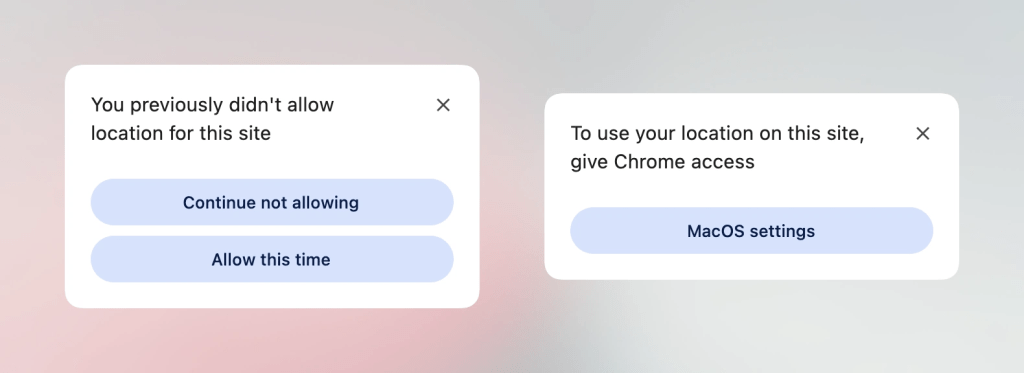
The Geolocation API has historically been one of the most frustrating aspects of the web platform due to its reliance on external hardware and the volatility of permission statuses. The new <geolocation> element attempts to bridge this gap. While it introduces specific styling restrictions, the ability to layer this alongside the legacy Geolocation API—as detailed by the team at Piccalilli—ensures that developers can implement progressive enhancement today without sacrificing backward compatibility.
Syntax Highlighting with ::highlight()
Dave Rupert’s MicroLighter is a masterclass in modern web performance. By leveraging the Custom Highlight API, it moves the heavy lifting of syntax coloring away from the DOM and into the rendering layer. This is a game-changer for documentation sites and code-heavy applications where traditional syntax highlighters often introduce significant layout shift and memory overhead.
CSS Grid and Custom Properties
Temani Afif’s recent work on injecting CSS grid information into custom properties allows for a level of design responsiveness that was previously impossible. By capturing the number of rows, columns, and specific cell coordinates, developers can now build dynamic layouts that react to their own structural geometry. This "hover proximity" technique is particularly useful for complex data visualizations and interactive dashboards.
Official Responses and Expert Consensus
The community is currently divided on the implementation of "Dark Mode" toggles. Lea Verou advocates for a two-state system, arguing for simplicity. In contrast, Bramus makes a compelling case for a tri-state system, which accounts for the "system default" setting. The emerging consensus, supported by voices like Vale.Rocks, suggests a middle ground: an "auto-until-overridden" approach. This allows the user to benefit from system-wide preferences while providing a clear manual override when necessary.
Furthermore, the introduction of the Class Prefix Selector (.something-*) has been met with widespread enthusiasm. By providing a cleaner, more performant alternative to legacy attribute selectors like [class^="something-"], this proposal promises to reduce the complexity of CSS selectors significantly. Geoff Graham’s analysis highlights that while it currently lacks browser support, the performance benefits are so profound that its adoption is likely to be fast-tracked.
Implications: The Road Ahead
As we transition into the autumn season, the implications for the web platform are clear:
- The Death of Over-Engineering: With native browser support for complex interactions like interest invokers and syntax highlighting, the reliance on third-party JavaScript libraries will continue to decline. This results in faster page loads and reduced technical debt.
- Progressive Enhancement as a Default: The adoption of features like
flex-wrap: balance(as highlighted by Ahmad Shadeed) mirrors the success oftext-wrap: balance. These features are designed to enhance the visual quality of interfaces without breaking older browsers. - Granular Control: The introduction of
named-feature()within@supportssignifies a move toward a more intelligent CSS. We are finally able to query the "unqueryable," allowing developers to push the boundaries of what is possible within a browser’s layout engine.
Final Thoughts
The web platform is currently undergoing a renaissance. As we move away from hacky workarounds and toward standardized, high-performance primitives, the barrier to entry for building high-quality, complex user interfaces is being lowered. Whether you are a fan of the new flex-wrap capabilities or are eagerly awaiting the class prefix selector, one thing is certain: the work done in the last two weeks has provided a glimpse into a more robust and elegant future for web development.
Stay tuned to What !important for the next edition, where we will continue to monitor the browser support charts and the evolving standards that define the modern web. The transition from "the web as a document viewer" to "the web as an application platform" is nearly complete, and it is an exhilarating time to be a developer.