The Unseen Pulse: Cristiano Monteiro’s DIY Time Server Achieves Nanosecond Precision, Reshaping Access to Cutting-Edge Synchronization
Main Facts
In an era where the digital pulse dictates the rhythm of global commerce, scientific discovery, and industrial automation, the precision of timekeeping has become an increasingly critical, albeit often unseen, frontier. Spearheading a remarkable advancement in this domain, engineer Cristiano Monteiro has unveiled an enhanced version of his satellite-backed time server, a groundbreaking DIY project capable of achieving time synchronization down to the nanosecond level. This achievement significantly surpasses the capabilities of conventional Network Time Protocol (NTP) servers, which typically offer accuracy within milliseconds, pushing the boundaries of what is attainable for the average maker and researcher.
Monteiro’s latest creation leverages the sophisticated Precision Time Protocol (PTP), a standard (IEEE 1588) designed for highly demanding applications where even microscopic discrepancies in timing can have profound consequences. Unlike its widely adopted predecessor, NTP, PTP relies on hardware-level timestamping, a feature that until recently was largely confined to expensive commercial solutions and specialized industrial equipment. The democratization of this technology has been made possible, in part, by the emergence of affordable, PTP-capable microcontrollers, notably Espressif’s ESP32-P4 application processor, which Monteiro has expertly integrated into his design.
At the heart of this ultra-precise clock lies a navigation-grade Global Navigation Satellite System (GNSS) receiver, providing an unimpeachable time reference derived from atomic clocks orbiting Earth. This robust combination of a highly accurate external source and hardware-accelerated synchronization protocol positions Monteiro’s server as a formidable tool for fields ranging from high-frequency financial trading and advanced scientific research to complex robotic assembly lines and critical infrastructure management. While the vast majority of users may never require such extreme temporal fidelity, the project not only showcases the incredible potential of open-source hardware and software but also drastically reduces the financial barrier to entry for accessing nanosecond-level timekeeping.
Chronology: The Evolution of Precision Timekeeping and Monteiro’s Journey
The quest for accurate time synchronization is as old as interconnected systems themselves, evolving from simple clock adjustments to the complex protocols we rely on today.
The Dawn of Network Time: NTP’s Enduring Legacy
For decades, the Network Time Protocol (NTP) has been the undisputed workhorse of digital time synchronization. Developed by David L. Mills at the University of Delaware in the 1980s, NTP provides a robust, scalable, and highly reliable method for synchronizing computer clocks across a network. It operates by periodically querying a hierarchy of time servers (strata), with Stratum 0 servers being atomic clocks or GPS receivers, and subsequent strata distributing time downwards. NTP’s genius lies in its algorithms that account for network latency and jitter, allowing systems to typically achieve synchronization within tens of milliseconds relative to a primary time source. For most internet-connected devices, corporate networks, and general computing tasks like email, web browsing, and data logging, this level of accuracy is more than sufficient.
Cristiano Monteiro himself recognized the utility and accessibility of NTP, demonstrating his expertise in 2021 with the release of his original portable GPS time server. Built around the ubiquitous ESP8266 microcontroller, that project embodied the maker spirit, providing an affordable and practical solution for home users and small businesses to establish their own stratum 1 NTP server. It was a testament to the power of open-source hardware and software in democratizing essential technological infrastructure.
The Microsecond Frontier: When NTP Isn’t Enough
However, as technology advanced and the demands of certain applications grew exponentially, the limitations of NTP became apparent. While 10 milliseconds might seem incredibly fast, in the context of modern high-speed data acquisition, industrial control, or financial transactions, it can represent an eternity. The fundamental challenge with NTP’s software-based approach is its susceptibility to various forms of latency and jitter introduced by operating system scheduling, network stack processing, and varying network loads. These factors inherently limit its accuracy to the millisecond range.
The Rise of Nanosecond Precision: Introducing PTP (IEEE 1588)
The need for far greater temporal precision led to the development of the Precision Time Protocol (PTP), standardized as IEEE 1588. PTP was specifically engineered to overcome the limitations of NTP by employing hardware-assisted timestamping. This critical difference means that the timestamps are generated and captured directly by the network interface controller (NIC) or Ethernet MAC, bypassing the unpredictable delays introduced by software processing. This hardware-level interaction allows PTP to achieve synchronization accuracy down to the nanosecond, a thousand-fold improvement over NTP.
PTP operates on a master-slave clock hierarchy within a local area network (LAN), where a "grandmaster" clock (typically disciplined by an atomic clock or GNSS receiver) distributes highly accurate time to "slave" clocks. The protocol incorporates mechanisms like "transparent clocks" and "boundary clocks" to compensate for delays introduced by network switches and routers, ensuring that the time synchronization messages are propagated with minimal error.
The Hardware Hurdle and the ESP32-P4 Breakthrough
For years, the adoption of PTP in DIY and smaller-scale industrial applications was hampered by a significant barrier: the cost and availability of hardware with integrated PTP support. Specialized Ethernet controllers and industrial-grade PTP solutions were prohibitively expensive, effectively limiting nanosecond-level synchronization to large enterprises and highly funded research institutions.
This landscape began to shift dramatically with the release of Espressif’s ESP32-P4 application processor. Known for their popular ESP32 and ESP8266 Wi-Fi/Bluetooth microcontrollers, Espressif’s P4 series was designed with a focus on high-performance industrial and IoT applications. Crucially, the ESP32-P4 includes hardware-level support for PTP in its Ethernet controller. This integration represented a watershed moment, making PTP functionality accessible and affordable for the maker community, small and medium-sized enterprises, and independent researchers.
Monteiro’s Vision Realized: From Concept to DIY PTP Server
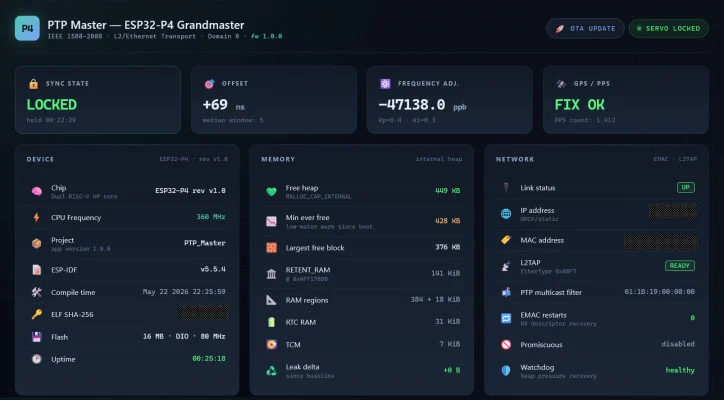
Recognizing the transformative potential of the ESP32-P4, Cristiano Monteiro embarked on the ambitious project to build an enhanced satellite-backed time server. His journey involved meticulously integrating the new PTP-capable microcontroller with a high-quality GNSS receiver. The GNSS receiver, by providing a precise Pulse Per Second (PPS) signal synchronized to satellite atomic clocks, serves as the ultimate reference for the PTP grandmaster clock. This combination ensures that the server not only distributes time with nanosecond precision but also derives that time from the most accurate source available on Earth.
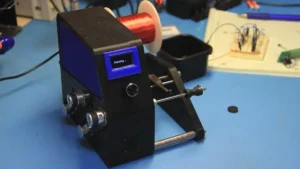
Monteiro’s project is not just a technical marvel but also an embodiment of the maker ethos. He ensured the build remained as hacker-friendly as possible, incorporating a 3D-printed case designed in OpenSCAD and featuring a front panel adorned with blinking status LEDs—a nod to classic computing and a practical indicator of the system’s operational status. This attention to detail and accessibility underscores the project’s goal: to democratize advanced time synchronization, making it a tangible reality for a broader audience previously excluded by cost and complexity.
Supporting Data: Delving into the Technicalities and Applications
Understanding the profound difference between NTP and PTP, as well as the critical role of GNSS, is key to appreciating Monteiro’s achievement.
NTP vs. PTP: A Technical Deep Dive
Network Time Protocol (NTP):
- Mechanism: NTP operates primarily in software. A client sends a request to a server, and the server responds with its current time. NTP algorithms then estimate the round-trip delay and the client’s clock offset.
- Accuracy: Typically achieves synchronization within 1-50 milliseconds, depending on network conditions, server load, and operating system scheduling.
- Latency Sources: Network congestion, variable packet processing times in routers and switches, and the unpredictable nature of general-purpose operating system schedulers all contribute to jitter and reduce accuracy.
- Ubiquity: Highly robust and widely implemented across virtually all networked devices, from smartphones to large data centers.
- Use Cases: General system clock synchronization, logging events, scheduling tasks, email systems, web servers.
Precision Time Protocol (PTP – IEEE 1588):
- Mechanism: PTP achieves superior accuracy by utilizing hardware timestamps. When a PTP synchronization message traverses the network, the exact ingress and egress times are recorded by the network interface hardware itself, eliminating software processing delays.
- Clock Hierarchy: Establishes a master-slave hierarchy. The Grandmaster Clock (GMC) is the most accurate clock in the domain (often synchronized to a GNSS receiver). Other clocks (Ordinary Clocks, Boundary Clocks, Transparent Clocks) synchronize to the GMC.
- Ordinary Clock (OC): A device that is either a master or a slave, but not both.
- Boundary Clock (BC): A device (e.g., a network switch) with multiple PTP ports, where one port acts as a slave to an upstream master, and other ports act as masters to downstream slaves. It filters and relays PTP messages.
- Transparent Clock (TC): A device (e.g., a network switch) that forwards PTP messages but measures the residence time of the message within itself and updates a correction field in the PTP message. This allows slave clocks to compensate for switch delays.
- Accuracy: Capable of achieving nanosecond-level synchronization (typically <100 nanoseconds, often <10 nanoseconds) within a local network segment.
- Latency Mitigation: Hardware timestamping, coupled with mechanisms like Boundary and Transparent Clocks, precisely accounts for network delays, minimizing jitter and maximizing accuracy.
- Use Cases: Highly specialized applications where extreme timing precision is paramount.
The Indispensable Role of GNSS Receivers
For a PTP grandmaster clock to provide nanosecond accuracy, it must itself be disciplined by an even more precise time source. This is where Global Navigation Satellite Systems (GNSS) come into play. GNSS encompasses various satellite constellations, including the American GPS, Russian GLONASS, European Galileo, and Chinese BeiDou. Each satellite carries highly stable atomic clocks (cesium or rubidium) that broadcast precise time signals.
A GNSS receiver on Earth captures these signals and, in addition to calculating its position, extracts extremely accurate time information. Crucially, high-quality GNSS receivers output a "Pulse Per Second" (PPS) signal. This electrical pulse, synchronized to the atomic clocks in space with extreme accuracy (often better than 100 nanoseconds), serves as the ultimate reference for the local oscillator within Monteiro’s PTP server. The "navigation-grade" aspect implies a higher quality of receiver, capable of more stable and precise PPS output, less susceptible to environmental interference or multipath errors, further ensuring the integrity of the grandmaster clock’s time.
Real-World Applications of Nanosecond Precision
The applications demanding nanosecond-level synchronization are diverse and critical, impacting various facets of modern society:
- High-Frequency Trading (HFT): In financial markets, where trades are executed in microseconds, timestamping transactions with nanosecond precision is crucial for regulatory compliance (e.g., MiFID II), dispute resolution, and maintaining market integrity. Even a few microseconds of latency can translate into millions of dollars in profit or loss.
- Industrial Automation and Control (Industry 4.0): Robotic assembly lines, advanced manufacturing processes, and distributed control systems require perfectly synchronized operations. Nanosecond precision ensures that multiple robotic arms move in concert, sensors acquire data simultaneously, and actuators respond with precise timing, leading to higher efficiency, better quality control, and safer operations.
- Scientific Research:
- Particle Physics: Experiments at facilities like CERN, where particle collisions are observed, require event timestamping with extreme precision to correlate data from thousands of detectors.
- Radio Astronomy (VLBI): Very Long Baseline Interferometry combines signals from multiple radio telescopes separated by thousands of kilometers to achieve the resolution of a single, colossal telescope. This requires precise synchronization of data acquisition at each site.
- Seismology: Accurate timestamping of seismic sensor data helps researchers pinpoint earthquake epicenters and study wave propagation with greater fidelity.
- Telecommunications (5G Networks): Modern 5G cellular networks rely heavily on precise time synchronization for efficient handover between base stations, beamforming, and coordinating massive MIMO (Multiple-Input Multiple-Output) antenna arrays. PTP is fundamental to these operations, ensuring seamless connectivity and high data throughput.
- Smart Grids and Power Systems: Synchrophasors in smart grids measure electrical waves with high resolution across wide areas. Precise time synchronization allows for real-time monitoring of grid stability, fault detection, and intelligent control, preventing blackouts and optimizing energy distribution.
- Data Center Synchronization: For distributed databases and high-performance computing clusters, precise time synchronization ensures data consistency, accurate logging of events across multiple servers, and efficient workload distribution.
The DIY Advantage: Cost-Effectiveness and Accessibility
Monteiro’s project stands out not just for its technical prowess but also for its profound impact on accessibility. Commercial PTP grandmaster clocks and synchronization solutions can easily cost tens of thousands of dollars, placing them out of reach for individual makers, small research labs, educational institutions, or startups with limited budgets. By leveraging affordable components like the ESP32-P4 and open-source design principles, Monteiro has demonstrated that nanosecond-level precision can be achieved for a fraction of that cost. This "couple zeros shy" estimate highlights a significant democratizing force, enabling wider experimentation and application of advanced timing technology. The inclusion of a 3D-printed case designed in OpenSCAD further exemplifies this commitment to open-source and maker-friendly development, inviting others to replicate, modify, and improve upon his work.
Official Responses: Industry Perspective and the Maker Movement
While direct "official responses" from large corporations on individual DIY projects are rare, the very existence and success of Cristiano Monteiro’s time server speak volumes about broader industry trends and the impact of the maker movement.
Espressif’s Enabling Vision
The availability of the ESP32-P4 with integrated PTP support is a clear indicator of Espressif’s strategic vision. Companies like Espressif are increasingly designing microcontrollers and application processors that bundle advanced functionalities—previously found only in specialized, expensive chips—into accessible and affordable packages. This move is not merely about technical capability but about market expansion. By providing PTP support in a chip priced for the mass market and the maker community, Espressif effectively democratizes access to industrial-grade technology. Their implicit "response" is the creation of products that empower innovation from the ground up, fostering a wider ecosystem of developers and applications. This strategy directly contributes to the realization of complex IoT and industrial automation solutions, not just by large corporations but by individuals and smaller entities.
The Maker Movement as an Innovation Engine
The broader technology community and industry observers view projects like Monteiro’s as vital contributions to innovation. The maker movement, characterized by open-source hardware, collaborative development, and a "build it yourself" ethos, acts as a powerful engine for practical experimentation and knowledge dissemination.
Such projects:
- Validate new technologies: They demonstrate the real-world applicability and robustness of new chips and protocols in diverse, often unexpected, contexts.
- Generate new use cases: Makers often find novel applications for technologies that might not have been envisioned by their original developers.
- Foster talent: They provide invaluable learning experiences, inspiring and educating the next generation of engineers and technologists.
- Reduce barriers to entry: By making complex technologies accessible and affordable, they lower the hurdle for innovation, allowing smaller teams or even individuals to compete with established players.
While commercial entities focus on productization and mass-market solutions, the maker community provides a fertile ground for prototyping, proof-of-concept, and community-driven development that can eventually influence commercial offerings or spin off into new ventures. The "official response" from the industry, in this context, is one of quiet appreciation and observation, recognizing the invaluable role these grassroots efforts play in advancing the technological landscape.
Challenges and Future Directions
Despite the immense promise, DIY PTP solutions also face challenges. Maintaining nanosecond accuracy over long periods requires careful calibration, environmental control (temperature stability affects oscillator performance), and robust power management. Commercial solutions typically include advanced features like redundant power supplies, oven-controlled crystal oscillators (OCXOs), or even atomic clocks for ultra-long-term stability, and rigorous certification. While Monteiro’s project is a brilliant proof-of-concept and practical tool, scaling it to mission-critical industrial applications might require additional engineering to match the reliability and robustness of commercial offerings. However, this is precisely where the open-source community can contribute, iterating and improving upon the initial design.
Implications: Democratizing Precision and Shaping Tomorrow’s Infrastructure
Cristiano Monteiro’s enhanced satellite-backed time server is more than just an impressive piece of engineering; it carries significant implications for the future of precision timing and technological accessibility.
The Democratization of Cutting-Edge Technology
The most profound implication is the continued democratization of highly advanced technology. For too long, nanosecond-level time synchronization has been the exclusive domain of well-funded corporations and research institutions. Monteiro’s project, by demonstrating that such precision is attainable with off-the-shelf components and open-source designs, shatters this exclusivity. This empowers a broader cohort of innovators—students, small business owners, independent researchers, and dedicated hobbyists—to experiment with and deploy PTP in contexts previously unimaginable due to cost constraints. This ripple effect could accelerate innovation in niche fields, leading to new applications and solutions that were previously economically unfeasible.
Impact on Education and Skill Development
The project also holds immense educational value. By providing a tangible, buildable example of a complex system, it serves as an invaluable learning tool. Students and aspiring engineers can delve into the intricacies of network protocols, satellite navigation, embedded systems, and precision analog electronics. The hands-on experience of assembling, configuring, and troubleshooting such a device offers a deeper understanding of these concepts than theoretical study alone, fostering a new generation of skilled professionals capable of tackling complex technological challenges.
Fostering an Open-Source Ecosystem for Critical Infrastructure
Monteiro’s commitment to making his project hacker-friendly, with detailed documentation and an OpenSCAD-designed case, strengthens the open-source hardware ecosystem. This collaborative approach encourages others to replicate, modify, and improve upon the design, potentially leading to a more resilient and adaptable timing infrastructure. In a world increasingly reliant on synchronized systems, fostering an open and transparent development environment for critical technologies like time servers can enhance security, reliability, and innovation across the board.
Paving the Way for Future Innovations
The success of this DIY PTP server hints at future trends in time synchronization. As microcontrollers become more powerful and integrate even more advanced features, we might see further reductions in cost and complexity for ultra-precise timing solutions. This could extend beyond PTP, potentially paving the way for easier access to even more exotic timing methods currently confined to the laboratory, such as optical clocks, which promise even greater orders of magnitude in precision. The journey from milliseconds to nanoseconds has been remarkable, and the path to picoseconds and femtoseconds, while still challenging, becomes slightly clearer with each such breakthrough.
Ultimately, while the average person may never consciously perceive the need for nanosecond accuracy, the unseen pulse of precise timekeeping underpins much of our modern world. Cristiano Monteiro’s DIY time server is a testament to human ingenuity, a beacon for the maker movement, and a powerful statement that the pursuit of ultimate precision, and the tools to achieve it, should be within reach for all who dare to build. It’s a reminder that even if you don’t need your clock to be accurate down to the nanosecond, the option to achieve it is a powerful enabler for a more precisely synchronized and technologically advanced future.