The Intersection of High Fashion and High Tech: The Rise of the Raspberry Pi-Powered "Koi-Tar"

The world of microcomputing has long been associated with the utilitarian, the scientific, and the experimental. From monitoring underwater conservation efforts on the backs of sea turtles to optimizing the yields of Japanese vineyards, the Raspberry Pi has proven its mettle in the most demanding environments on Earth—and even beyond it, within the confines of the International Space Station. However, a new frontier was recently breached that few in the engineering community anticipated: the high-stakes, aesthetic-driven runway of New York Fashion Week (NYFW).
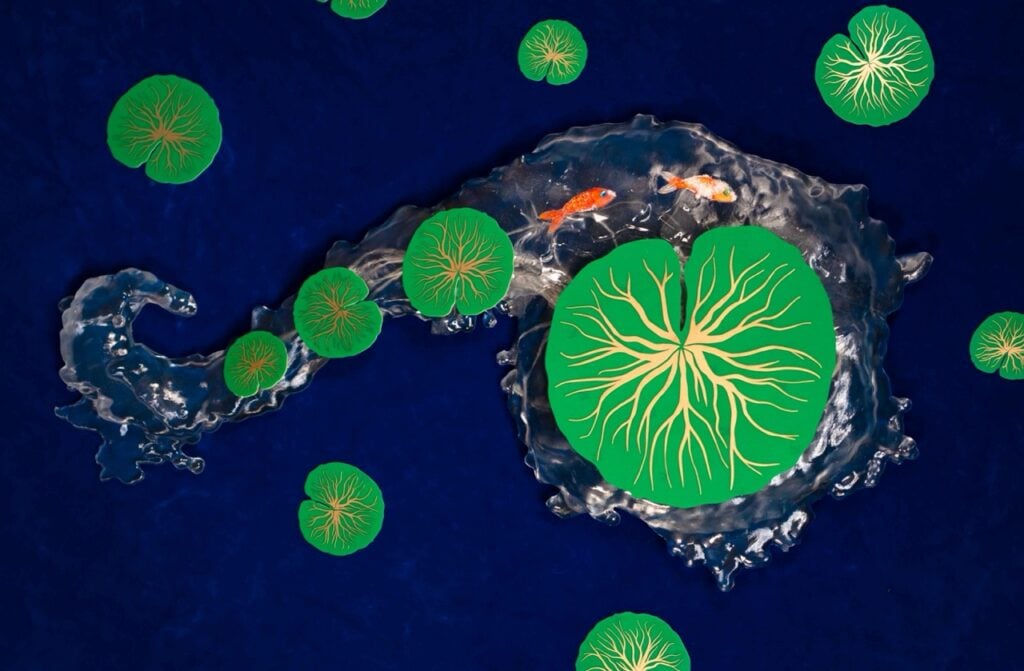
The "Koi-Tar," a stunning MIDI controller guitar that mimics the fluid motion of a water splash, represents a landmark moment for the "Maker" movement. Designed by engineer and artist Monique Evette, the instrument is not merely a prop but a fully functional piece of electronic music hardware powered by the Raspberry Pi Pico. Its debut at NYFW signals a shifting paradigm where the boundaries between computer science, musical expression, and haute couture are increasingly becoming indistinguishable.
Main Facts: A Symphony of Silicon and Aesthetics
The Koi-Tar is the centerpiece of Monique Evette’s "Whimsical Machines" series, a collection of instruments and wearables designed to bridge the gap between technical precision and organic beauty. At its core, the Koi-Tar is a MIDI (Musical Instrument Digital Interface) controller, meaning it does not produce sound through vibrating strings but rather sends digital signals to a computer or synthesizer to trigger audio.
Technical Architecture
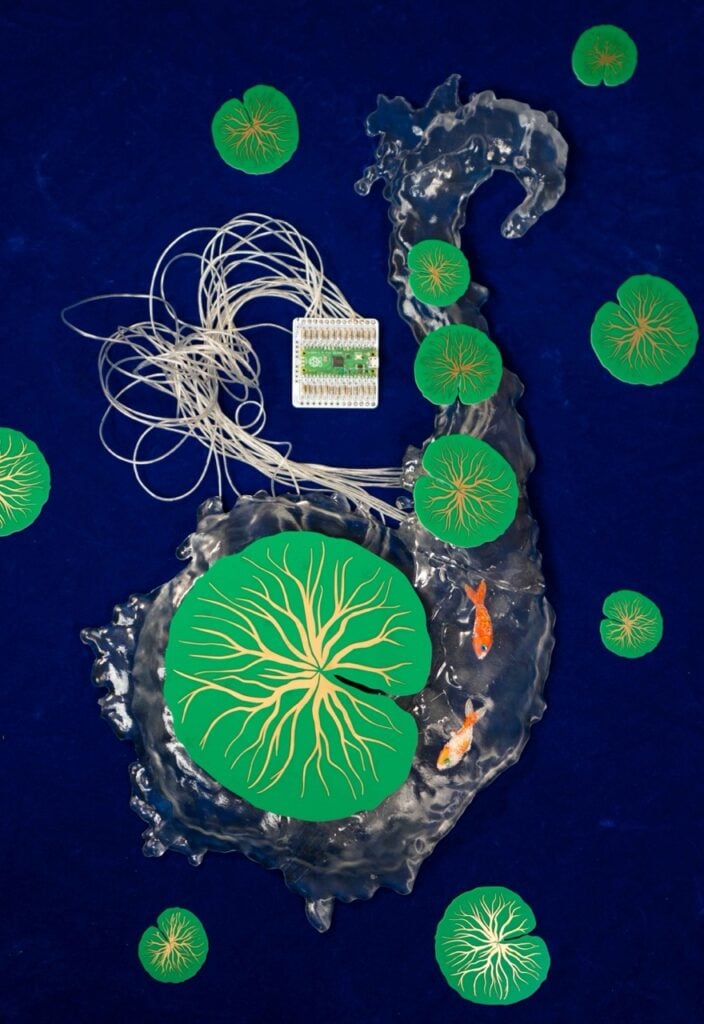
The instrument’s functionality is driven by the Raspberry Pi Pico, a high-performance microcontroller board designed by Raspberry Pi in the UK. The Pico is integrated into the system via a SPOKE-mini resistor array, a specialized component that facilitates the complex wiring required for capacitive touch sensing.
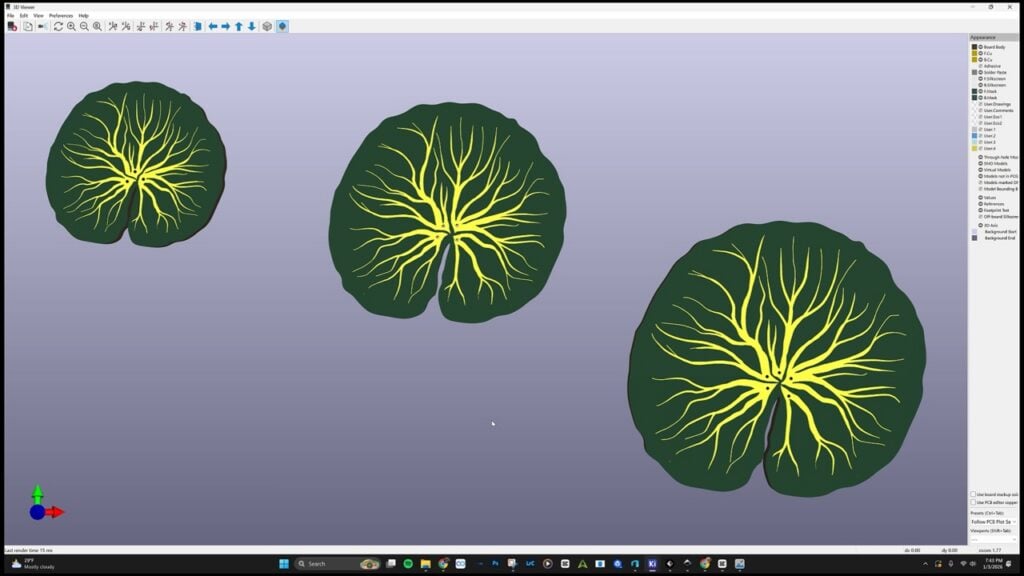
Unlike a traditional guitar, the Koi-Tar utilizes PCB (Printed Circuit Board) capacitive touch sensors shaped like lily pads. When a performer touches these "pads," the change in electrical capacitance is detected by the Pico, which then translates the physical interaction into MIDI data. This allows for a seamless, tactile playing experience that lacks the physical resistance of strings but offers a new dimension of expressive control.
Artistic Design
The housing of the Koi-Tar is an achievement in modern additive manufacturing. The body was modeled in Blender, a professional 3D creation suite, utilizing advanced water physics simulations to capture the exact geometry of a "splash frozen in time." To achieve the crystalline, high-detail finish required for a fashion runway, the design was realized using Stereolithography (SLA) 3D printing. This resin-based printing method allows for much higher resolution and transparency than traditional filament-based (FDM) printing, resulting in a piece that looks more like a hand-carved sculpture than a 3D-printed object.
Chronology: From Software Engineering to the Runway
The journey of the Koi-Tar began long before its appearance in New York. The timeline of its creation is a testament to the evolving career of its creator, Monique Evette, and the iterative nature of hardware development.
The Foundation (Pre-2020)
Monique Evette’s background is rooted in the rigorous disciplines of Computer Science and Physics. After earning her degree, she spent several years working in the tech industry as a software engineer. During this period, she cultivated an "artistic practice" on the side, exploring how code and hardware could be used to create beauty rather than just utility. This duality would eventually become the hallmark of her brand, "Evette’s Niche."
The "Whimsical Machines" Concept (2021–2023)
The idea for the "Whimsical Machines" series emerged from a desire to create a "fairy orchestra." Evette envisioned a suite of instruments that looked as though they belonged in a mythical forest but functioned with the precision of modern electronics. This led to the development of several prototypes, each exploring different methods of human-computer interaction.
Development and Peer Review (Early 2024)
As the Koi-Tar moved from concept to prototype, Evette sought the expertise of the professional music community. The development process involved a rigorous feedback loop with prominent musicians and sound designers, including Benn Jordan (a prolific composer and advocate for science education) and Venus Theory (a well-known sound designer and synthesist).
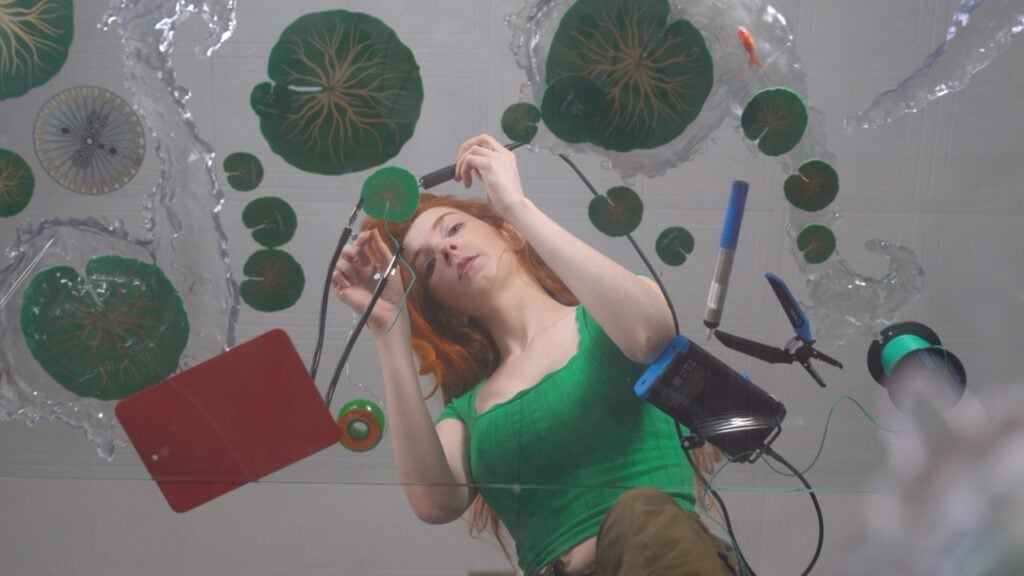
These collaborators stress-tested the MIDI response times and ergonomics of the lily-pad sensors. Their feedback was instrumental in refining the sensitivity of the Raspberry Pi Pico’s firmware, ensuring that the instrument was not just a visual marvel but a viable tool for professional musicians.
The New York Fashion Week Debut (Late 2024)
The culmination of this work was the invitation to showcase the Koi-Tar at New York Fashion Week. The instrument was integrated into a larger ensemble, demonstrating how wearable technology can serve as a focal point for high-concept fashion. It was a rare instance of "maker" culture—typically relegated to workshops and hobbyist fairs—being embraced by the global fashion elite.
Supporting Data: The Hardware Behind the Art
The success of the Koi-Tar relies on the specific hardware choices made during its engineering phase. By utilizing the Raspberry Pi Pico, Evette was able to leverage several key technical advantages:
- Low Latency: In MIDI controllers, the time between a touch and the resulting sound (latency) must be imperceptible. The Pico’s RP2040 chip provides the deterministic timing necessary for real-time musical performance.
- Power Efficiency: The Pico can run for extended periods on battery power, a necessity for a portable instrument designed to be carried down a runway.
- Form Factor: The diminutive size of the Pico allowed it to be tucked away within the "splash" housing without compromising the aesthetic flow of the resin body.
The use of the SPOKE-mini resistor array further streamlined the build. By providing a dedicated interface for capacitive touch, it reduced the amount of manual "rat’s nest" wiring that often plagues complex DIY electronics, making the instrument more durable and easier to maintain.
Official Responses and Perspectives
Monique Evette has been vocal about the philosophy driving her work. In a statement regarding the Koi-Tar and her broader "Whimsical Machines" series, she noted:
"I love making art inspired by engineering concepts and celebrating the beauty of the natural world. The goal was to create something that felt organic and alive, yet was powered by the same logic and physics that govern our digital world."
The Raspberry Pi Foundation has also noted the significance of this project. While the Pi has been used in countless creative installations, the Foundation highlighted the Koi-Tar as a prime example of the "Pico in the wild," demonstrating how their smallest board can empower artists to create professional-grade hardware.
Musicians who tested the device emphasized its unique tactile nature. Benn Jordan commented on the shift in performance style required by capacitive touch, noting that it opens up new possibilities for "glissando" and rapid-fire triggering that are difficult to achieve on traditional stringed instruments.
Implications: The Future of STEAM and Wearable Tech
The appearance of the Koi-Tar at New York Fashion Week carries significant implications for several industries.
The Evolution of STEAM
For years, educators have pushed for "STEAM" (Science, Technology, Engineering, Art, and Math) rather than just "STEM." The Koi-Tar is a physical manifestation of this philosophy. It proves that technical mastery (computer science and physics) does not have to be divorced from creative expression. Projects like this serve as a powerful recruitment tool for the next generation of engineers, showing that coding can lead to the runway just as easily as it can lead to a server room.
The Democratization of High-End Design
Traditionally, a custom-built, high-concept musical instrument would require a massive manufacturing budget and a team of specialists. However, using off-the-shelf components like the Raspberry Pi Pico and accessible software like Blender, Evette has shown that an individual creator can produce world-class, "mind-bending" designs. This democratization of manufacturing through 3D printing and open-source hardware is likely to lead to an explosion of "niche" electronics that cater to specific artistic visions.
Wearable Technology in Haute Couture
Fashion has often flirted with technology—LED dresses and 3D-printed shoes have appeared before—but the Koi-Tar represents a deeper integration. It is a "playable" accessory. As we move forward, we may see more "performative fashion," where the clothing and accessories worn by models are active participants in the soundtrack and atmosphere of the show.
Conclusion
The Koi-Tar is more than just a guitar; it is a bridge between worlds. It takes the cold, calculated logic of a Raspberry Pi Pico and wraps it in the fluid, whimsical beauty of a water lily pond. As Monique Evette continues to expand her "Whimsical Machines" series, she is not only creating beautiful objects but also redefining what it means to be an engineer in the 21st century. Whether it is a chest plate modeled after the Apollo 11 hatch or a guitar that looks like a frozen splash, the message is clear: the future of technology is not just functional—it is enchanting.