The Authenticity Paradox: Superhuman Acquires GPTZero in Strategic Pivot
In a move that has sent ripples through the technology sector, Superhuman—the productivity company best known for its AI-powered writing assistant tools—has announced the acquisition of GPTZero, a leading platform for AI detection and authenticity verification. While at first glance the marriage of a company that facilitates AI generation with one that polices it appears contradictory, the deal represents a calculated effort to define the "rules of the road" for the next generation of digital communication.
The Main Facts: A Convergence of AI Generation and Detection
Superhuman, a dominant player in the AI-assisted writing space, confirmed this week that it has finalized an agreement to purchase GPTZero. Financial terms of the acquisition remain undisclosed, but the implications for the future of AI in professional and educational workflows are significant.
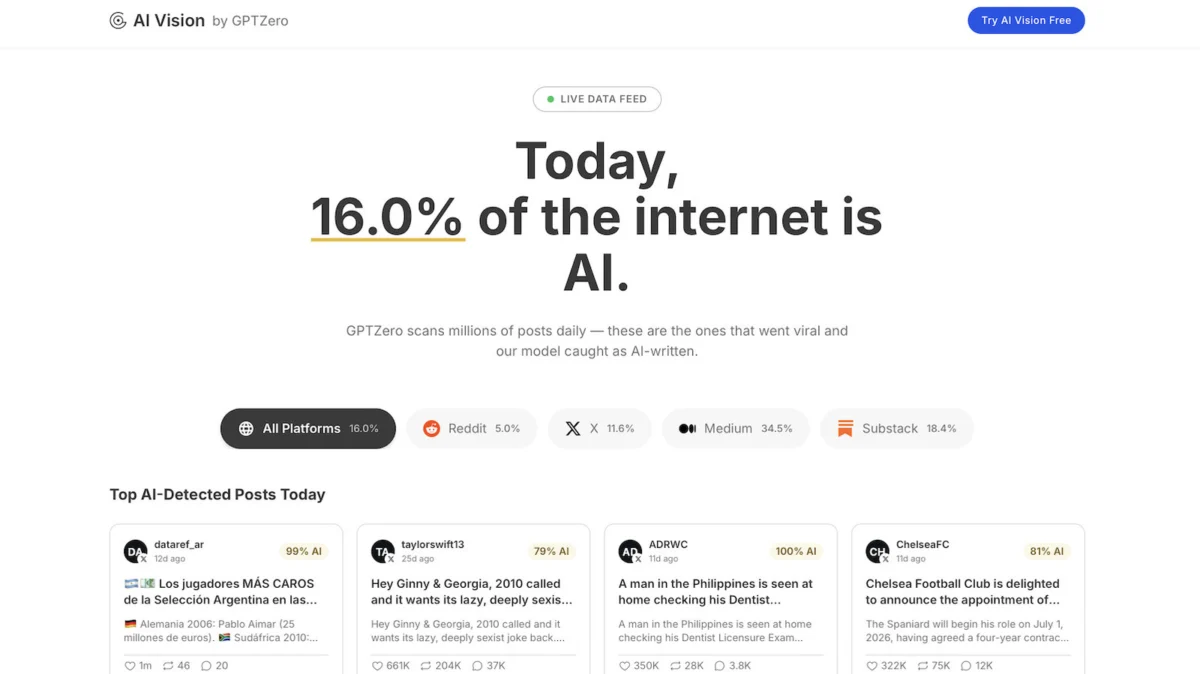
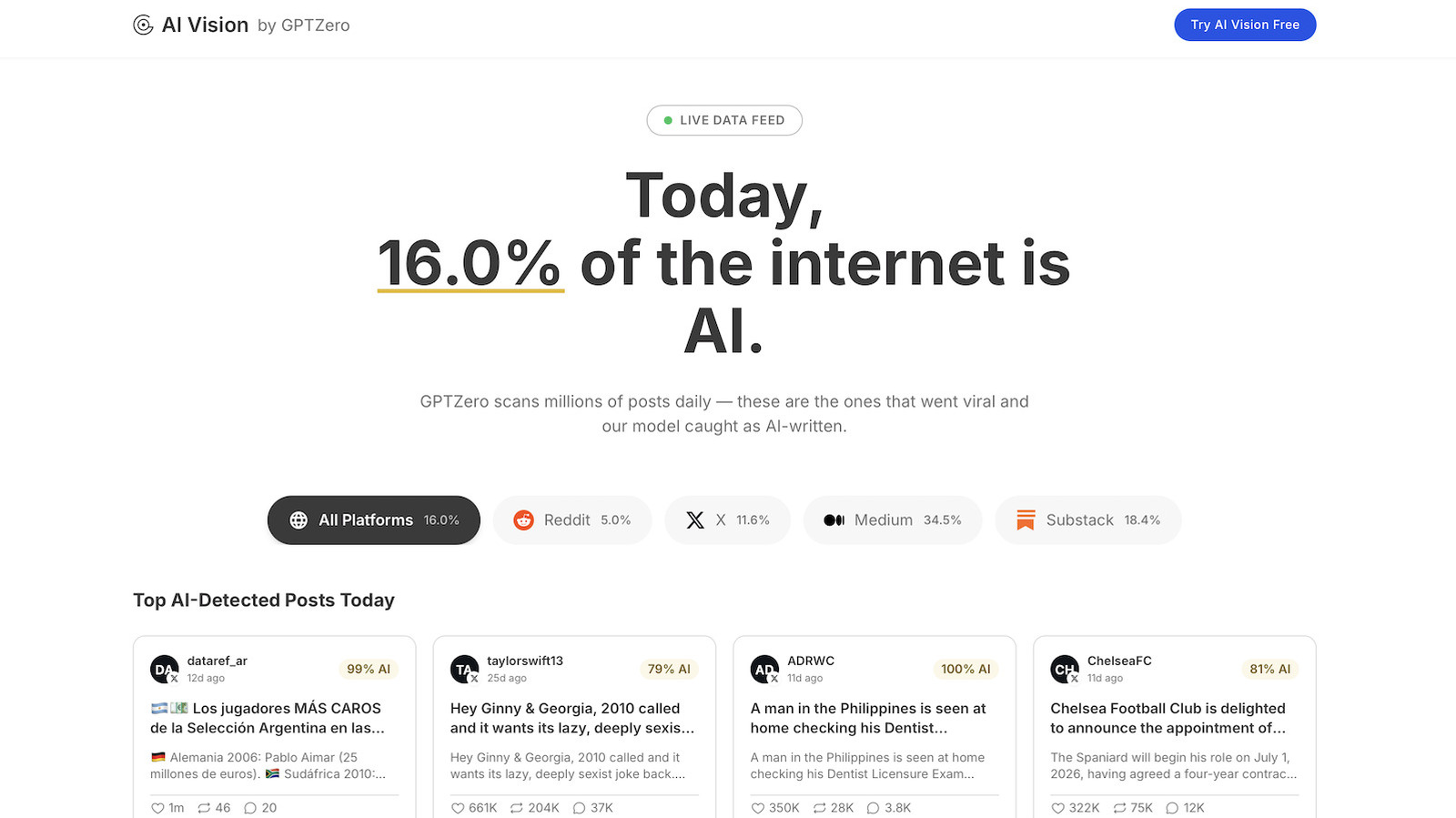
GPTZero rose to prominence as a critical tool for educators, researchers, and editors tasked with distinguishing between human-authored prose and machine-generated text. Its suite of services includes advanced hallucination detection, plagiarism screening, and a public-facing data tool, "AI Vision," which tracks the density of synthetic content across the broader internet.
By integrating GPTZero’s architecture into its flagship Superhuman Go AI assistant, the company aims to move beyond simple text generation. The stated goal is to provide users with a "trust-verified" workflow, where the tools that help users write are the same tools that ensure their work meets standards of authenticity and originality.
Chronology: From Academic Integrity to Corporate Strategy
The journey toward this acquisition began with the meteoric rise of generative AI, which fundamentally disrupted the concept of intellectual property and original authorship.
- Early 2023: GPTZero gains massive traction in the academic sector. Following the release of ChatGPT, educators found themselves in a crisis of integrity, unable to discern student work from AI output. GPTZero fills this void, becoming the industry standard for detection.
- Mid-2023: Superhuman expands its AI footprint. The company doubles down on generative writing assistants, aiming to streamline email communication and professional documentation.
- Late 2024: Concerns regarding "hallucinations"—where AI presents false information as fact—begin to plague professional industries. Trust in AI becomes a primary barrier to enterprise adoption.
- June 2026: Superhuman officially announces the acquisition of GPTZero. The press release highlights a desire to merge the "creation" side of the AI coin with the "verification" side, effectively aiming to position Superhuman as the arbiter of digital truth.
Supporting Data: The Scale of the "Synthetic Internet"
To understand why this acquisition is so vital, one must look at the data provided by GPTZero’s own metrics. As of the second quarter of 2026, the volume of synthetic content on the web has reached an inflection point. According to GPTZero’s "AI Vision" tracker, nearly 40% of new long-form digital content—including blogs, newsletters, and corporate communications—now contains some degree of AI-assisted generation.
This saturation has created a "trust deficit." For businesses, the risk of deploying AI-generated text is not merely the potential for poor quality, but the risk of legal liability stemming from hallucinations or inadvertent plagiarism. By acquiring a tool that can parse these patterns at scale, Superhuman is essentially hedging its bets against the erosion of trust in its own core product.
Official Responses and Strategic Rationale
The leadership teams at both companies have characterized the merger as a "win-win" for the future of digital literacy.
"Our mission has always been to restore trust in a digital world," said a spokesperson for GPTZero. "By joining forces with Superhuman, we are no longer just an ‘auditing’ tool sitting on the sidelines. We are now moving into the engine room of creation, ensuring that as people write, they have real-time feedback on the authenticity and accuracy of their output."
Superhuman, meanwhile, has emphasized that its primary demographic—teachers, students, and professional writers—will remain the focal point. "We aren’t trying to stifle AI," a Superhuman executive noted. "We are trying to institutionalize it. The future isn’t ‘AI vs. Human’; the future is ‘AI-enabled Human,’ where the AI is checked and verified at the point of origin."
However, industry analysts are more skeptical. The acquisition follows a period of "hot water" for Superhuman. Previously, the company faced significant backlash when it attempted to integrate generative feedback features that mimicked the specific styles and voices of famous writers. The backlash from the creative community was swift, forcing the company to pull the feature and issue public apologies. Critics argue this acquisition is a "reputation management" play, designed to convince regulators and users that the company is taking ethics seriously.
Implications: The Future of the "Verified Author"
The implications of this deal are profound and touch on three specific pillars of the digital economy:
1. The Death of the "Black Box"
If Superhuman successfully integrates GPTZero, it signals the end of the "black box" era of AI. Users will likely see a "Trust Score" attached to their AI-generated drafts. This shift forces a higher standard of accountability, as users will be alerted to potentially hallucinated data before they hit "send."
2. The Professionalization of Academic Integrity
For the education sector, the acquisition suggests that detection is moving from a cat-and-mouse game to an integrated feature of the writing process. Instead of teachers using GPTZero to "catch" students, students may soon use Superhuman to "validate" their work, ensuring that their citations and facts are accurate before submission.
3. The Commodification of Authenticity
Perhaps the most controversial implication is the commodification of "authenticity." If Superhuman offers a "verified" seal of approval, does that imply that content without such a seal is inherently inferior or dishonest? This could create a two-tiered internet: one where verified AI-assisted content dominates the professional landscape, and an unverified, "wild west" of organic or unregulated content.
Conclusion: A High-Stakes Bet
Superhuman’s acquisition of GPTZero is an acknowledgment of a fundamental reality: generative AI is only as useful as it is trustworthy. By purchasing the very tool that monitors its shortcomings, Superhuman is attempting to become the architect of a more stable, transparent ecosystem for AI.
Whether this succeeds depends entirely on the implementation. If the integration feels like an intrusive "policing" layer, users may revolt. If it feels like a genuine, value-add "proofreading" service that provides clarity, Superhuman may well set the standard for how the world interacts with the next generation of AI. For now, the industry is watching closely, waiting to see if this marriage of creator and auditor leads to a more honest digital future, or if it is simply a clever way for a tech giant to control the narrative surrounding its own tools.