Breaking the Chains: Hardware Hack Unlocks Amazon Echo Show 8 (3rd Gen) for Custom OS and Enhanced Control
Main Facts
In a significant development for device enthusiasts and proponents of open hardware, an intrepid hacker known as "[Vowed]" on the XDA forums has successfully devised a method to achieve root access and even install alternative operating systems on the Amazon Echo Show 8 (3rd Generation). This breakthrough, detailed on the prominent hacking and development platform, represents a considerable victory against the increasingly stringent security measures implemented by manufacturers like Amazon to lock down their consumer electronics. Unlike previous generations of Amazon’s smart display devices, which often allowed for relatively straightforward software-based modifications through tools like Android Debug Bridge (ADB) or bootloader exploits, the Echo Show 8 (3rd Gen) has proven notoriously difficult to penetrate. Amazon’s sophisticated lockdown strategy necessitated a far more drastic approach, pushing the boundaries into hardware-level intervention.
[Vowed]’s method involves directly tapping into the device’s embedded MultiMediaCard (eMMC) storage and Universal Asynchronous Receiver-Transmitter (UART) interface. This complex procedure bypasses software restrictions entirely, granting direct access to the device’s core operating system and memory. The hack allows for a complete takeover, enabling users to not only root the FireOS system—Amazon’s Android-derived proprietary operating system—but also to replace it entirely with a custom Linux distribution, such as Debian. This capability transforms the Echo Show 8 from a dedicated Amazon ecosystem portal into a versatile, general-purpose computing device, offering a new lease on life and expanded utility for a product designed with a very specific, limited function in mind. The implications are profound for consumers seeking greater control over their devices, as well as for the broader right-to-repair and open-source movements.
Chronology of a Lockdown and Breakthrough
The history of hacking Amazon devices, particularly their Fire tablets and Echo smart displays, has long been a cat-and-mouse game between determined developers and Amazon’s security teams. Early generations of these devices, running variations of FireOS (which itself is built upon Android), were often amenable to relatively simple rooting procedures. These typically involved enabling developer options, connecting via ADB, and exploiting vulnerabilities in the bootloader to gain elevated privileges or flash custom firmware. The goal was often to replace FireOS with a stock Android experience or other Linux-based distributions, thereby escaping Amazon’s walled garden of apps and services.
However, as these devices grew in popularity and Amazon’s ecosystem became more entrenched, the company progressively tightened its grip. Subsequent iterations saw bootloaders locked down more aggressively, ADB access restricted, and new security mechanisms introduced to prevent unauthorized modifications. The Echo Show 8 (3rd Gen) stands as a testament to this evolution in security, having been designed from the ground up to resist common software-based exploits. Its robust defenses effectively shut down the traditional avenues for modification, leading many to believe that hardware intervention would be the only viable path.
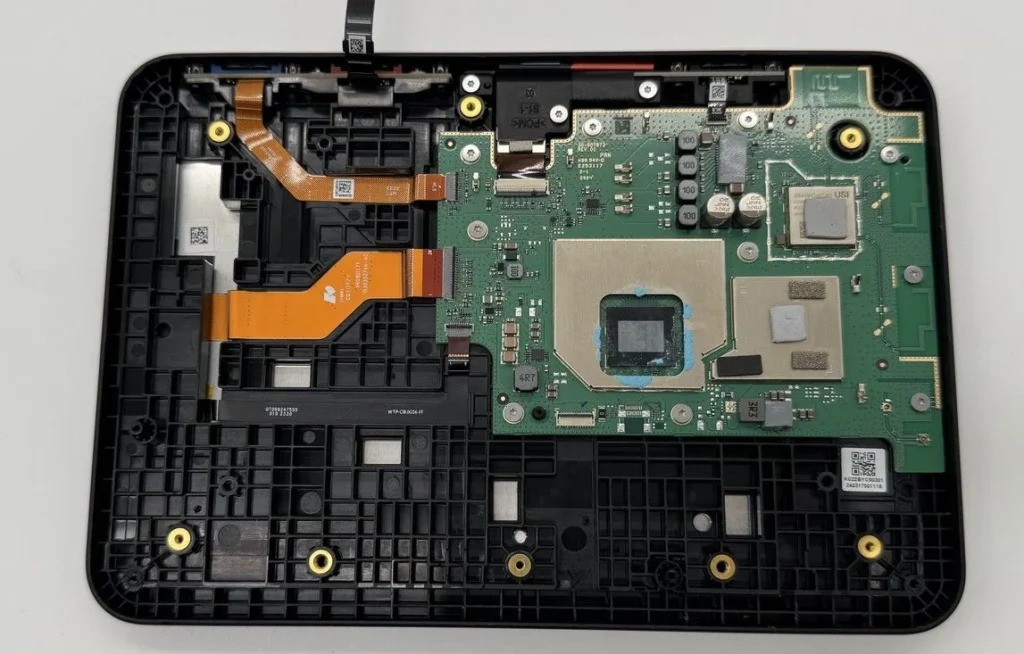
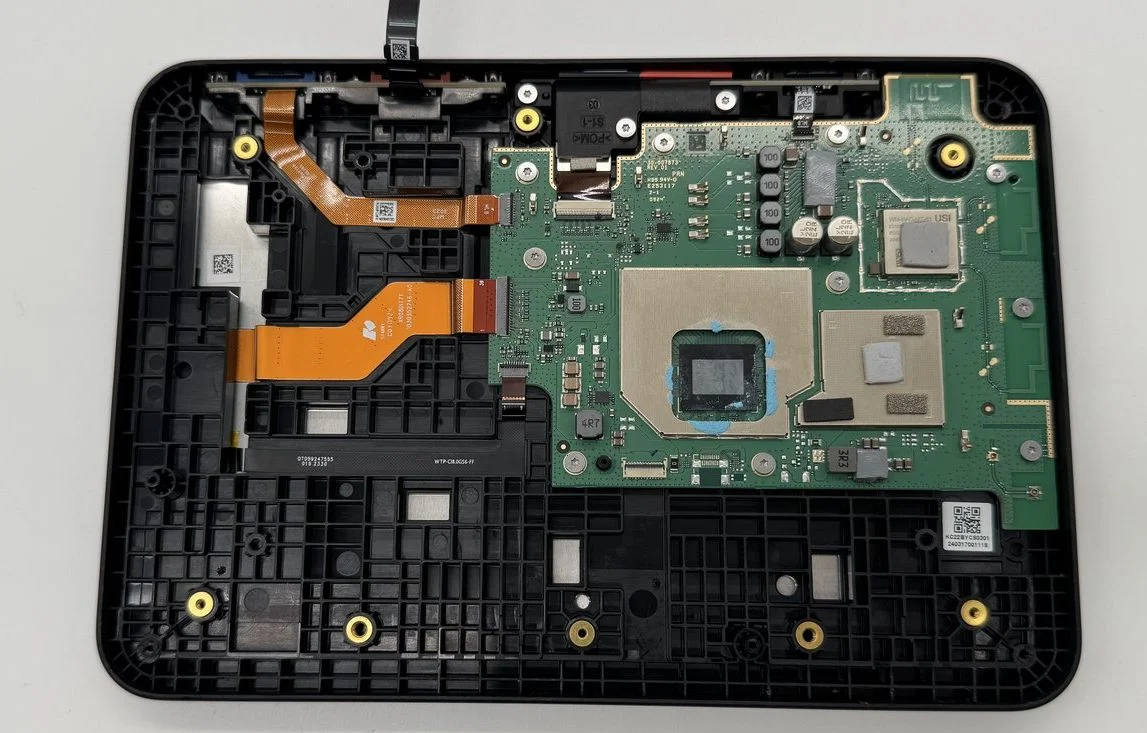
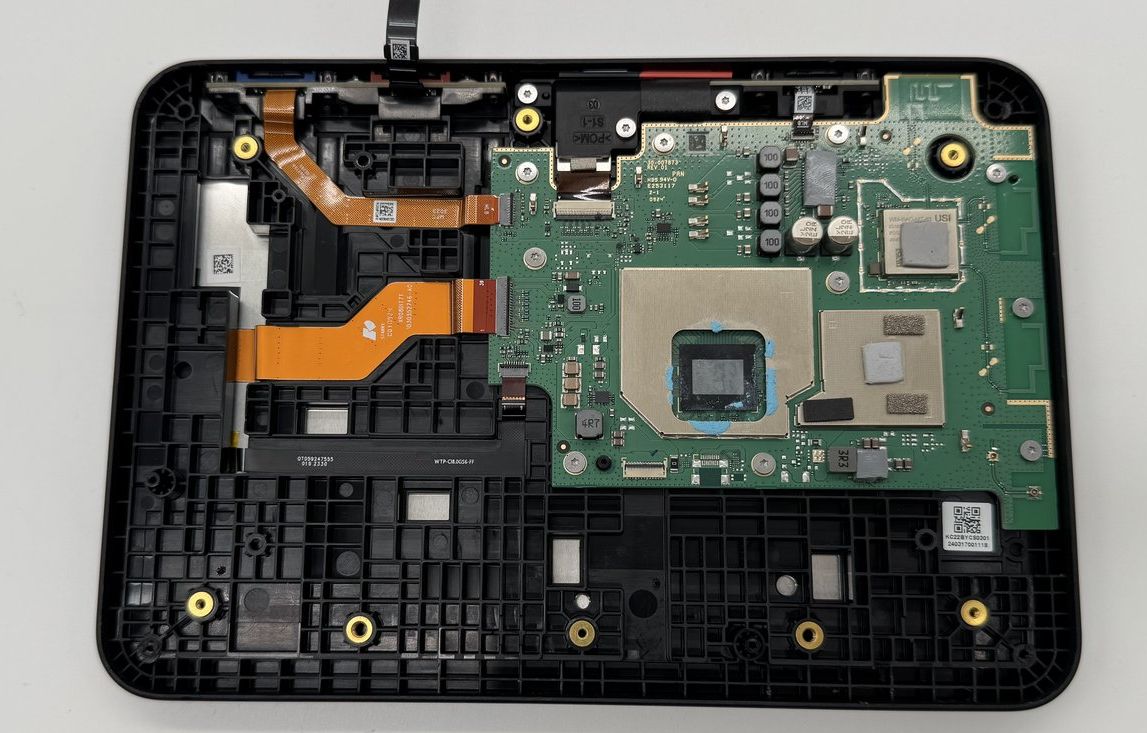
This is precisely where [Vowed]’s work becomes critical. The journey to unlocking the Echo Show 8 (3rd Gen) is not for the faint of heart and highlights the extreme measures required when software vulnerabilities are patched. The process begins with a daunting physical teardown of the device. Even established resources like the iFixit teardown guide for the Echo Show 8 (3rd Gen) emphasize the complexity of disassembly, revealing a tightly packed and intricately designed internal architecture. Gaining access to the mainboard is merely the first hurdle.
Once the mainboard is exposed, the next significant challenge involves the eMMC module, which houses the device’s core storage and operating system. This critical component is typically protected by a metal shield, a "can" designed to prevent electromagnetic interference and, crucially, to deter physical tampering. [Vowed]’s method necessitates either carefully removing or cutting open this metal shield to expose the eMMC chip and its tiny contact pads. This step requires precision and specialized tools to avoid damaging the delicate components underneath.
With the eMMC exposed, fine wires must be meticulously soldered to its contact pads. These wires then connect to an external eMMC programmer, allowing for direct read and write access to the device’s internal storage. Simultaneously, wires must also be soldered to the UART pads on the mainboard. The UART provides a serial communication interface, often used for debugging and low-level interaction with the device’s firmware. For those with advanced fabrication skills, a custom pogo pin adapter can be fashioned as an alternative to direct soldering, offering a less permanent and potentially safer connection method for repeated use.
A crucial preparatory step, emphasized by [Vowed] and best practice in any hardware modification, is to create a complete backup image of the original eMMC contents. This "insurance policy" ensures that the device can be restored to its factory state if any modifications go awry. Once the physical connections are established, a serial connection via UART can be used to interact with the device’s original FireOS firmware, enabling features like ADB that Amazon typically keeps locked down. More significantly, with the eMMC adapter connected, direct alterations to system files become possible, streamlining the rooting process and paving the way for a complete operating system overhaul. The ultimate demonstration of this control was the successful installation of a Debian Linux distribution, transforming the Echo Show 8 into a fully customizable, open-platform device.
Supporting Data: The Technical Underpinnings and Motivations
The success of [Vowed]’s hack hinges on a deep understanding of embedded systems and a willingness to engage in intricate hardware manipulation. Two key interfaces, UART and eMMC, are central to this achievement.
UART (Universal Asynchronous Receiver-Transmitter) is a serial communication protocol widely used in embedded systems for debugging, console access, and low-level communication between microcontrollers or a microcontroller and a host computer. In the context of the Echo Show 8, gaining UART access provides a "backdoor" into the device’s boot process and operating system. It often presents a command-line interface (CLI) that can display boot logs, kernel messages, and even allow for input commands during specific stages of the device’s operation. This direct, low-level access is invaluable for understanding how the device boots, identifying potential vulnerabilities, and, in this case, enabling features like ADB that are otherwise locked by software. Think of it as plugging directly into the device’s brain stem, bypassing the higher-level functions that Amazon controls.
eMMC (embedded MultiMediaCard) is a type of non-volatile flash storage commonly used in mobile devices, smart appliances, and other embedded systems. It functions essentially as the device’s hard drive, storing the operating system, applications, and user data. Direct eMMC access is the ultimate form of hardware control because it completely bypasses the device’s internal bootloader and security mechanisms. By connecting an external eMMC programmer, one can read the entire contents of the chip, modify specific partitions, or even overwrite the entire operating system with a new one. This is akin to removing the hard drive from a computer and plugging it into another machine to make changes, circumventing any password or software lock on the original system. The ability to "unleash an eMMC programmer" on the device is what makes the installation of an entirely new OS like Debian possible, as it allows for a complete erasure of FireOS and installation of the desired alternative.
FireOS, Amazon’s proprietary operating system for its Echo Show devices and Fire tablets, is built on the Android Open Source Project (AOSP). While it shares a Linux kernel and many underlying Android components, Amazon heavily customizes it with its own user interface, services, and app store, often restricting access to Google services and limiting user customization. The lockdown of ADB (Android Debug Bridge) on the Echo Show 8 (3rd Gen) is a prime example of Amazon’s control. ADB is a versatile command-line tool that allows developers to communicate with an Android-powered device. It’s used for installing and debugging apps, accessing shell commands, and managing device files. By disabling or heavily restricting ADB access, Amazon effectively closes off a common avenue for software-based modification and sideloading.
The sheer difficulty of this hack underscores the delicate nature of modern consumer electronics. Fine-pitch soldering, involving connections to incredibly small pads, requires specialized equipment (magnification, fine-tipped soldering irons) and a steady hand. The risk of inadvertently damaging the mainboard or adjacent components is high, making this an endeavor strictly for experienced hobbyists or professionals. The suggestion of a custom pogo pin adapter, while more complex to create, highlights an advanced approach to interfacing with such devices non-destructively, appealing to those who might want to repeatedly flash or experiment with different firmware.
Beyond the technical prowess, the motivation for such hardware hacks is multifaceted. For many consumers, it’s about reclaiming ownership and control over devices they’ve purchased. The desire to escape proprietary ecosystems, which often come with limitations on app choice, data privacy concerns, and planned obsolescence, is a powerful driver. Repurposing a device like the Echo Show 8 into a versatile Linux tablet extends its lifespan and utility beyond its intended commercial use, aligning with the growing "right-to-repair" movement. For the hobbyist community, it’s the intellectual challenge of reverse engineering, understanding how devices work at their most fundamental level, and pushing the boundaries of what’s possible with readily available hardware.
Official Responses
Manufacturers like Amazon typically maintain a consistent stance regarding unauthorized modifications to their devices. While they rarely issue direct comments on specific hacking incidents, their official policies and actions speak volumes. Amazon’s Terms of Service (TOS) for its devices and services explicitly prohibit unauthorized modifications, reverse engineering, or attempts to circumvent security measures. Engaging in such activities almost invariably voids the device’s warranty, leaving the user without recourse for repairs or replacements should something go wrong.
Amazon’s primary focus is on providing a seamless, secure, and controlled user experience within its proprietary ecosystem. Their business model relies heavily on users engaging with Amazon’s services, content, and products through their devices. From their perspective, allowing unfettered access or encouraging the installation of third-party operating systems could introduce security vulnerabilities, degrade performance, or lead to a fragmented user experience that they cannot control or support. They often highlight potential risks such as malware, loss of functionality, or device instability as reasons to discourage such modifications.
In response to hardware hacks like [Vowed]’s, Amazon’s likely strategy would not involve a public statement but rather an internal review of device security. While software vulnerabilities can often be patched through over-the-air (OTA) updates, hardware-level exploits are far more challenging to mitigate in existing devices. For future iterations of the Echo Show or other smart devices, Amazon engineers might consider implementing even more robust physical tamper detection, more complex mainboard layouts, or advanced anti-tamper technologies to make direct eMMC and UART access even more difficult. However, the cat-and-mouse game continues, as determined hackers will invariably seek new ways to bypass whatever physical or digital barriers are erected.
Implications
The successful hardware hack of the Amazon Echo Show 8 (3rd Gen) carries significant implications across several domains, impacting consumers, manufacturers, and the broader technology landscape.
For Consumers:
The primary implication for consumers is empowerment. This hack demonstrates that even highly locked-down devices can eventually be liberated from their manufacturer’s control. For those willing to undertake the technically challenging process, it opens up a world of possibilities:
- Enhanced Utility: An Echo Show 8, typically restricted to Amazon’s services, can be transformed into a general-purpose Linux tablet, capable of running a wider array of applications, browsing the web without Amazon’s filters, or serving as a dedicated smart home control panel with greater customization.
- Privacy and Control: By replacing FireOS with an open-source operating system like Debian, users gain greater control over their data and privacy, reducing reliance on Amazon’s data collection practices.
- Extended Device Lifespan: This hack directly challenges planned obsolescence. Instead of discarding a perfectly functional device because its proprietary software becomes outdated or unsupported, users can repurpose it, contributing to electronic waste reduction.
- Risks: However, these benefits come with substantial risks. The process is complex, carries a high risk of "bricking" the device, and unequivocally voids any warranty. Users venturing into such modifications must possess significant technical skill, specialized tools, and a tolerance for potential device failure. Furthermore, installing unverified third-party software could introduce new security vulnerabilities if not sourced and configured carefully.
For Amazon and Other Manufacturers:
For companies like Amazon, this hack represents a persistent challenge to their business model and control over their ecosystems.
- Ongoing Security Arms Race: It highlights the continuous struggle between manufacturers aiming for locked-down, proprietary experiences and a segment of users determined to unlock their devices. This will likely spur Amazon to invest further in hardware-level security measures, making future devices even more resistant to physical tampering.
- Ecosystem Control: The ability to replace FireOS undermines Amazon’s efforts to steer users towards its services and content. If a significant number of users begin to repurpose these devices, it could impact Amazon’s revenue streams from its content and app store.
- Public Perception: While only a niche community will attempt such a difficult hack, its existence contributes to the broader narrative around device ownership and control. Some consumers may be deterred by overly restrictive devices, while others might actively seek out devices known to be "hackable" for their versatility.
Broader Industry Impact:
This development feeds into larger industry trends and discussions:
- Right-to-Repair Movement: The hack reinforces the arguments of the right-to-repair movement, advocating for consumers’ ability to repair, modify, and control their purchased electronics. It demonstrates that devices are often physically capable of more than their manufacturers allow.
- Open-Source Hardware/Software: It underscores the value and potential of open-source software and the desire for more open hardware platforms. The ability to install a general-purpose Linux distribution like Debian transforms a proprietary gadget into a versatile, open computing platform.
- IoT Device Ownership: As the Internet of Things (IoT) expands, the question of who truly "owns" a smart device—the consumer who bought it or the manufacturer who controls its software—becomes increasingly pertinent. Hacks like [Vowed]’s challenge the notion of absolute manufacturer control, pushing the boundaries of what consumers can expect from their purchased electronics.
In conclusion, [Vowed]’s successful hardware hack of the Amazon Echo Show 8 (3rd Gen) is more than just a technical feat; it is a powerful statement about consumer autonomy and the enduring spirit of technological exploration. While not a path for the casual user, it paves the way for a future where smart devices might offer greater flexibility and longevity, challenging manufacturers to balance security with the inherent desire for freedom and control over one’s own technology.