The Future of AI-Assisted Android Development: Inside the July Update to Android Bench
In the rapidly evolving landscape of mobile software engineering, the integration of Large Language Models (LLMs) has transitioned from a futuristic experiment to a fundamental component of the modern developer’s toolkit. To navigate this influx of AI-powered coding assistants, Google launched Android Bench in March, a specialized leaderboard designed to evaluate how effectively various models handle the unique, high-stakes challenges of the Android ecosystem.
This July, the project reaches a significant milestone. With the integration of the Harbor framework, the addition of eight high-performance models, and the opening of the platform to community-driven contributions, Android Bench is shifting from a static measurement tool to a collaborative industry standard.
The Chronology of Android Bench
The inception of Android Bench was rooted in a simple necessity: transparency. As the market became saturated with LLMs claiming prowess in "coding," it became increasingly difficult for developers to distinguish between models that could write generic Python scripts and those capable of navigating the complex, highly specific requirements of the Android SDK.
- March Launch: Android Bench debuted to provide a baseline for real-world Android tasks, such as navigating platform API updates and implementing Jetpack Compose.
- The Expansion Phase: Following the initial launch, the team integrated feedback from the developer community, expanding the scope to include "open-weight" models and adding critical dimensions like cost-efficiency and latency.
- The July Update: Marking the most significant leap to date, the July release introduces the Harbor framework, eight new models, and a formal process for developer contributions, signaling a maturing of the platform.
Upgrading Methodology: The Harbor Framework Integration
At the heart of the July update is a fundamental shift in technical infrastructure. When Android Bench first launched, it relied on the mini-swe-agent v1, a general-purpose tool adapted for Android tasks. While effective for a baseline, the rapid evolution of agentic AI necessitated a more robust, standardized approach.
Embracing Standardization
By adopting the Harbor framework, Android Bench is aligning itself with an industry-standard ecosystem. Harbor provides a modular architecture that enables more rigorous, reproducible, and transparent evaluations. This change is not merely cosmetic; it represents a fundamental upgrade in how "success" is measured during a coding task.
Why This Matters for Developers
The transition to Harbor allows for greater visibility into how a model reaches a solution. It simplifies the process for third-party developers to run their own benchmarks, evaluate their preferred model configurations, and share their findings. For the individual developer, this means the scores on the leaderboard are now more resilient to bias and more reflective of real-world performance under standardized testing conditions.
While this shift has caused a minor recalibration in scores—as models are now being evaluated through a more precise lens—the team has ensured that historical data remains accessible. Developers can continue to track model progression through the Android Bench archive, maintaining a clear narrative of how far these tools have come in just a few short months.

Supporting Data: The New Guard of LLMs
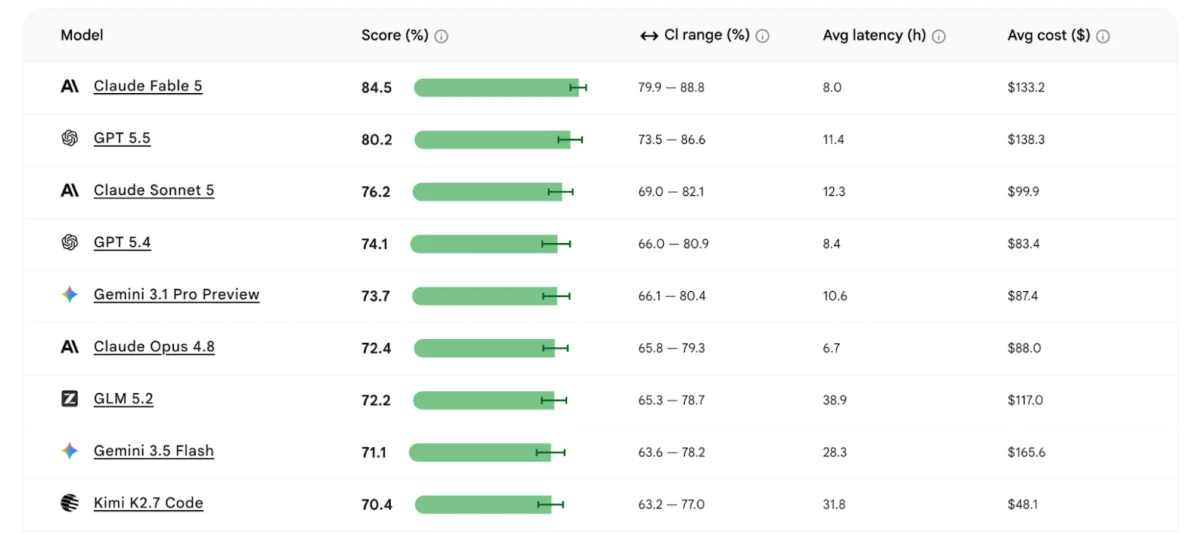
The July update brings a wave of new competitors to the leaderboard, reflecting the intense pace of AI innovation. The inclusion of eight new models—Claude Fable 5, Claude Sonnet 5, Claude Opus 4.8, GLM 5.2, Kimi K2.7 Code, MiniMax M3, Qwen 3.7 Plus, and Qwen 3.7 Max—highlights the global nature of this development.
The Leaderboard Hierarchy
The results of the latest benchmark run show a shifting landscape in model capability:
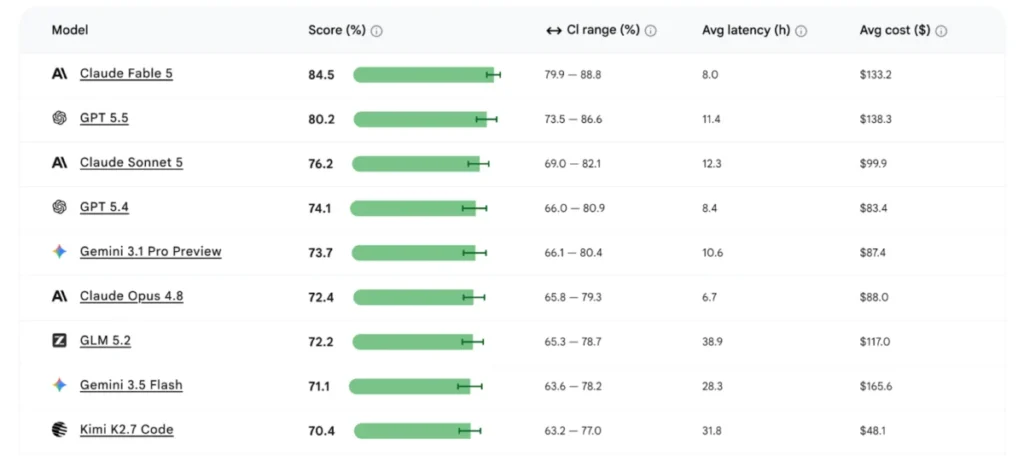
- Claude Fable 5 has surged to the top of the leaderboard with an impressive score of 84.5, setting a new benchmark for excellence in Android-specific coding tasks.
- GPT 5.5 follows closely in second place with a score of 80.2.
- Claude Sonnet 5 rounds out the top three with a score of 76.2.
For developers who prioritize open-weight models, the landscape is equally competitive. GLM 5.2 currently leads the open-weight category with a score of 72.2, closely followed by Kimi K2.7 Code at 70.4.
These scores are not arbitrary; they are derived from rigorous testing against real-world Android scenarios, including complex Jetpack Compose migrations, the intricacies of wearable networking, and the rapid-fire changes required by platform API updates. By checking the updated leaderboard, developers can now make data-driven decisions on which models to integrate into their IDEs for specific tasks.
Official Responses and Community Collaboration
The Android team has explicitly stated that transparency is the bedrock of this initiative. By making the methodology and test harness publicly available on GitHub, the team has invited the developer community to act as both a beneficiary and a contributor.
Opening the Doors to the Community
The request for community feedback has been clear: developers want a say in what constitutes a "real-world" challenge. Starting now, the community is invited to contribute in two primary ways:
- Task Submission: Developers can now propose new, real-world tasks that reflect their daily work challenges.
- Dataset Curation: Through the Harbor Hub, users can now contribute to the datasets that inform the benchmark, ensuring that the tests remain grounded in the day-to-day realities of global Android development.
The Android team will personally review these submissions, ensuring that only tasks meeting the project’s rigorous standards for quality and relevance are integrated. This collaborative model ensures that Android Bench does not become a static artifact, but rather a living, breathing metric that grows alongside the Android platform itself.

Implications: The Shift Toward Agentic Development
The broader implication of these changes is the industry-wide transition toward agentic development. We are moving past the era of simple code completion (where an AI suggests a single line) and into the era of agents that can perform multi-step tasks, such as architectural migrations or cross-module debugging.
A New Standard for Productivity
For the Android developer, these updates translate to a more reliable, effective, and smarter AI assistant. By providing an objective measure of which models handle specific Android complexities best, the leaderboard empowers developers to choose the right tool for the job. Whether you are building a new application from scratch or maintaining a massive, legacy codebase, knowing which model excels at your specific domain—be it networking, UI, or platform integration—can save dozens of hours of manual work.
Looking Ahead
The future of software engineering is intrinsically linked to the efficacy of the tools we use. With the adoption of the Harbor framework and the formalization of community contributions, the Android Bench team is ensuring that the ecosystem stays ahead of the curve.
As AI models continue to evolve at an exponential rate, maintaining a cutting-edge benchmark is not just a luxury; it is a necessity for the health of the Android developer community. We encourage all developers to head over to the official GitHub repository, explore the Harbor Hub, and contribute their own insights.
In the world of AI, the only constant is change. Through transparency, rigorous measurement, and community collaboration, Android Bench is providing the map to navigate that change, ensuring that the developers of tomorrow are equipped with the most capable tools of today.