Bridging the Gap: How Google’s AI-Powered Ultrasound is Transforming Maternal Healthcare
In the quiet corners of rural clinics across the globe, a silent crisis persists. Every year, complications during pregnancy and childbirth claim the lives of approximately 287,000 mothers and 2.4 million neonates. According to the World Health Organization (WHO), the overwhelming majority—roughly 95%—of these tragedies occur in under-resourced regions where access to basic prenatal diagnostics is virtually non-existent. However, a groundbreaking initiative from Google Research is poised to change this narrative, leveraging artificial intelligence and mobile technology to democratize access to critical maternal healthcare.
By utilizing TensorFlow Lite, an open-source machine learning framework, researchers are turning standard, portable ultrasound devices into sophisticated diagnostic tools that can be operated by frontline health workers with minimal training. This project, which integrates advanced AI models onto mobile hardware, represents a pivotal shift in how we approach global health equity.
Main Facts: The Intersection of AI and Obstetrics
At the heart of this initiative is a fundamental challenge: the shortage of trained sonographers. In many underserved areas, the ratio of medical professionals to patients is staggeringly low, leaving pregnant individuals without the essential screening required to monitor fetal health.
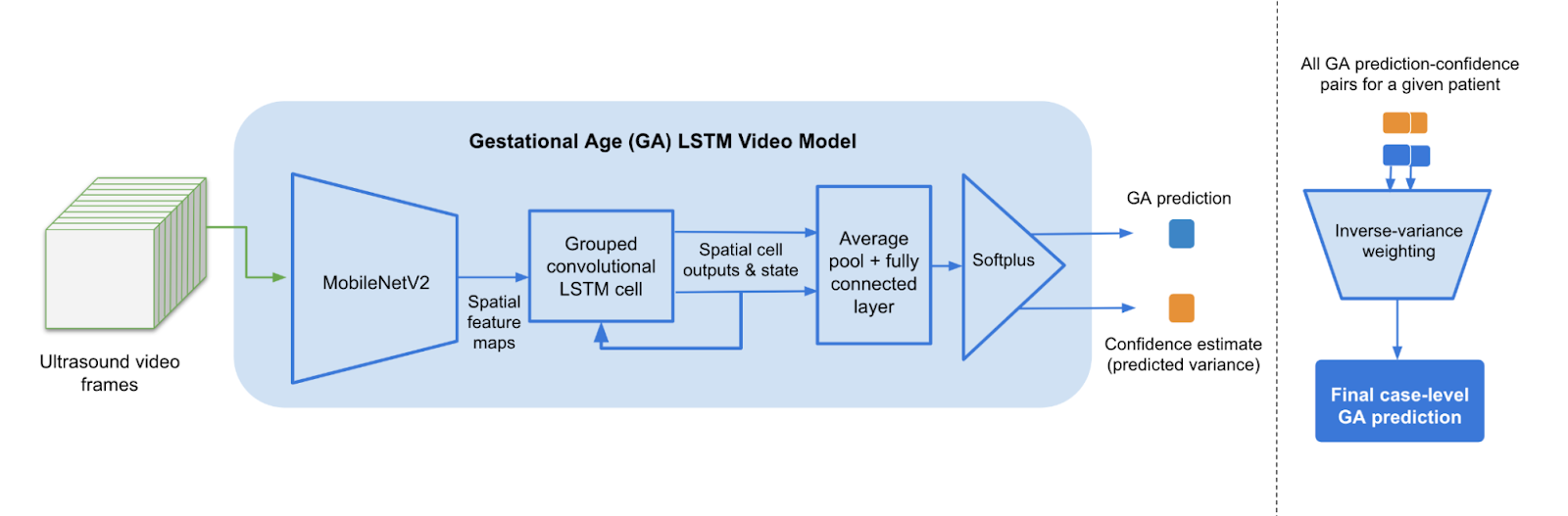
Google’s research team, led by experts in Health AI, has developed models capable of predicting gestational age and identifying fetal presentation (the orientation of the fetus in the womb). These are not merely academic exercises; they are essential data points that inform prenatal care plans, identify high-risk pregnancies, and determine the necessity of medical interventions.

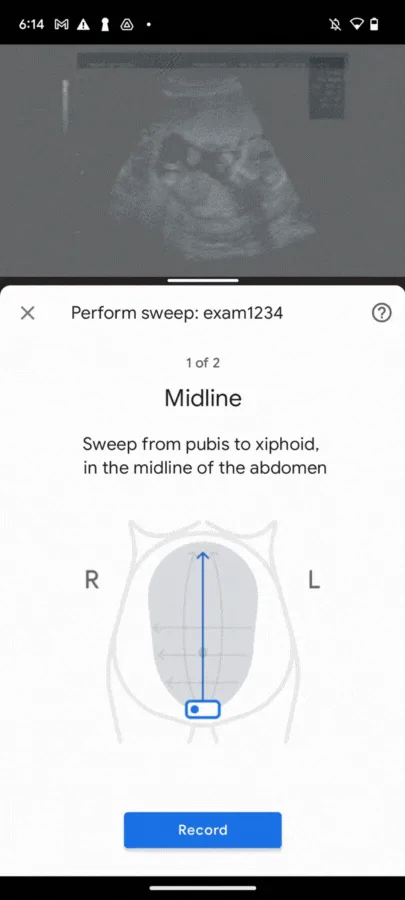
The innovation lies in the "blind sweep" protocol. Traditionally, an ultrasound requires a highly skilled technician to manually navigate the probe to specific anatomical landmarks. The Google team’s model, however, processes video captured during a simple, continuous sweep of the abdomen. The AI analyzes these clips, identifies relevant structures, and provides actionable clinical information, effectively lowering the barrier to entry for performing these life-saving scans.
A Chronological Evolution of the Research
The path to this innovation was paved by several years of rigorous research and iterative design.
Phase 1: Conceptualization and Data Gathering. The project began with the identification of a massive unmet need: the lack of diagnostic tools in low-resource settings. Recognizing that hardware was becoming cheaper but expertise remained scarce, the team pivoted toward software-defined solutions.
Phase 2: Developing the "Blind Sweep." The team moved away from the standard, expert-dependent scan, developing a protocol that allows a non-expert to "sweep" the probe across the abdomen. This process was refined through extensive data collection in clinical environments, training models to recognize anatomy regardless of the sweep’s angle or quality.

Phase 3: Optimization and Mobile Integration. Recognizing that clinics in remote areas often face unreliable internet and power, the team turned to TensorFlow Lite. By optimizing the models for on-device processing, they ensured that the diagnostic tools could function offline, maintaining the privacy of sensitive patient data.
Phase 4: Clinical Validation. The research culminated in a study published in Nature Communications Medicine, titled "A mobile-optimized artificial intelligence system for gestational age and fetal malpresentation assessment." The findings proved that when using the AI-assisted blind sweep, non-experts could match the performance of standard clinical care provided by trained sonographers.
Supporting Data: Performance and Benchmarking
The efficacy of this technology is not anecdotal; it is backed by robust data. In comparative studies, the gestational age regression model demonstrated that it could achieve results comparable to traditional fetal biometry performed by experts.
The classification model for fetal malpresentation showed similarly impressive results. Receiver Operating Characteristic (ROC) curves—the industry standard for measuring diagnostic accuracy—demonstrated that even when the "blind sweeps" were performed by novices, the AI system maintained high levels of sensitivity and specificity.

From a computational perspective, the results were equally promising. By utilizing the TensorFlow Lite GPU delegate, the team achieved a 2x speed improvement in model inference. The system can now process over 30 frames per second on standard mobile devices, allowing for real-time feedback. This is crucial: if the system detects that a sweep is of poor quality, it immediately prompts the user to adjust their technique—perhaps by applying more pressure or using more gel—thereby ensuring the data collected is of the highest possible diagnostic standard.
Official Perspectives: The Road to Global Implementation
Google Research underscores that this project is not merely a technical achievement but a moral one. The team, comprising a diverse group of interdisciplinary researchers, is operating under the umbrella of Google’s AI Principles, which mandate a "thoughtful and responsible" approach to AI development.
"Our vision is to enable safer pregnancy journeys using AI-driven ultrasound," the team stated in a recent blog post. To move from the laboratory to the field, Google has established strategic partnerships that are essential for scaling the technology. Collaborations with Northwestern Medicine in the United States and Jacaranda Health in Kenya are currently serving as the bedrock for further development. These partnerships allow the team to evaluate the models in real-world, diverse clinical environments, ensuring the technology is culturally and contextually appropriate for the communities it is intended to serve.
It is important to note that the team remains transparent about the limitations of the technology. They explicitly state that TensorFlow Lite has not been certified or validated for clinical, medical, or diagnostic purposes in a standalone capacity. The responsibility for clinical validation remains with the medical institutions and users who implement these frameworks. This caution reflects a commitment to safety and the understanding that AI is a tool to augment human decision-making, not replace it.

Implications for the Future of Global Health
The implications of this research extend far beyond the specific application of fetal ultrasound. By proving that complex medical diagnostics can be distilled into mobile-optimized models, Google has set a precedent for a new era of "Edge AI" in healthcare.
1. The Democratization of Diagnostics
If this technology can be scaled, it represents the most significant advancement in maternal health in decades. By training local community health workers to use these AI-enabled devices, nations can bypass the decade-long training pipelines required for traditional sonographers. This could potentially move ultrasound from a specialized service to a routine element of prenatal care, even in the most remote villages.
2. Privacy and Offline Utility
The reliance on on-device machine learning (as opposed to cloud-based processing) is a paradigm shift for rural healthcare. It addresses the "last mile" problem of connectivity, ensuring that diagnostic tools work even when the nearest cellular tower is miles away. Furthermore, by keeping data on the device, the system inherently protects patient privacy, a critical factor in sensitive medical settings.
3. A Template for Future AI Deployment
This project provides a roadmap for other researchers looking to tackle complex tasks with mobile hardware. The success of the "blind sweep" protocol suggests that with enough data and the right architectural constraints, AI can simplify inherently difficult human tasks.
Conclusion: A Collaborative Path Forward
The road ahead is complex. Scaling this technology will require navigating regulatory hurdles, overcoming logistical barriers in distributing hardware, and ensuring that the human-AI interaction is seamless for non-experts. However, the collaborative effort between Google Research, international universities, and local health organizations in Zambia and beyond signals a concerted, global effort to address maternal mortality.
As we look toward the future, the integration of these AI models into the standard of care could be the difference between life and death for millions. By marrying the precision of modern computing with the accessibility of the smartphone, we are witnessing the beginning of a transformation that promises to make the miracle of childbirth safer for parents and infants, regardless of where they live. The research is in its early stages, but the promise is immense: a world where geography no longer dictates the quality of care one receives during pregnancy.