AWS Elevates Agentic AI: General Availability of Web Search for Amazon Bedrock AgentCore
In a significant leap for the enterprise AI landscape, Amazon Web Services (AWS) has announced the general availability of Web Search for Amazon Bedrock AgentCore. This new capability empowers AI agents to ground their responses in real-time, verified web information, effectively bridging the "knowledge gap" that has historically plagued large language models (LLMs). By integrating a managed, secure, and cited search tool directly into the Bedrock ecosystem, AWS is providing developers with a streamlined pathway to build agents that are not only conversational but also factually current and contextually aware.
The Evolution of Agentic AI: Main Facts
The core challenge in deploying AI agents for business-critical tasks is the phenomenon of "hallucination"—where models confidently present outdated or incorrect information because they are limited by their training data cut-off dates. Web Search on Bedrock AgentCore fundamentally addresses this by enabling agents to query the live web.
Key features of this launch include:

- Zero Data Egress: A defining characteristic of this tool is its commitment to security. The search process occurs within the customer’s secured AWS environment, ensuring that sensitive user prompts and retrieval queries are not exposed to external search providers.
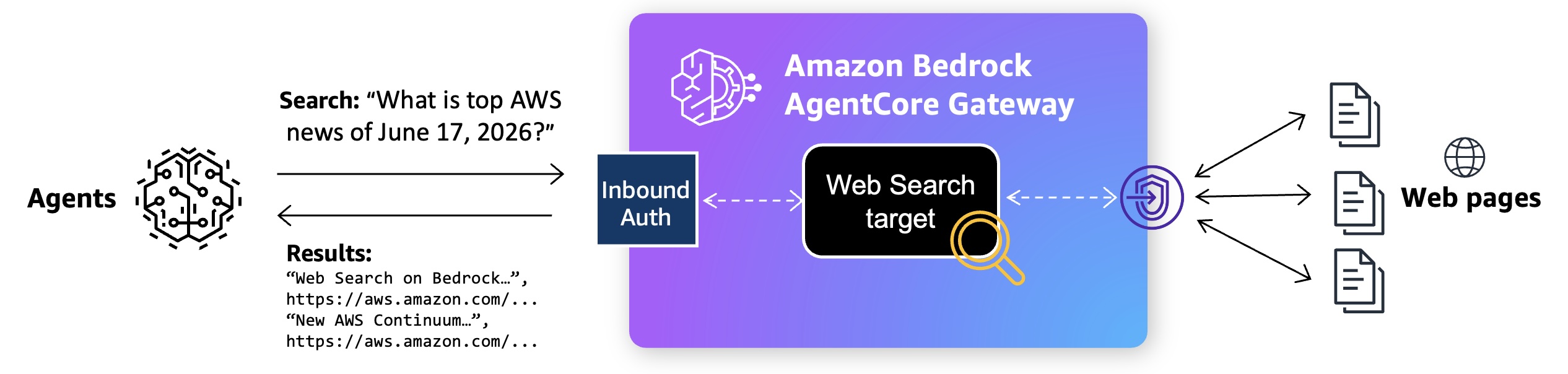
- Model Context Protocol (MCP) Integration: By leveraging the Model Context Protocol, AWS has standardized how these agents interact with external data. The agent sends a natural-language query, and the system returns highly relevant snippets, source URLs, and publication dates.
- Hybrid Intelligence: The tool does not merely scrape the web; it combines Amazon’s vast web index with structured knowledge graph data. This "multi-source grounding" allows agents to verify facts against known truths, providing a higher degree of accuracy than a raw search engine.
- Infrastructure Management: Developers are relieved of the burden of building and maintaining custom search connectors. This is a "fully managed" service, meaning AWS handles the scaling, indexing, and infrastructure, allowing teams to focus on the high-level logic of their AI agents.
A Chronology of Innovation: From Alexa to AgentCore
The roots of this technology run deep within Amazon’s historical investments in information retrieval. For years, the company has refined its search infrastructure through diverse high-scale platforms, including Alexa+, Amazon Quick, and the specialized search engine Kiro.
- Foundation Years: The development began by optimizing how agents understand human intent and map it to reliable data sources. These early iterations focused on voice-first experiences and rapid, intent-driven information retrieval.
- The Rise of Bedrock: With the introduction of Amazon Bedrock, the focus shifted to providing a platform for building generative AI applications. However, the ecosystem required a mechanism for these models to "go outside" their training parameters safely.
- The AgentCore Era: The introduction of Bedrock AgentCore provided the framework for agents to execute tasks. The addition of the Web Search tool, unveiled today, serves as the "eyes and ears" of these agents, allowing them to perform research in real-time.
- Official Launch: Following a period of early access with select enterprise partners, the tool reached general availability in June 2026, specifically debuting in the US East (N. Virginia) region.
Supporting Data: Efficiency and Integration
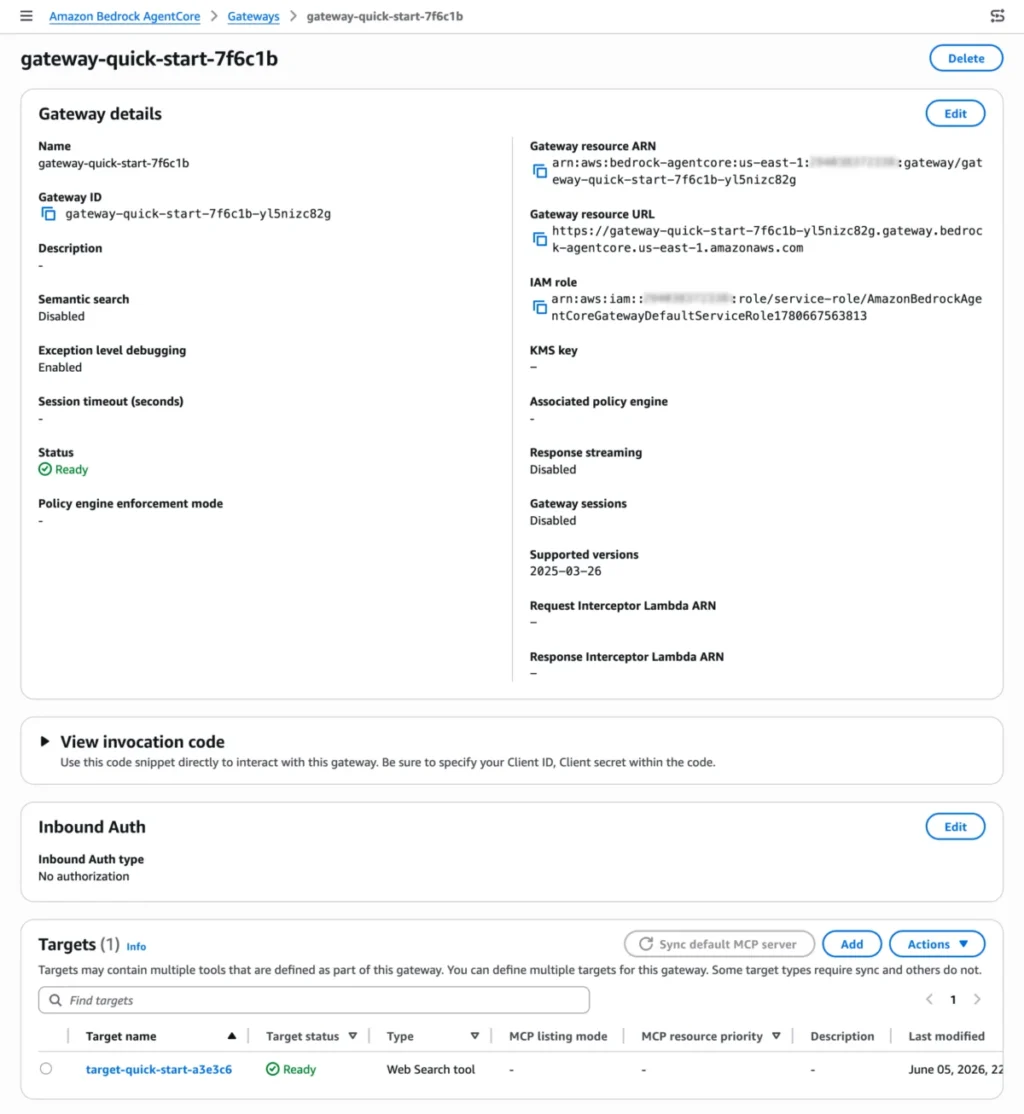
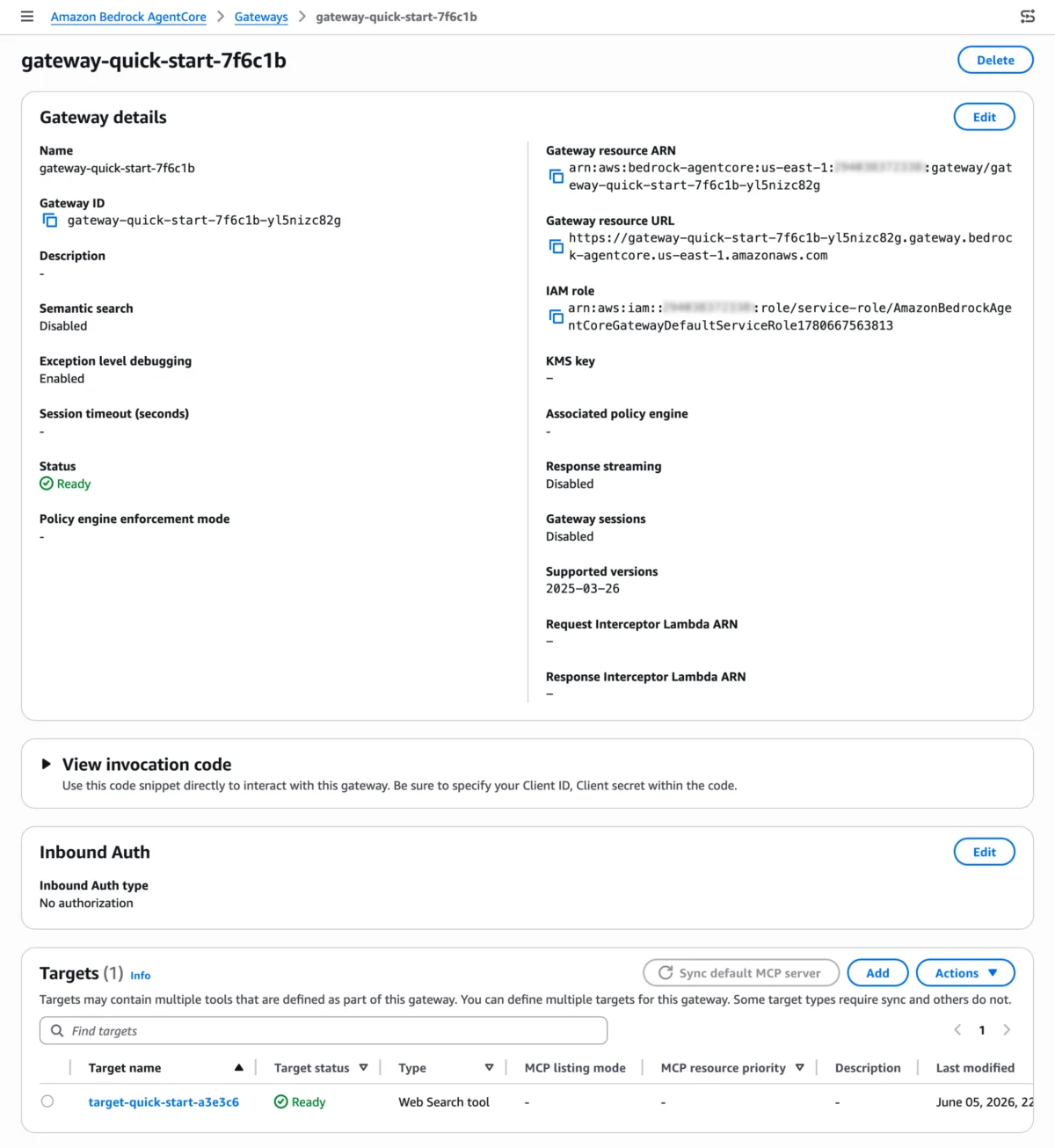
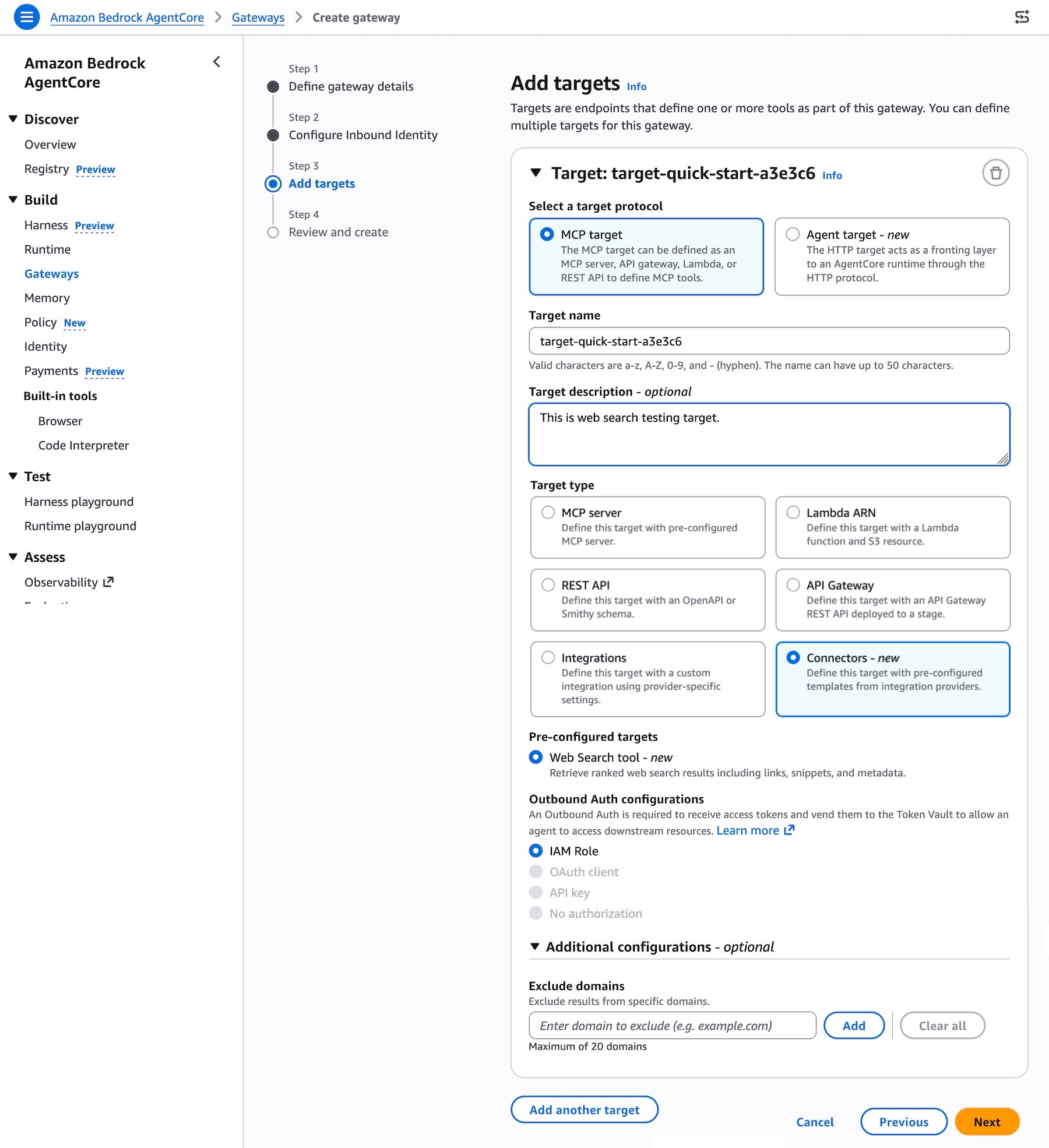
The technical implementation is designed for agility. By utilizing the Bedrock AgentCore Gateway, developers can incorporate web search as a "preconfigured target" using the MCP standard.
Technical Workflow
- Configuration: Within the Bedrock AgentCore console, developers create a Gateway and define the Web Search tool as a Connector target.
- Invocation: The agent identifies a query requiring external context, triggering an API call or a CLI-based request to the Web Search tool.
- Retrieval: The system parses the web and knowledge graph, returning snippets and metadata.
- Reasoning: The LLM integrates these findings to construct a cited, grounded, and accurate response.
Pricing and Accessibility
AWS has opted for a transparent, usage-based pricing model to lower the barrier to entry. Priced at $7 per 1,000 queries, it offers a predictable cost structure for enterprises. Furthermore, the inclusion of the service under the AWS Free Tier—which offers up to $200 in credits for new users—allows developers to prototype and test these agents without immediate financial risk.

Official Responses and Customer Validation
The value of this technology is best articulated by those who have been utilizing it during the early access phase.
Benchling, a leader in R&D cloud solutions for the life sciences, has integrated the tool to help scientists synthesize complex data. Nicholas Larus-Stone, Head of AI Agents at Benchling, noted, "Scientists using Benchling AI can now ask about a target they’re actively working on and get answers grounded in both their institutional data and published literature. The result is more complete science and hypothesis generation done right."
Similarly, Gen Digital, a giant in the cyber-safety space, has utilized the tool for their "Norton Revamp" product. Iskander Sanchez-Rola, Senior Director of AI & Innovation, highlighted the security aspect: "What we value most is that AWS uses its own search index and keeps queries within our trusted AWS environment." This sentiment underscores the primary reason enterprises choose AWS: the ability to marry cutting-edge AI capabilities with stringent data governance.
Implications for the Future of Enterprise AI
The general availability of Web Search on Bedrock AgentCore is not just a feature update; it marks a transition in how corporations view AI.
The End of Static AI
For years, the "training cut-off" was the Achilles’ heel of LLMs. By providing a native, managed bridge to the live web, AWS is signaling the end of the era of static, stale AI. Agents that cannot "read the news" or access the latest documentation are increasingly viewed as legacy technology.
The Standardization of Interoperability
The use of the Model Context Protocol (MCP) is particularly noteworthy. By adopting an open standard for tool interaction, AWS is encouraging a broader ecosystem. This suggests that in the future, developers will be able to swap out search providers or add other tools (such as database connectors or internal APIs) with equal ease, using the same "Gateway" architecture.
Governance as a Competitive Advantage
In an era of increasing AI regulation, the ability to perform web searches without data leaking into the hands of third-party search API providers is a massive competitive advantage. Companies can now utilize the power of the web while maintaining the regulatory and compliance postures demanded by legal and security teams.
Looking Ahead
As AWS continues to roll out this capability to other regions, the focus will likely shift to expanding the "knowledge graph" capabilities. Integrating more structured, domain-specific data into the search process will allow agents to transition from being general-purpose assistants to highly specialized experts in fields ranging from legal research to real-time supply chain management.
For developers looking to get started, the AWS documentation provides a clear path through the Bedrock AgentCore console. As the industry moves toward more autonomous, agentic workflows, the ability to effectively "search, cite, and synthesize" will be the defining trait of successful AI deployment. By simplifying this process, AWS has provided the tools necessary for the next generation of AI to move from the research lab to the front lines of business.