Revolutionizing Image Editing: Simon Willison Ports AI Inpainting to Your Browser, Powered by AI
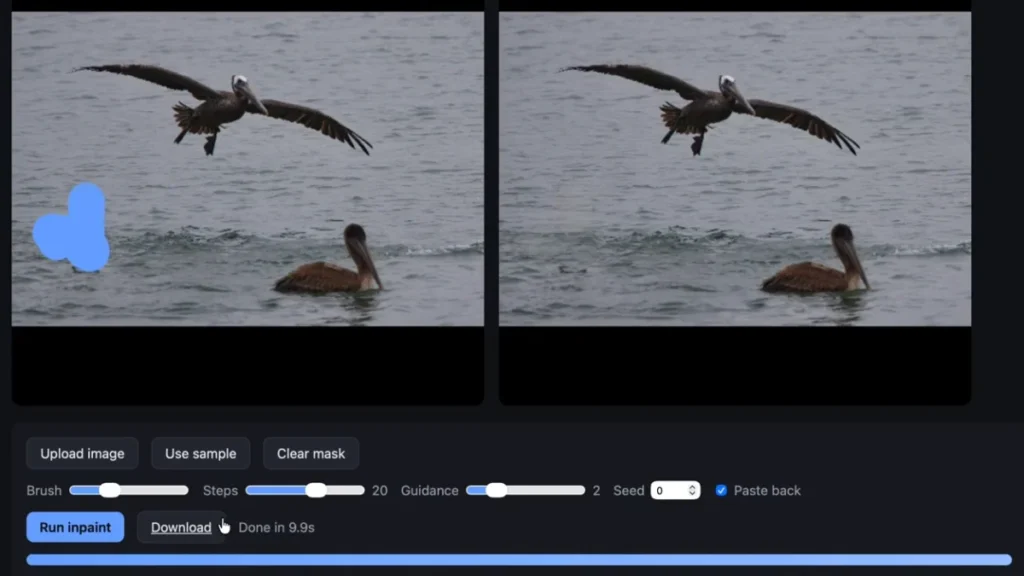
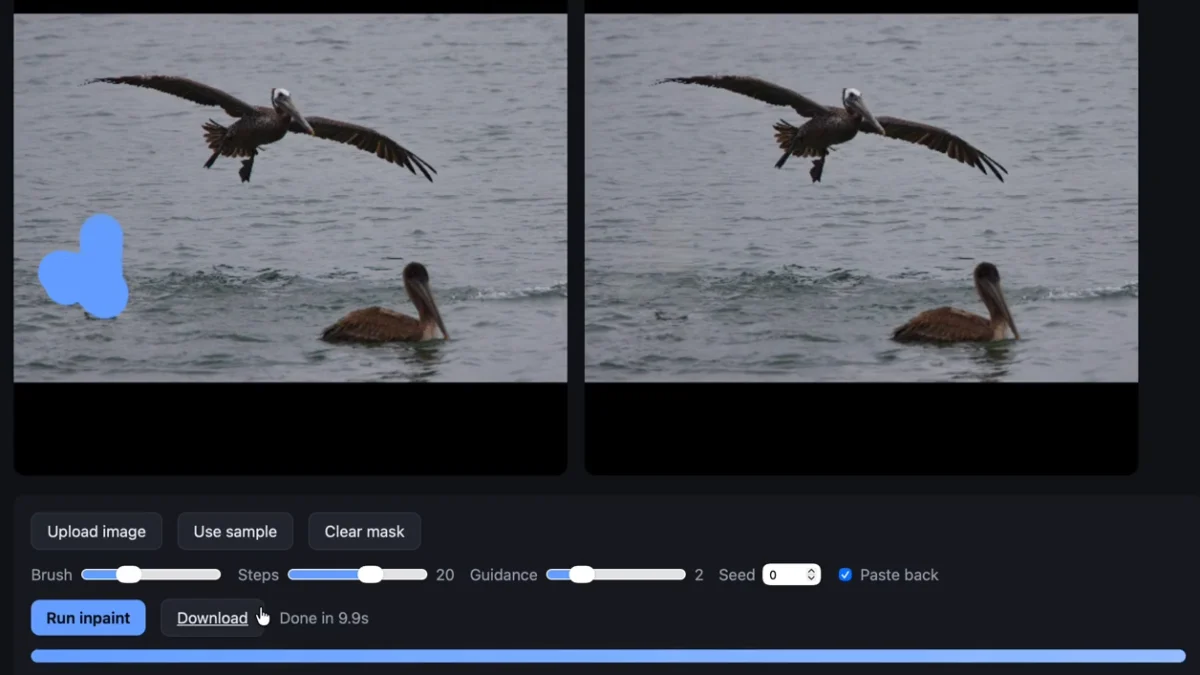
In a groundbreaking demonstration of technological convergence, acclaimed software developer Simon Willison has successfully ported the sophisticated Moebius 0.2B image inpainting model to run entirely locally within a standard web browser. This remarkable feat, largely orchestrated by an advanced AI coding agent, signifies a pivotal moment for accessible AI, pushing the boundaries of what is possible on the client side and heralding a new era for web-based applications. The project not only delivers a powerful image editing tool directly to users’ devices but also serves as a profound case study in the rapidly evolving capabilities of artificial intelligence in software development.
The newly deployed web tool offers a simple yet potent functionality: users can upload an image, designate a section for removal, and the Moebius model will intelligently "patch up" the missing area, seamlessly reconstructing the image. What makes this particularly revolutionary is its complete independence from remote services or expensive server-side GPU resources. The entire process, from model execution to image manipulation, occurs directly on the user’s machine, ensuring enhanced privacy, reduced latency, and a significantly lower barrier to entry for advanced AI capabilities.
Willison’s venture into client-side AI was not merely about creating a tool; it was an intentional experiment to gauge the advancements in AI coding agents. Intriguingly, Willison, a seasoned software developer, personally wrote almost none of the code for this complex porting project. Instead, he leveraged the formidable capabilities of Claude Opus 4.8, an AI agent that demonstrated an astonishing level of autonomy and proficiency in translating a cutting-edge machine learning model into a web-compatible format. This collaborative triumph underscores a paradigm shift in software development, where human ingenuity increasingly converges with artificial intelligence to accelerate innovation and tackle previously insurmountable technical challenges.
The project’s immediate availability via an online demo invites the public to experience this innovation firsthand, though prospective users should be prepared for a substantial initial download: a 1.27 gigabyte model file is required on the first run. This one-time download, facilitated by modern web APIs, then enables subsequent uses without further internet dependency, solidifying the promise of truly local AI. Simon Willison’s work, documented extensively in his accompanying write-up and the project’s GitHub repository, provides an invaluable glimpse into the future of web development, AI deployment, and the evolving relationship between human developers and their AI counterparts.
A Chronology of Innovation: The Journey to Client-Side AI
The journey to bringing the Moebius 0.2B image inpainting model into the web browser is a testament to persistent innovation and the rapid progression of both web technologies and artificial intelligence. Understanding the chronological steps and motivations behind this project sheds light on its profound significance.
The Genesis of Moebius 0.2B and the Inpainting Revolution
Image inpainting, at its core, is the art and science of intelligently filling in missing or corrupted parts of an image. This task, historically requiring meticulous manual effort from graphic designers, has been revolutionized by deep learning models. Moebius 0.2B stands as one such advanced model, capable of synthesizing new pixels that are contextually consistent with the surrounding image, effectively "erasing" objects or repairing damaged photographs with surprising realism.
Before Willison’s project, sophisticated models like Moebius typically operated in environments optimized for their computational demands. This usually meant powerful servers equipped with high-end Graphics Processing Units (GPUs), often accessed via cloud services. While effective, this server-side paradigm introduces several limitations: reliance on internet connectivity, potential privacy concerns as images are uploaded to remote servers, and recurring costs for cloud infrastructure. The very existence of Moebius 0.2B, a model designed for complex generative tasks, set the stage for a challenge: could such a resource-intensive operation be decentralized and brought directly to the user?
Simon Willison’s Vision: Pushing the Boundaries of WebAI
Simon Willison is widely recognized in the software development community for his expertise in data, web technologies, and his innovative explorations into emerging fields like AI. His work often involves democratizing complex technologies and making them accessible through practical, open-source projects. With this particular endeavor, Willison’s motivation extended beyond merely porting a model; he explicitly framed it as an opportunity to learn about the current state of AI coding agents and their efficacy in real-world development scenarios.
His vision was clear: to demonstrate that client-side execution of advanced AI models was not just a theoretical possibility but a tangible reality. This required overcoming several significant technical hurdles, primarily translating a model built in a specialized AI framework (PyTorch) into a format executable within a web browser, and then ensuring it could leverage local hardware for performance without relying on server infrastructure. It was a bold objective that encapsulated the spirit of web decentralization and the growing desire for "edge AI"—where computation happens as close to the data source (the user’s device) as possible.
The AI Assistant Takes the Helm: Claude Opus 4.8’s Role
Perhaps the most fascinating aspect of this project’s chronology is the pivotal role played by an artificial intelligence agent, Claude Opus 4.8. Rather than personally writing the intricate code for model conversion, WebGPU integration, and browser compatibility, Simon Willison engaged Claude as his primary developer. This marks a significant departure from traditional software engineering workflows and highlights a new frontier in human-AI collaboration.
Willison effectively acted as an architect and project manager, guiding Claude Opus 4.8 with high-level instructions and problem definitions. The AI agent then took these directives and autonomously executed a complex series of tasks:
- PyTorch to ONNX Conversion: Claude handled the intricate process of converting the Moebius model from its native PyTorch framework to ONNX (Open Neural Network Exchange), an open standard designed to represent machine learning models, enabling them to run on various platforms and devices.
- WebGPU Integration: The AI agent was tasked with integrating the ONNX model to run efficiently within the browser using WebGPU. This involved understanding how to interact with this low-level web API to harness local GPU acceleration, a non-trivial task requiring deep knowledge of both web standards and model execution.
- CacheStorage Implementation: Recognizing the substantial size of the model, Claude implemented the CacheStorage API to manage the initial 1.27GB download. This ensured that once the model was downloaded, it would be persistently stored and available for offline use, enhancing the user experience.
- Architectural Documentation: In a truly remarkable demonstration of its capabilities, Claude Opus 4.8 went beyond mere code generation. It independently created an informative document,
understanding.md, explaining the underlying architecture of the ported application. This artifact not only details the technical choices made but also provides a clear, concise overview for other developers, showcasing the AI’s ability to not only build but also comprehend and articulate complex systems.
The degree of autonomy exhibited by Claude Opus 4.8 in this project underscores a profound shift in the landscape of AI coding agents. It moves beyond simple code snippets or bug fixes, demonstrating an ability to manage and execute multi-faceted engineering challenges from conception to documentation, under human guidance.
Unpacking the Technical Brilliance: Supporting Data and Mechanisms
The successful porting of the Moebius 0.2B model to a web browser relies on a sophisticated interplay of cutting-edge web standards and machine learning deployment techniques. Each technical component plays a crucial role in enabling this client-side AI revolution.
From PyTorch to ONNX: Bridging Frameworks
At the heart of modern AI development lies a diverse ecosystem of machine learning frameworks, with PyTorch being one of the most prominent. Developed by Facebook’s AI Research lab, PyTorch is celebrated for its flexibility, dynamic computation graphs, and ease of use in research and prototyping. However, models trained in PyTorch are not natively executable in web browsers.
This is where ONNX (Open Neural Network Exchange) becomes indispensable. ONNX is an open standard that defines a common set of operators and an open format to represent deep learning models. Its primary purpose is to facilitate interoperability between different deep learning frameworks. By converting a PyTorch model to ONNX, developers can then deploy that model across a wide range of platforms, including those where PyTorch itself might not be directly supported, such as web browsers.
The conversion process, orchestrated by Claude Opus 4.8, involved translating the complex computational graph and learned parameters of the Moebius 0.2B model from PyTorch’s internal representation into the standardized ONNX format. This step is critical because it creates a portable version of the model that can then be loaded and executed by ONNX runtime engines, which are available for various environments, including the web. Without this framework-agnostic intermediate representation, directly running a PyTorch model in a browser would be significantly more challenging, if not impossible.
WebGPU: The Powerhouse in Your Browser
For advanced AI models like Moebius 0.2B, performance is paramount. Image inpainting involves numerous complex mathematical operations, often best handled by parallel processing units. Historically, this meant relying on powerful discrete GPUs on servers. However, the advent of WebGPU is changing this paradigm for web applications.
WebGPU is a new web standard and API that provides web applications with direct access to a computer’s GPU, offering a significantly more powerful and lower-level interface than its predecessor, WebGL. It allows web developers to perform high-performance graphics rendering and general-purpose computation (GPGPU) directly within the browser, leveraging the user’s local GPU resources (if available).
In Willison’s project, WebGPU is the computational engine that powers the ONNX model. After the Moebius model is converted to ONNX, an ONNX runtime specifically compiled for WebGPU (or a compatible WebAssembly backend leveraging WebGPU) can execute the model’s operations. This means that instead of sending image data to a remote server for processing, the user’s own graphics card performs the heavy lifting, dramatically reducing latency and eliminating the need for server infrastructure. The ability to tap into local GPU power transforms the browser from a mere content viewer into a robust platform for demanding AI applications.
CacheStorage API: Handling Large Models Seamlessly
The 1.27 gigabyte size of the Moebius 0.2B model presents a practical challenge for web deployment. Downloading such a large file every time a user visits the web tool would lead to a frustrating and impractical user experience. This is where the CacheStorage API comes into play.
The CacheStorage API is part of the broader Service Worker ecosystem, which enables web applications to gain more control over network requests and caching. It allows web applications to programmatically store and retrieve network responses (including large files like AI models) in a persistent cache, separate from the browser’s standard HTTP cache.
When a user accesses the Moebius web tool for the first time, the 1.27GB model is downloaded and, crucially, stored using the CacheStorage API. For all subsequent visits, the Service Worker intercepts the request for the model and serves it directly from the local cache, bypassing the network entirely. This mechanism ensures that the large download is a one-time event, providing a seamless and offline-capable experience for recurring users. Without the CacheStorage API, the project’s viability as a practical, client-side tool would be severely compromised, highlighting the importance of robust web caching strategies for large AI assets.
The AI’s Contribution: Beyond Code Generation
Beyond the direct implementation of these technologies, the AI agent’s contribution extended into the realm of architectural understanding and documentation. The understanding.md document, generated by Claude Opus 4.8, is more than just a README; it’s a technical explanation of the choices made, the components used, and how they interact.
This capability demonstrates that advanced AI agents are moving beyond simply generating code based on prompts. They can comprehend the broader system architecture, explain complex technical relationships, and even anticipate the need for documentation that helps other developers understand and maintain the project. This level of meta-cognition—the ability to understand and articulate the "why" behind the "how"—is a profound indicator of the rapidly expanding intellectual capabilities of AI in the development pipeline. It suggests a future where AI not only writes code but also contributes to design, analysis, and knowledge transfer, becoming a truly collaborative partner in complex engineering endeavors.
Expert Perspectives and Official Responses
While the original article does not detail specific "official responses" from organizations, Simon Willison’s project inherently elicits strong reactions and sparks significant discussion within the developer community and among AI ethicists. His work serves as a practical, compelling counter-narrative to some of the prevailing skepticism surrounding AI coding agents.
The Developer Community’s Take
Within the developer community, Willison’s project is likely to be met with a mix of excitement, curiosity, and perhaps a healthy dose of critical evaluation. As a respected voice in web development and AI, his endorsement of AI agents through practical application carries significant weight. The success of porting a complex model entirely client-side aligns perfectly with the burgeoning trend of "on-device AI" or "edge AI," which seeks to decentralize AI processing for privacy, efficiency, and robustness.
Many developers will view this as a powerful demonstration of the web platform’s evolving capabilities. It proves that the browser, once a mere document renderer, can now serve as a powerful computation engine, leveraging local hardware to run sophisticated AI models. This opens doors for new categories of web applications that were previously confined to native desktop environments or server-side infrastructures.
However, the quote from the original article, mentioning that "One may consider AI coding agents to be disasters waiting to happen," reflects a genuine and ongoing debate. Concerns around the quality, security, and maintainability of AI-generated code are valid. Developers grapple with questions of debugging AI-produced errors, ensuring code efficiency, and maintaining human oversight in a pipeline increasingly managed by machines. Willison’s project, by showcasing a successful and complex implementation, provides concrete evidence that with proper guidance and strategic application, AI agents can be incredibly effective tools, rather than just sources of potential chaos. It encourages developers to learn how to effectively "prompt engineer" and manage AI tools, shifting their role from sole code creators to architects and overseers of AI-driven development.
AI Ethics and Development Paradigms
Beyond the technical aspects, Willison’s project has broader implications for AI ethics and the future of development paradigms. The increased autonomy of AI agents in writing significant portions of code raises questions about accountability. If an AI agent introduces a bug or a security vulnerability, who is ultimately responsible? The human developer who provided the prompt, the AI model’s creators, or the AI itself? These are complex questions that will require new legal and ethical frameworks as AI becomes more integrated into the development lifecycle.
Furthermore, the project contributes to the ongoing discourse about the future of programming roles. If AI agents can autonomously handle tasks like model porting and architectural documentation, what does this mean for entry-level programmers or even experienced developers whose work primarily involves routine coding tasks? The prevailing expert consensus, supported by Willison’s experience, suggests a shift rather than an elimination of roles. Developers will likely transition from writing boilerplate code to more high-level tasks: defining problems, designing architectures, verifying AI-generated solutions, and focusing on creative problem-solving and strategic implementation. The need for human expertise in prompt engineering, critical evaluation, and ethical considerations will become even more pronounced. This project, therefore, is not just about technology; it’s about the evolving nature of human work in an AI-powered world.
Profound Implications: The Future of Web, AI, and Development
The successful porting of the Moebius 0.2B image inpainting model to a web browser, largely through the efforts of an AI coding agent, carries profound implications across multiple domains, from the democratization of technology to the very definition of software development.
Democratizing Advanced AI
Perhaps the most immediate and significant implication is the democratization of advanced AI capabilities. By enabling sophisticated image inpainting to run directly in a web browser, Willison’s project removes several traditional barriers to access:
- No specialized hardware required: Users don’t need powerful GPUs or dedicated servers. Any device capable of running a modern web browser can potentially leverage these tools.
- No cloud subscriptions or API keys: The model runs locally, eliminating recurring costs associated with cloud-based AI services.
- Accessibility for all: This opens up advanced AI editing to hobbyists, students, small businesses, and anyone without the technical expertise or financial resources to set up server-side AI infrastructure. It fosters innovation by putting powerful tools into more hands.
This shift empowers a broader user base, potentially leading to novel applications and creative uses of AI that were previously constrained by technical and financial limitations.
Enhanced Privacy and Security
A critical advantage of client-side AI is the inherent enhancement of privacy and security. When an AI model runs locally in the browser:
- Data never leaves the device: Sensitive image data, which might contain personal information or proprietary content, is processed entirely on the user’s computer. There is no need to upload images to a third-party server, eliminating potential privacy breaches or data leaks during transit or storage.
- Reduced attack surface: By removing the reliance on remote servers, the attack surface for malicious actors is significantly reduced. Users are less susceptible to server-side vulnerabilities or data breaches that could compromise their input or processed data.
This aspect is particularly crucial for applications dealing with personal media, medical imaging, or confidential corporate assets, where data sovereignty is paramount.
The Evolving Role of the Developer
Willison’s experience with Claude Opus 4.8 offers a compelling glimpse into the future of software development. The role of the human developer is clearly evolving from a primary code writer to an architect, strategist, and "AI whisperer."
- From Coder to Conductor: Developers will increasingly define problems, design high-level architectures, and guide AI agents through complex implementation tasks. Their expertise will lie in understanding the nuances of different AI models, crafting effective prompts, and integrating AI-generated components into larger systems.
- Emphasis on Verification and Oversight: With AI generating significant portions of code, the human role will shift towards rigorous testing, debugging, performance optimization, and ensuring the ethical implications of the AI’s output. Developers will need to be skilled at auditing AI-generated solutions.
- Focus on Creativity and Innovation: By offloading repetitive or complex coding tasks to AI, human developers can allocate more time to truly innovative problem-solving, exploring novel ideas, and focusing on the strategic aspects of software design and user experience. This could unlock unprecedented levels of productivity and creativity in the industry.
Paving the Way for Offline-Capable AI Applications
The effective use of the CacheStorage API means that once the substantial 1.27GB model is downloaded, the Moebius web tool can function entirely offline. This capability opens up new avenues for robust, internet-independent AI applications.
Imagine professional-grade image editing tools, language translation, or even local machine learning model training that can be performed anywhere, anytime, without an internet connection. This enhances the utility and reliability of web applications, making them more resilient and accessible in diverse environments, from remote locations to situations with unreliable connectivity. It blurs the lines between traditional desktop applications and web-based tools, offering the best of both worlds.
Challenges and Future Outlook
Despite its revolutionary nature, the project also highlights existing challenges and points towards future areas of development:
- Initial Download Size: While manageable with CacheStorage, a 1.27GB download is still significant and could deter users with limited bandwidth or storage. Future advancements might focus on more compact model architectures or efficient streaming techniques.
- Performance Variability: While WebGPU leverages local GPUs, performance will naturally vary depending on the user’s hardware. Ensuring consistent and optimal performance across a wide range of devices remains an ongoing challenge for client-side AI.
- Standardization and Ecosystem: As browser-based AI proliferates, there will be a growing need for more standardized ways to package, deploy, and update AI models for the web. A robust ecosystem of tools, libraries, and best practices will be essential for widespread adoption.
- Rapid Pace of Change: The AI landscape is evolving at an unprecedented pace. What is cutting-edge today might be commonplace tomorrow. Developers and AI agents alike will need to continuously adapt and learn new techniques and technologies to stay relevant.
Simon Willison’s port of Moebius 0.2B is more than just a clever hack; it’s a powerful harbinger of the future. It demonstrates the tangible reality of client-side AI, the burgeoning capabilities of AI coding agents, and the transformative potential for how we build, deploy, and interact with artificial intelligence. As the lines between human and AI contribution blur, the emphasis shifts from merely writing code to orchestrating intelligence, promising an era of unprecedented innovation and accessibility in technology.