Beyond Fragility: The Digital Renaissance of Global Supply Chains
For over three decades, the global supply chain was defined by a singular, obsessive philosophy: efficiency. Driven by the gospel of lean manufacturing, just-in-time (JIT) delivery, and single-source procurement, multinational corporations optimized their networks relentlessly for cost-minimization and velocity. It was a model that thrived in the tranquil waters of a stable, globalized era.
However, the illusion of stability shattered under the weight of the 21st century’s "polycrisis." From the COVID-19 pandemic to the Suez Canal blockage, and from the global semiconductor famine to the rising tide of geopolitical volatility and climate-driven catastrophes, the fragility of the "efficient" model was laid bare. Leaders have come to a sobering realization: efficiency without visibility is merely a recipe for disaster. The ongoing race to digitize the supply chain is, at its core, a strategic pivot from blind optimization to intelligent resilience.
The Architecture of Invisibility: Why the Old Model Failed
For years, the industry operated on "assumed" visibility. Companies possessed a clear view of their Tier 1 suppliers and their own internal warehousing, but the map went dark beyond that point. Tier 2 and Tier 3 suppliers—the specialized chemical plants, the niche component manufacturers, and the regional logistics hubs—remained opaque.
When a disruption occurred deep in the supply chain, the primary firm was often the last to know, resulting in a bullwhip effect where minor delays cascaded into total production stoppages. This opacity was a byproduct of fragmented data silos, manual reporting, and a lack of integrated digital infrastructure. Today, that is changing. Network-based data sharing, IoT-enabled tracking, and AI-driven predictive analytics are finally turning the "blind spots" into operational intelligence.
Chronology: From Lean Efficiency to Resilience-Driven Digitalization
The evolution of the modern supply chain can be mapped across three distinct phases:
- The Era of Lean Optimization (1990–2010): The period dominated by the "Amazon effect" and JIT methodologies. The goal was to minimize inventory costs and maximize throughput. Resilience was often sacrificed in favor of quarterly bottom-line performance.
- The Age of Disruption (2010–2020): Early warnings began to emerge—natural disasters in Southeast Asia, political instability in Eastern Europe, and trade wars. These events highlighted the dangers of over-reliance on singular geographic hubs, yet many firms remained anchored to legacy processes.
- The Digital Transformation Epoch (2020–Present): Triggered by the pandemic, this era marks the transition toward "Sense and Respond" architectures. The focus has shifted toward building redundancy, gaining granular visibility, and utilizing AI to manage complexity in real-time.
The Technological Vanguard: IoT and AI at the Helm
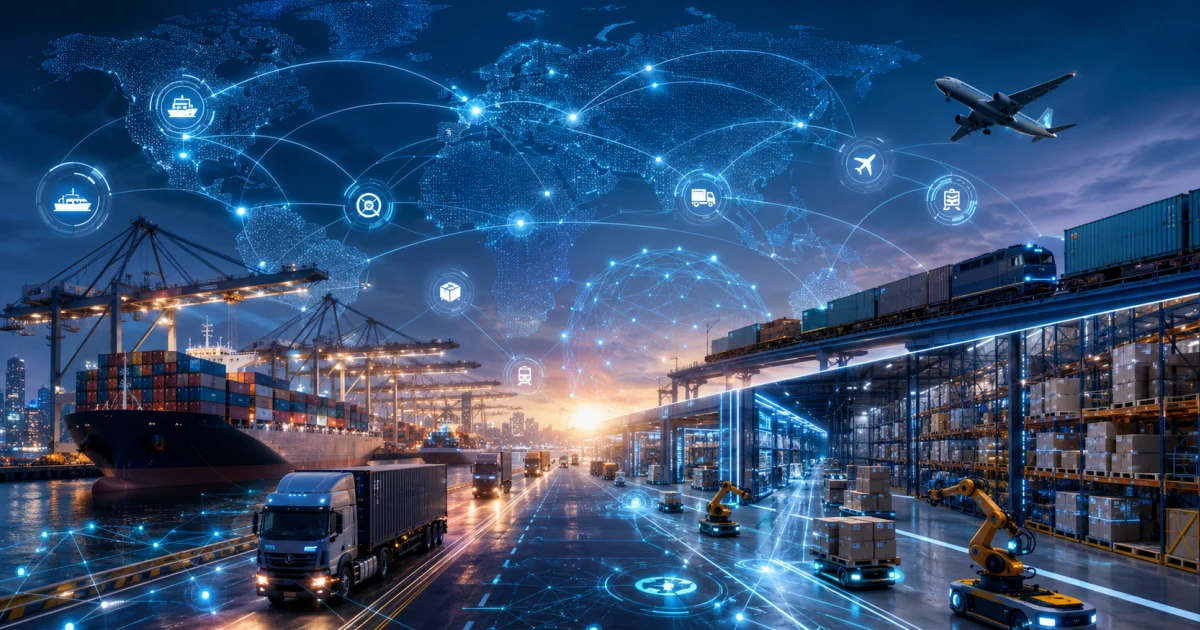
Modern supply chains are now being instrumented with a nervous system of digital tools that provide a continuous, high-fidelity pulse of global operations.
Real-Time Logistics and IoT
The deployment of IoT sensors on shipping containers and individual pallets has moved logistics from "best-guess" tracking to "live-truth" monitoring. GPS coordinates combined with telemetry data—tracking temperature, humidity, and shock—ensure that pharmaceutical, food, and high-tech shipments arrive in the specified condition. This is no longer just a luxury; for sensitive goods, it is a regulatory and quality compliance mandate.
Closing the Inventory Gap
At the warehouse level, the age-old problem of "what the system says" versus "what is on the shelf" is being solved by RFID, computer vision, and autonomous inventory drones. By replacing periodic manual cycle counts with continuous automated monitoring, companies can finally achieve a real-time inventory position, reducing carrying costs while virtually eliminating stockouts.
AI-Driven Demand Sensing
Traditional forecasting was notoriously inaccurate, relying on lagging historical data and subjective sales estimates. AI has transformed this into "Demand Sensing." By ingesting a massive, disparate signal set—including point-of-sale data, social media sentiment, web traffic, weather patterns, and macroeconomic volatility—AI updates forecasts continuously. This transition from monthly cycles to real-time adjustments allows for far more agile production scheduling.
Supporting Data: The Cost of Disruption vs. The Investment in Intelligence
The financial implications of this transformation are profound. Industry analysis suggests that organizations that successfully digitize their supply chains report:
- A 15–20% reduction in inventory holding costs through better demand forecasting.
- A 30% improvement in "on-time, in-full" (OTIF) delivery rates.
- A significant reduction in carbon footprint (Scope 3 emissions), as better routing and reduced overproduction directly contribute to sustainability goals.
However, the cost of inaction is higher. Recent data indicates that the average company loses nearly 40% of its annual profit due to supply chain disruptions over a decade. The return on investment for digital platforms—ranging from Control Towers to AI risk-monitoring software—is increasingly seen as a baseline insurance policy against catastrophic operational failure.
Official Responses and Industry Perspectives
Supply chain leaders, speaking at industry forums, are increasingly using terms like "Orchestration" rather than "Management." The consensus is that a "Control Tower" approach—a centralized hub that aggregates data from suppliers, logistics providers, and internal production systems—is the mandatory architectural goal.
"We no longer look for the cheapest price; we look for the most resilient path," stated a leading logistics executive during a recent digital transformation roundtable. "When we see a port delay or a supplier financial crisis, the control tower doesn’t just alert us; it simulates the downstream impact and offers us three alternative shipping lanes before the disruption even reaches our warehouse."
This sentiment is echoed by regulatory bodies, which are increasingly mandating "Digital Product Passports." These records track a product’s provenance, material composition, and carbon intensity throughout its lifecycle. What started as an operational efficiency project is now becoming the core architecture for mandatory environmental, social, and governance (ESG) reporting.
Implications for the Future: The Human and Cultural Shift
Perhaps the most underestimated aspect of this revolution is the human element. The supply chain professional of the future is not a "firefighter" who spends their day expediting missing parts or handling angry customer calls. They are, instead, an analyst and a strategist.
This shift requires a fundamental redesign of organizational culture. Employees must move away from reacting to "what just happened" toward working with "probabilistic scenarios." This requires high-level training in data literacy, simulation software, and risk-based decision-making. Companies that treat this as a software-only implementation often fail; those that invest in the human cognitive shift alongside the digital infrastructure succeed.
Conclusion: Building Durable Competitive Advantage
The era of "flying blind" is coming to a definitive end. The supply chain has shifted from being a back-office cost center to a primary driver of top-line growth and brand loyalty.
By integrating digital visibility, firms are no longer forced to choose between efficiency and resilience. Instead, they have unlocked a "third way": the ability to carry less inventory while simultaneously maintaining higher service levels, and the capability to diversify suppliers without compromising on cost.
In a volatile, unpredictable world, the digital supply chain is not merely a tool for survival. It is the most significant competitive moat a company can build. Organizations that embrace this transition today are positioning themselves to thrive in an environment where speed, transparency, and intelligence are the currencies of the future. The supply chain is no longer just a pipeline for goods; it is the central nervous system of the modern enterprise.