Sky-High Innovation: How a San Francisco Maker Transformed SFO Flight Paths into an Immersive Home Installation
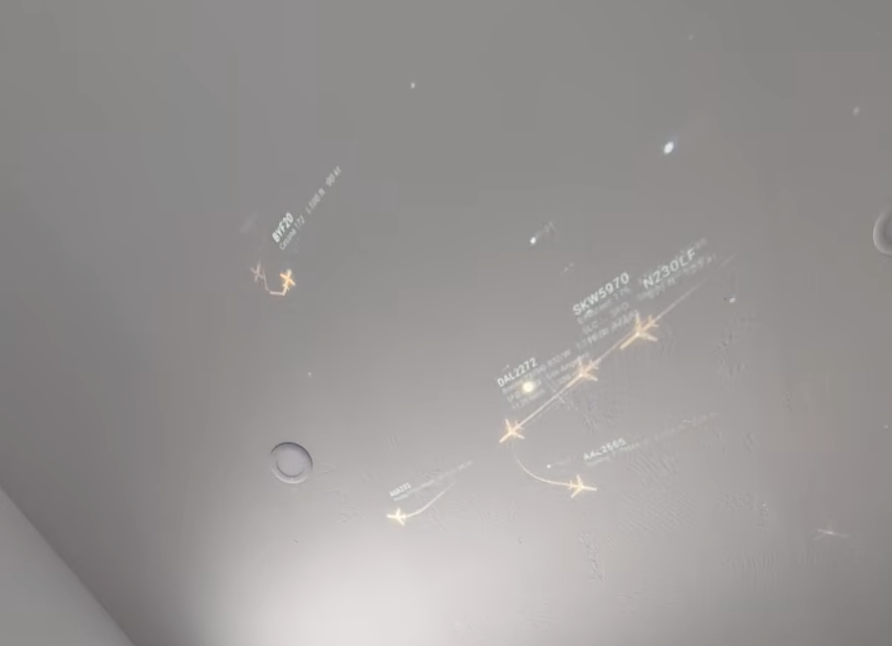
In the intersection of hobbyist electronics, aviation data, and augmented reality, a new project titled "Skylight" has emerged as a benchmark for what is possible with consumer-grade hardware. Developed by Cameron Paczek, a San Francisco-based maker and engineer, the project utilizes the Raspberry Pi 5 to turn a domestic annoyance—constant overhead air traffic—into a sophisticated, real-time data visualization and tracking system. By combining software-defined radio (SDR) with artificial intelligence and projection mapping, Paczek has effectively brought the bustling skies of San Francisco International Airport (SFO) directly onto his living room ceiling.
Main Facts: The Architecture of "Skylight"
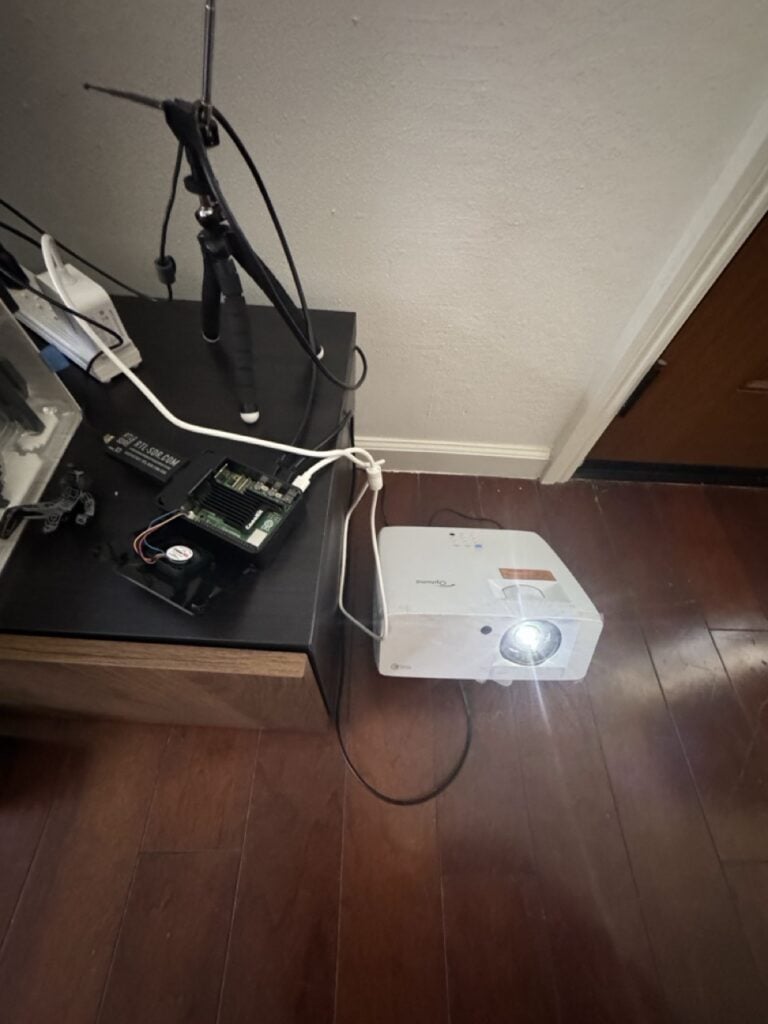
The "Skylight" project is a multi-layered hardware and software stack designed to identify, track, and visually represent aircraft as they pass over a specific geographic location. Paczek’s home is situated directly beneath one of the primary departure corridors for SFO, where aircraft frequently maintain altitudes of only 600 to 800 feet during their initial ascent.
The system’s core functionality relies on three primary technological pillars:
- Signal Acquisition: An RTL-SDR (Software-Defined Radio) dongle tuned to the 1090MHz frequency captures Automatic Dependent Surveillance–Broadcast (ADS-B) signals. These signals are mandated for most aircraft and transmit critical telemetry data, including GPS coordinates, altitude, airspeed, and flight identification.
- Computational Processing: A Raspberry Pi 5 serves as the central hub. It processes the raw ADS-B data, performs the geometric calculations necessary to map the plane’s position relative to the house, and runs a lightweight AI model for visual tracking.
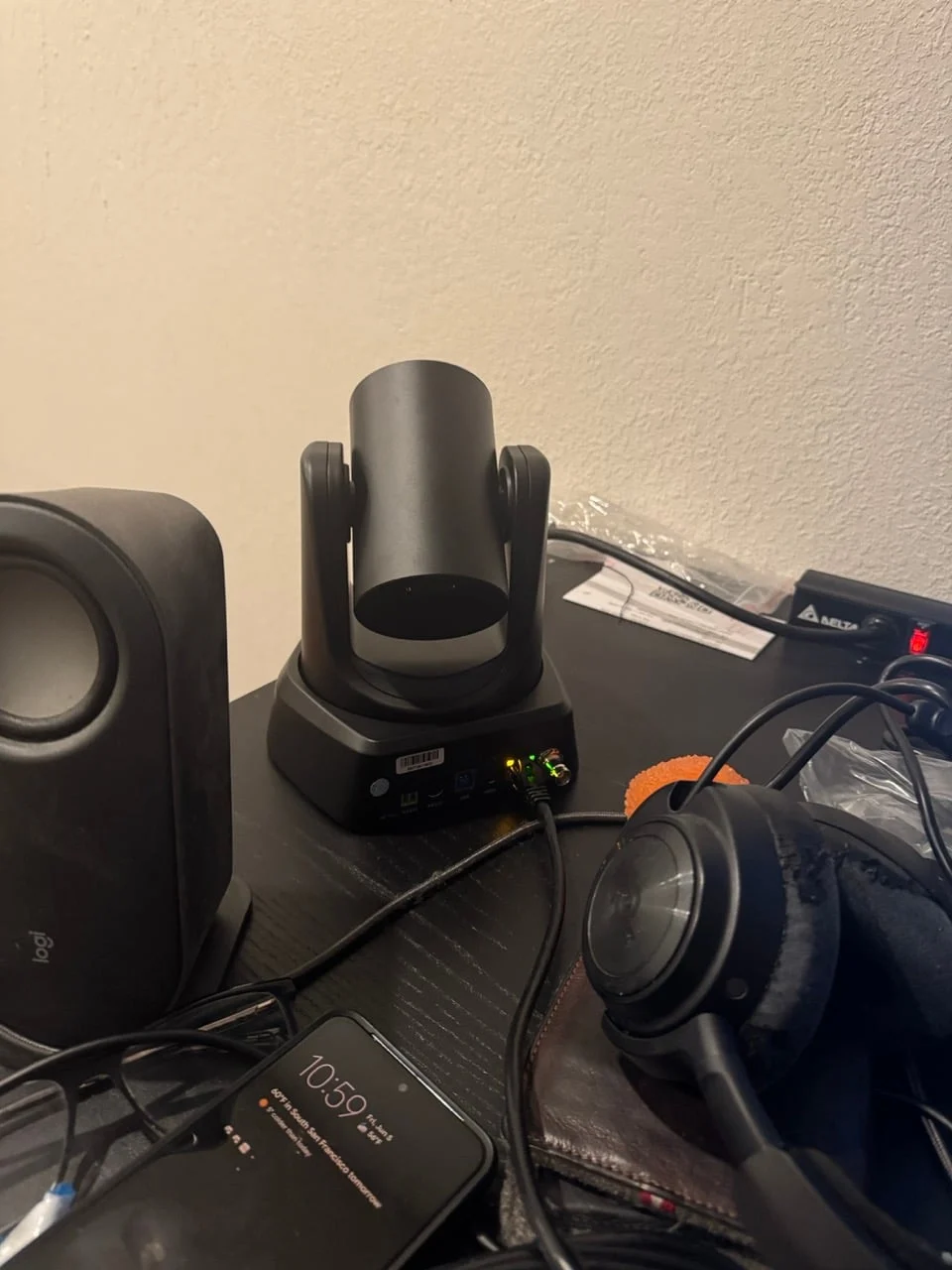
- Visualization and Automation: The system outputs data to two distinct displays. A ceiling-mounted projector creates a "radar" view, mapping the plane’s trajectory across the room’s architecture. Simultaneously, an external VISCA-enabled PTZ (Pan-Tilt-Zoom) camera uses AI to lock onto the aircraft, streaming a high-definition close-up to the user’s television.
Chronology: From Noise Complaint to Engineering Feat
The genesis of "Skylight" was born out of environmental necessity. Upon moving into a residence near the SFO flight path, Paczek found his daily life punctuated by the rhythmic "shaking of the house" caused by heavy-lift aircraft on departure. This physical sensation became a catalyst for curiosity. Like many aviation enthusiasts, Paczek initially relied on mobile applications like FlightRadar24 to identify the vessels passing overhead. However, the friction of manually checking a phone every few minutes proved cumbersome.
The project began to take shape in early 2024, following Paczek’s exploration of projection mapping—a technique typically used in large-scale art installations to project video onto irregularly shaped surfaces. He realized that the ceiling of his home could serve as a literal canvas for the sky above.
The development process followed a logical progression of engineering challenges:
- Phase 1: Data Harvesting. Paczek first established a reliable method for intercepting ADS-B signals. By using a Raspberry Pi, he was able to create a localized receiver that was faster and more accurate for his specific coordinates than a web-based service.
- Phase 2: The Mapping Engine. The most significant hurdle was translating three-dimensional GPS data (latitude, longitude, and altitude) into a two-dimensional projection that felt intuitive to someone sitting in a chair. This required custom geometry to ensure that when a plane moved from east to west over the roof, the projection moved synchronously across the ceiling.
- Phase 3: AI Integration. To move beyond simple data points, Paczek integrated a VISCA-enabled PTZ camera. He utilized the YOLOX-Nano object detection model to solve the problem of "visual lock." While ADS-B data gives a rough location, it is not precise enough for a high-zoom camera to stay centered on a fast-moving jet. The AI allows the camera to "see" the plane and make micro-adjustments to its aim.
- Phase 4: Open Source Release. In June 2024, after refining the code and stabilizing the hardware interface, Paczek released the entire project on GitHub, allowing other makers to replicate or adapt the system for their own locations.
Supporting Data: The Technical Specifications
The success of "Skylight" is a testament to the significant jump in performance provided by the Raspberry Pi 5. Previous iterations of the Pi would have struggled with the simultaneous demands of SDR processing, 4K video output, and real-time AI inference.
ADS-B and SDR Mechanics
The 1090MHz frequency is the international standard for ADS-B. The RTL-SDR used in this project acts as a wideband radio receiver. When paired with a dedicated antenna, it can pick up signals from aircraft up to 200 miles away. For "Skylight," however, the software filters these signals to only focus on a tight radius around the user’s home, reducing latency and computational load.
Geometric Mapping
To project the plane’s path, the system uses the Haversine formula or similar spherical trigonometry to calculate the distance and bearing from the receiver to the aircraft. Because the aircraft are at such low altitudes (600–800 feet), the parallax effect is significant. The software must account for the angle of observation to ensure the projection aligns with the auditory cues of the engines outside.
YOLOX-Nano Efficiency
The choice of YOLOX-Nano for object detection is critical. It is a high-performance object detection model designed for "edge" devices with limited processing power. In this application, the model is trained to recognize the silhouette of an aircraft against the sky. By running this on the Raspberry Pi 5, Paczek achieves enough frames per second (FPS) to keep the PTZ camera’s motors synchronized with the plane’s flight path, which can exceed 200 knots even in the early stages of takeoff.
Official Responses and Community Impact
While there has been no formal statement from San Francisco International Airport or the Federal Aviation Administration (FAA) regarding the project, "Skylight" has been met with significant acclaim within the "Maker" and "Home Assistant" communities.
Raspberry Pi Ltd. has highlighted the project as a premier example of the Pi 5’s capabilities in handling complex, multi-modal tasks. The project has also sparked discussions on platforms like TikTok and GitHub regarding the democratization of aviation data.
Privacy advocates have noted that while ADS-B data is public, the use of AI-driven PTZ cameras to track specific objects raises interesting questions about the future of domestic surveillance and hobbyist data collection. However, since the system tracks commercial aircraft in public airspace—vessels that are already being tracked by global networks—the project falls well within the legal bounds of hobbyist radio and photography.
Paczek’s decision to open-source the project on GitHub (under the repository cpaczek/skylight) has been praised for its transparency. By providing the "solid" to the community, he has enabled other residents living under flight paths—from Heathrow to O’Hare—to transform their environmental noise into an educational and aesthetic experience.
Implications: The Future of Ambient Computing
The "Skylight" project represents a shift in how we interact with the "Internet of Things" (IoT). Moving beyond smart lightbulbs and thermostats, Paczek has demonstrated the concept of Ambient Computing—where data from the external world is seamlessly integrated into the physical environment of the home.
1. Educational Potential
Systems like "Skylight" provide a tangible way for students and hobbyists to learn about physics, geometry, and radio frequency (RF) engineering. It turns an abstract concept (air traffic control) into a visible, local reality.
2. Augmented Living Spaces
As projectors become smaller and more affordable, the "Skylight" model suggests a future where our homes can "tell" us about the world outside through visual overlays. This could extend to tracking weather patterns, satellite passes (like the International Space Station), or even local wildlife, using similar AI-tracking logic.
3. The Democratization of AI
Only a few years ago, tracking a fast-moving object with a PTZ camera using real-time image recognition would have required an expensive industrial computer. The fact that a $60-80 microcontroller (the Raspberry Pi 5) can now perform these tasks with a "Nano" AI model signifies a massive shift in the accessibility of high-end automation.
In conclusion, Cameron Paczek’s "Skylight" is more than just a "nerdy" hobbyist project; it is a sophisticated integration of modern technologies that solves a unique modern problem. It takes the invisible data streams that surround us—the radio waves of passing planes—and gives them a physical presence, allowing a resident to "see" through their own ceiling and connect with the global infrastructure moving just a few hundred feet above their head. For those living in the shadow of the world’s busiest airports, the sky is no longer just a source of noise; it is a canvas for innovation.