Raspberry Pi Advances Industrial Security Standards with Version 2.3 of Secure Boot Provisioning Suite
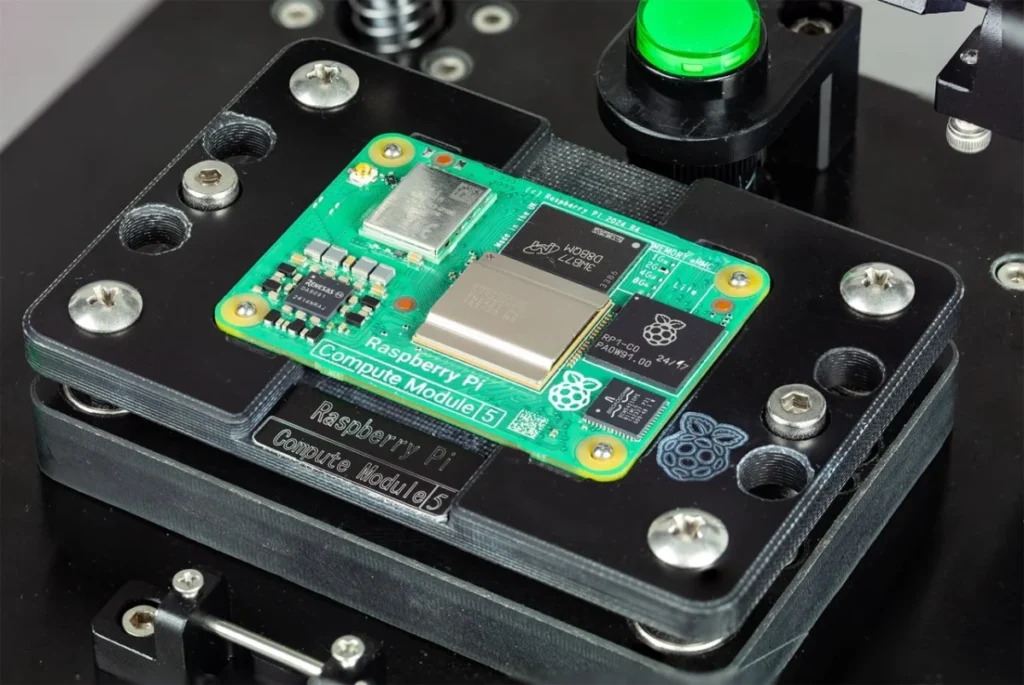
LONDON — Raspberry Pi Ltd has announced a significant leap forward in its industrial and enterprise offerings with the release of version 2.3 of its secure boot provisioning software, rpi-sb-provisioner. This latest update represents a fundamental shift in how organizations deploy Raspberry Pi hardware at scale, integrating sophisticated security protocols with streamlined manufacturing workflows. By bridging the gap between complex cryptographic requirements and the practicalities of a factory floor, the update aims to solidify the Raspberry Pi’s position as a leading choice for professional embedded systems and edge computing.
The release introduces several high-impact features, including native integration with Raspberry Pi Connect for Organizations, a new Image Description Provisioning (IDP) system, and enhanced support for asymmetric cryptography via the rpi-fw-crypto utility. These advancements are designed to solve the "last mile" problem of secure device deployment: ensuring that thousands of units can be provisioned with unique, secure identities without slowing down production lines.
Main Facts: A Comprehensive Security Overhaul
The core of the version 2.3 release is the transformation of the rpi-sb-provisioner from a specialized utility into a holistic manufacturing ecosystem. The update focuses on three primary pillars: scalability, flexibility, and cryptographic integrity.
1. Seamless Remote Management Integration
One of the most notable additions is the integration with Raspberry Pi Connect for Organizations. Previously, associating a device with a remote management account required manual intervention, which was a significant bottleneck for large-scale deployments. Version 2.3 utilizes new device identity support to assign an immutable identity to each unit during the provisioning process. This ensures that devices are automatically linked to an organization’s account, maintaining that association through firmware updates, OS re-flashes, and factory resets.
2. Programmable Image Provisioning
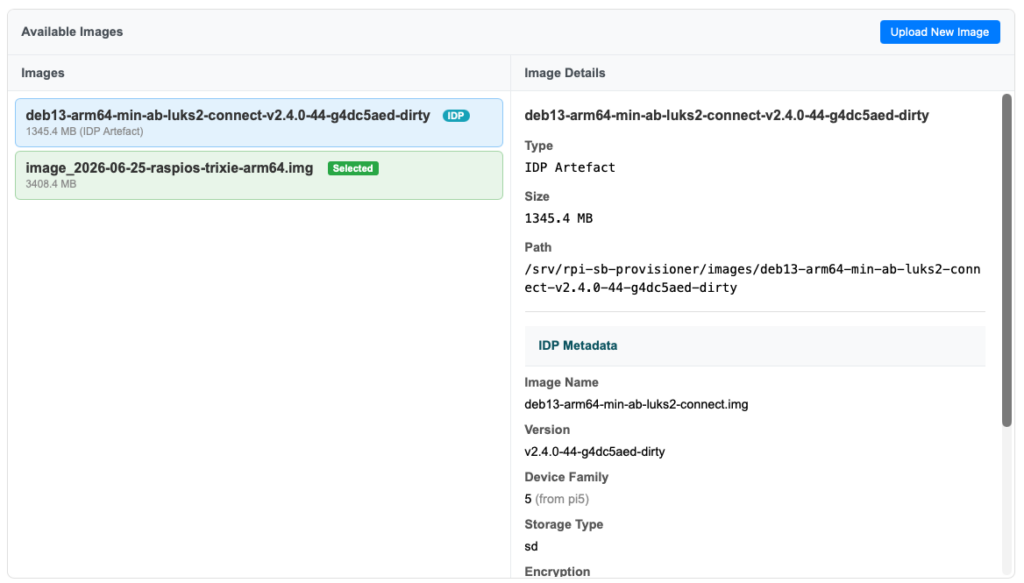
Moving beyond the constraints of traditional Raspberry Pi OS images, the update introduces Image Description Provisioning (IDP). Integrated with the rpi-image-gen tool, IDP allows developers to define complex partition layouts and file system attributes in a programmable format. This means that organizations using custom Linux distributions or non-standard storage architectures can now use the provisioner as a "universal" deployment tool.
3. Hardened Cryptography
The inclusion of support for rpi-fw-crypto marks a milestone in how Raspberry Pi handles device-unique keys. By leveraging asymmetric cryptography, the system can now perform secure operations without exposing the device’s private key. This is critical for industrial applications where the integrity of the device must be verifiable throughout its lifecycle, from the factory to the end-user.
Chronology: From Shell Scripts to Enterprise Suite
The evolution of the Raspberry Pi provisioning ecosystem has been rapid, driven by the increasing demand for "Zero Trust" hardware in the IoT sector.
- Pre-2024: The Manual Era: Secure boot on Raspberry Pi was historically a manual, multi-step process involving various command-line tools. While powerful, it was prone to human error and difficult to implement in a high-volume manufacturing environment.
- Early 2024: The Birth of
rpi-sb-provisioner: Raspberry Pi released the first version of the provisioner. Its primary goal was to make secure boot and full disk encryption (FDE) "boring and predictable." It started as a collection of shell scripts designed to automate the signing of bootloaders and the creation of encrypted partitions. - Mid-2024: The User Feedback Loop: Following the initial release, industrial users provided feedback regarding the need for better visibility and record-keeping. This led to the introduction of a manufacturing database and an audit log, allowing companies to track exactly when and how each device was provisioned.
- Late 2024 to Early 2025: Interface and Integration: The tool evolved from a CLI-only script to a system featuring a robust Web UI. This change allowed factory floor technicians to monitor provisioning status via a graphical interface, reducing the specialized knowledge required to operate the line.
- June 2024 (Current Release): Version 2.3: The latest iteration integrates the broader Raspberry Pi software ecosystem (
Connect,image-gen, andfw-crypto), completing the transition from a standalone tool to a full-stack deployment platform.
Supporting Data: The Mechanics of Secure Deployment
To understand the impact of version 2.3, one must look at the technical hurdles it overcomes. Industrial IoT devices are frequently deployed in "untrusted" environments where physical access is possible. Without secure boot and encryption, a malicious actor could intercept the boot process, modify the OS, or steal proprietary data.
The IDP Advantage
Traditional imaging tools like pi-gen produce a static image. However, modern industrial applications often require:
- A/B Partitioning: For seamless over-the-air (OTA) updates.
- Data Persistence Layers: Separate encrypted partitions for user data.
- Diverse File Systems: Using XFS or Btrfs instead of the standard ext4.
The IDP system in version 2.3 allows these configurations to be described in a metadata file. The provisioner reads this description and builds the target environment on the fly. According to technical documentation, if a layout can be described in the IDP schema, the rpi-sb-provisioner can deploy it, making it essentially agnostic to the specific Linux flavor being used.
Cryptographic Security
The rpi-fw-crypto integration addresses the "Key Management Problem." In many systems, if a device needs to prove its identity, it must access a private key. If that key is easily accessible in the software layer, the device is compromised. The new system utilizes the Raspberry Pi’s hardware-level security features to ensure that while the device can use its private key to sign or decrypt data, the key itself remains shielded from the main operating system.
Official Responses: Engineering for Predictability
The development of the rpi-sb-provisioner has been guided by a philosophy of simplifying the complex. In statements regarding the release, Raspberry Pi’s engineering team emphasized that the goal was never just to add features, but to solve "concrete user problems."
"In my many years as a software engineer, I always found working with secure boot more complicated than it had any right to be," noted a lead developer at Raspberry Pi. This sentiment reflects the core mission of the 2.3 update: removing the "friction" from security.
The team further clarified that the move toward a web-based UI and a manufacturing database was a direct response to industrial customers. "When you’re provisioning devices at scale, you can’t afford to slow down… you want those associations to survive OS updates and factory resets." This focus on the "lifecycle" of the device, rather than just the initial flash, marks a shift in Raspberry Pi’s maturity as a vendor for the professional market.
Furthermore, the commitment to open-source remains a cornerstone of their strategy. By making rpi-sb-provisioner, rpi-fw-crypto, and rpi-image-gen open source, Raspberry Pi allows security auditors to verify the code and enables developers to contribute improvements, ensuring the tools remain robust against evolving threats.
Implications: A New Era for Edge Computing
The release of version 2.3 has profound implications for several sectors of the technology industry.
For Industrial Manufacturing
The ability to automate the association of hardware with "Raspberry Pi Connect for Organizations" is a game-changer for Original Equipment Manufacturers (OEMs). A company building smart city sensors or factory controllers can now ship units that are "pre-connected" to their management dashboard. This reduces the deployment time from hours to minutes and ensures that every device in the field is running a verified, encrypted software stack.
For Cybersecurity and Compliance
As global regulations regarding IoT security (such as the EU’s Cyber Resilience Act) become more stringent, manufacturers are under pressure to prove that their devices are secure by design. The audit logs and immutable identities provided by version 2.3 offer a "paper trail" for compliance. Being able to prove exactly which cryptographic keys were written to which device, and verifying the integrity of the boot chain, is no longer a luxury but a legal necessity for many.
For the "Prosumer" and Enthusiast
While the 2.3 update is heavily weighted toward industrial use, the enthusiast community benefits from the trickle-down of these professional tools. Advanced hobbyists running home servers or sensitive private projects now have access to the same "gold standard" provisioning tools used by multi-million dollar corporations.
Future Outlook
The "More to Come" section of the announcement suggests that Raspberry Pi is far from finished. As edge computing continues to grow, the need for decentralized yet secure management will only increase. We can expect future versions of the provisioner to potentially include support for more advanced hardware security modules (HSMs) or even more complex multi-tenant management features.
In conclusion, Raspberry Pi version 2.3 of the rpi-sb-provisioner is more than just a software update; it is a declaration of intent. It signals that Raspberry Pi is no longer just a board for learning to code—it is a sophisticated, secure, and highly manageable platform capable of powering the next generation of global industrial infrastructure. By making secure boot "boring," Raspberry Pi has made it accessible, and in doing so, has raised the bar for the entire single-board computer industry.