Revolutionizing Technical Debt: AWS Unveils "Continuous Modernization" to Automate Software Maintenance
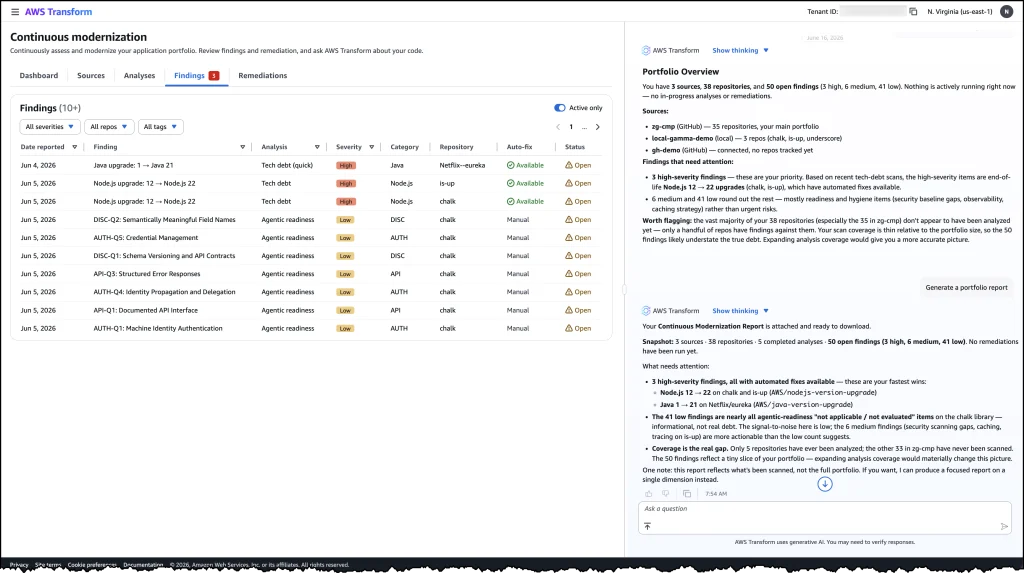
In a move set to redefine how enterprise engineering organizations manage the long-term health of their software ecosystems, Amazon Web Services (AWS) has announced the preview release of AWS Transform – Continuous Modernization. This new capability, integrated directly into the broader AWS Transform suite, promises to move technical debt management from a reactive, manual, and often neglected chore to an autonomous, high-velocity operational standard.
By leveraging automated scanning, customizable remediation policies, and intelligent pull-request generation, AWS is positioning this tool as the definitive answer to the "technical debt trap" that currently consumes nearly a third of corporate IT budgets.
The Core Challenge: Why Technical Debt is Breaking Engineering Teams
To understand the gravity of this release, one must look at the current state of software development. Modern enterprises are not just building software; they are maintaining thousands of repositories, each burdened by legacy frameworks, deprecated dependencies, and shifting security requirements.
The "Stitch-Together" Problem
For years, platform engineering teams have relied on a fragmented ecosystem of point tools. They use one scanner for vulnerabilities, another for dependency management, and a third for code quality. This lack of integration forces teams into a manual, application-by-application remediation cycle. As AWS points out, this results in "self-reported status" reports that often hide the reality of system regressions and outdated runtimes until a critical failure occurs.
The AI Acceleration Paradox
The rise of AI-assisted coding has inadvertently accelerated the accumulation of technical debt. While generative AI allows developers to write code faster than ever, it also facilitates the rapid introduction of non-standardized patterns and outdated library usage. AWS Transform – Continuous Modernization enters the market as a necessary counterbalance, providing the "guardrails" that keep pace with the velocity of AI-augmented development.
Chronology: From Manual Migration to Autonomous Modernization
The evolution of AWS Transform reflects the company’s broader shift toward lifecycle management.
- Initial Phase: AWS Transform began as a specialized tool for heavy-duty migrations—helping enterprises move out of on-premises data centers, modernize Windows-based applications, and refactor legacy mainframes.
- The Maintenance Gap: AWS recognized that while migration was a major milestone, the "day-two" problem of maintenance—upgrading Java versions, replacing deprecated frameworks, and updating Lambda runtimes—remained a significant bottleneck for their customers.
- The Current Milestone: With the launch of the continuous modernization preview, AWS has transitioned from a project-based migration tool to an ongoing operational platform. By enabling autonomous, continuous analysis, the platform moves away from the "stop-and-fix" mentality toward a "continuous improvement" model.
Supporting Data and Operational Mechanics
The efficacy of the new capability rests on two pillars: Continuous Analysis and Autonomous Remediation.
Pillar 1: Continuous Analysis
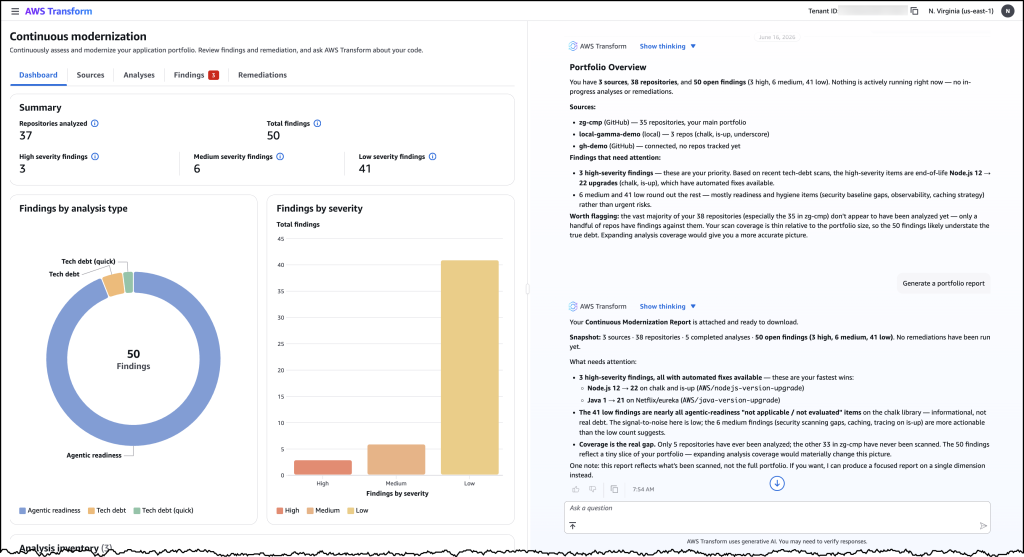
The system operates by scanning repositories against "configurable baselines." Unlike periodic audits that occur once a quarter, this system provides real-time ground truth.

- Speed: Findings are generated in hours, not the weeks typical of manual code reviews.
- Customization: While the tool comes with pre-set policies for common tech debt (e.g., end-of-life dependencies), organizations can codify their own internal standards. If an organization mandates a specific logging pattern or library, the tool treats that preference as a global policy, immediately flagging any repository that deviates from the standard.
Pillar 2: Autonomous Remediation at Scale
Detection is only half the battle. The power of the new AWS Transform lies in its ability to take action.
- Automated PRs: When a violation is found, the system can be configured to automatically generate a pull request (PR). This PR doesn’t just flag the issue; it provides the fix.
- The Human-in-the-Loop: Teams retain control. Developers can review, modify, or merge the PR. Once the fix is merged, the system detects the update and closes the finding, providing automated, verified compliance without the need for manual status reports.
Implications for Enterprise IT Strategy
The introduction of this tool has profound implications for how CTOs and platform teams allocate their resources.
Shifting from "Project" to "Product"
Traditionally, upgrading a major framework version was treated as a "project"—a massive, disruptive, and expensive effort that stopped feature development. AWS Transform – Continuous Modernization enables a "campaign mode" for large projects, but its real value lies in "continuous mode," where small, incremental updates are applied as part of the daily workflow. This minimizes the "big bang" risk of massive upgrades.
Integrating Security as Code
By integrating with AWS Security Agent, the platform ensures that security is not a separate silo. Vulnerabilities are prioritized alongside technical debt, allowing engineering teams to see a single, unified backlog. This helps security teams move away from "shouting from the sidelines" and toward enabling developers with pre-verified remediation paths.
Financial Impact
If 30% of IT budgets are currently tied up in maintenance, even a 10% efficiency gain through automation represents a massive redirection of capital toward innovation. By reducing the "undifferentiated heavy lifting" of dependency management, AWS is essentially helping companies buy back time for their most expensive asset: their developers.
Official Perspectives: A Shift in Governance
While AWS has not released a specific executive statement regarding the financial projections of this tool, the technical documentation and blog release underscore a clear philosophy: Visibility equals velocity.
"Leaders fall back on self-reported team status that lags reality and hides regressions," notes the AWS technical briefing. By providing a dashboard that offers an "always-current view of the technical debt landscape," AWS is attempting to replace human intuition with objective data. This removes the "he-said, she-said" culture of project tracking, replacing it with a clear, repository-by-repository breakdown of compliance.
How to Get Started: A Practical Roadmap
For organizations looking to pilot the service, the entry point is the AWS Transform web application. The onboarding process is designed to be low-friction:
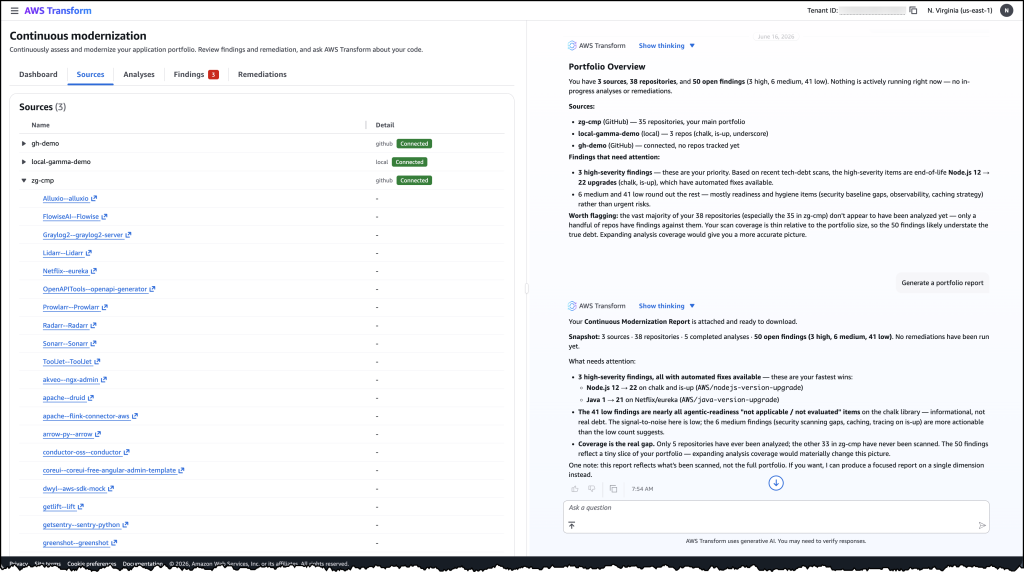
- Source Control Integration: Connect existing GitHub or local repositories to the AWS Transform dashboard.
- Baseline Configuration: Set initial policies. Organizations typically start with "Low Hanging Fruit," such as updating Java versions or addressing widely known deprecated frameworks.
- Analysis Phase: Allow the tool to run for several hours. The resulting dashboard provides a bird’s-eye view of the organization’s tech debt.
- Remediation Campaigns: Select high-priority findings and trigger the automated PR generation.
- Monitoring: Track the "Return to Compliance" metrics on the dashboard to visualize the improvement in repository health.
Furthermore, for teams deeply integrated into modern AI workflows, AWS has made this capability available via MCP (Model Context Protocol) and skills, allowing developers to interact with their tech debt remediation through their existing coding agents.
Conclusion: The Future of Maintenance
The preview of AWS Transform – Continuous Modernization represents a maturation of the cloud ecosystem. We have spent the last decade focusing on how to build in the cloud; we are now entering the decade of how to maintain that infrastructure at scale.
As software complexity continues to grow, manual oversight will become impossible. By automating the identification and remediation of technical debt, AWS is setting a new standard for the "Self-Healing Enterprise." While it is currently in preview, the potential to free up thousands of engineering hours makes this one of the most significant operational announcements in recent memory. For the CTO, the question is no longer "How do we manage our tech debt?" but "How quickly can we integrate this automated intelligence into our pipeline?"