Debunking the Myth: New Research Settles the X11 vs. Wayland Input Latency Debate


For years, a persistent narrative has echoed through the corridors of Linux gaming forums, Reddit threads, and Discord servers: Wayland, the modern display server protocol intended to replace the aging X11, is fundamentally "laggy." For competitive gamers, this perception—whether rooted in placebo or genuine technical friction—has served as a primary deterrent for migrating away from the legacy X.Org server.
However, a groundbreaking empirical study by developer Marco Nett has finally provided the data necessary to separate folklore from fact. By utilizing a bespoke hardware testing rig, Nett has effectively dismantled the notion that Wayland is inherently inferior in terms of input latency, instead pointing the finger at the real bottleneck: XWayland.
The Evolution of the Debate: A Chronology of Concern
The tension between X11 and Wayland is nearly as old as Wayland itself. Since its inception in 2008, Wayland was designed to modernize Linux graphical stacks by removing the bloat and security flaws inherent in the X11 architecture. Yet, as the Linux desktop environment shifted toward GNOME and KDE Plasma, gamers remained skeptical.

The 2025 Catalyst
The conversation took a sharp turn in 2025 when a prominent developer published findings comparing GNOME’s Wayland implementation against X11. Using camera-based latency measurement, the report suggested that Wayland introduced "considerable" extra latency. While the methodology was criticized for its reliance on high-speed mobile phone cameras—which can introduce frame-capture variability—the damage to Wayland’s reputation was done. The "Wayland is laggy" stigma became a cornerstone of Linux gaming discourse, leading many enthusiasts to cling to X11 long after its maintenance cycle began to sunset.
The Rise of DIY Precision
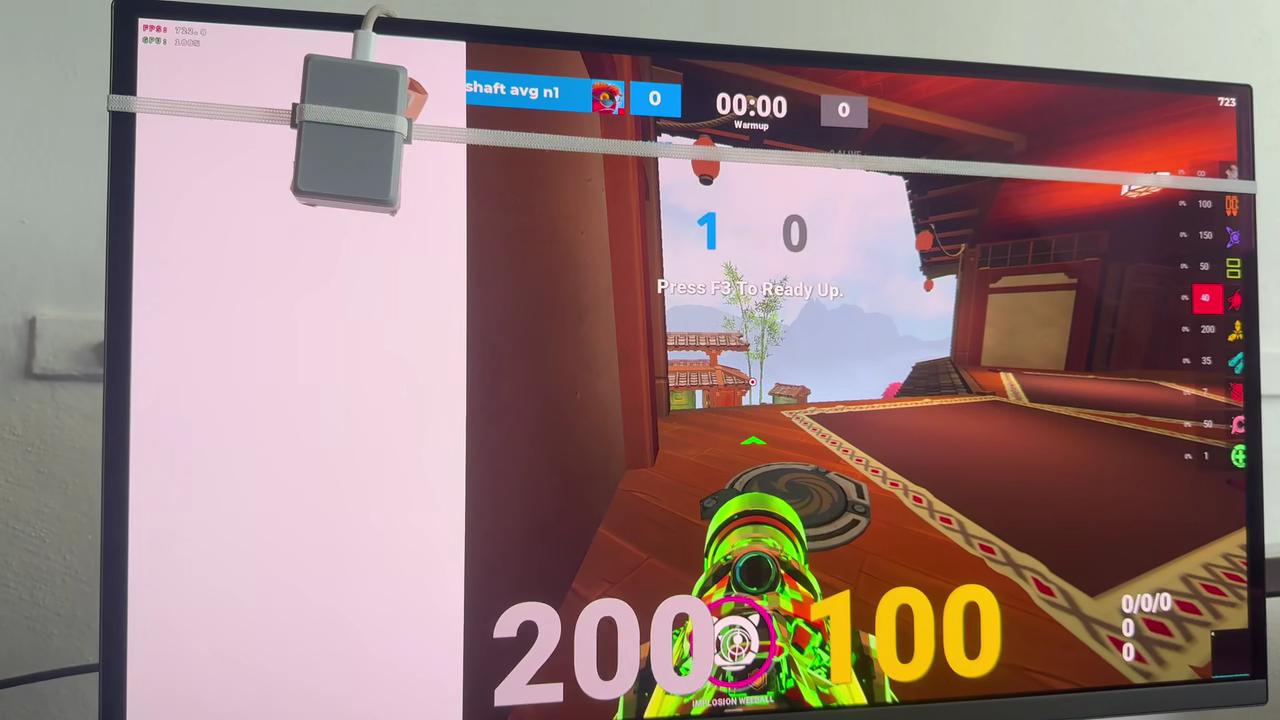
The industry remained at an impasse until Marco Nett decided to move beyond subjective "feel" and camera-based approximations. Nett’s approach was to eliminate human error and optical variance by building a physical testing device dubbed Click2photon. By strapping a light sensor to a 500 Hz OLED monitor and automating mouse clicks via a custom USB microcontroller, Nett achieved a level of scientific rigor previously unseen in the Linux desktop space.
The Anatomy of the Study: Methodology and Setup
To ensure the test reflected real-world gaming scenarios, Nett utilized a high-end test bench featuring an NVIDIA RTX 4070 SUPER, running on CachyOS. The subject of the test was Diabotical, a fast-paced, CPU-bound DirectX 11 arena shooter that relies heavily on consistent frame timing and minimal input delay.

Testing Parameters
Nett conducted 300 individual test iterations for each configuration to ensure statistical significance. The test matrix included:
- Protocol Comparison: Native X11 vs. Native Wayland vs. XWayland.
- Display Features: Variable Refresh Rate (VRR) enabled vs. disabled.
- Driver Optimizations: Standard DXVK vs. the
dxvk-low-latencyfork.
By isolating these variables, Nett was able to identify which components actually contributed to input lag and which were simply being blamed by association.
What the Numbers Reveal: Quantifying the Lag
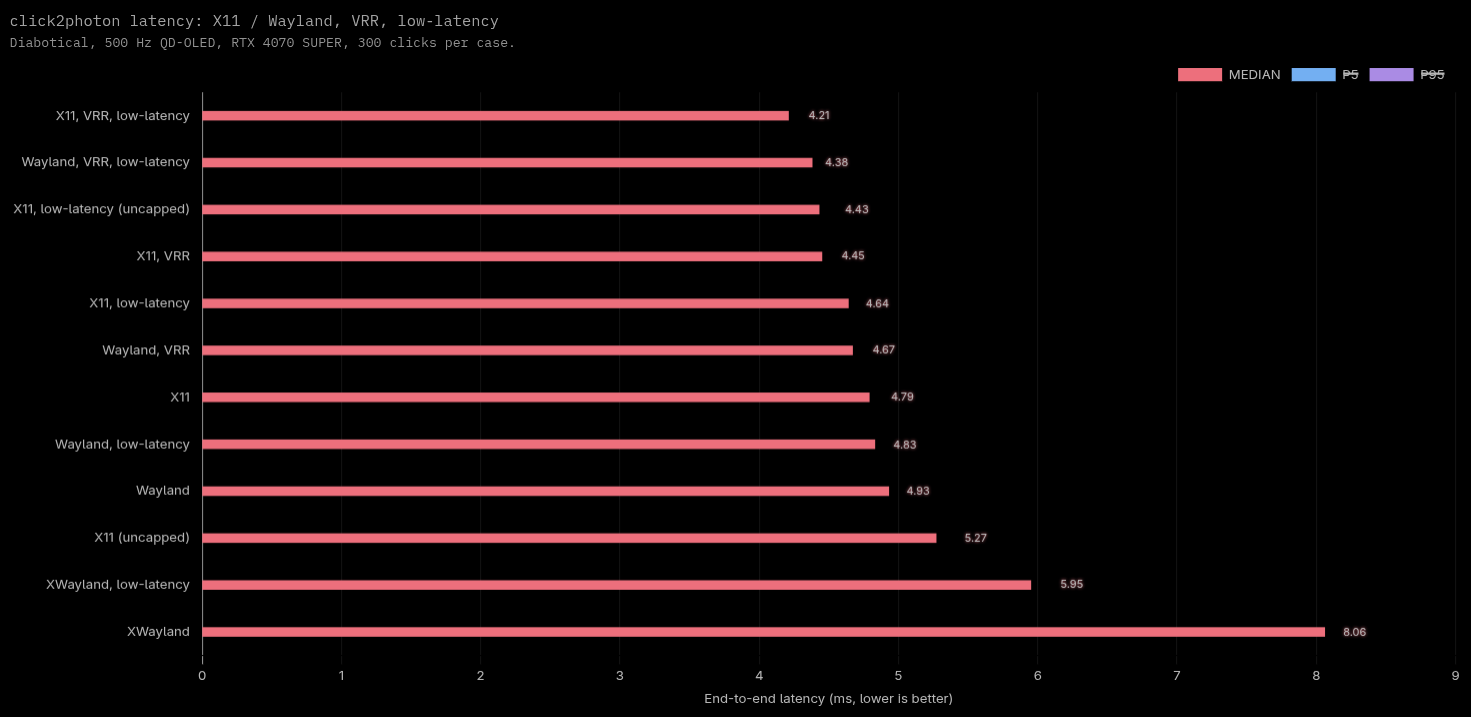
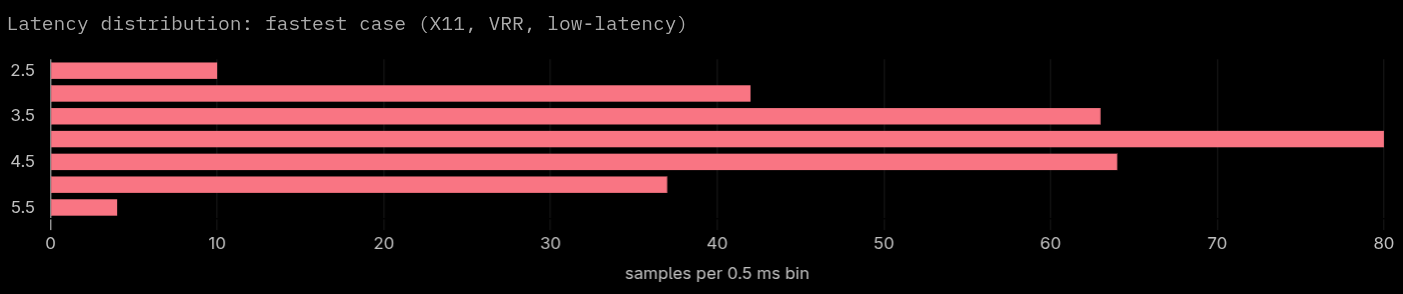
The results of the Click2photon study are nothing short of a paradigm shift. Across all eight primary test cases, the difference between the fastest and slowest configurations was a mere 0.72 milliseconds. This revelation effectively renders the "Wayland is laggy" argument obsolete.
The Minimal Protocol Gap
When comparing native X11 to native Wayland, the latency delta was found to be between 0.14 and 0.22 ms. In the context of a 500 Hz monitor, where a single frame update occurs every 2 ms, this difference is practically imperceptible to even the most elite human reflexes. The data suggests that for native Linux applications, the overhead added by the Wayland protocol is effectively non-existent.
The "XWayland" Culprit
If Wayland isn’t the problem, why do gamers report lag? The study provides a smoking gun: XWayland. The compatibility layer designed to run legacy X11 applications on Wayland compositors adds an average of 3.13 ms of latency. This is more than all other tested factors combined. When gamers run an older title through XWayland, they are experiencing the overhead of two different display protocols trying to communicate, which manifests as the "laggy" sensation often attributed to Wayland itself.
The Impact of VRR and DXVK
Nett’s findings also highlighted the effectiveness of modern gaming optimizations:
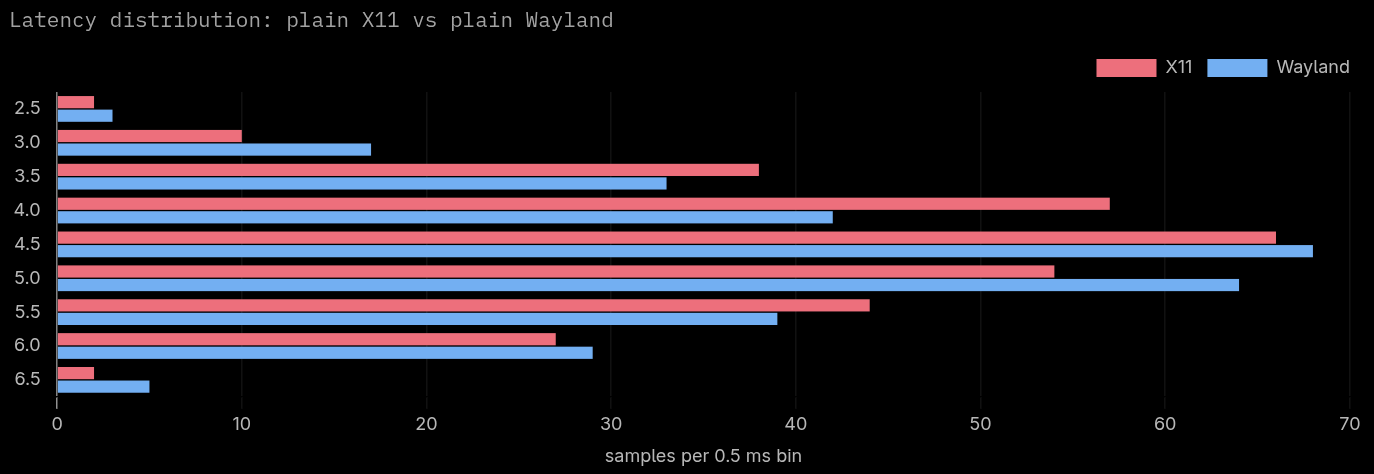
- VRR (Variable Refresh Rate): Enabling G-Sync/FreeSync provided the most consistent improvement, cutting latency by 0.26 to 0.45 ms and, more importantly, tightening the distribution of frame delivery.
- DXVK Low-Latency: For titles running through the DXVK low-latency fork, users can expect to shave up to 0.84 ms off their input pipeline.
Implications for the Linux Gaming Community
The conclusion for the average Linux user is clear: the focus of the community has been misplaced. Rather than avoiding Wayland, users should be focusing on the software layers that facilitate gaming.
1. Shift the Focus to Native Support
The most significant performance gains are found in running games natively or via wrappers that bypass the XWayland translation layer. As the ecosystem matures and more titles move toward native Wayland support, the perceived gap between Linux and Windows gaming will continue to shrink.
2. Prioritize Hardware-Level Features
The study confirms that modern display technologies like VRR are significantly more impactful on the "feel" of a game than the display server protocol itself. Users are better served by investing in a high-refresh-rate, VRR-capable monitor than by obsessing over X11 vs. Wayland settings.
3. Open Source Transparency
Perhaps the most commendable aspect of Nett’s work is its commitment to the open-source ethos. By releasing the hardware schematics, firmware, and analysis code for Click2photon on GitHub, Nett has empowered other researchers to replicate and expand upon these findings. This transparency is the bedrock of Linux development; it allows for peer-reviewed verification rather than relying on hearsay.
Final Thoughts: The Path Forward
The "Wayland vs. X11" debate has been one of the most polarizing topics in the Linux community, often driven by anecdote rather than objective reality. With the publication of the Click2photon data, the technical community finally has a clear path forward.
The takeaway is not to abandon one protocol for the other, but to understand the nuances of the stack. X11 is not the miracle cure, and Wayland is not the bottleneck. The future of Linux gaming lies in the continued optimization of the translation layers—specifically XWayland—and the broader adoption of native display protocols by game developers.
For those still harboring doubts, the numbers are clear: the "lag" you feel is likely a byproduct of the compatibility layer, not the protocol itself. It is time for the Linux gaming community to stop fighting the transition to Wayland and start demanding better integration from the software that runs on top of it.
For those interested in the full dataset, deep-dive analysis, or replicating these experiments, Marco Nett’s complete research findings and the Click2photon source code are available on his official blog and GitHub repository.