Beyond the Horizon: NASA’s Psyche Spacecraft Reveals Stunning New Perspectives of Mars
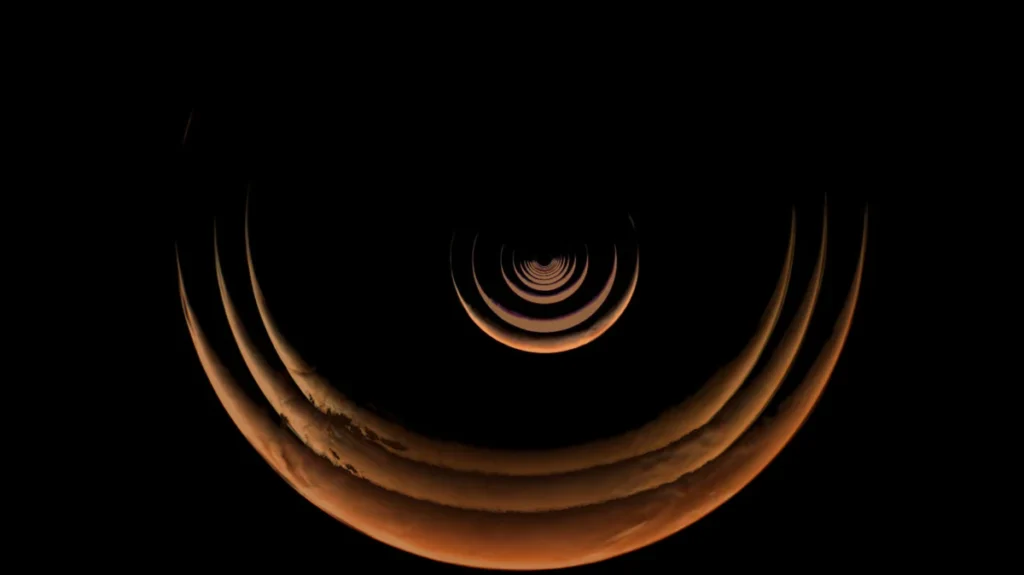
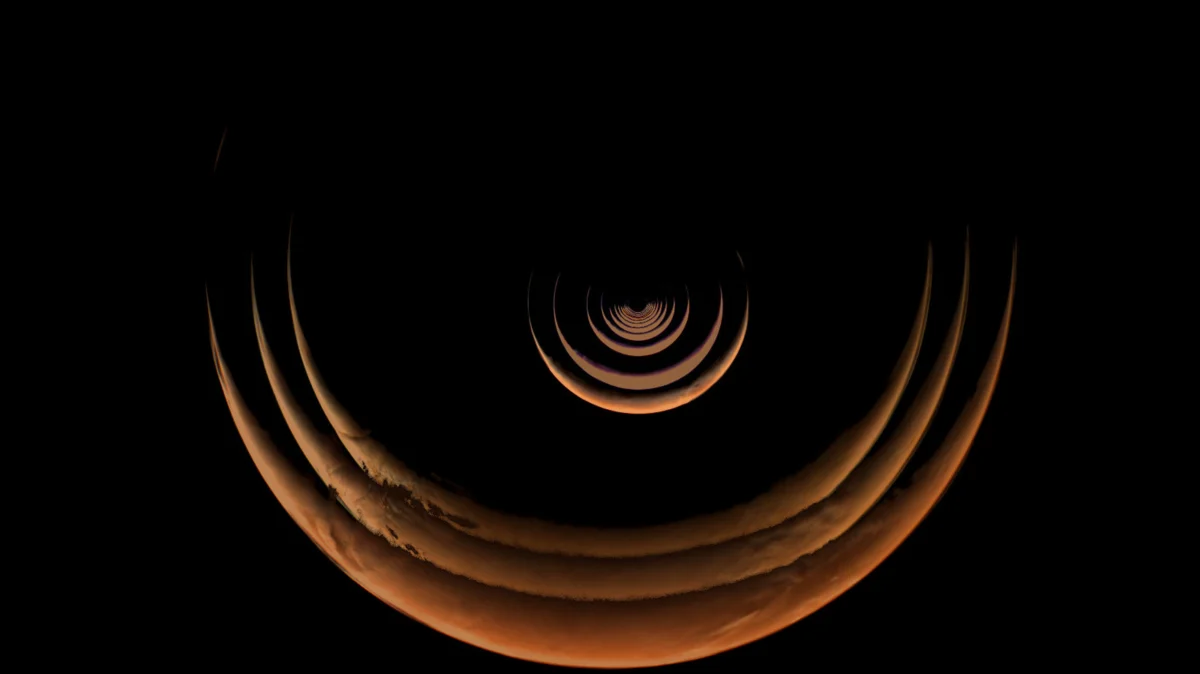
In a remarkable display of technological prowess and cosmic serendipity, NASA’s Psyche spacecraft has provided the world with a rare, cinematic look at our solar system’s most enigmatic neighbor. As the craft continues its multi-year odyssey toward the metallic asteroid that shares its name, it recently completed a high-stakes "gravity assist" maneuver near Mars. While the primary goal of this encounter was to refine the spacecraft’s trajectory and conserve precious propellant, the mission team seized the opportunity to turn Psyche’s multispectral imager toward the Red Planet, resulting in a mesmerizing timelapse that offers both scientific utility and visual splendor.
The Mission at a Glance: A Technical Overview
The Psyche mission, led by Arizona State University and managed by NASA’s Jet Propulsion Laboratory (JPL), represents one of the most ambitious deep-space endeavors of the decade. Launched in October 2023, the spacecraft is designed to reach the asteroid 16 Psyche—a massive, metal-rich world orbiting between Mars and Jupiter—by 2029.
The recent encounter with Mars was a critical milestone in the mission’s navigation plan. To reach its destination, Psyche required a "gravity assist"—a complex orbital maneuver where a spacecraft swings past a planet to gain momentum or change direction. By utilizing the gravitational pull of Mars, Psyche effectively "stole" a fraction of the planet’s orbital energy, accelerating the craft toward its final destination without the need for additional chemical fuel.
While the maneuver was purely gravitational in nature, the spacecraft’s onboard instrumentation was anything but dormant. Throughout the approach and subsequent departure, the multispectral imager captured thousands of individual frames, which NASA technicians have now synthesized into a cohesive, high-definition video of the flyby.
Chronology: A Two-Week Encounter
The encounter was not a fleeting moment but a deliberate, two-week-long observation window. The timeline of the event highlights the precision required for modern interplanetary navigation:
- May 2, 2026: The spacecraft officially began its "approach phase," initiating a series of calibration tests for its imaging suite. At this stage, the distant Mars appeared as a small, crescent-shaped object against the void of space.
- May 15, 2026: The moment of "closest approach." During this peak, the spacecraft utilized the gravitational influence of the planet to adjust its vector. This phase provided the most detailed imagery, including clear shots of the Martian surface and the distinct, icy southern polar cap.
- Late May 2026: As the craft receded from the planet, it continued to capture data, allowing scientists to observe the Martian disc from a retreating perspective, effectively creating a "departure" sequence that provides a unique vantage point rarely seen by Earth-bound telescopes.
- July 2026: Following weeks of data processing and calibration, NASA released the finalized, stitched-together timelapse, offering the public a front-row seat to the gravity assist maneuver.
Supporting Data: Why This Matters for Science
While the public sees a beautiful video, the scientific community sees a "stress test" for the spacecraft’s capabilities. According to mission leads, the flyby was far more than a photo opportunity; it served as a vital practice run for the challenges that lie ahead at the asteroid belt.
Testing Sensitivity and Calibration
One of the primary scientific objectives during the flyby was to calibrate the imager’s sensitivity to "scattered light." In the harsh environment of space, sunlight can reflect off the spacecraft’s own structures and interfere with sensitive optical sensors. By photographing a large, bright target like Mars, engineers were able to refine how the software filters out this noise, ensuring that when the craft eventually reaches the dim, dark surface of the asteroid Psyche, the images remain crisp and clear.
Searching for Moonlets
Perhaps the most significant technical achievement during the encounter was the successful detection of Phobos and Deimos, the two moons of Mars. Because the spacecraft is designed to look for "moonlets"—tiny satellites that might be orbiting the asteroid 16 Psyche—the ability to spot the Martian moons from a significant distance was a crucial proof-of-concept. The success of this detection confirms that the spacecraft’s onboard systems are capable of identifying small, faint objects against the backdrop of deep space, a skill that will be essential once the mission reaches its target.
Official Perspectives: Insights from the Mission Team
The team behind the Psyche mission has expressed immense satisfaction with the performance of the hardware. Jim Bell, the instrument lead at Arizona State University, emphasized that the data collected goes well beyond the aesthetic value of the timelapse.
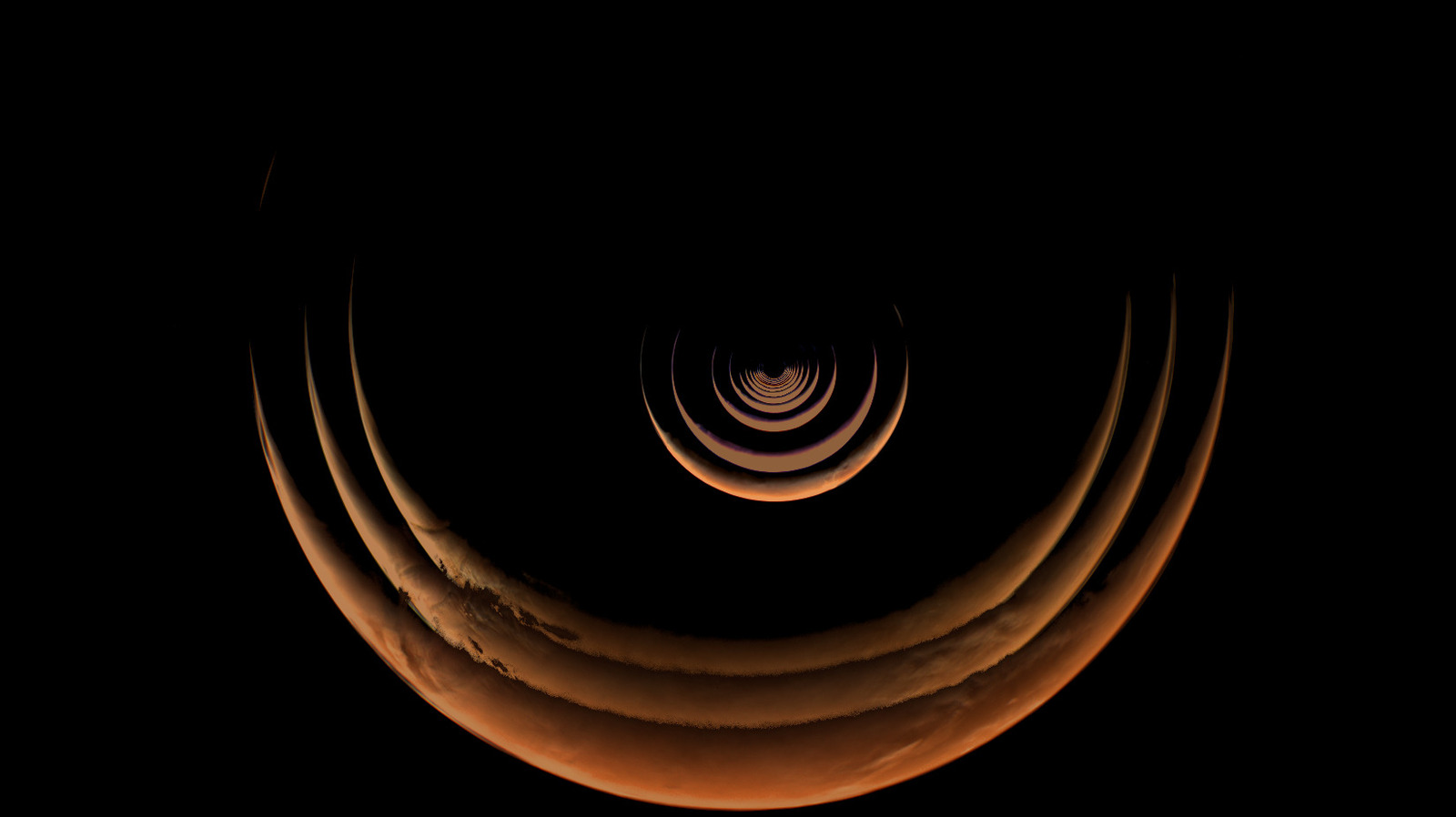
"The imager performed brilliantly, delivering some rarely seen views of the red planet," Bell stated in a recent press release. "Beyond the obvious beauty of the photos, we were also able to fully test its calibration and sensitivity to scattered light. We were even able to pick out the Martian moons Phobos and Deimos from very far away as a part of a practice for the satellite search that we will use at the asteroid Psyche."
This sentiment is echoed by mission controllers at JPL, who noted that the flyby was completed with "exceptional precision." The fuel savings gained from the gravity assist are expected to extend the operational life of the spacecraft, providing more buffer room for complex maneuvers during the primary science phase in 2029.
Implications for Future Exploration
The success of the Psyche flyby has several implications for the future of robotic deep-space exploration:
1. The Power of Gravity Assists
This mission serves as a masterclass in orbital mechanics. By leveraging the natural gravitational wells of our solar system, NASA is able to reach increasingly distant targets with smaller, more efficient, and less expensive payloads. As missions look toward the outer solar system, these "slingshot" maneuvers will become the standard operating procedure.
2. Deep-Space "Practice"
The ability to use planetary encounters as "rehearsals" for mission-critical tasks is becoming a standard feature of mission architecture. By treating the Mars flyby as a simulator for the asteroid approach, the Psyche team has reduced the risk of failure when the craft arrives at its true destination. This iterative approach to mission safety is a significant shift from the "all-or-nothing" risks taken in early space exploration.
3. Understanding Planetary Diversity
While the primary mission is to study an asteroid, the imagery captured provides a fresh look at the Martian environment. By comparing these images with those captured by the Mars Reconnaissance Orbiter (MRO) and other local assets, scientists can glean new insights into how planetary atmospheres and surfaces appear from varying angles, contributing to a broader understanding of planetary geology.
The Road to 2029
As the Psyche spacecraft continues its journey, the mission enters a quiet, long-duration phase. The craft is currently cruising through the vacuum of space, its systems operating within nominal parameters. The data gathered during the May flyby is currently being ingested into the archives of the Planetary Data System, where it will be available for researchers globally to analyze.
The next few years will be defined by maintenance and preparation. The team will monitor the craft’s health, perform periodic software updates, and prepare for the complex arrival sequence at 16 Psyche. When the craft finally reaches the asteroid—a world believed to be the exposed core of a protoplanet—it will spend months in orbit, using its multispectral imager and other scientific instruments to map the composition of the asteroid.
If the asteroid is indeed the metallic core it is hypothesized to be, the data returned by the mission could revolutionize our understanding of how terrestrial planets like Earth are formed. For now, the world can look back at the beautiful, crescent-shaped imagery of Mars as a reminder of the ingenuity required to push the boundaries of human knowledge. The Psyche mission is not just a study of an asteroid; it is a testament to the persistent, calculated, and often beautiful progress of humanity as we navigate the vast, silent corridors of our solar system.