Mastering Magnetic Integration: Seven Glue-Free Methods Revolutionize 3D Printing Durability
FOR IMMEDIATE RELEASE
[City, State] – [Date] – In the ever-evolving landscape of additive manufacturing, the integration of functional components often presents unique challenges. Among these, embedding magnets into 3D printed objects has long been a pursuit fraught with compromises, primarily revolving around the unreliable nature of adhesives and the inherent fragility of traditional friction fits. However, a recent comprehensive guide from industry expert Slant 3D, spearheaded by Josh, is set to redefine best practices, unveiling seven robust, glue-free methodologies that promise to significantly enhance the durability, functionality, and professional finish of magnetic 3D prints.
The frustration stemming from magnets loosening due to thermal creep, or the messy, often temporary solutions offered by super glue, has been a common lament among designers and hobbyists alike. Slant 3D’s detailed video tutorial, now serving as a definitive resource, meticulously outlines alternative mechanical embedding techniques, each evaluated for its advantages and disadvantages. This pivotal contribution not only offers practical solutions but also underscores a critical warning regarding the potential for magnets to catastrophically damage 3D printing equipment if improperly handled during the printing process itself.
Main Facts: Redefining Magnet Integration in 3D Printing
The core challenge in integrating magnets into 3D printed objects has historically centered on achieving a secure, long-lasting bond without compromising the print’s integrity or the magnet’s functionality. Traditional approaches, such as relying solely on a friction fit, have proven susceptible to "thermal creep"—the gradual deformation of thermoplastic materials under constant stress, particularly when exposed to temperature fluctuations. This phenomenon leads to magnets inevitably loosening and falling out over time. Similarly, the use of cyanoacrylate (super glue) often results in brittle bonds, unsightly residue, and potential chemical interactions with certain plastics, leading to premature failure.
Recognizing these pervasive issues, Slant 3D, a prominent voice in the 3D printing community, has meticulously compiled and demonstrated seven innovative, glue-free techniques designed to embed magnets securely and permanently into 3D prints. These methods leverage clever design principles and mechanical retention, moving beyond the inherent limitations of adhesives and simple press-fits. The overarching goal is to enable designers to create functional prints with integrated magnetic features that perform reliably for the lifespan of the object.
Key highlights from this comprehensive guide include:
- Enhanced Friction Fits: Optimizing the geometry of both magnet and cavity, coupled with precise installation techniques, to maximize retention.
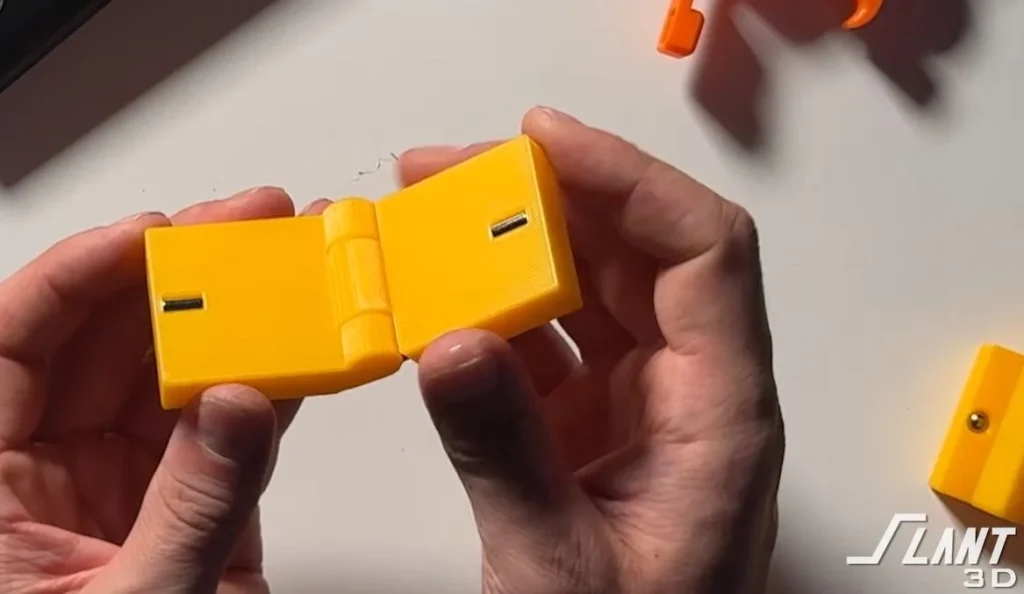
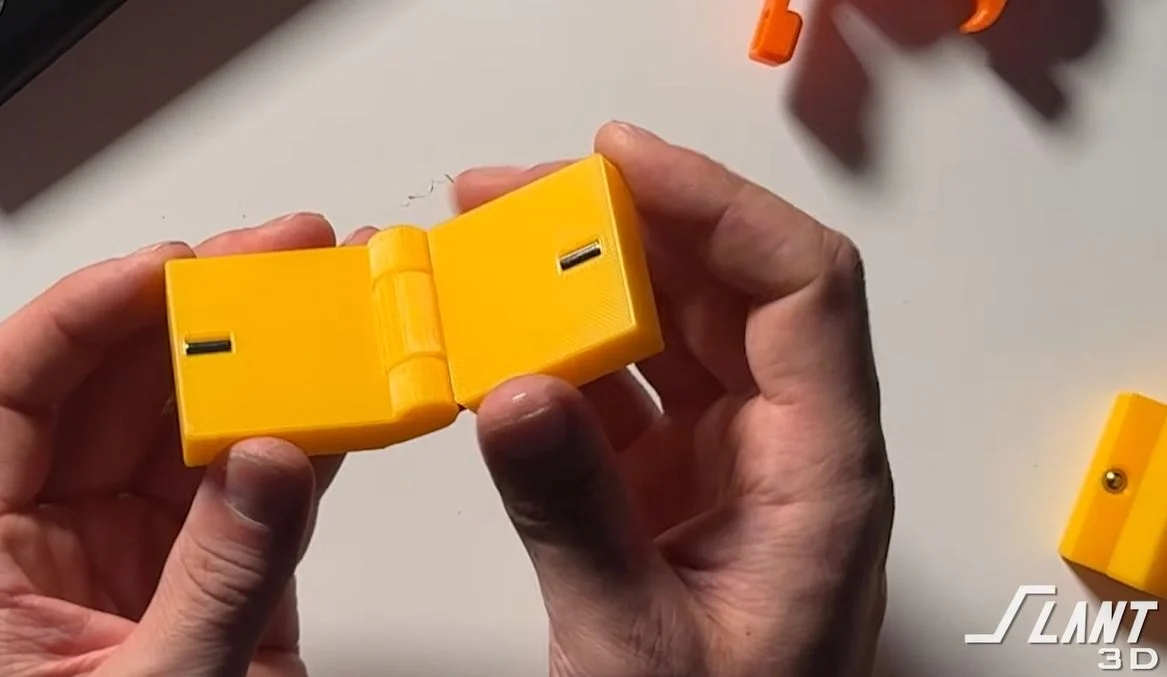
- Strategic Side Slots: A post-print installation method that simplifies the process while maintaining structural integrity.
- Mechanical Retainers: Utilizing snap-fit or press-fit designs with printed ledges or caps that physically lock magnets into place.
- Spherical Magnet Versatility: Exploiting the unique shape of spherical magnets for self-orientation and secure embedding.
- "Magnetic Lock" Optimization: A crucial recommendation to pair magnets with cheaper, more durable ferrous materials (like ball bearings) rather than another magnet, mitigating the risk of chipping and failure due to the inherent brittleness of neodymium magnets.
- Advanced Post-Print Integration: Exploring techniques like captive printed lids and heat staking/ultrasonic welding for ultimate security.
Crucially, the guide also issues a stark warning about the dangers of attempting to embed magnets during the FDM printing process. Magnets can interfere with sensitive electronic components, damage stepper motors, distort print beds, and even magnetize metallic nozzles, leading to catastrophic print failures and potentially costly damage to the printer itself. This emphasis on post-print integration for most methods is a cornerstone of safe and successful magnetic embedding.
By shifting the paradigm from adhesive-dependent integration to mechanically sound, design-driven solutions, Slant 3D’s insights empower the 3D printing community to achieve unprecedented levels of functionality and durability in their creations, pushing the boundaries of what is possible with additive manufacturing.
Chronology: The Evolution of Magnet Integration in 3D Printing
The journey of integrating magnets into 3D prints mirrors the broader evolution of additive manufacturing itself – a progression from rudimentary experimentation to sophisticated engineering.
Early Days (Late 2000s – Early 2010s): The Dawn of Functional Prints
When consumer-grade 3D printers first became widely accessible, users quickly moved beyond purely aesthetic models to functional prototypes and objects. The desire to create modular assemblies, secure closures, or articulated mechanisms naturally led to the inclusion of magnets. Early attempts were often rudimentary, involving simply pausing a print, dropping in a magnet, and resuming, or, more commonly, gluing magnets into pre-printed cavities. These methods were largely born out of necessity rather than optimized design.
The Era of Adhesives and Early Failures (Mid-2010s): Learning the Hard Way
As the community grew, so did the shared experiences of failure. Super glue, initially seen as a universal solution, proved problematic. Its brittleness meant bonds often fractured under stress, and its tendency to leave visible white residue (blooming) marred the aesthetic of prints. More critically, the widespread use of simple friction fits began to expose the inherent weakness of thermoplastics: thermal creep. Users observed magnets slowly but surely loosening and falling out, especially in objects exposed to fluctuating temperatures or continuous magnetic forces. This period was characterized by a collective realization that "good enough" was not truly good enough for lasting functional integration.
Emergence of Design-Driven Solutions (Late 2010s): Mechanical Ingenuity Takes Hold
The limitations of adhesives and basic friction fits spurred innovation. Designers began to experiment with more sophisticated cavity geometries, incorporating features like retaining lips, tapered channels, and snap-fit mechanisms. The concept of post-processing and multi-part assemblies gained traction, where magnets were inserted into separate components that were then assembled. The community started to document successful designs, often shared through platforms like Thingiverse and YouTube, highlighting methods that relied on the mechanical properties of the plastic rather than external bonding agents. The dangers of embedding magnets during a print also became a more widely understood concern, as anecdotes of damaged print beds and clogged nozzles became more frequent.
Slant 3D’s Synthesis (Early 2020s): Consolidating Best Practices
The recent video from Slant 3D represents a significant milestone in this chronological development. It is not merely an introduction of new techniques but a comprehensive synthesis of accumulated community knowledge, refined through professional experience and rigorous testing. By categorizing and explaining seven distinct glue-free methods, Slant 3D provides a structured framework that moves beyond anecdotal evidence. This guide solidifies best practices, addresses the fundamental engineering principles at play (like thermal creep and magnet brittleness), and offers practical, actionable advice for both novices and seasoned professionals. It marks a shift from experimental discovery to formalized, reliable methodology, setting a new standard for magnet integration in 3D printing.
The Path Forward: Continued Innovation and Standardization
The future of magnet integration will likely see further refinement of these mechanical methods, potentially incorporating multi-material printing techniques, advanced simulation tools for optimal cavity design, and even standardized modular components. Slant 3D’s contribution serves as a critical stepping stone, empowering designers to create more robust, reliable, and professionally finished 3D printed products with seamlessly integrated magnetic functionality, pushing the boundaries of what 3D printing can achieve.
Supporting Data: Deep Dive into Glue-Free Magnet Integration Techniques
The pursuit of robust magnet integration in 3D printing is driven by the desire for enhanced functionality, modularity, and aesthetic appeal. Magnets offer convenient attachment, alignment, and closure mechanisms for a vast array of 3D printed objects, from enclosures and jigs to toys and artistic displays. However, achieving lasting integration requires a fundamental understanding of material science and mechanical design.
The Imperative for Robust Magnet Integration
The limitations of traditional methods are well-documented. A simple friction fit, while easy to implement, is notoriously unreliable. Thermoplastics like PLA, ABS, and PETG are viscoelastic materials, meaning they deform over time under constant stress, especially when subjected to temperature variations. This phenomenon, known as thermal creep, causes the plastic cavity to slowly expand, leading to the magnet becoming loose. Furthermore, these plastics can expand and contract differently than the magnets they house, exacerbating the problem. Adhesives, particularly cyanoacrylate glues, introduce their own set of problems: they can be brittle, messy, difficult to apply precisely, and some plastics react poorly with them, leading to weakening or discoloration. Therefore, the imperative for mechanical, glue-free solutions is clear: to create durable, reliable, and aesthetically pleasing magnetic assemblies that stand the test of time.
Mechanical Solutions for Lasting Magnet Placement
Slant 3D’s guide meticulously details several mechanical solutions, each leveraging specific design principles to ensure permanent magnet retention.
1. Enhanced Friction Fit: Cylindrical Magnets and Precision Pressing
While simple friction fits are generally discouraged, they can be significantly improved by optimizing the magnet geometry and installation method. Cylindrical magnets offer a superior surface area for contact within a circular cavity compared to flat disc magnets. This increased contact area distributes friction more effectively, making the fit more robust.
- Design Considerations: The hole for the magnet should be designed with a slight interference fit – typically 0.05mm to 0.1mm smaller than the magnet’s diameter, depending on the plastic’s flexibility and printer calibration.
- Installation: Rather than relying on manual force, which is inconsistent and can damage prints, using an arbor press is highly recommended. An arbor press provides controlled, perpendicular force, ensuring the magnet is inserted evenly without deforming the surrounding plastic excessively or becoming misaligned.
- Advantages: Simplicity of design and integration.
- Disadvantages: Still susceptible to some degree of thermal creep over very long periods or extreme temperature cycling, making it less ideal for high-stress applications. The plastic barrier remains.
2. Strategically Designed Side Slots for Post-Print Integration
This method addresses the logistical challenges and risks associated with pausing a print to embed a magnet. Instead, a slot is designed into the side of the 3D print, allowing the magnet to be slid in after the printing process is complete.
- Design Considerations: The slot should be precisely dimensioned to create a snug friction fit or even a very slight snap-fit as the magnet enters the final position. A small retaining lip or feature at the end of the slot can help secure it.
- Installation: Magnets are simply pushed or slid into the slot.
- Advantages: Eliminates the need for print pauses, reducing print failure rates. Easy post-processing.
- Disadvantages: The magnet is still separated from its target by a layer of plastic, slightly reducing magnetic force. The design must accommodate the slot’s visual and structural impact.
3. Snap-Fit or Press-Fit with Retaining Ledges
This technique is a significant upgrade from a basic friction fit, employing a mechanical feature to lock the magnet in place. The cavity is designed with a slight undercut or a retaining lip that the magnet must be pushed past.
- Design Considerations: The cavity features a slightly smaller opening than the main magnet pocket. The magnet is forced through this smaller opening, and once past, it "snaps" or "presses" into a larger cavity, where the lip prevents it from coming back out. The flexibility of the plastic is crucial here; too rigid, and it might crack; too flexible, and it won’t hold.
- Installation: An arbor press is invaluable here to apply consistent force to push the magnet past the retaining lip without damaging the print.
- Advantages: Extremely secure and resistant to pull-out forces and thermal creep. Offers a very clean aesthetic as the magnet is fully encapsulated.
- Disadvantages: Requires precise printer calibration and material selection. Improper force during installation can damage the print.
4. Harnessing the Unique Properties of Spherical Magnets
Spherical magnets, often used in applications requiring multi-directional movement or self-alignment, can be uniquely secured through a simple yet effective design.
- Design Considerations: The cavity for a spherical magnet is typically a slightly smaller sphere or a cone-shaped entry that opens into a larger spherical pocket. The magnet is pushed past the narrowest point, then rests securely within the larger pocket.
- Installation: Similar to the snap-fit, controlled force from an arbor press or a well-designed jig is beneficial.
- Advantages: Spherical magnets inherently self-orient to an opposing magnetic field, making them ideal for self-aligning components or articulated joints. Once locked in, they are highly secure.
- Disadvantages: Spherical magnets can be more expensive and less common than disc or cylindrical magnets.
5. The "Magnetic Lock" Fallacy and the Ball Bearing Advantage
A common misconception is that the strongest "magnetic lock" is achieved by pairing two magnets. This is often counterproductive due to the inherent brittleness of neodymium magnets, the most common type used in 3D printing.
- The Problem: Neodymium magnets are incredibly strong but also very fragile. When two magnets impact each other, especially repeatedly, they are prone to chipping, cracking, or shattering. This not only reduces their magnetic strength but also creates sharp debris and poses a safety hazard.
- The Solution: Instead of a magnet-to-magnet connection, use a magnet paired with a ferrous metal object, such as a stainless steel ball bearing, a washer, or a screw head. Steel is significantly more durable and less prone to damage upon impact.
- Advantages: Greatly increases the durability and lifespan of the magnetic mechanism. Steel components are often much cheaper than magnets.
- Disadvantages: Requires embedding a separate metal component, which adds a step to the design and assembly process. The magnetic force might feel slightly different than a direct magnet-to-magnet interaction, but often provides a more satisfying and robust "click."
6. Captive Magnets with Printed Lids/Caps
This method involves a multi-part assembly where the magnet is placed in a cavity, and then a separate, smaller 3D printed part (a lid or cap) is used to physically secure it.
- Design Considerations: The main print features an open-top cavity for the magnet. The lid or cap is designed to snap into place, screw on, or be permanently bonded (e.g., with a small amount of solvent cement for ABS/ASA, or friction fit for PLA/PETG) over the magnet.
- Installation: The magnet is placed in its cavity, and then the lid is attached.
- Advantages: Offers maximum security, allows for easy magnet replacement if needed (if the lid is removable), and can create a very clean, flush surface.
- Disadvantages: Adds complexity to the printing and assembly process, requiring two separate printed parts and an additional assembly step.
7. Post-Print Ultrasonic Welding or Heat Staking
These advanced techniques provide an extremely secure and permanent method of magnet encapsulation, although they require specialized tools.
- Ultrasonic Welding: A plastic cap or a small stud designed into the print is vibrated at ultrasonic frequencies, generating heat that melts the plastic and fuses it over the magnet, effectively welding it in place.
- Heat Staking: A heated tool is used to melt and deform a plastic stud or boss over the magnet, creating a permanent mechanical lock.
- Design Considerations: Requires designing specific bosses or features that can be effectively welded or staked.
- Installation: Requires an ultrasonic welder or a heat staking tool.
- Advantages: Creates an incredibly strong, permanent, and clean bond, ideal for high-volume or high-durability applications.
- Disadvantages: Requires specialized equipment not typically found in hobbyist setups. The process is irreversible without destroying the plastic.
The Perils of In-Print Magnet Embedding
Despite the allure of seamlessly embedding magnets during an FDM print, this practice carries significant risks that can lead to catastrophic print failures and damage to the printer itself.
- Interference with Stepper Motors: 3D printers rely on precise stepper motors to move the print head and bed. Strong magnetic fields can interfere with the magnetic fields generated by these motors, leading to skipped steps, misalignments, and layer shifts.
- Print Bed Sensor Interference: Many printers use Hall effect sensors for bed leveling, which are highly sensitive to magnetic fields. Introducing a strong magnet too close to the bed during printing can cause these sensors to malfunction, leading to incorrect leveling, nozzle crashes, or prints detaching.
- Nozzle and Extruder Damage: If a magnet adheres to a metallic nozzle, it can disrupt the melt zone, cause filament flow issues, or even scratch the print surface. In extreme cases, a magnet could interfere with the extruder’s internal components, leading to damage.
- Metallic Debris Attraction: Magnets can attract tiny metallic debris present in the printing environment, which could then adhere to the nozzle or get embedded in the print, causing defects or even blocking the nozzle.
- Print Bed Adhesion Issues: A strong magnetic field near the print bed can subtly affect the magnetic adhesion of some flexible print surfaces or cause localized warping.
Therefore, for the vast majority of applications, integrating magnets after the printing process using the mechanical methods outlined above is the safest and most reliable approach.
Official Responses and Expert Insights
Slant 3D, under the guidance of Josh, has long been a trusted resource in the additive manufacturing community, known for practical advice and in-depth analysis of 3D printing technologies and techniques. The recent video on magnet integration is a testament to this commitment, addressing a persistent pain point with authoritative, empirically-backed solutions.
The immediate community reception to Slant 3D’s video has been overwhelmingly positive, with users expressing relief and gratitude for the clear, actionable guidance. Comments across various platforms highlight the pervasive nature of the "loose magnet" problem and the value of professional-grade solutions. This collective appreciation underscores the need for such foundational knowledge in a rapidly expanding field where many users are self-taught or learn through trial-and-error.
From a broader industry perspective, these glue-free techniques align perfectly with principles of robust product design and manufacturing best practices. Industrial design prioritizes reliability, longevity, and ease of assembly. Relying on mechanical retention rather than adhesives is a standard engineering approach for durable goods, as it avoids issues related to adhesive degradation, environmental factors, and assembly complexity. The principles elucidated by Slant 3D are not merely "hacks" but rather apply fundamental engineering concepts to the unique properties of 3D printed thermoplastics.
Material science insights further support these recommendations. Understanding the viscoelastic nature of plastics (thermal creep), the inherent brittleness of rare-earth magnets (neodymium), and the magnetic properties of various metals (ferrous vs. non-ferrous) is crucial for successful integration. By leveraging these material characteristics—for instance, using the slight elasticity of plastic for a snap-fit, or the ductility of steel against a brittle magnet—designers can create components that are inherently more durable and reliable. Slant 3D’s work effectively translates complex material science and engineering principles into accessible, practical advice for the 3D printing enthusiast and professional alike.
Implications: Elevating 3D Print Functionality and Design Freedom
The widespread adoption of these advanced, glue-free magnet integration techniques carries significant implications across the spectrum of 3D printing applications, from hobbyist projects to industrial prototyping.
Enhanced Functionality and Durability: The most immediate implication is a dramatic improvement in the reliability and longevity of 3D printed objects with integrated magnetic features. No longer will users contend with magnets falling out or connections failing prematurely. This newfound durability expands the potential for 3D prints in applications requiring repeated use, modularity, or consistent holding power, such as custom jigs, organizational tools, articulated models, and intricate enclosures. Products designed with these methods will perform better and last longer, enhancing user satisfaction and the perceived value of 3D printed goods.
Expanded Design Freedom and Complexity: By offering dependable methods for magnet embedding, designers are empowered to explore more sophisticated and ambitious designs. The uncertainty surrounding magnet retention often limited creativity, forcing designers to simplify concepts or resort to less elegant solutions. Now, with a robust toolkit for integration, designers can confidently incorporate magnetic closures, alignment features, quick-change tool systems, and intricate kinematic mechanisms directly into their prints. This opens doors for innovation in product design, educational aids, and artistic installations, pushing the boundaries of what 3D printing can achieve.
Reduced Waste and Frustration: The elimination of failed glue applications and loose magnets translates directly into reduced material waste and a significant decrease in user frustration. Less time will be spent on messy clean-ups, reprinting failed parts, or attempting temporary fixes. This efficiency gain is particularly valuable in professional settings where prototyping costs and development timelines are critical, but also for hobbyists who seek to maximize their enjoyment and productivity.
Professionalization of 3D Printed Products: These techniques elevate the quality and professionalism of 3D printed products. Objects with seamlessly integrated, securely held magnets appear more refined and function more reliably, blurring the lines between traditionally manufactured goods and those produced via additive manufacturing. This contributes to the overall legitimization and acceptance of 3D printing as a viable method for producing functional end-use parts, not just prototypes or novelties.
Educational Value and Community Empowerment: Resources like Slant 3D’s guide are invaluable for the continuous education and empowerment of the 3D printing community. By disseminating best practices and explaining the underlying "why," these guides enable users to move beyond rote instruction and truly understand the engineering principles at play. This fosters a more knowledgeable and innovative community, capable of adapting these techniques to novel situations and even developing new solutions.
Future of Integrated Components: The successful integration of magnets serves as a microcosm for the broader trend towards embedding other functional components—electronics, sensors, actuators—directly into 3D prints. As the community masters the nuances of component integration, it paves the way for truly smart, interconnected, and highly functional 3D printed devices, moving closer to the vision of a fully integrated additive manufacturing ecosystem.
In conclusion, Slant 3D’s detailed exposition on glue-free magnet integration marks a pivotal moment for the 3D printing community. By providing clear, actionable, and robust solutions, it not only solves a common problem but also significantly broadens the horizons of design and functionality achievable through additive manufacturing, empowering creators to build more reliable, durable, and sophisticated objects than ever before. The era of loose magnets and messy glue is definitively over.