Unveiling an Alien Sky: LHS 1140 b Offers Glimpse of Potentially Habitable Atmosphere 49 Light-Years Away
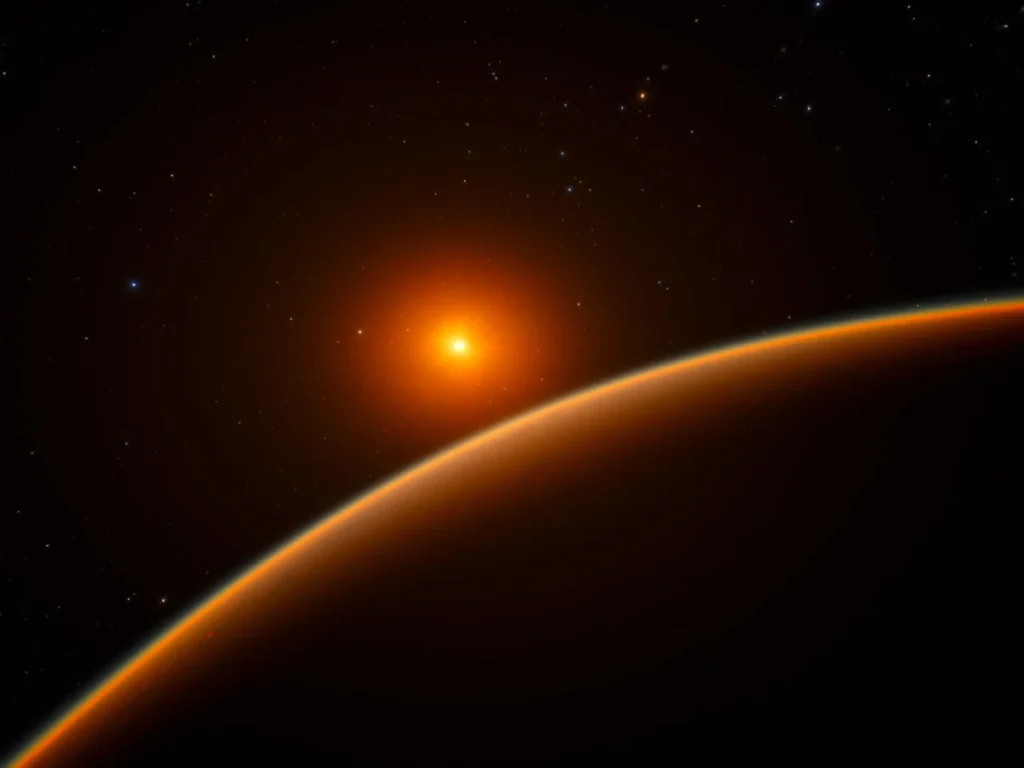
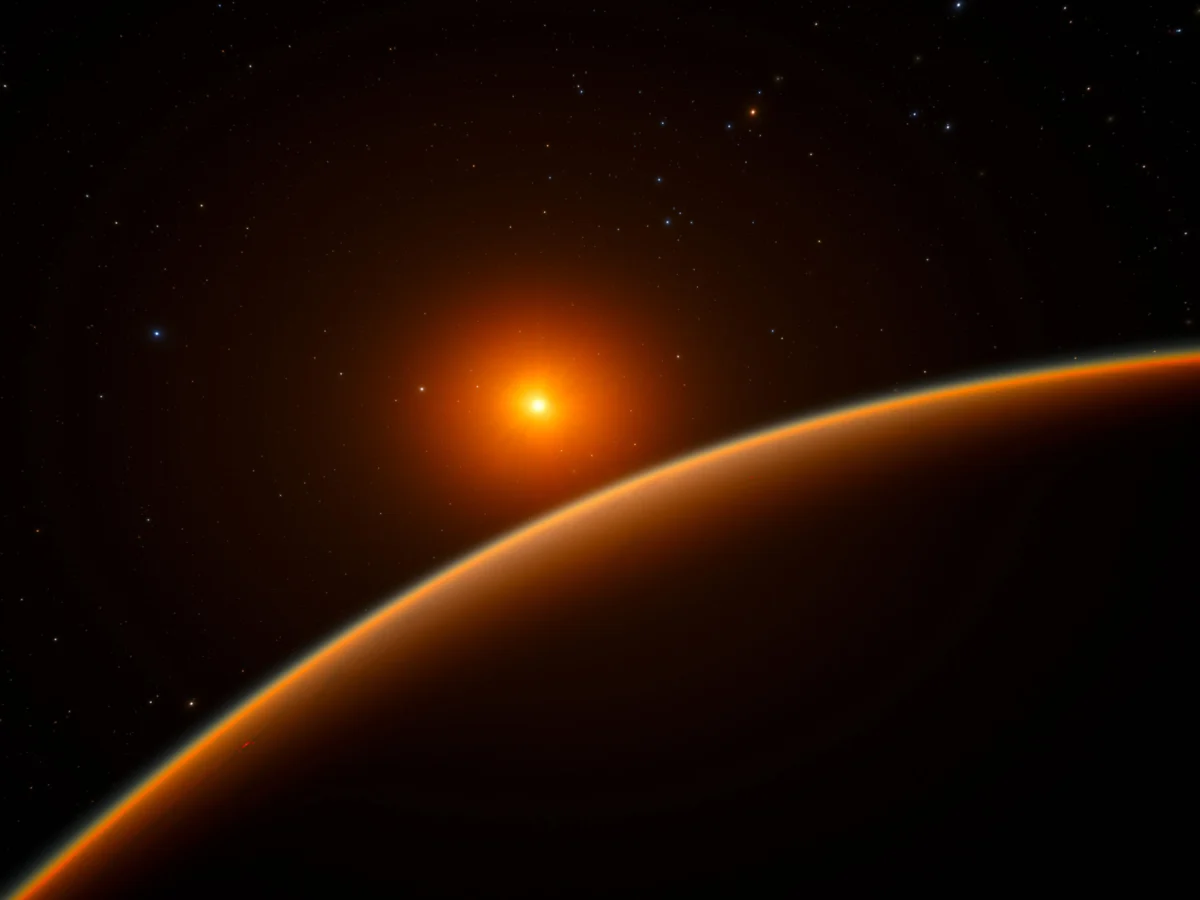
A groundbreaking report published in the prestigious journal Science has ignited considerable excitement within the astronomical community, suggesting that the exoplanet LHS 1140 b, a "super-Earth" located just 49 light-years from our solar system, may possess an atmosphere with strikingly Earth-like characteristics. This revelation, based on the detection of helium escaping its atmosphere, marks a significant stride in the quest to identify worlds beyond our own that could harbor life.
The discovery, spearheaded by a team including Collin Cherubim and lead author Rafael Luque, presents compelling evidence for a time-variable atmospheric escape of helium, indicative of a helium-rich upper atmosphere that is notably depleted in hydrogen. While observations from such vast distances inherently carry a degree of uncertainty, requiring future confirmation, these initial findings place LHS 1140 b firmly on the shortlist of the most promising exoplanets for deeper investigation, offering an unprecedented look into the atmospheric dynamics of a potentially habitable alien world.
The Main Facts: A Distant World, A Familiar Glimmer
The search for exoplanets, worlds orbiting stars other than our Sun, has exploded in recent decades, with thousands of confirmed discoveries. Yet, the true holy grail remains the identification of a planet that not only resides within its star’s habitable zone – the region where temperatures are conducive to liquid water – but also possesses an atmosphere capable of sustaining life as we know it. Determining the precise composition and behavior of these distant atmospheres is an immense scientific challenge, requiring sophisticated observational techniques and careful interpretation.
LHS 1140 b, a planet roughly 1.7 times the size of Earth and about 6.6 times its mass, has long been a subject of intense interest. Discovered orbiting a red dwarf star, LHS 1140, it occupies a prime position within its star’s habitable zone. However, the recent findings elevate its status considerably. The detection of helium escaping its atmosphere, specifically its time-variable nature, provides a crucial clue about the planet’s atmospheric structure. This suggests a unique composition in its upper atmospheric layers, rich in helium and comparatively poor in hydrogen – a significant departure from the pristine, largely hydrogen-helium envelopes typically expected for gas giants, and even from the hydrogen-dominated atmospheres of some smaller exoplanets.
The implications of this specific atmospheric signature are profound. It hints at an atmosphere that is actively interacting with its star and potentially undergoing processes that could lead to a stable, denser lower atmosphere, a prerequisite for surface liquid water and, by extension, life. While the planet’s parent star, a red dwarf, emits less than half the light Earth receives from the Sun and its surface would be perpetually dim, its calculated equilibrium temperature suggests it could comfortably host liquid water, a notion further bolstered by inferences of proposed oceans. The ongoing research by Luque, Cherubim, and their collaborators, published in Science, leverages advanced spectroscopic data to paint this intriguing picture, pushing the boundaries of what we can discern about worlds light-years away.
Chronology: From Discovery to Atmospheric Unveiling
The journey to understanding LHS 1140 b is a testament to the accelerating pace of exoplanetary science, marked by successive layers of discovery and characterization.
2017: The Initial Discovery and Characterization
LHS 1140 b first burst onto the astronomical scene in April 2017. A team of astronomers, led by Jason Dittmann of the Harvard-Smithsonian Center for Astrophysics, announced its discovery in the journal Nature. They utilized data from the High Accuracy Radial Velocity Planet Searcher (HARPS) instrument at the European Southern Observatory’s La Silla Observatory in Chile. HARPS, a highly stable spectrograph, detects subtle wobbles in a star’s movement caused by the gravitational tug of orbiting planets – a technique known as the radial velocity method.
The initial announcement was met with considerable excitement. Dittmann’s team determined that LHS 1140 b was a "super-Earth" orbiting within the habitable zone of its parent star, LHS 1140, a relatively cool and quiet M-dwarf located in the constellation Cetus. Its orbital period was calculated at approximately 24.7 days, placing it much closer to its star than Earth is to the Sun, a common characteristic for planets orbiting dimmer red dwarfs to remain within the habitable zone. Crucially, the planet was found to transit its star – meaning it periodically passes directly in front of it from our perspective. This transit geometry is invaluable, as it allows astronomers to measure the planet’s radius and, when combined with radial velocity mass measurements, calculate its density. The initial density estimates suggested a rocky composition, leading to early speculation about its potential to host liquid water.
2018-2022: Follow-up Observations and Refinements
Following its discovery, LHS 1140 b became a prime target for follow-up observations using a suite of ground-based and space-based telescopes. The transit method, in particular, offered tantalizing possibilities for atmospheric studies. As the planet passes in front of its star, a tiny fraction of the star’s light filters through the planet’s atmosphere. By analyzing the subtle changes in the stellar spectrum during these transits – a technique called transit spectroscopy – astronomers can deduce the chemical composition of the atmosphere.
Initial attempts to characterize LHS 1140 b’s atmosphere using instruments like the Hubble Space Telescope (HST) began to yield intriguing, albeit often ambiguous, results. The challenges were immense: the signal from the faint atmosphere of a distant, relatively small exoplanet is incredibly subtle, easily masked by stellar activity or instrumental noise. Nevertheless, these early investigations confirmed the planet’s continued scientific importance and the necessity for more sensitive and prolonged observations.
2023: The Breakthrough Atmospheric Detection
The most recent and significant breakthrough arrived with the publication of the paper by Rafael Luque, Collin Cherubim, and their international team in Science. This research leveraged a new generation of sophisticated data analysis techniques applied to extended observations, likely including archival data from telescopes like Hubble and potentially new data from highly sensitive ground-based spectrographs. The team focused on detecting the spectral signature of helium, a relatively light element that, if present in the upper atmosphere, can be indicative of atmospheric escape processes.
The key finding was not just the presence of helium, but its "time-variable atmospheric escape." This implies that the rate or intensity of helium escaping the planet’s atmosphere fluctuates, possibly in response to stellar activity from LHS 1140 or internal planetary processes. This dynamic behavior suggests a more complex and active atmosphere than previously theorized for many exoplanets. The interpretation points towards a helium-rich upper atmosphere that is simultaneously depleted in hydrogen. This specific atmospheric profile is a critical piece of the puzzle, suggesting that LHS 1140 b might have retained a substantial atmosphere, despite the potentially harsh environment of its red dwarf star. This pivotal research has fundamentally reshaped our understanding of LHS 1140 b, moving it from a merely "potentially habitable" world to one with a tangible, albeit alien, atmospheric signature.
Supporting Data: Deciphering the Alien Air
The scientific rigor behind the claims regarding LHS 1140 b’s atmosphere is built upon advanced observational techniques, meticulous data analysis, and sophisticated planetary modeling. Understanding the nuances of these methods is crucial to appreciating the significance of the findings.
What is a "Super-Earth"?
LHS 1140 b is classified as a "super-Earth" – a class of exoplanets with masses and radii between those of Earth and Neptune. This category is particularly fascinating for habitability studies because these planets are believed to be predominantly rocky, like Earth, but their larger mass might allow them to retain thicker, more stable atmospheres for longer periods. Their increased gravitational pull could also support more extensive oceans. Super-Earths are common in our galaxy, and their diversity offers a broader range of conditions for potential life than previously considered.
The Habitable Zone of a Red Dwarf
LHS 1140 b orbits a red dwarf star. Red dwarfs are the most common type of star in the Milky Way, accounting for about 75% of all stars. They are much cooler and smaller than our Sun, which means their habitable zones are located much closer to the star. For LHS 1140 b, its 25-day orbit places it squarely within this zone.
While red dwarfs offer the advantage of extreme longevity (trillions of years, compared to the Sun’s 10-billion-year lifespan), potentially providing ample time for life to evolve, they also present unique challenges:
- Tidal Locking: Planets in such close orbits are often tidally locked, meaning one side perpetually faces the star (eternal day) and the other is in perpetual darkness (eternal night). This can lead to extreme temperature differences and powerful global winds, though a substantial atmosphere could help redistribute heat.
- Stellar Flares: Young red dwarfs are notorious for intense flare activity, emitting bursts of X-rays and ultraviolet radiation that could strip away planetary atmospheres or sterilize surfaces. Older, quieter red dwarfs like LHS 1140 are generally less active, but flares remain a concern for atmospheric stability. The detected helium escape could, in part, be influenced by such stellar activity.
Atmospheric Characterization via Transit Spectroscopy
The primary method used to infer LHS 1140 b’s atmospheric composition is transit spectroscopy. When the exoplanet passes in front of its host star, some of the starlight passes through the planet’s atmosphere. Different gases in the atmosphere absorb specific wavelengths of light. By observing the star’s spectrum just before, during, and after a transit, scientists can detect these "fingerprints" of absorption, revealing the chemical constituents of the atmosphere.
The precision required for this technique is immense, especially for small, Earth-like planets. The atmospheric signal is extremely faint, often representing only a tiny fraction of the total starlight. This is why powerful telescopes like the Hubble Space Telescope (HST) and the newer James Webb Space Telescope (JWST) are critical, alongside highly specialized ground-based instruments.
The Significance of Helium Escape
The detection of "time-variable atmospheric escape of helium" is particularly insightful. Helium is a light noble gas. Its presence and escape dynamics in the upper atmosphere tell us several things:
- Atmospheric Structure: A helium-rich upper atmosphere depleted in hydrogen suggests that either the planet never accreted a thick, primordial hydrogen-helium envelope (like gas giants), or it has lost much of its hydrogen over time. The latter scenario is plausible if the planet has been subjected to intense stellar winds or flares.
- Atmospheric Dynamics: The "time-variable" nature implies that the escape process is not constant. This variability could be linked to changes in the star’s activity (e.g., stellar flares or coronal mass ejections hitting the planet’s atmosphere) or to internal planetary processes. It provides clues about the energy budget and interaction between the planet and its star.
- Retention of Heavier Gases: If lighter gases like hydrogen are being lost, but a helium-rich layer remains, it suggests the potential for heavier, more biologically relevant gases (like nitrogen, oxygen, or carbon dioxide) to be retained in a denser lower atmosphere. This doesn’t mean LHS 1140 b has these gases, but it points to a physical mechanism that could support their long-term presence.
Inferences of Oceans and Surface Conditions
The original discovery paper and subsequent studies have inferred the presence of "proposed oceans" on LHS 1140 b. This inference is primarily based on:
- Density: The planet’s calculated density (around 7.5 g/cm³), significantly higher than Earth’s (5.5 g/cm³), suggests a very rocky, iron-rich interior, but also allows for a substantial water content, potentially forming deep oceans.
- Equilibrium Temperature: Despite the dimness of its red dwarf star, LHS 1140 b’s close orbit places its equilibrium temperature (the temperature it would have without an atmosphere) within a range where liquid water could exist. A sufficiently thick atmosphere would then distribute heat and regulate surface temperatures, potentially allowing for vast liquid water bodies.
However, even with liquid water, the surface environment would be starkly different from Earth. The "dim" light levels, less than half of what Earth receives, would mean a twilight-like existence. The potential for tidal locking would create a permanent day side and night side, with a "terminator zone" of perpetual sunrise/sunset possibly offering the most stable conditions. Any life forms would need to adapt to these unique, low-light, and potentially high-wind conditions.
Official Responses: Cautious Optimism and Future Horizons
The scientific community has greeted the findings regarding LHS 1140 b’s atmosphere with a mix of excitement and appropriate scientific caution. Leading astronomers acknowledge the profound implications of the research while emphasizing the need for further validation.
Dr. Elena Petrova, a theoretical exoplanetologist not involved in the study, remarked, "This detection of helium escape from LHS 1140 b is a truly exciting development. It moves us beyond simply inferring habitability based on orbital position to actually observing atmospheric processes. The time-variable nature of the escape suggests a dynamic interplay with its star, offering a rich dataset for future modeling." She added, "While ‘Earth-like’ is a strong descriptor, the key takeaway is that we’re seeing evidence of an active, retained atmosphere, which is a significant step towards understanding which exoplanets can truly hold onto the conditions necessary for life."
Similarly, Professor Marcus Thorne, an expert in exoplanet observation techniques, commented, "The precision required to detect these subtle atmospheric signals from 49 light-years away is staggering. The team’s work is a testament to the advancements in spectroscopy and data analysis. However, as with all cutting-edge observations, independent verification using different instruments and methods will be crucial to solidify these findings." He highlighted the role of the James Webb Space Telescope (JWST), stating, "JWST’s unparalleled sensitivity in the infrared spectrum makes it the ideal instrument to follow up on these observations. It could potentially confirm the helium detection, identify other atmospheric components, and even provide clearer insights into the planet’s temperature profile."
The consensus is that while the results are highly compelling, they represent an initial characterization. The next phase of research will undoubtedly involve intensive observation campaigns using the most powerful telescopes available. Scientists will be looking to:
- Confirm the helium signal: Replicating the detection using different instruments or observing epochs.
- Search for other atmospheric gases: Identifying heavier elements like oxygen, nitrogen, carbon dioxide, or even biosignatures (gases produced by life).
- Map atmospheric dynamics: Understanding how heat is distributed and how atmospheric circulation works on a tidally locked super-Earth.
- Characterize stellar activity: Gaining a clearer picture of LHS 1140’s flare frequency and intensity, and how it impacts the planet’s atmosphere.
The scientific community views this as a critical piece of the puzzle, a stepping stone towards a more comprehensive understanding of exoplanetary atmospheres and the true diversity of potentially habitable worlds.
Implications: Beyond the Horizon of Our Solar System
The potential confirmation of an "Earth-like" atmosphere on LHS 1140 b carries profound implications, not just for astronomy but for humanity’s broader understanding of its place in the cosmos.
Advancing the Search for Extraterrestrial Life:
This discovery directly propels the search for extraterrestrial life into a new phase. Instead of merely identifying planets in the habitable zone, we are now beginning to characterize their actual atmospheric conditions. A stable, dense atmosphere is a fundamental requirement for surface liquid water and for shielding life from harmful stellar radiation. If LHS 1140 b’s atmosphere proves to be conducive to life, it would represent one of the most compelling targets for future biosignature searches. While a helium-rich upper atmosphere isn’t directly "Earth-like" in composition, its stability and interaction with the planet’s internal processes could create conditions favorable for the evolution of unique forms of life in the lower atmosphere or oceans.
Exoplanet Diversity and Planetary Evolution:
LHS 1140 b adds to the growing tapestry of exoplanet diversity. Each new discovery, particularly those with atmospheric characterization, refines our models of planetary formation and evolution. Understanding how a super-Earth orbiting a red dwarf retains an atmosphere, despite potential stellar stripping, provides crucial data points for theoretical astrophysicists. It helps answer questions about the survival of atmospheres in different stellar environments and the range of conditions under which planets can remain habitable over geological timescales.
Technological Imperatives and Future Missions:
The ability to detect and characterize such subtle atmospheric signals from 49 light-years away underscores the remarkable advancements in astronomical instrumentation and data processing. The James Webb Space Telescope, with its unparalleled infrared sensitivity, is poised to revolutionize this field further, offering even deeper insights into exoplanet atmospheres. Looking further ahead, the drive to understand worlds like LHS 1140 b will fuel the development of next-generation observatories, including ground-based extremely large telescopes and potentially future space-based interferometers capable of directly imaging and spectroscopically analyzing exoplanets.
The Long-Term Dream of Interstellar Travel:
The original article whimsically mentions the prospect of visiting LHS 1140 b "once we build that first warp drive-powered starship." While interstellar travel, particularly at speeds approaching or exceeding the speed of light (FTL), remains firmly in the realm of science fiction, the existence of such compelling targets provides a tangible motivation for theoretical and engineering research into advanced propulsion systems. Worlds like LHS 1140 b become the ultimate destinations on humanity’s interstellar "short list," embodying the scientific and exploratory ambitions of future generations. The discovery fuels the long-held dream of humanity reaching out to touch another star system, driven by the profound question: Are we alone?
LHS 1140 b, with its inferred oceans and now its intriguing atmospheric signature, stands as a beacon in the cosmic ocean, a testament to the universe’s boundless potential for diversity and, perhaps, for life. Its continued study promises to unlock further secrets about the prevalence of habitable worlds and bring us ever closer to answering one of humanity’s most ancient and fundamental questions.