Adobe’s Project Indigo: Redefining Mobile Photography Through Generative AI
In the rapidly evolving landscape of mobile photography, Adobe’s "Nextcam" team has sparked a significant industry debate with the latest update to its experimental application, Project Indigo. Originally launched with the promise of delivering a "natural, SLR-like look" to smartphone snapshots, the app is shifting its focus toward a more aggressive integration of generative artificial intelligence. By introducing the "AI Playground," Adobe is signaling a departure from traditional computational photography toward a future where the line between capturing a moment and fabricating one becomes increasingly blurred.
Main Facts: The Evolution of AI Playground
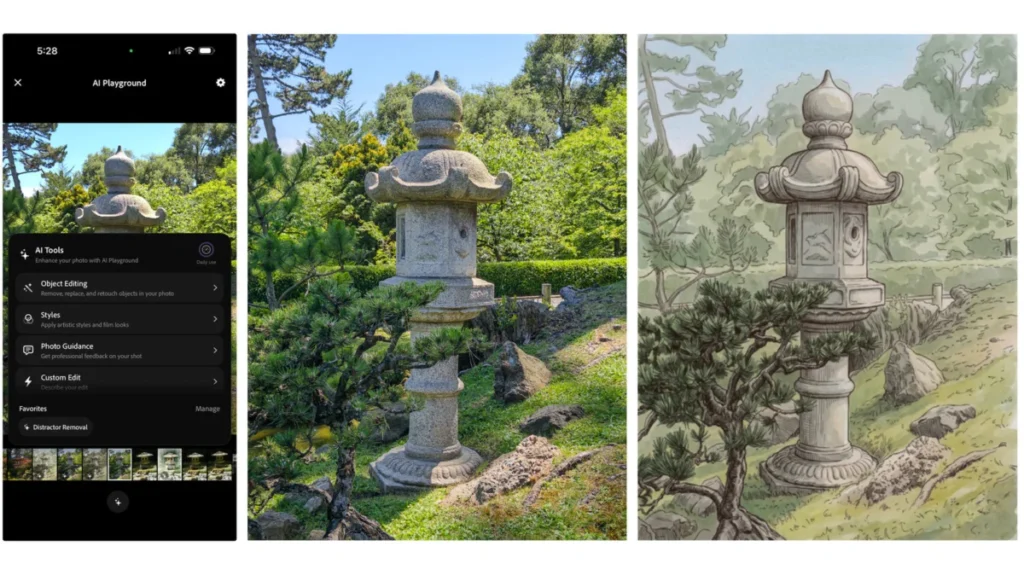
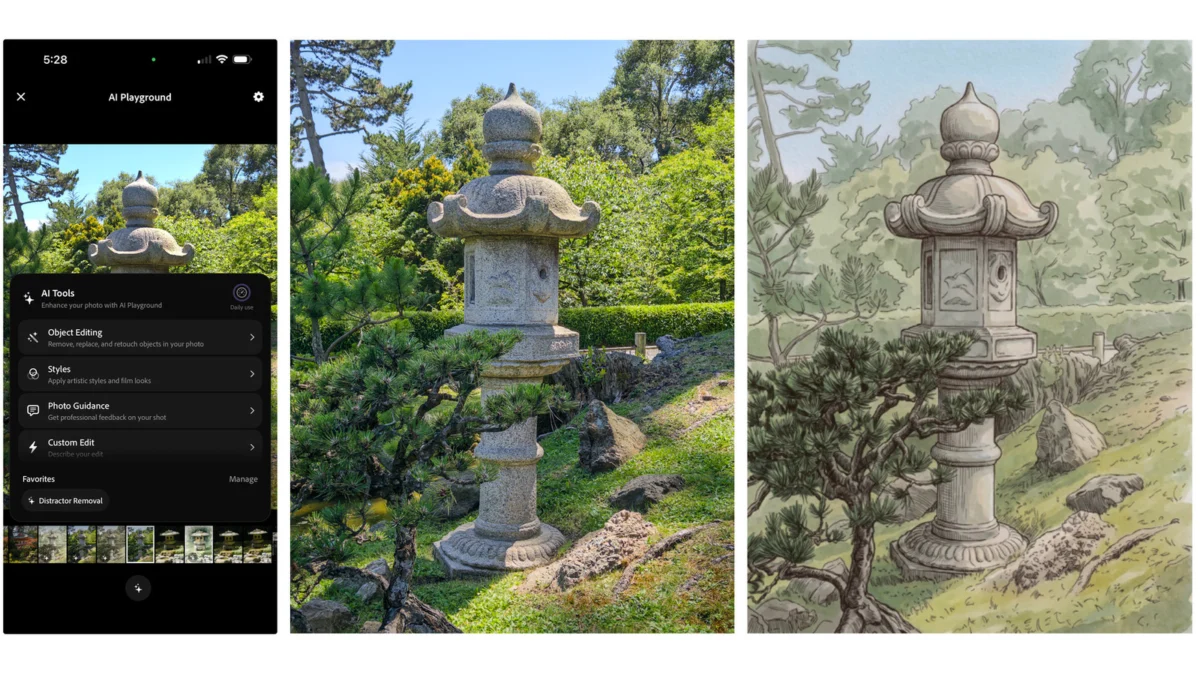
Project Indigo, an experimental venture spearheaded by former Pixel camera engineers, has introduced a suite of tools that fundamentally alter how images are processed at the "point of capture." The newly unveiled AI Playground is divided into four distinct pillars, each leveraging generative models to manipulate reality in real-time or near-real-time.
- Object Editing: This feature allows users to perform complex post-processing tasks—such as removing unwanted photobombers, stray cars, or distracting signage—directly within the app. It also includes an artificial bokeh effect, enabling users to simulate the shallow depth of field typically reserved for high-end, full-frame camera lenses.
- Styles: Moving beyond simple filters, the Styles section uses generative AI to re-render images in artistic formats. Users can transform a standard portrait into a pen-and-ink sketch or a color-washed painting, effectively changing the medium of the photograph after the shutter button has been pressed.
- Photo Guidance: Perhaps the most intrusive of the new features, Photo Guidance acts as a virtual photography coach. It critiques a composition in real-time, offering suggestions for framing and lighting before the user takes the shot.
- Custom Edit: This represents the most advanced tier of the update. Utilizing text-to-image prompting, users can manipulate specific elements within a scene—such as relocating a lantern to a mountain ledge or shifting the direction of ambient sunlight—creating a bespoke image that bears little resemblance to the original raw data captured by the sensor.
The engine powering these features is currently Google’s "Nano Banana" model. While Adobe has noted that this is a temporary choice, it highlights the reliance of experimental software on large-scale foundational models developed by third-party tech giants.
Chronology: From Pixel Precision to Generative Synthesis
The genesis of Project Indigo was rooted in a desire to provide smartphone users with the tactile, high-fidelity experience of traditional DSLR photography. The Nextcam team sought to optimize the sensor-to-processor pipeline, emphasizing optical fidelity, dynamic range, and accurate color science.
- Early 2023: Project Indigo is introduced to the public as an alternative to the heavy-handed, often over-processed look of native smartphone camera apps. The initial user base consisted of enthusiasts seeking "authentic" photography.
- Late 2023: The Nextcam team begins internal testing of generative tools, recognizing that the market for mobile photography is shifting away from pure capture toward "image creation."
- Mid-2024: The public announcement of AI Playground marks a pivot point. The focus shifts from hardware-level optimization to software-level augmentation.
- Current Status: The app is currently in a restricted, invite-only phase, with Adobe monitoring usage metrics to determine the feasibility of a subscription-based model.
Supporting Data: The Economics and Accessibility of AI
The rollout of the AI Playground is currently limited to a small percentage of the existing user base. This controlled release is a strategic move by Adobe to manage server load and gather critical user feedback.
As noted by the Nextcam team, the current free access period is temporary. The financial model underlying these features is explicitly tied to popularity and performance. Adobe has been transparent about the economic reality of generative AI: the compute costs associated with running these models are significantly higher than traditional image processing. Consequently, the company has stated, "We can’t offer it for free forever." If the user adoption rates remain high, a transition to a "freemium" or subscription-based model is all but guaranteed.
This reflects a broader trend in the software industry where "experimental" features are used as lead magnets for recurring revenue streams. By providing a glimpse into the power of generative editing, Adobe is positioning itself to capture a significant portion of the mobile editing market, challenging competitors like Google Photos and Apple’s native computational tools.
Official Responses and Strategic Vision
The philosophy driving the Nextcam team is centered on the concept of "AI as a partner." In various statements, the team has emphasized that the goal is not to replace the photographer, but to provide them with an "assistant" that removes the technical barriers to high-quality output.
"Our goal is to explore how generative AI can assist mobile photographers at the point of capture," the team stated in a recent release. They argue that by automating the removal of distractions or suggesting better framing, they are allowing the user to focus on the "creative intent" rather than the technical limitations of a small smartphone sensor.
However, critics within the photography community have raised concerns regarding the integrity of the image. The transition from "capturing" to "editing via prompt" raises questions about what constitutes a photograph in the modern era. Adobe appears to be navigating this tension by framing the AI Playground as an "experimental" sandbox, thereby insulating the core Adobe brand from the immediate backlash often associated with AI-generated content.
Implications: The Death of the "Authentic" Snapshot?
The introduction of these features has profound implications for the future of digital visual culture.
1. The Erosion of Photographic Truth
When an app can effectively move a lantern or change the source of light via a prompt, the photograph ceases to be a record of reality and becomes a digital canvas. While this is a boon for artists and social media creators, it poses a challenge for journalism and documentary photography. As tools like Project Indigo become ubiquitous, the burden of proof for the authenticity of an image will increase significantly.
2. The Homogenization of Aesthetics
By offering "Styles" and "Photo Guidance," Adobe is essentially standardizing the creative process. If every user is guided by the same AI to frame their shots in a specific way, and every image is processed through the same generative filters, we risk a future where all mobile photography looks identical—a "mathematically optimized" aesthetic that lacks the idiosyncrasies of human error and personal style.
3. The New Creative Barrier
The transition toward a paid model for these features creates a divide between those who can afford "AI-enhanced" imagery and those who cannot. This could lead to a two-tiered system where the "professional" look is gated behind a subscription, further commodifying the act of taking a picture.
4. Hardware vs. Software
Perhaps the most significant implication is the relative decline of the importance of smartphone hardware. If a generative model can simulate a shallow depth of field and correct lighting after the fact, the need for larger, more expensive camera sensors may diminish. If software can fix the output, the hardware simply becomes a vehicle for the data, potentially disrupting the high-end smartphone camera market.
Conclusion: A Turning Point for Adobe
Adobe’s Project Indigo is no longer just a camera app; it is a laboratory for the future of human-AI collaboration. While the shift away from a "natural, SLR-like look" may alienate purists, it aligns the company with the prevailing winds of the tech industry.
As the Nextcam team continues to refine these tools, the industry will be watching closely. Whether the AI Playground becomes a standard for all future mobile photography or remains a niche, experimental toy, one thing is clear: the way we document our lives is undergoing a fundamental transformation. The shutter button is becoming less of a trigger for a moment in time, and more of a starting point for an iterative, AI-driven creative process. As Adobe looks toward a future of paid, generative tools, the question remains: are users ready to trade the authenticity of the "real" for the polish of the "generated"? The coming months of user testing will provide the answer.