10x Genomics Pivots to the Clinic: Building the Infrastructure for the Future of Precision Diagnostics


In a strategic evolution that marks a departure from its foundational role as a provider of research-grade tools, 10x Genomics is aggressively building the infrastructure necessary to transition into the clinical diagnostics arena. The company confirmed this week that it is on schedule to launch a CLIA-certified (Clinical Laboratory Improvement Amendments) facility at its Pleasanton, California, headquarters by early 2027. This laboratory serves as the linchpin of a broader corporate strategy designed to translate single-cell and spatial biology insights directly into patient care.
The Strategic Shift: From Bench to Bedside
For over a decade, 10x Genomics has been synonymous with the "omics" revolution, providing academic, government, and commercial research labs with the high-resolution tools required to map the complexities of biology at the cellular level. However, the move toward clinical diagnostics represents a fundamental shift in the company’s business model.
According to 10x co-founder and CEO Serge Saxonov, PhD, the decision to build an in-house CLIA lab is not merely an operational expansion—it is a vertical integration strategy. By housing the laboratory within the company’s existing Pleasanton campus, 10x aims to create a closed-loop system where internal expertise in single-cell sequencing and spatial biology can be leveraged to validate, optimize, and refine new diagnostic assays with unprecedented speed.
"Building a CLIA lab is definitely not a trivial undertaking, but we’ve been making really great progress," Saxonov told GEN. "The team has been standing up these capabilities, and we are definitely on track for early next year. Having all the infrastructure under one roof at this stage is incredibly enabling. We have the space, the expertise, and the deep knowledge of our own technology to move quickly."
Chronology of a Clinical Ambition
The path to this moment has been paved with a series of deliberate, high-profile institutional partnerships.
- January 2026: 10x Genomics officially announced its entry into the clinical diagnostics space at the J.P. Morgan 44th Healthcare Conference in San Francisco. The announcement was accompanied by the unveiling of three landmark collaborations with the Cancer Research Institute (CRI), Brigham and Women’s Hospital, and the Dana-Farber Cancer Institute.
- Spring 2026: The company began formalizing workflows and logistics, focusing on the ability to handle distributed patient samples—a critical hurdle for any clinical-grade diagnostic platform.
- June 2026: 10x Genomics expanded its footprint by signing a multi-year collaboration with the Cleveland Clinic, one of the world’s most prestigious nonprofit multispecialty academic medical centers.
- July 2026 (Present): 10x is actively integrating data streams from its Boston-based partners (Dana-Farber and Brigham and Women’s) while preparing the physical and regulatory infrastructure for the upcoming CLIA lab opening.
The Cleveland Clinic Collaboration: Decoding Bladder Cancer
The most recent partnership with the Cleveland Clinic highlights the practical application of 10x’s technology in oncology. The collaboration is focused on developing novel diagnostics for bladder cancer, specifically targeting the identification of biomarkers that predict patient response to immunotherapies and antibody-drug conjugates (ADCs).
While many biomarkers for these therapies are already known, their predictive value remains limited because their expression patterns within the tumor microenvironment—the complex ecosystem of cancer cells, immune cells, and structural cells—are not fully understood.
"Those biomarkers are definitionally known already, but the actual context of their expression isn’t really that well known in terms of being able to predict response," Saxonov explained. "The question is, if you see their expression in the context of the cancer cells, or the tumor microenvironment, or the immune compartment, will it inform response to therapy? There is plenty of evidence in the scientific literature that there is a powerful signal there. What hasn’t been done is running rigorous, well-powered, clinically defined studies to measure and evaluate those biomarkers."
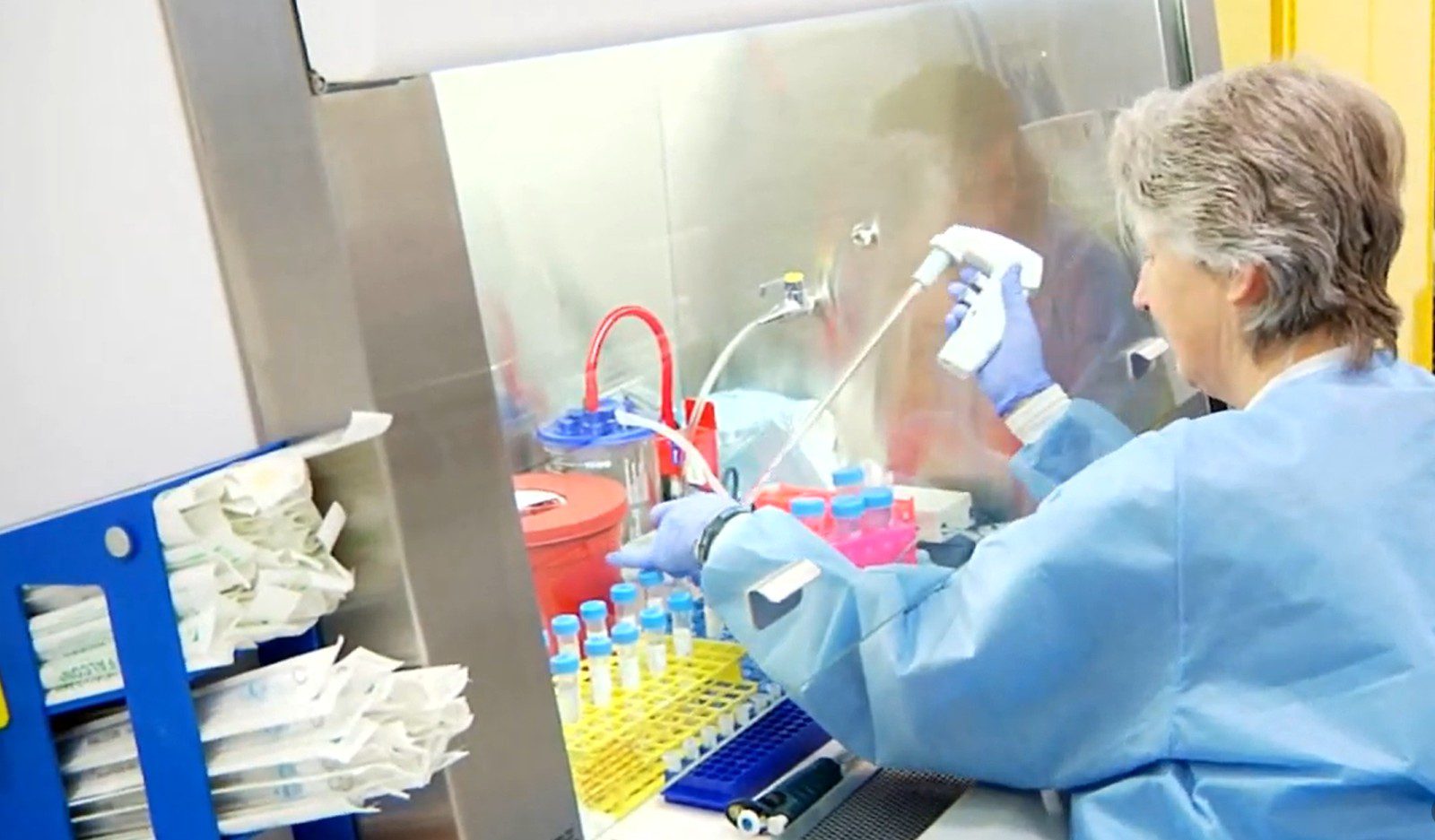
Through this collaboration, the Cleveland Clinic will provide patient samples with specific clinical phenotypes for analysis using 10x’s Flex Apex single-cell sequencing and Xenium spatial biology platforms. The objective is to correlate the biological data derived from these tools with actual therapeutic outcomes, providing a blueprint for future diagnostic tests.
Supporting Data: Why Now?
The timing of this pivot is not accidental. Saxonov identifies three converging trends that have made this the optimal moment for 10x to lean into clinical applications:
- Workflow Maturity: Investments in robust, standardized workflows have finally bridged the gap between experimental research protocols and clinical-grade procedures.
- Logistical Scalability: The company has developed the supply chain and logistics necessary to manage the collection and transport of patient samples from multiple clinical sites, a requirement for high-throughput diagnostic settings.
- Cost Efficiency: Significant advancements in cost-reduction for single-cell and spatial analysis have brought the price of these sophisticated technologies within the realm of potential diagnostic reimbursement.
Navigating Market Volatility
The company’s shift to clinical diagnostics comes on the heels of a challenging period for its research business. Last year, 10x Genomics was forced to trim its workforce by roughly 8% (approximately 100 jobs) as academic and government research funding tightened, impacting the company’s traditional revenue streams. Despite this, Saxonov insists that the clinical push is an independent, forward-looking strategic evolution rather than a reactionary measure.
"We feel our research business gives us an awesome foundation to now invest in this future of clinical applications," Saxonov said. "It was always our plan, always our mission, and always the strategy of the company that, as we develop our technologies, we want to make them have a direct clinical impact."
While the research market remains subject to funding fluctuations, the clinical path offers a different value proposition: the ability to provide actionable data that improves patient survival rates and optimizes treatment selection—a market with more consistent demand drivers.
Clinical Implications and Future Outlook
The implications of 10x’s entry into the clinical space are significant. By providing a platform that can map the tumor microenvironment with single-cell resolution, 10x is positioning itself to be at the center of the next generation of precision medicine.
Priority Therapeutic Areas
10x has identified two primary pillars for its clinical expansion:
- Oncology: Focused on therapy selection, monitoring, and understanding resistance mechanisms.
- Autoimmune Disease: Leveraging the ability of single-cell analysis to identify pathogenic immune cell subsets, which could lead to better diagnostics for complex, chronic immune-mediated conditions.
The collaboration with the Cancer Research Institute remains a critical data-generating engine, focused on creating "AI-ready" datasets for immunotherapy. These datasets are expected to serve as the training foundation for future machine-learning models that could eventually automate diagnostic interpretations.
The Road Ahead
As the company moves toward the 2027 opening of its CLIA lab, the focus will remain on "generating clinical evidence." Saxonov noted that the company is currently in the "evidence-generation phase" across its various partnerships.
"We are currently in a really nice position to lean into generating clinical evidence for all these different therapeutic areas," Saxonov stated. "Then, we will take the resulting information and deploy that in the context of diagnostic tests in the future."
The industry will be watching closely as 10x releases its upcoming quarterly earnings, where stakeholders expect further clarity on the company’s progress within its research and clinical divisions. With patient flows established in Boston and research programs underway in Cleveland, 10x Genomics is effectively betting its future on the idea that the next frontier of diagnostic medicine lies in the high-resolution mapping of the cellular architecture of disease.
If the company succeeds in operationalizing these complex tools within a clinical framework, it could fundamentally change how doctors prescribe therapies, moving away from "one-size-fits-all" approaches toward a future defined by the precise, spatial, and single-cell understanding of every patient’s unique pathology.