AirSense: Breathing New Life into DIY Purification with Smart ESP32 Integration
In an era where a significant portion of our lives unfolds indoors, the quality of the air we breathe within our homes and workspaces has become a paramount concern. From offices to maker spaces, and increasingly, home offices, the health and productivity of "predominantly indoor creatures" hinges directly on their immediate environment. It is within this context that Kishan Pratap Singh’s ingenious creation, AirSense, emerges as a beacon of innovation – an ESP32-powered air filter that transcends mere purification by offering comprehensive environmental monitoring. This project not only provides a tangible solution for cleaner air but also exemplifies the power of DIY ingenuity in tackling contemporary health challenges.
Introduction: The Genesis of Clean Air – AirSense Redefines DIY Purification
The modern indoor environment, while offering shelter and comfort, can often harbor a complex cocktail of pollutants, allergens, and irritants. From microscopic dust particles and pet dander to volatile organic compounds (VOCs) and seasonal pollen, these unseen adversaries can significantly impact respiratory health, cognitive function, and overall well-being. Recognizing this pervasive challenge, Kishan Pratap Singh embarked on a mission to empower individuals with a customizable, intelligent solution: AirSense. Far from being just another air purifier, AirSense represents a sophisticated fusion of filtration technology and real-time environmental sensing, all built upon the versatile ESP32 microcontroller platform.
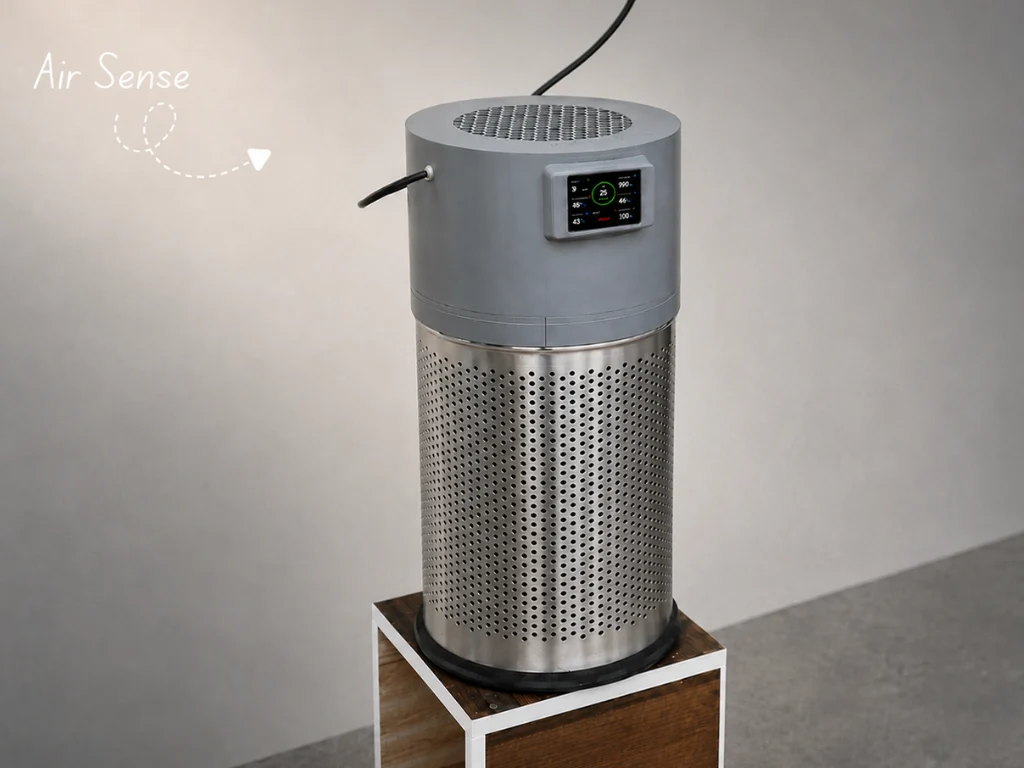
At its core, AirSense promises cleaner air, but its true brilliance lies in its ability to inform. By meticulously measuring critical metrics such as PM2.5 dust concentration, the overarching Air Quality Index (AQI), ambient temperature, humidity levels, and even atmospheric pressure, the device transforms a passive purifier into an active guardian of indoor health. This data-driven approach allows users to not only benefit from purified air but also to understand the precise conditions of their environment, fostering a deeper connection with their personal air quality. Ingeniously housed within a common metal trash can and topped with a custom 3D-printed cap, AirSense showcases how accessible components and clever design can culminate in a powerful and aesthetically pleasing device, challenging the notion that advanced environmental control must come with a hefty price tag or complex installation.
Main Facts: Beyond Basic Filtration – An Intelligent Approach to Indoor Air Quality
AirSense is a testament to thoughtful engineering, combining robust air filtration with a suite of environmental sensors to provide a holistic view of indoor air quality. This dual functionality sets it apart, offering not just a reactive solution to pollution but also proactive insights into the ambient conditions.
The Core Innovation: AirSense’s Dual Functionality
The concept of "predominantly indoor creatures" aptly describes a significant portion of the global population today. With the rise of remote work, digital entertainment, and specialized indoor hobbies, individuals spend an unprecedented amount of time within enclosed spaces. For these individuals, maintaining optimal indoor air quality is not merely a luxury but a fundamental requirement for sustained health and productivity. AirSense directly addresses this need by offering a two-pronged approach: effective purification and detailed monitoring.
Firstly, its primary function as an air purifier is executed with efficiency. Utilizing a widely available cylindrical Xiaomi HEPA (High-Efficiency Particulate Air) filter, AirSense is designed to capture microscopic particles that are detrimental to human health. HEPA filters are renowned for their ability to trap at least 99.97% of airborne particles 0.3 micrometers (µm) in diameter, including dust, pollen, mold spores, and pet dander. This mechanical filtration process ensures that the air circulated through the system is significantly cleaner, reducing allergens and irritants in the living space.
Secondly, and perhaps more innovatively, AirSense acts as a comprehensive environmental monitoring station. Mounted strategically along the exhaust path of the filter, a series of sensors continuously collects data on various properties of the air being expelled. This includes:
- PM2.5 Dust Concentration: Particulate matter 2.5 micrometers or less in diameter is a key indicator of air pollution and poses significant health risks due to its ability to penetrate deep into the lungs. AirSense provides real-time readings of this critical metric.
- Air Quality Index (AQI): This standardized index translates complex air quality data into a single, easily understandable number, indicating how clean or polluted the air is and what associated health effects might be a concern.
- Temperature and Humidity: These basic environmental parameters are crucial for comfort, but also play a role in the prevalence of certain pollutants. High humidity, for instance, can foster mold growth, while extreme temperatures can impact the release of VOCs from certain materials.
- Atmospheric Pressure: While less directly linked to air quality health, atmospheric pressure data can be valuable for understanding micro-climates, predicting weather changes, and providing a more complete environmental profile.
By monitoring the air after it has passed through the filter, AirSense provides direct feedback on the filter’s performance and the quality of the air being introduced back into the room. This transparency is invaluable for users who wish to verify the effectiveness of their purification system.
Engineering Elegance: Design and Components
The physical manifestation of AirSense is a testament to resourceful and elegant engineering. The choice of components and their integration demonstrates a keen understanding of both functionality and aesthetics within the DIY ethos.
Central to the intelligence of AirSense is the ESP32 microcontroller. This powerful, low-cost System-on-a-Chip (SoC) is a popular choice in the maker community due to its integrated Wi-Fi and Bluetooth capabilities, robust processing power, and extensive peripheral support. For AirSense, the ESP32 serves as the brain, collecting data from multiple sensors, processing it, and potentially enabling connectivity for remote monitoring or smart home integration. Its energy efficiency also makes it suitable for continuous operation.
The sensor array, though not explicitly detailed in the original brief, would typically include a dedicated PM2.5 sensor (e.g., a Plantower PMS5003 or similar) for particulate matter detection, and a multi-sensor module (like a Bosch BME280 or BME680) for temperature, humidity, and atmospheric pressure. These components are strategically mounted to capture accurate readings of the air post-filtration.
Air circulation is managed by a 150 mm exhaust fan. This fan is crucial for pulling ambient air into the system, through the HEPA filter, and then expelling the purified and monitored air back into the room. The size suggests a significant airflow capacity, suitable for purifying medium to large rooms effectively.
The structural integrity and streamlined appearance of AirSense are largely due to its ingenious enclosure. A 3D-printed cap serves multiple functions: it securely mounts the exhaust fan, houses the ESP32 and the LCD readout, and provides a sleek, finished look to the top of the device. This component highlights the accessibility of modern manufacturing techniques for DIY projects. The main body of the purifier is an everyday perforated metal trash can enclosure. This choice is brilliant for several reasons: it’s inexpensive, readily available, and its perforations naturally allow for air intake while providing a sturdy and aesthetically pleasing housing for the large cylindrical Xiaomi HEPA filter within.
The cylindrical Xiaomi HEPA filter is a smart choice for a DIY project. These filters are widely available, cost-effective, and known for their effectiveness. Their cylindrical shape also lends itself well to the trash can enclosure, maximizing the filtration surface area within the compact design.
Finally, the LCD readout integrated into the 3D-printed cap provides instant, at-a-glance access to all the collected environmental data. This immediate feedback loop is crucial for user engagement and understanding, allowing individuals to see the tangible impact of the purifier in real-time. The meticulous integration of all these components within the cap contributes significantly to the device’s "sleek look," proving that DIY solutions can be both highly functional and visually appealing.
Chronology: The Evolution of Smart Air Purification and Singh’s Contribution
The development of AirSense is not an isolated event but rather a significant contribution to a broader, ongoing narrative concerning indoor air quality and the democratization of technology. Understanding this chronology provides context for Singh’s innovation.
A Growing Awareness: The Need for Indoor Air Solutions
Concerns about indoor air quality (IAQ) are not new. Decades ago, phenomena like "sick building syndrome" brought attention to the adverse health effects of poor ventilation and indoor pollutants in commercial settings. However, in recent years, this awareness has expanded significantly to residential environments. Factors such as tighter building envelopes for energy efficiency (which can trap pollutants), increased use of synthetic materials in furnishings, and a greater understanding of allergens and particulate matter have driven the demand for effective indoor air solutions.
Initially, the market responded with large, often expensive, commercial air purifiers. These devices offered filtration but often lacked transparency regarding their performance or the actual air quality of the environment. As sensor technology became more affordable and compact, a new wave of "smart" air purifiers emerged, promising connectivity and data. However, these often came with proprietary ecosystems and limited user control.
Kishan Pratap Singh’s Journey with AirSense
Kishan Pratap Singh’s AirSense project can be seen as a direct response to the limitations of existing commercial solutions and an embrace of the open-source, DIY ethos. While the specific chronology of Singh’s development process is not detailed, one can envision a typical maker’s journey:
- Inspiration and Problem Identification: Singh likely recognized the growing importance of indoor air quality and the lack of affordable, transparent, and customizable solutions on the market. The idea of not just cleaning the air but understanding it in real-time would have been a key driver.
- Research and Component Selection: This phase would involve exploring available microcontrollers (the ESP32 being a prime candidate for its connectivity and processing power), suitable air filters (Xiaomi filters are known for good performance and availability), and various environmental sensors (PM2.5, temperature, humidity, pressure). The clever use of a trash can for the enclosure likely came from a desire for cost-effectiveness and ease of assembly.
- Design and Prototyping: Utilizing CAD software for the 3D-printed cap would be essential, followed by iterative physical prototyping to ensure all components fit correctly and airflow is optimized. Software development for the ESP32, including sensor integration, data processing, and LCD display management, would run in parallel.
- Testing and Refinement: Rigorous testing of the purifier’s effectiveness and the accuracy of the sensors would lead to adjustments in design or code. The decision to mount sensors along the exhaust path, for instance, is a deliberate design choice for performance validation.
- Documentation and Sharing: A hallmark of the maker community, Singh’s decision to publish AirSense on Instructables.com underscores the project’s commitment to knowledge sharing. This step not only solidifies his contribution but also inspires others to replicate, modify, and improve upon the design.
The DIY Movement’s Role in Innovation
AirSense is a shining example of the broader DIY and maker movement’s impact on technological innovation. This movement, characterized by accessibility, affordability, and customization, empowers individuals to create solutions tailored to their specific needs. Platforms like Instructables, GitHub, and Hackaday serve as vital hubs for sharing designs, code, and insights, fostering a collaborative environment where projects evolve and improve through community input.
The increasing availability of low-cost, powerful microcontrollers like the ESP32, affordable sensors, and accessible manufacturing tools like 3D printers have lowered the barrier to entry for complex projects. This democratization of technology allows individuals like Kishan Pratap Singh to develop sophisticated solutions that rival, and in some aspects surpass, commercial offerings, particularly in terms of transparency, customizability, and educational value. AirSense stands as a testament to this empowering trend, demonstrating that cutting-edge technology can be built in garages and workshops, not just corporate labs.
Supporting Data: The Science Behind Clean Air and Intelligent Monitoring
To truly appreciate AirSense, it’s essential to understand the scientific principles underpinning its design and the significance of the data it provides.
Understanding PM2.5 and AQI: Critical Health Indicators
- PM2.5 (Particulate Matter 2.5): This refers to airborne particles with a diameter of 2.5 micrometers or less. To put this into perspective, a human hair is about 70 micrometers in diameter. PM2.5 particles are generated from various sources, including combustion (cooking, heating, vehicle exhaust), industrial processes, and natural sources like wildfires and dust storms. Indoors, common sources include cooking fumes, burning candles, fireplaces, and even some cleaning products. The danger of PM2.5 lies in its minuscule size, which allows it to bypass the body’s natural defenses (like nose hairs and mucus) and penetrate deep into the lungs, and even enter the bloodstream. Exposure to high levels of PM2.5 can lead to a range of health issues, including respiratory problems (asthma, bronchitis), cardiovascular disease, and other chronic conditions. Monitoring PM2.5 is therefore critical for assessing immediate health risks.
- AQI (Air Quality Index): The AQI is a standardized metric used by government agencies (like the EPA in the U.S.) to communicate daily air quality to the public. It converts concentrations of various pollutants (including PM2.5, ozone, carbon monoxide, sulfur dioxide, and nitrogen dioxide) into a single, color-coded scale that ranges from 0 to 500. A low AQI (0-50, green) indicates good air quality, while a high AQI (301-500, maroon) signifies hazardous conditions. By calculating and displaying the AQI, AirSense provides an intuitive summary of the overall air quality, allowing users to quickly gauge potential health concerns without needing to interpret raw sensor data.
The Role of Temperature, Humidity, and Pressure
While not direct pollutants, temperature, humidity, and atmospheric pressure are crucial environmental factors that influence comfort, the behavior of other pollutants, and overall indoor air quality.
- Temperature: Beyond comfort, extreme indoor temperatures can affect the off-gassing rates of certain materials (e.g., formaldehyde from furniture) and influence the stability of various chemicals. Maintaining a comfortable temperature range is essential for both well-being and mitigating certain pollutant concentrations.
- Humidity: Relative humidity plays a significant role in indoor environments. Low humidity can lead to dry skin, irritated respiratory passages, and static electricity. Conversely, high humidity (above 60%) creates an ideal breeding ground for mold, dust mites, and bacteria, all of which can trigger allergies and respiratory issues. Monitoring humidity allows users to adjust ventilation or use humidifiers/dehumidifiers to maintain optimal levels (typically between 30-50%).
- Atmospheric Pressure: While its direct impact on health is less pronounced than temperature or humidity, atmospheric pressure is a fundamental meteorological parameter. Changes in pressure can sometimes correlate with changes in outdoor air infiltration rates, and for those sensitive to barometric pressure changes, it can be a factor in comfort. In a broader environmental sensing context, it adds valuable data for a complete understanding of the ambient conditions.
HEPA Filtration: A Gold Standard
The choice of a Xiaomi HEPA filter underscores the project’s commitment to effective purification. HEPA filters are recognized as the gold standard for mechanical air filtration due to their exceptional efficiency. Unlike electrostatic filters that use charged plates or activated carbon filters that adsorb gases, HEPA filters physically trap particles as air passes through a dense mat of randomly arranged fibers. This mechanical process is highly effective against:
- Pollen: A common allergen, particularly during seasonal peaks.
- Pet Dander: Tiny flecks of skin shed by animals, a major allergen.
- Dust Mites: Microscopic arthropods that thrive in dust, their droppings are potent allergens.
- Mold Spores: Microscopic reproductive units of fungi, which can trigger allergic reactions and respiratory problems.
- Larger Bacteria and Viruses: While not designed specifically for microorganisms, HEPA filters can capture larger bacteria and viruses that often attach to larger dust particles.
The high efficiency of HEPA filters ensures that AirSense significantly reduces the concentration of these harmful particulates, contributing directly to a healthier indoor environment.
The ESP32 Ecosystem: Powering Smart Devices
The ESP32 is more than just a chip; it’s an ecosystem that has revolutionized DIY electronics and the Internet of Things (IoT). Its key features make it an ideal choice for a project like AirSense:
- Low Power Consumption: Critical for a device intended for continuous operation, allowing for efficient energy use.
- Integrated Wi-Fi and Bluetooth: These connectivity options are fundamental for smart devices. They enable AirSense to potentially connect to a home network, send data to a cloud platform, integrate with smart home systems (like Home Assistant), or even be controlled via a smartphone app.
- Powerful Dual-Core Processor: Capable of handling multiple tasks simultaneously, such as reading sensor data, processing calculations for AQI, updating the LCD, and managing network communications, all without performance bottlenecks.
- Rich Peripheral Set: Offers numerous GPIO pins, analog-to-digital converters (ADCs), and communication protocols (I2C, SPI, UART), making it compatible with a wide array of sensors and display units.
- Affordability and Ease of Programming: Its low cost makes advanced projects accessible, and its support for popular development environments like the Arduino IDE and MicroPython lowers the barrier to entry for developers of all skill levels.
The ESP32 empowers AirSense to be not just a filter, but a truly "smart" device, capable of complex data processing and seamless integration into modern digital living spaces.
Official Responses & Industry Context: Broader Implications for Air Quality
While AirSense is a DIY project, its functionality aligns closely with the goals and recommendations of official bodies and reflects broader trends in the commercial air purification industry.
Regulatory Bodies and Public Health Advisories
Organizations like the Environmental Protection Agency (EPA) in the United States and the World Health Organization (WHO) globally provide extensive guidelines and recommendations regarding indoor air quality. They highlight the importance of ventilation, source control of pollutants, and the use of air filtration systems to mitigate health risks. The data provided by AirSense—especially PM2.5 and AQI—directly correlates with metrics emphasized by these bodies. By providing real-time data, projects like AirSense empower individuals to monitor their environment in a way that aligns with public health advisories, enabling them to take corrective action when air quality deteriorates. This personal monitoring goes a step beyond general recommendations, offering localized, immediate insights.
The Commercial Landscape vs. DIY Solutions
The commercial air purifier market is robust, with offerings ranging from basic filters to high-end "smart" purifiers integrated with smart home ecosystems. However, these commercial products often come with significant drawbacks:
- Cost: High-performance purifiers, especially those with smart features, can be very expensive.
- Proprietary Systems: Many commercial devices operate within closed ecosystems, limiting interoperability and user control over data.
- Lack of Transparency: Users often rely on manufacturer claims without direct, real-time verification of air quality metrics after filtration.
- Limited Customization: Commercial units offer little to no flexibility in terms of design, features, or integration.
AirSense directly addresses these limitations. Its cost-effective design, open-source nature, and transparent data reporting offer a compelling alternative. It demonstrates that advanced functionality can be achieved at a fraction of the cost, with the added benefits of complete user control and the ability to customize or repair the device. Furthermore, the "smart home" trend is pushing commercial products towards greater connectivity; DIY solutions like AirSense can often lead the way in integrating with diverse platforms like Home Assistant, offering flexibility that commercial vendors might not.
Open-Source Ethos and Knowledge Sharing
The decision by Kishan Pratap Singh to publish AirSense on Instructables embodies the core tenets of the open-source movement: transparency, collaboration, and knowledge sharing. This act not only allows others to replicate the project but also encourages modifications, improvements, and further innovation.
This spirit is evident in other related projects that have garnered attention:
- Hacking Xiaomi Air Purifier Filter DRM: The community’s efforts to bypass DRM (Digital Rights Management) on Xiaomi filters highlight a desire for user autonomy and cost-effectiveness, aligning with AirSense’s use of these popular filters. It’s a fight against planned obsolescence and for the right to repair and reuse.
- Naomi Wu’s Practical Open Source Air Purifier: This project, often celebrated for its robust design and clear documentation, showcases another influential figure in the maker community addressing the same core problem of indoor air quality with an open-source approach. Such projects inspire each other and collectively advance the state of DIY environmental control.
- ESP32 with Home Assistant for Air Purifiers: The integration of ESP32s with existing commercial air purifiers to bring them online with platforms like Home Assistant demonstrates a strong community drive to unify smart home devices, regardless of manufacturer. AirSense, being built on an ESP32, inherently possesses this potential for deep integration, allowing users to control and monitor their air quality system alongside other smart devices.
These examples underscore a vibrant ecosystem where shared knowledge drives collective progress, making advanced technologies more accessible and adaptable to individual needs. AirSense is a proud member of this community, contributing to a growing library of open-source solutions for a healthier future.
Implications: The Future of Personalized Air Quality Management
AirSense, while a singular project, carries profound implications for the future of indoor environmental control, pointing towards highly personalized, intelligent, and community-driven solutions.
The "Smart" Upgrade: Intelligent Power Management
The original article raises a pertinent question: "We wonder if it might be interesting to set it up to only filter the air if air quality drops below a certain level to conserve power, especially if you’re on a time-of-use power plan." This suggestion is more than just a minor optimization; it represents a fundamental shift towards intelligent, demand-driven air purification.
Currently, AirSense runs continuously. However, integrating a conditional operation based on real-time sensor data could yield significant benefits:
- Power Conservation: Running the fan only when necessary would drastically reduce electricity consumption, lowering utility bills and environmental impact. This is particularly relevant for those on time-of-use power plans, where electricity costs fluctuate throughout the day.
- Extended Filter Life: HEPA filters have a finite lifespan. By operating only when needed, the filter’s life could be extended, reducing replacement frequency and associated costs.
- Reduced Noise Pollution: Air purifiers, even quiet ones, generate some noise. Operating intermittently would ensure a quieter environment during periods of good air quality.
Implementing this "smart" upgrade would indeed require careful redesign. If the current sensors are along the exhaust path, they would only read filtered air when the fan is running. A separate sensor assembly in the intake path, or a "reverse" operation mode for initial sensing, would be necessary to accurately gauge ambient air quality before activating purification. This challenge, however, is precisely the kind of problem the maker community thrives on solving, potentially leading to a "version 2.0" of AirSense that is even more efficient and intelligent. Furthermore, integrating machine learning algorithms could allow the system to predict periods of poor air quality based on historical data (e.g., cooking times, outdoor pollution patterns), optimizing its operation even further.
Integration into Smart Homes and Beyond
The ESP32’s inherent Wi-Fi capabilities make AirSense ripe for seamless integration into existing smart home ecosystems. Imagine AirSense communicating with:
- Home Assistant: A popular open-source home automation platform. Users could monitor air quality data on their dashboards, create automations (e.g., "If PM2.5 > 50 for 10 minutes, turn on AirSense to high," or "If outdoor AQI is poor, close smart windows and activate AirSense"), and log historical data.
- Voice Assistants (Alexa, Google Home): Simple voice commands like "Alexa, what’s the air quality in the living room?" or "Hey Google, turn on the air purifier" could become standard interactions.
- Other Smart Devices: AirSense could trigger other devices, such as smart humidifiers if humidity drops too low, or even smart ventilation systems.
- Cloud-Based Dashboards: Data could be uploaded to platforms like Adafruit IO, ThingSpeak, or custom web servers for remote monitoring, historical analysis, and alert notifications (e.g., SMS or email alerts if air quality deteriorates significantly).
This level of integration transforms AirSense from a standalone device into a critical component of a truly intelligent living environment, where various systems work in concert to maintain optimal conditions.
Customization and Community-Driven Enhancements
The open-source nature of AirSense guarantees a vibrant future of customization and enhancement. The initial design serves as a robust foundation, but the community can build upon it in countless ways:
- Aesthetic Variations: Different 3D-printed cap designs, alternative enclosures (e.g., wooden cabinets, custom metalwork) to match various interior decors.
- Sensor Expansion: Integrating additional sensors for other pollutants like VOCs (Volatile Organic Compounds), CO2 (Carbon Dioxide), or even radon, to provide an even more comprehensive environmental profile.
- Advanced UI/UX: Developing more sophisticated LCD interfaces, touchscreen displays, or even companion smartphone apps for richer data visualization and control.
- Alternative Power Solutions: Exploring battery power for portability or solar integration for off-grid applications.
- Filter Options: Adapting the design to accommodate different types or brands of filters, including activated carbon filters for odor and VOC removal.
This collaborative environment ensures that AirSense remains relevant and continuously evolves, driven by the diverse needs and creativity of its users.
Empowering the Individual
Ultimately, the most significant implication of projects like AirSense is the empowerment of the individual. In a world increasingly dominated by black-box technologies and subscription services, AirSense offers:
- Understanding: Users gain a deep understanding of their immediate environment and the factors affecting their health.
- Control: The ability to build, modify, and integrate their own solutions provides unparalleled control over their living spaces.
- Affordability: Access to advanced technology without the prohibitive costs of commercial equivalents.
- Education: The process of building AirSense is an invaluable learning experience, fostering skills in electronics, programming, 3D printing, and environmental science.
By making complex environmental monitoring and purification accessible, AirSense encourages a proactive approach to health and well-being, moving beyond passive consumption to active creation and informed decision-making.
Conclusion: A Breath of Fresh Air for the Maker Community
Kishan Pratap Singh’s AirSense is more than just an air purifier; it is a compelling blueprint for how accessible technology, ingenious design, and the collaborative spirit of the maker community can converge to address critical modern challenges. By seamlessly integrating the powerful ESP32 with a comprehensive array of sensors and an efficient HEPA filter, AirSense offers a highly effective and transparent solution for indoor air quality management. Its smart monitoring capabilities provide invaluable real-time data, empowering users to understand and actively improve their immediate environment.
As we look to the future, the implications of AirSense are clear: a trajectory towards personalized, intelligent, and highly customizable air purification systems. The potential for intelligent power management, deep integration into smart home ecosystems, and continuous community-driven enhancements positions AirSense as a pioneering example in the evolving landscape of environmental tech. It underscores the profound impact that individual innovation, openly shared, can have on collective well-being, truly offering a breath of fresh air for "predominantly indoor creatures" and the maker community alike.