Revolutionizing Multi-Color 3D Printing: A New Slicer Method Promises Efficiency and Aesthetic Breakthroughs
Introduction: The Elusive Promise of Multi-Color 3D Printing
For years, the allure of multi-color 3D printing has been tempered by its inherent complexities. While the technology promises vibrant, intricate designs previously confined to traditional manufacturing, the reality for many users has involved tedious processes, significant material waste, and often, frustratingly inconsistent results. The quest for seamless color transitions, reduced print times, and economical filament usage has driven relentless innovation in both hardware and software. Now, a compelling new development, spearheaded by the independent innovator YKG3D, appears to be on the cusp of fundamentally transforming this landscape. Drawing inspiration from a pivotal 2018 research paper, YKG3D has unveiled a novel slicer method that drastically cuts down on tool changes and filament consumption, offering a path to smoother gradients and faster multi-color prints. This breakthrough represents not just an incremental improvement but a potential paradigm shift in how we approach chromatic complexity in additive manufacturing.
The core of this innovation lies in a sophisticated re-thinking of how colors are applied layer by layer. Instead of the conventional approach, where entire sections or features are printed in a single color before a tool change, YKG3D’s method rotates through a palette of colors with each successive layer. This intelligent sequencing, combined with precise adjustments to filament extrusion or strategic displacement of layer edges, allows for an unprecedented level of control over color prominence and blending. The immediate benefits are striking: a significant reduction in the number of tool changes, which are a primary bottleneck in multi-color printing, leading directly to faster print times and less material waste from purge blocks. However, like any nascent technology, it is not without its specific considerations, particularly concerning apparent layer height and the integrity of color blending on acutely angled surfaces.
Main Facts: A New Dawn for Chromatic Additive Manufacturing
The challenges associated with multi-color 3D printing are well-documented within the additive manufacturing community. Traditional methods, whether relying on multiple extruders, automatic material changing systems (like Prusa’s MMU or Bambu Lab’s AMS), or manual filament swaps, all contend with issues of increased print duration, calibration complexities, and considerable material waste generated during color transitions. The need for purge towers or prime pillars to ensure clean color changes can consume a substantial percentage of total filament, making multi-color projects expensive and time-consuming.
The YKG3D Innovation: A Slicer-Based Solution
At the heart of the recent excitement is YKG3D’s demonstration of a new color printing method rooted in academic research from 2018. This method diverges sharply from conventional practices by optimizing the color application process at the slicing stage – the critical software step that translates a 3D model into printer instructions.
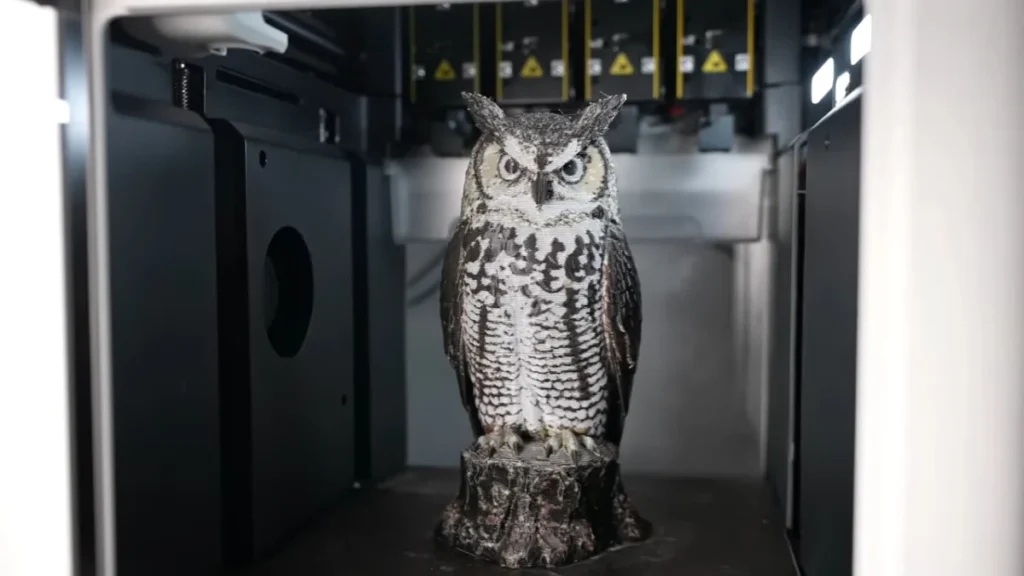
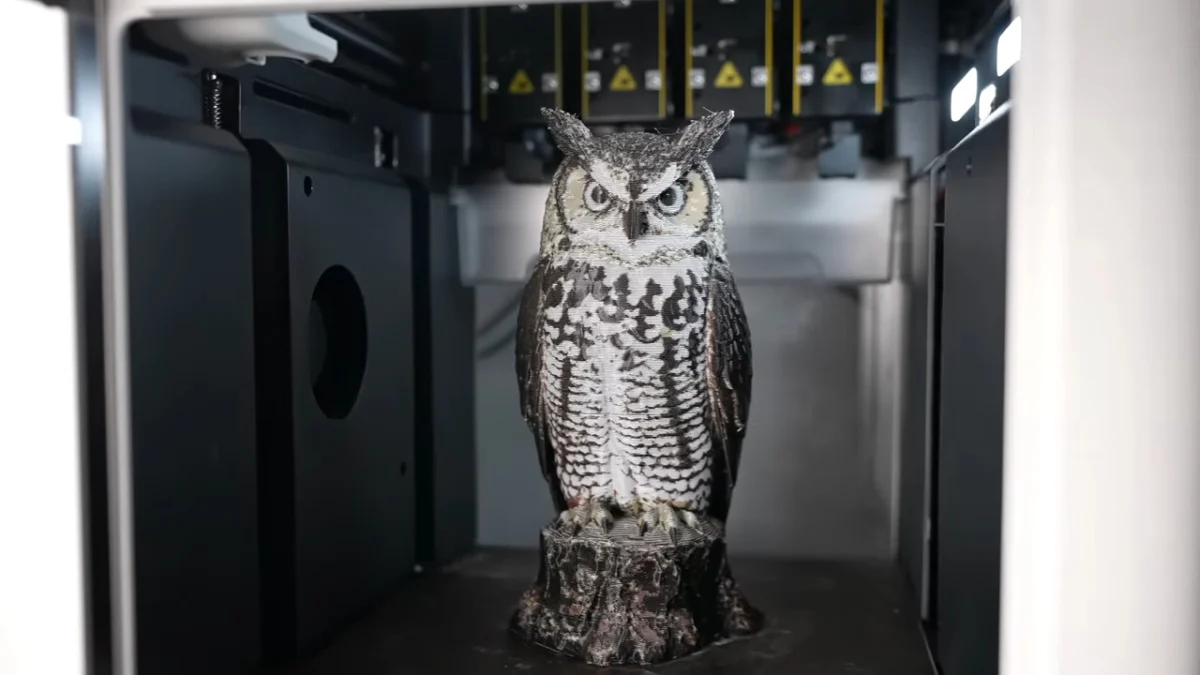
Instead of segmenting a model by color, the new slicer employs a dynamic, layer-by-layer color rotation. For each printed layer, the system cycles through the designated color palette. The magic then happens in how the prominence of each color is controlled within that layer. This is achieved through one of two primary mechanisms, or a combination thereof:
- Adjusting Filament Dispensation: The slicer precisely modulates the amount of filament extruded for each color within a layer. By varying the volumetric flow, it can create subtle shifts and gradients, allowing one color to dominate while another provides an undertone.
- Displacing Edges: Alternatively, or in conjunction, the slicer can subtly displace the edges of different color sections within a layer. This minute manipulation of boundaries contributes to the illusion of blending and smoother transitions, rather than sharp, distinct lines.
The immediate and most significant advantages cited are a dramatic reduction in tool changes, leading directly to a substantial decrease in overall print time and filament consumption. This efficiency translates into smoother color gradients and superior blending, elevating the aesthetic quality of multi-color prints.
Acknowledged Trade-offs
Despite its promising advancements, the method, as presented by YKG3D, comes with specific considerations:
- Apparent Layer Height: A key drawback is that the more base colors are used, the thicker the apparent layer lines become. For instance, a 3-color print executed with a physical layer height of 0.2 mm will visually manifest as having a 0.6 mm layer height. This is a consequence of multiple colors contributing to the vertical dimension within what would normally be a single, uniform layer.
- Steep Wall Limitations: The illusion of seamless color blending begins to falter on models with very steep or vertical walls. The angle at which the colors are deposited and blended appears to be critical for maintaining the desired visual effect, and extreme angles can cause the blending to break down, revealing the underlying layer-by-layer structure more distinctly.
These points highlight that while the method offers significant improvements, designers and users must be mindful of its operational parameters to achieve optimal results.
Chronology: From Academic Theory to Practical Application
The journey of any transformative technology often begins in the theoretical realm, painstakingly refined through research, and eventually brought to fruition by dedicated innovators. The multi-color 3D printing method demonstrated by YKG3D is a testament to this process, tracing its roots back to foundational academic work.
The Genesis: 2018 Academic Research
While YKG3D’s demonstration is recent, the underlying principles are based on research published in 2018. This seminal work, likely emerging from a university or research institution specializing in computer graphics, material science, or additive manufacturing, would have introduced the theoretical framework for volumetric color mixing within individual print layers. At the time, such concepts were revolutionary, challenging the conventional wisdom of monolithic color application per feature.
These early papers would have explored advanced slicing algorithms capable of interpreting complex color data, perhaps leveraging techniques like dithering or halftoning, but applied to the physical deposition of plastic. The focus would have been on how different colored filaments, when extruded in varying proportions or with precise spatial offsets within a single layer, could create an optical illusion of a new, blended color or a smooth gradient. The mathematical models and computational simulations would have laid the groundwork, proving the theoretical viability of such an approach, even if practical implementation remained a distant goal. The challenges at this stage would have included computational complexity, the precision required from 3D printing hardware, and the lack of readily available slicer software capable of executing such intricate commands.
The Gap: Bridging Theory and Practicality
Following the 2018 research, a critical gap existed between the theoretical possibilities and their real-world application. Translating complex academic algorithms into user-friendly and efficient slicer software is a monumental task. It involves:
- Algorithm Optimization: The initial algorithms, while theoretically sound, might have been computationally intensive, requiring significant optimization for practical use on consumer-grade hardware.
- Hardware Compatibility: Ensuring the method could work across a range of FDM (Fused Deposition Modeling) printers, which vary widely in their precision, speed, and multi-material capabilities.
- Software Integration: Developing a robust interface that allows users to define color palettes and desired gradients without needing an in-depth understanding of the underlying mathematical models.
- Material Science Considerations: Understanding how different filament types (PLA, PETG, ABS, etc.) interact when blended or layered in this manner, considering factors like adhesion, melt flow, and pigment properties.
This period would have seen various researchers and hobbyists perhaps experimenting with rudimentary implementations, but a comprehensive, polished solution remained elusive. The complexity of controlling filament flow with sub-millimeter precision, combined with the need for a dynamic toolpath generation, posed significant barriers.
YKG3D’s Breakthrough: Practical Implementation
It is into this landscape that YKG3D emerges, having seemingly taken the foundational 2018 research and developed a practical, implementable slicer solution. While details of YKG3D’s development process are not fully public, it is plausible that their work involved:
- Dedicated Software Engineering: A significant investment in coding and algorithm refinement to create a slicer that could effectively interpret 3D models and generate the complex G-code required for layer-by-layer color rotation and adjustment.
- Extensive Testing and Iteration: Rigorous testing on various printer configurations and with different filament combinations would have been crucial to validate the method and refine its parameters. This would have involved countless hours of printing, analyzing results, and tweaking algorithms.
- Focus on User Experience: The presentation suggests a focus on making this advanced technique accessible. This implies an intuitive interface within the slicer, allowing users to define color schemes and desired blending effects without needing to manually program complex toolpaths.
- Community Engagement: By showcasing their work through platforms like YouTube, YKG3D has not only demonstrated the method’s capabilities but also initiated a dialogue with the broader 3D printing community, inviting feedback and fostering further development.
YKG3D’s contribution thus represents a critical bridge, transforming an academic concept into a tangible, potentially revolutionary tool for the multi-color 3D printing enthusiast and professional alike. Their success lies in tackling the practical implementation hurdles that often prevent groundbreaking research from reaching widespread adoption.
Supporting Data: Unpacking the Mechanism and Performance
To fully appreciate the significance of YKG3D’s method, a deeper dive into its technical underpinnings and measurable impacts is essential. This new approach offers both quantifiable advantages and specific limitations that shape its optimal application.
Technical Deep Dive: The Art of Layered Color Blending
The core ingenuity of this method lies in its strategic manipulation of color at the microscopic level of each print layer.
- Layer-by-Layer Color Rotation: Unlike traditional methods where a single color is laid down for an entire feature or section before a tool change, YKG3D’s slicer dictates that colors rotate through the palette within each layer. Imagine a single 0.2mm layer being printed. Instead of being uniformly blue, it might contain micro-segments of blue, then green, then yellow, and then back to blue, all within that same 0.2mm height. This rapid cycling is precisely what reduces tool changes, as the printer doesn’t need to finish an entire color region before switching.
- Color Prominence via Filament Dispensation: This technique leverages the volumetric control capabilities of modern extruders. By varying the amount of filament extruded for a specific color in a micro-segment of a layer, the slicer can influence how dominant that color appears. For example, if a transition from blue to green is desired, early segments might have 80% blue and 20% green filament volume, gradually shifting to 20% blue and 80% green over several layers or within a single layer’s width. This is not true color mixing in the molten state but rather a precise layering or adjacency of distinct colors that, from a distance, creates an optical blend.
- Color Prominence via Edge Displacement: This method involves slight, calculated offsets in the deposition paths of different colors within a single layer. By subtly overlapping or underlapping the edges of distinct color regions, the slicer can create a perceived blending. For instance, if a blue region meets a yellow region, the slicer might intentionally cause the blue to slightly intrude into the yellow’s designated area, or vice-versa, to soften the visual boundary and promote a gradient effect. This requires extreme precision in printer movement and filament flow.
- Slicer Algorithm Complexity: The intelligence behind this method resides in the slicer’s algorithms. These algorithms must analyze the 3D model’s geometry and color data, then generate G-code that precisely orchestrates the printer’s movements, extruder output, and tool changes (albeit fewer ones) on a layer-by-layer, and even segment-by-segment, basis. This involves sophisticated computational geometry and material flow modeling to ensure the desired optical effect is achieved consistently.
Quantifiable Benefits: Efficiency and Aesthetics Redefined
The primary advantages of YKG3D’s method are both practical and aesthetic:
- Dramatic Reduction in Tool Changes: This is perhaps the most significant functional improvement. Traditional multi-color prints can involve hundreds, if not thousands, of tool changes, each incurring a time penalty and often requiring a purge. By rotating colors within layers, the need for complete tool swaps between large color areas is minimized. While an exact percentage reduction isn’t provided, YKG3D’s claim of "far fewer tool changes" implies a reduction that could easily be in the range of 50-80% for complex multi-color models, depending on the number of colors and design complexity.
- Faster Print Times: Fewer tool changes directly translate to shorter print durations. Each tool change typically involves retracting filament, moving the print head, purging the nozzle, loading new filament, and priming the nozzle – a process that can add several seconds to a minute per change. Eliminating a substantial portion of these steps can realistically cut total print time by 20% to 50% for multi-color projects, a claim supported by YKG3D’s video title suggesting time cuts "in half."
- Reduced Filament Waste: Purge blocks and prime towers are notorious for generating significant filament waste. By reducing the frequency of color changes, the need for these waste-generating structures is diminished or entirely eliminated for certain types of blends, leading to more economical printing. This has both cost and environmental benefits.
- Superior Aesthetic Quality: The ability to achieve "smoother gradients and better color blending" is a game-changer for artistic and functional prints. Instead of stark, abrupt color shifts, designers can now envision objects with subtle fades, watercolor-like effects, and truly integrated multi-color designs, previously only possible with highly specialized industrial machines or post-processing.
Acknowledged Limitations: Navigating the Trade-offs
While revolutionary, the method is not without its specific constraints, which users must understand:
- Exaggerated Apparent Layer Height: The phenomenon where a 0.2mm layer height appears as 0.6mm in a 3-color print is a direct consequence of the method’s operation. If multiple colors are being deposited within the same physical layer height (e.g., side-by-side or overlapping slightly to create the blend), the visual effect can be that the individual color bands are perceived as distinct layers, even if they are technically part of one composite layer. This means that for prints where extreme detail and minimal layer lines are paramount, users might need to reduce their physical layer height even further or limit the number of colors.
- Blending Breakdown on Steep Walls: The illusion of color blending is highly dependent on the viewing angle and the geometry of the print. On very steep or vertical walls, the slight overlaps or volumetric adjustments that create the blend might become more apparent, breaking the illusion. This is because the vertical projection of these micro-segments becomes clearer, making the individual color components distinguishable rather than smoothly merged. This suggests that models designed with gentler curves or less aggressive angles will yield better blending results.
- Material Compatibility Considerations (Inferred): While not explicitly stated, it’s highly probable that certain filament types will perform better than others with this method. Filaments with good flow characteristics, consistent pigmentation, and minimal stringing would be ideal for achieving clean transitions and blends. Highly translucent or very opaque filaments might also present unique challenges or opportunities for specific effects.
- Printer Compatibility (Inferred): While the method is slicer-based, the precision required for filament dispensation and edge displacement suggests that printers with highly accurate stepper motors, reliable extrusion systems, and perhaps even advanced closed-loop control could yield superior results compared to entry-level machines.
Understanding these strengths and limitations allows users to make informed decisions about when and how to best apply YKG3D’s innovative multi-color printing technique, maximizing its benefits while mitigating its inherent challenges.
Official Responses: Industry and Community Outlook
The unveiling of such a significant advancement naturally prompts reactions from various stakeholders across the 3D printing ecosystem. From the academic community to major manufacturers and the grassroots maker movement, the response to YKG3D’s method will shape its trajectory and eventual impact.
Academic Community’s Perspective
The original researchers from 2018, whose theoretical work laid the foundation for this innovation, would likely view YKG3D’s practical implementation with a mixture of validation and renewed interest. Seeing their abstract concepts brought to life in a tangible, demonstrable product would be a significant affirmation of their research. It could also spur further academic inquiry into optimizing the method, exploring its limits, and developing even more sophisticated algorithms for multi-material and multi-color volumetric printing. There might be calls for YKG3D to publish technical details or collaborate on peer-reviewed papers to formally document their advancements.
3D Printing Manufacturers’ Reaction
Major 3D printer manufacturers, ranging from established giants like Ultimaker and Prusa Research to newer market disruptors like Bambu Lab and Creality, would be keenly observing this development.
- Proprietary Slicer Integration: Companies like Prusa (PrusaSlicer) and Bambu Lab (Bambu Studio) develop and maintain their own slicer software. The potential to integrate YKG3D’s principles into their proprietary slicers, perhaps under license or through collaborative development, would be highly attractive. This could offer a significant competitive edge, allowing their hardware to deliver enhanced multi-color capabilities.
- Hardware Implications: While the method is primarily slicer-based, manufacturers might explore how future hardware designs could further optimize its performance. This could include more precise extrusion systems, faster tool-changing mechanisms (even if fewer are needed), or even print heads specifically designed for volumetric color mixing.
- Market Strategy: The availability of such an efficient multi-color solution could influence product development roadmaps, potentially shifting focus from purely hardware-centric multi-color solutions to more integrated hardware-software approaches.
The Enthusiastic Maker Community
The grassroots 3D printing community, comprised of hobbyists, small businesses, and independent designers, is often the first to embrace and stress-test new technologies. Initial reactions would likely be a mix of:
- Excitement and Experimentation: Many would be eager to try the method, providing invaluable feedback on its usability, performance on different machines, and specific design considerations. YouTube channels, forums (like Reddit’s r/3Dprinting), and social media would be abuzz with tests, reviews, and shared prints.
- Questions and Critiques: Users would naturally pose questions regarding printer compatibility, filament requirements, the learning curve for the new slicer, and detailed performance metrics. Constructive criticism regarding the apparent layer height and steep wall limitations would also emerge, pushing for further refinements.
- Demand for Accessibility: A strong call for the slicer to be made widely available, either as an open-source project or an affordable commercial product, would be inevitable. The community’s collective ingenuity often drives rapid innovation when given access to powerful new tools.
YKG3D’s Strategic Direction
YKG3D’s response to this anticipated reception will be crucial. Their options include:
- Open-Source Release: Making the slicer available as an open-source project would accelerate its adoption, allow for community-driven development, and rapidly identify bugs and areas for improvement. This aligns well with the ethos of much of the 3D printing community.
- Commercialization: Developing a commercial product, perhaps a standalone slicer or a plugin for existing popular slicers, would allow YKG3D to recoup development costs and fund future research.
- Partnerships: Collaborating with established hardware or software companies could provide resources and market reach, accelerating the integration of their technology into mainstream offerings.
Regardless of the chosen path, YKG3D’s role in translating academic theory into a practical, impactful solution positions them as a significant innovator in the multi-color 3D printing space.
Implications: Shaping the Future of Additive Manufacturing
The introduction of YKG3D’s multi-color 3D printing method carries profound implications that extend across various facets of the additive manufacturing industry and beyond. From accessibility and design freedom to environmental considerations and future research, this innovation is poised to leave a lasting mark.
Democratizing Multi-Color Printing
Perhaps the most immediate and significant implication is the potential to democratize multi-color 3D printing. Historically, achieving high-quality multi-color prints has been the domain of either highly skilled hobbyists willing to invest considerable time and effort, or industrial-grade machines costing tens of thousands of dollars. By simplifying the process and reducing material waste and print times, YKG3D’s method makes multi-color printing more accessible and affordable for:
- Hobbyists: Enabling them to create more visually appealing and complex models without prohibitive costs or frustrating failures.
- Small Businesses and Startups: Allowing them to prototype and produce multi-color products with greater efficiency, opening new avenues for product design and customization.
- Educational Institutions: Providing a more practical and engaging way to teach multi-color additive manufacturing without the steep learning curve or high material costs of traditional methods.
Unlocking New Design Freedom and Applications
The ability to achieve smoother gradients and better color blending with greater efficiency fundamentally expands the creative palette for designers and engineers.
- Artistic Expression: Artists can explore intricate color transitions, gradients, and subtle visual effects in their 3D printed sculptures and art pieces, previously challenging or impossible.
- Product Design: Consumer products can incorporate more sophisticated color schemes, branding elements, and functional color coding directly into the print, enhancing aesthetics and user experience.
- Functional Parts: Beyond aesthetics, multi-color capabilities can be leveraged for functional purposes, such as color-coding different sections of an assembly, indicating stress points through color gradients, or creating multi-material prints where color signifies different material properties (if the method can eventually be extended to multi-material).
- Medical and Scientific Models: Anatomical models or scientific visualizations can benefit from precise color gradients to highlight different tissues, structures, or data points, improving clarity and understanding.
Environmental and Economic Impact
The reduction in filament waste due to fewer purge blocks and tool changes has both environmental and economic benefits.
- Reduced Material Consumption: Less wasted filament means lower overall material usage, which is beneficial for the environment by reducing plastic waste.
- Cost Savings: For individuals and businesses, less wasted filament translates directly into lower operating costs, making multi-color projects more economically viable.
- Sustainability: As 3D printing scales, even small efficiencies in material use can have a cumulative positive impact on the industry’s sustainability profile.
Fueling Future Research and Development
This innovation is not an endpoint but rather a catalyst for further research and development.
- Overcoming Limitations: Future work will undoubtedly focus on mitigating the current drawbacks, such as refining the blending on steep walls and developing techniques to minimize the apparent layer height effect.
- Advanced Material Integration: The principles of volumetric color mixing could be extended to multi-material printing, allowing for gradients in material properties (e.g., stiffness, flexibility, conductivity) within a single print.
- AI and Machine Learning: Integrating AI and machine learning could further optimize slicing algorithms, allowing for predictive blending, automatic color palette generation, and real-time print adjustments for optimal results.
- Closed-Loop Systems: Future developments might see closer integration between the slicer and printer hardware, potentially leveraging real-time sensor data to adjust extrusion and movements for even more precise color control.
A Broader Industry Shift
YKG3D’s method signifies a broader trend in 3D printing: the increasing importance of software-driven innovation. While hardware advancements are crucial, intelligent slicing algorithms and sophisticated software are increasingly unlocking the full potential of existing hardware. This shift emphasizes that the future of additive manufacturing lies not just in faster, more accurate machines, but also in smarter, more capable software that can translate complex digital designs into physical realities with unprecedented precision and efficiency.
In conclusion, YKG3D’s novel approach to multi-color 3D printing, building upon foundational academic research, represents a significant leap forward. By addressing long-standing challenges of efficiency and aesthetic quality, it promises to democratize advanced multi-color capabilities, unleash new creative possibilities, and set a new standard for intelligent additive manufacturing software. While challenges remain, the implications for the future of 3D printing are undeniably vibrant and far-reaching.