The Evolution and Economic Boom of the Global Software Testing Services Market: Trends, Growth Forecasts, and Career Horizons
GLOBAL — For years, IT professionals and aspiring technologists have weighed the longevity and viability of a career in quality assurance (QA). Questions such as "What is the future of the software testing business?" and "Should I consider software testing as a viable career option?" dominated forums, career counseling sessions, and academic panels. Today, however, those questions have been resoundingly answered.
Software testers and automation analysts are no longer viewed as peripheral checklist-executors at the tail end of a development cycle. Instead, they have evolved into indispensable core members of modern product development teams. Driven by exponential leaps in artificial intelligence, mobile adoption, and continuous integration models, the global software testing services market is undergoing a historic transformation, accompanied by massive economic expansion and a surging demand for specialized talent.
Main Facts: A Multi-Billion-Dollar Growth Engine
Recent market research and industry forecasts paint an exceptionally bright picture for the software testing ecosystem. Industry analysts from prominent research firms have quantified this boom, revealing unprecedented capital influx and structural reliance on QA protocols.
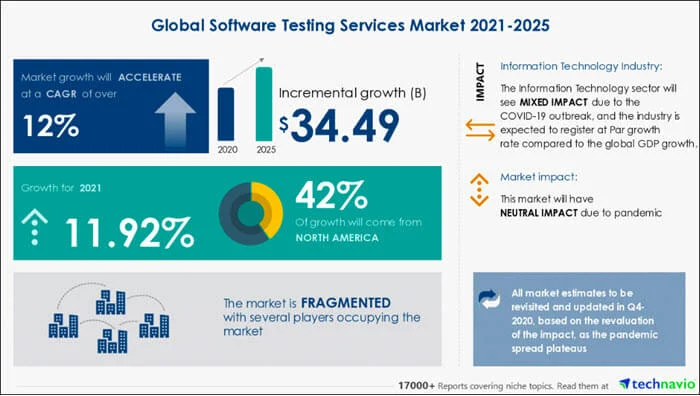
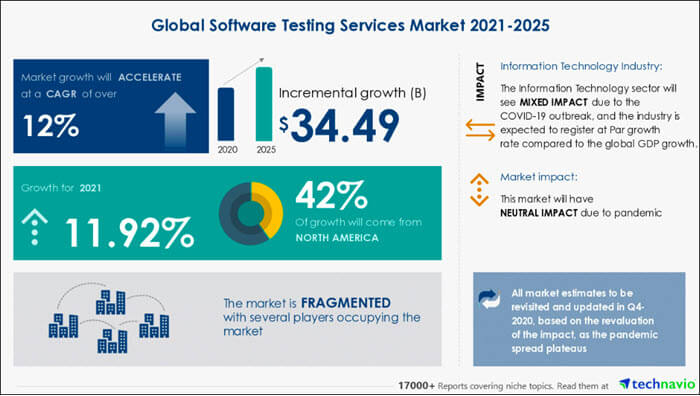
According to data compiled by PR Newswire, the global software testing services market is projected to skyrocket by $90 billion between 2021 and 2030, expanding at a robust Compound Annual Growth Rate (CAGR) of 12.39%. Complementing this, research from Global Market Insights indicates that the valuation of the software testing market surpassed $40 billion in 2020 alone, with a projected steady CAGR of 7% through the decade.

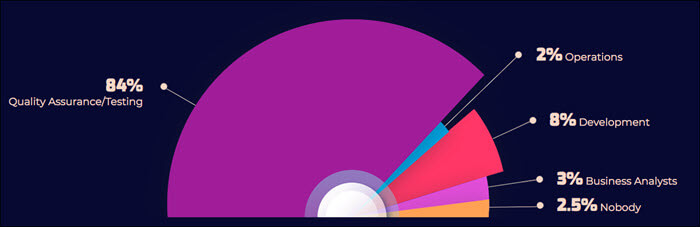
This momentum is not driven merely by an increase in software deployment, but by structural changes in how organizations build technology. A landmark survey by Tricentis examining functional test automation practices revealed that in over 80% of organizations, functional test automation is spearheaded directly by dedicated software testers and QA professionals.
Furthermore, the World Quality Report published by Micro Focus underscores how deeply ingrained quality engineering has become. According to the report, 90% of businesses are experiencing accelerated integration of AI into their operations, and 69% of businesses report successfully meeting their quality and delivery goals. As practices like DevOps, DevSecOps, and continuous testing become standard operating procedure, software testing budgets have transitioned from discretionary spending to an immutable, core line item in global software engineering budgets.
Chronology of Quality Assurance: From Manual Checks to Intelligent Automation
To understand where the software testing industry stands today, it is essential to trace its rapid evolution over the past decade:
- The Pre-2015 Era (Manual Dominance): Software testing was largely reactive, labor-intensive, and siloed. Testing occurred at the absolute end of the software development lifecycle (SDLC), often creating major bottlenecks before product launches.
- The Rise of Agile and Continuous Integration (2015–2018): As companies shifted toward Agile methodologies, traditional manual testing could no longer keep pace. This period marked the widespread adoption of early-stage automation frameworks, spearheaded by tools like Selenium and JUnit, allowing code to be tested continuously.
- The Digital Transformation and Mobile Boom (2019–2020): The proliferation of mobile applications, cloud infrastructures, and complex microservices forced organizations to scale up their testing capabilities. Market valuations breached $40 billion, and automated functional testing became standard practice for the vast majority of enterprise-level product teams.
- The AI and Intelligent Automation Era (2021 and Beyond): Modern testing has merged with Artificial Intelligence (AI) and Machine Learning (ML). Organizations are moving past simple script-based automation toward intelligent, self-healing test scripts, predictive analytics, and automated cybersecurity testing, establishing testing as a proactive, predictive engineering discipline.
Supporting Data: Tools, Technologies, and Market Metrics
Data from various industry reports highlight the specific tools, frameworks, and technological pillars driving the modern testing landscape:
1. Automation Maturity
Research from the Forte Group indicates that test automation is experiencing impulse growth. Approximately 12% of QA practitioners report that their testing pipelines are fully automated, while 35% state they are halfway there.
2. Preferred Frameworks and Languages
Insights from JetBrains’ developer ecosystem research reveal the dominant toolsets in the QA community:
- Programming Language: Java remains the undisputed front-runner for test automation scripting.
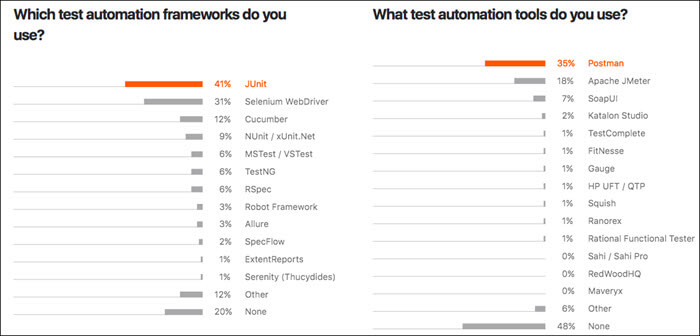
- Automation Frameworks: JUnit and Selenium WebDriver continue to be the most widely deployed test automation frameworks globally.
- Testing Tools: Postman and Apache JMeter lead the market for API testing and performance benchmarking, respectively.
3. The Rise of Cybersecurity Testing
With digital infrastructure facing unprecedented threats, cybersecurity testing has become a primary driver of QA expenditure. According to Amzur research, 68% of large enterprises report a sharp increase in cybersecurity threats. Consequently, global spending on cybersecurity and automated security testing—often driven by Robotic Process Automation (RPA)—is projected to surge, with overall global cybersecurity spending reaching $133.7 billion.
Official Responses and Industry Perspectives
Industry leaders and global organizations are uniformly recognizing the indispensable value of software testing in mitigating technical debt and safeguarding brand reputation.
Enterprise software executives note that as applications grow in complexity—spanning multi-cloud environments, Internet of Things (IoT) ecosystems, and blockchain implementations—the margin for error has vanished. A single software glitch in a mission-critical financial system or healthcare platform can result in catastrophic financial loss and reputational damage.
Global organizations have responded by elevating the status of QA engineers within corporate hierarchies. Testing is no longer viewed as a cost center, but as a strategic asset that directly influences user experience, customer retention, and ROI. According to qualitative insights from enterprise CTOs, integrating QA specialists early in the software design phase—often referred to as "Shift-Left Testing"—significantly reduces post-release patch cycles and lowers long-term development costs.
Implications: The Future of QA Careers and Technological Horizons
The explosive growth of the software testing market carries profound implications for the global technology workforce, enterprise security, and the future of software engineering.
1. A High Demand for Specialized Talent
Data from the QA Lead highlights that the global average stands at roughly 5.2 software testers per 100,000 people per capita, underscoring a persistent talent shortage. Educational pathways into the field are evolving: 56% of practicing testers rely on self-directed learning via books and technical literature, while 44% have completed formal certification classes and bootcamps.
For aspiring IT professionals, the career path is exceptionally bright. However, expectations have shifted. Industry surveys indicate that employers place the highest premium on two critical skill sets:
- Communication Skills: Cited by 75% of respondents, emphasizing the need for QA professionals to collaborate closely with developers, product managers, and business stakeholders.
- Scripting and Automation Skills: Cited by 63% of respondents, highlighting that basic manual testing credentials are no longer sufficient for long-term career advancement.
2. Emerging Trends Shaping the Next Decade
As the industry marches toward 2030—where AI and intelligent technologies are expected to represent a staggering $200 billion market segment—software testing is pioneering several revolutionary sub-disciplines:
- AI/ML-Driven Testing: Using machine learning algorithms to predict defect-prone areas of code and automatically generate test cases.
- Codeless Test Automation: Lowering the barrier to entry for business analysts to participate in functional validation.
- IoT and Blockchain Testing: Ensuring distributed ledgers and connected physical devices maintain cryptographic integrity and real-time responsiveness.
- Performance Engineering: Shifting from mere load testing to holistic architectural performance optimization.
Conclusion
The global software testing services market has graduated from an auxiliary administrative task to a high-tech, multi-billion-dollar pillar of the digital economy. Backed by solid double-digit growth forecasts, massive corporate investments in automation, and an unyielding demand for secure, flawless user experiences, software testing offers an extraordinarily secure and dynamic career path. For organizations and professionals alike, embracing the future of intelligent quality assurance is no longer optional—it is the definitive key to technological survival and success.