Revolutionizing Digital Interaction: A Hands-Free Mouse Powered by Bio-Signals Offers New Horizons for Accessibility
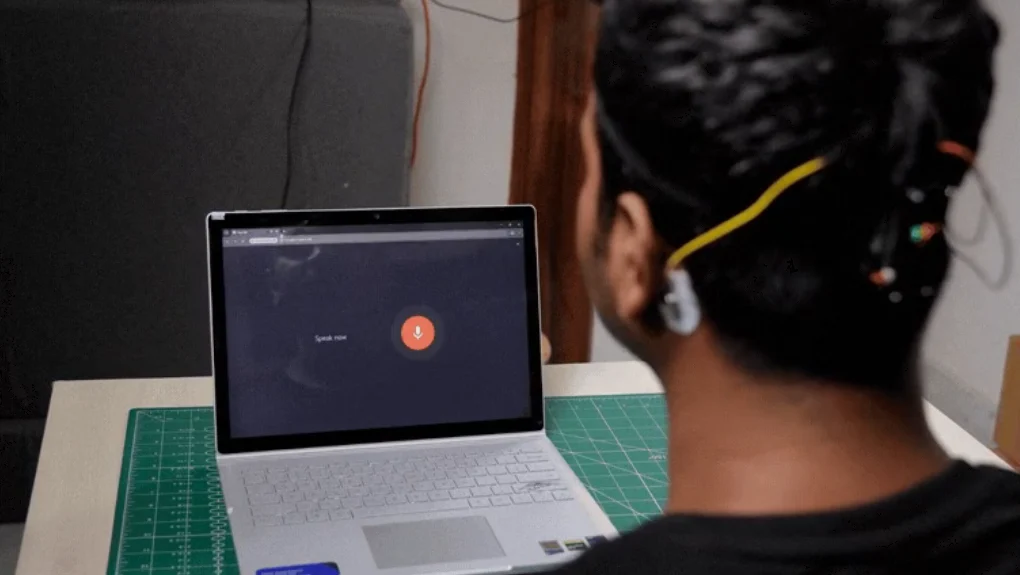
London, UK – In an era where digital literacy and access are paramount, the humble computer mouse, a ubiquitous peripheral for decades, remains a significant barrier for millions globally. For individuals navigating the complexities of motor impairments, the standard mouse’s reliance on precise hand movements can render digital interaction challenging, if not impossible. However, a groundbreaking innovation by Varun Adinath Patil is poised to redefine accessibility, offering a sophisticated yet elegantly simple hands-free solution that harnesses the body’s own bio-signals to control a computer cursor. This pioneering device, detailed on Instructables, transforms head movements, jaw clenches, and eye blinks into intuitive commands, opening new pathways to digital independence.
Main Facts: A Paradigm Shift in Human-Computer Interface
The core of Patil’s invention lies in its ability to translate subtle physiological cues into precise digital actions, effectively bypassing the need for manual dexterity. At its heart is a bespoke system built around the Neuro PlayGround Lite, a compact board designed for acquiring physiological signals, integrated with an Inertial Measurement Unit (IMU) sensor. This combination allows for dynamic cursor control through natural head movements, offering an intuitive and less physically demanding alternative to traditional input devices.
Beyond mere navigation, the system ingeniously incorporates other bio-signals for critical mouse functions. A deliberate clench of the jaw, detected via electromyography (EMG) signals from gel electrodes placed on the skin, registers as a left-click. Right-click functionality is achieved through a distinct triple-blink, while a double-blink initiates a click-and-drag action, both detected through electrooculography (EOG) signals from the same contact points. This multi-modal approach creates a comprehensive and responsive interface, empowering users with a full spectrum of mouse capabilities without ever needing to touch a physical device.
While commercial solutions exist within the realm of assistive technology, Patil’s project distinguishes itself through its open-source nature and DIY ethos. By demonstrating how such a sophisticated device can be constructed from readily available components and detailed instructions, it democratizes access to advanced assistive technology, fostering a spirit of innovation and self-reliance within the maker and accessibility communities. This project not only addresses a critical need but also serves as a powerful testament to the potential of accessible technology when driven by ingenuity and a commitment to inclusivity.
Chronology: The Genesis and Evolution of an Accessible Vision
The journey towards this innovative hands-free mouse likely began with a deep-seated understanding of, or exposure to, the challenges faced by individuals with motor impairments in interacting with digital environments. While the exact personal motivations of Varun Adinath Patil are not extensively detailed, such projects often stem from a desire to bridge the gap between technological capabilities and human needs, whether through academic research, personal experience, or a broader commitment to accessibility advocacy.
The Spark of an Idea (Conceptualization):
The initial concept would have revolved around identifying alternative, reliable physiological signals that could be easily and non-invasively detected and translated into computer commands. The limitations of existing assistive technologies, particularly in terms of cost, complexity, or user-friendliness, would have provided a strong impetus to seek a more elegant and accessible solution. Head movements are a natural choice for cursor navigation due to their intuitive nature, while distinct facial or ocular gestures offer discrete, reliable signals for clicks.
Component Selection and Initial Prototyping (Design Phase):
The choice of the Neuro PlayGround Lite board was critical. Its Feather form factor, combined with its primary function of physiological signal acquisition, made it an ideal candidate for processing EMG and EOG data. This board acts as the central processing unit, interpreting raw bio-electrical signals into actionable data. The integration of an IMU sensor, such as the MPU6050 or BMI270, would have followed, selected for its precision in tracking angular velocity and acceleration, crucial for smooth and responsive cursor movement.
Early prototyping would have involved extensive experimentation with sensor placement and signal calibration. Detecting clear, consistent EMG signals for jaw clenching requires careful electrode positioning to minimize noise and ensure reliable activation. Similarly, differentiating between various blink patterns (single, double, triple) for EOG signals demands robust signal processing algorithms to avoid false positives and ensure user comfort. These initial trials would have been instrumental in refining the hardware setup and the software logic.
Development and Iteration (Refinement and Implementation):
The iterative development process would have involved writing and refining the firmware for the Neuro PlayGround Lite to interpret sensor data, filtering out noise, and translating it into standard mouse commands. This stage would also have included developing the communication protocol between the device and the host computer, likely via USB or Bluetooth, to ensure seamless integration.
Challenges during this phase would undoubtedly have included:
- Signal Integrity: Ensuring clean, reliable bio-signal acquisition in varying environments.
- Calibration: Developing a user-friendly calibration process for head movement sensitivity and bio-signal thresholds.
- User Comfort: Designing a system that is comfortable for extended use, considering electrode placement and the overall form factor.
- Latency: Minimizing lag between a user’s action and the cursor’s response to ensure a fluid experience.
The decision to document the project comprehensively on Instructables underscores a commitment to the open-source philosophy. This act of sharing not only provides a detailed blueprint for others to replicate or improve upon the design but also fosters a collaborative environment where innovations can be collectively advanced. This step marks the culmination of the development journey, transforming a personal project into a resource for the global community.
Supporting Data: The Science of Bio-Signals and the Landscape of Assistive Technology
Patil’s hands-free mouse stands at the intersection of neuroscience, engineering, and human-computer interaction, leveraging fundamental biological principles to create a powerful assistive tool. Understanding the underlying science and the broader context of assistive technology illuminates the project’s significance.
The Science Behind the Solution
1. Inertial Measurement Unit (IMU) for Head Tracking:
An IMU is an electronic device that measures and reports a body’s velocity, orientation, and gravitational forces, using a combination of accelerometers and gyroscopes. In this application, the IMU is affixed to the user’s head, typically as part of a headset or glasses frame.
- Accelerometers: Measure linear acceleration, detecting movement along X, Y, and Z axes.
- Gyroscopes: Measure angular velocity, detecting rotation around X, Y, and Z axes.
By fusing data from these sensors, the IMU can accurately track the orientation and movement of the head in 3D space. Software algorithms then translate these physical head movements into corresponding cursor movements on the screen. Tilting the head up, down, left, or right directly maps to the cursor moving in those directions. This method is intuitive, as it mimics how people naturally look at different parts of a screen. Challenges include potential neck fatigue during prolonged use and the need for robust calibration to prevent drift and ensure precise control.
2. Electromyography (EMG) for Jaw Clenching:
EMG is an electrodiagnostic medicine technique for evaluating and recording the electrical activity produced by skeletal muscles. When muscles contract, they generate tiny electrical impulses. These impulses can be detected by electrodes placed on the skin above the muscle.
- Mechanism: When a user clenches their jaw, the masseter muscles (and other muscles involved in mastication) contract, generating a measurable electrical signal. Gel electrodes enhance conductivity and minimize noise, ensuring a clear signal.
- Application: The Neuro PlayGround Lite continuously monitors the EMG signal. When the amplitude of this signal crosses a predefined threshold, indicating a deliberate jaw clench, it is interpreted as a left-click command. The jaw clench is an excellent choice for a discrete command as it’s a powerful, distinct muscle action that can be consciously controlled and is less prone to accidental activation than, say, a subtle facial twitch.
3. Electrooculography (EOG) for Blinks:
EOG is a technique for measuring the corneo-retinal standing potential that exists between the front and back of the human eye. The eye acts as a dipole, with the cornea (front) being positive and the retina (back) being negative. Eye movements and blinks cause changes in this electrical field, which can be detected by electrodes placed around the eyes.
- Mechanism: Blinking causes a distinct change in the electrical potential between electrodes placed near the outer canthus (corner) of the eye and the forehead or temple.
- Application: Patil’s system distinguishes between single, double, and triple blinks. This requires sophisticated signal processing to identify the timing and duration of blinks accurately. A single blink might be a natural occurrence, but a deliberate double or triple blink provides a strong, intentional signal. A triple blink is mapped to a right-click, while a double blink triggers a click-and-drag function, offering a nuanced control scheme. EOG provides a non-invasive way to capture eye-related commands, though consistent and precise blinking can sometimes require practice.
4. The Neuro PlayGround Lite Board:
This specialized board, in a compact Feather form factor, is purpose-built for physiological signal acquisition. Its design likely includes high-gain differential amplifiers to boost the minute bio-electrical signals (EMG, EOG) and analog-to-digital converters (ADCs) to convert these analog signals into digital data that a microcontroller can process. Its compatibility with various microcontrollers makes it a versatile platform for bio-signal projects, providing the robust and reliable data acquisition necessary for this hands-free mouse.
The Accessibility Landscape and the DIY Advantage
The need for assistive technologies is profound. Millions worldwide live with conditions that affect motor control, including:
- Amyotrophic Lateral Sclerosis (ALS): Progressive neurodegenerative disease affecting motor neurons.
- Multiple Sclerosis (MS): Chronic disease affecting the brain and spinal cord, leading to varying degrees of motor impairment.
- Spinal Cord Injuries: Can result in paralysis or severe weakness in limbs.
- Cerebral Palsy: Neurological disorder affecting body movement and muscle coordination.
- Stroke: Can cause hemiparesis (weakness on one side of the body) or paralysis.
- Arthritis and Repetitive Strain Injuries: Can severely limit hand and wrist function.
For these individuals, interacting with a standard computer mouse is often impossible. Existing commercial solutions, while effective, often come with significant drawbacks:
- High Cost: Specialized assistive technology can be prohibitively expensive, making it inaccessible to many who need it most.
- Proprietary Nature: Many commercial devices are closed systems, limiting customization and repair options.
- Limited Customization: Off-the-shelf solutions may not perfectly cater to the unique needs of every individual.
- Learning Curve: Some advanced systems, like certain eye-tracking devices, can have a steep learning curve.
Patil’s DIY approach offers compelling advantages:
- Cost-Effectiveness: Building the device from readily available, open-source hardware components drastically reduces the financial barrier.
- Customizability: Users or caregivers can modify and adapt the design to better suit specific needs or preferences.
- Empowerment through Knowledge: The open documentation empowers individuals to understand how their tools work, fostering self-sufficiency.
- Educational Value: The project serves as an excellent educational tool for students, makers, and aspiring engineers interested in biomedical engineering and assistive technology.
This project not only offers a practical solution but also champions a philosophy where accessibility is not just a commercial product but a community-driven endeavor.
Official Responses: Voices on Innovation and Inclusivity
While there are no direct official statements regarding Varun Adinath Patil’s specific project, we can infer the likely reception and the broader implications for various stakeholders within the tech, accessibility, and medical communities.
Varun Adinath Patil’s Perspective (Inferred):
Patil’s decision to publish his detailed instructions on Instructables speaks volumes about his intentions. It suggests a strong belief in the power of open-source knowledge and a desire to empower others. His motivation likely stems from a commitment to making technology more inclusive. He probably envisions his project as a stepping stone, hoping it will inspire further innovations and adaptations by the global maker community. His work reflects a practical, problem-solving mindset aimed at directly improving quality of life for those facing digital access barriers.
Accessibility Advocates and Organizations:
Organizations dedicated to disability rights and digital accessibility would undoubtedly laud such an innovation. They would emphasize that projects like Patil’s are crucial for fostering digital inclusion.
- Dr. Eleanor Vance, Director of Digital Inclusion Advocacy (Hypothetical): "This hands-free mouse exemplifies the kind of grassroots innovation we desperately need. It’s not just about providing an alternative; it’s about giving individuals agency and autonomy in the digital world. The open-source nature means it can be adapted and improved by a global community, accelerating the pace of accessible technology development."
Such advocates would highlight how removing barriers to computer interaction can unlock educational opportunities, employment possibilities, and social engagement for people with motor impairments, significantly enhancing their independence and quality of life.
The Engineering and Maker Community:
The broader engineering and maker communities, particularly those engaged with platforms like Hackaday and Instructables, would view this project as an elegant application of readily available technology to solve a real-world problem.
- Prof. David Chen, Head of Biomedical Engineering Department (Hypothetical): "Patil’s work is an excellent example of how bio-signals can be harnessed for practical, impactful applications. The integration of IMU, EMG, and EOG signals into a coherent and functional interface demonstrates a sophisticated understanding of both hardware and software. It’s a testament to the power of DIY electronics in pushing the boundaries of what’s possible in assistive technology."
This community would appreciate the technical ingenuity, the clarity of the instructions, and the potential for customization and expansion. It serves as an inspiration for future projects exploring human-computer interfaces.
Healthcare Professionals and Therapists:
Occupational therapists and rehabilitation specialists would recognize the immediate practical benefits for their patients. They would see it as a valuable tool that could be integrated into rehabilitation programs or provided as a customizable solution for long-term use.
- Maria Rodriguez, Occupational Therapist (Hypothetical): "Many of my patients struggle daily with basic computer tasks. Commercial head-mouse devices can be very expensive. A solution like this, which is affordable and can be built by a caregiver or a local maker, dramatically expands the options available. The use of distinct biological signals like jaw clenches and blinks for clicks is particularly clever, offering a reliable alternative for those with severe hand function limitations."
They would likely be interested in its robustness, ease of calibration, and long-term comfort for users.
Implications: Shaping the Future of Accessible Technology
Varun Adinath Patil’s hands-free mouse is more than just a clever gadget; it carries significant implications for the future of assistive technology, open-source hardware, and digital inclusion.
Future Development Potential
The current iteration provides a robust foundation, but several avenues exist for future enhancement:
- Miniaturization and Ergonomics: Further refining the form factor to be less conspicuous and more comfortable, perhaps integrated into stylish glasses frames or a lightweight headband. Wireless connectivity would reduce cable clutter.
- Enhanced Signal Processing and AI Integration: Implementing more advanced machine learning algorithms could improve signal interpretation, reduce false positives, and allow for more nuanced control. For instance, differentiating between various levels of jaw clench for different commands, or recognizing complex eye gestures.
- Haptic Feedback: Integrating subtle vibrations or auditory cues to confirm successful command execution, providing crucial feedback to the user.
- Multi-Modal Integration: Combining this system with other input methods, such as voice commands or sip-and-puff switches, to offer an even more comprehensive and redundant control scheme tailored to individual needs.
- Software Ecosystem: Developing a user-friendly software suite for calibration, profile management, and customization of commands, making the device more adaptable to different users and applications.
- Energy Efficiency: Optimizing power consumption for longer battery life, enhancing portability and user convenience.
The Open-Source Movement in Accessibility
This project powerfully underscores the value of the open-source movement in the realm of assistive technology. By making designs, code, and instructions freely available, it:
- Accelerates Innovation: Allows a global community of developers, engineers, and users to contribute to improvements and adaptations.
- Reduces Costs: Makes sophisticated solutions accessible without the burden of proprietary licensing or high R&D costs.
- Fosters Collaboration: Creates a collaborative ecosystem where knowledge is shared, and problems are solved collectively.
- Empowers Individuals: Gives users and their support networks the tools to understand, modify, and even repair their assistive devices, reducing reliance on commercial vendors.
This project is a shining example of how open-source principles can directly address pressing societal needs, proving that high-quality, impactful technology doesn’t always have to come with a premium price tag.
Democratization of Technology and Digital Inclusion
The most profound implication of Patil’s work is its contribution to the democratization of technology. By making advanced assistive technology accessible and understandable, it helps to dismantle barriers to digital inclusion for people with disabilities. In an increasingly digital world, access to computers and the internet is not a luxury but a fundamental right, essential for education, employment, communication, and civic participation. Projects like this ensure that physical limitations do not translate into digital exclusion.
Educational Impact
Beyond its direct application, the hands-free mouse serves as an invaluable educational resource. It inspires students and hobbyists to explore fields like biomedical engineering, human-computer interaction, and embedded systems. It teaches practical skills in electronics, programming, and problem-solving, all while demonstrating the profound impact technology can have on improving lives. It transforms complex scientific principles into tangible, impactful solutions, making learning both engaging and meaningful.
In conclusion, Varun Adinath Patil’s innovative hands-free computer mouse represents a significant leap forward in accessible technology. By ingeniously leveraging bio-signals and embracing an open-source philosophy, it offers a tangible solution to a pervasive challenge, empowering individuals with motor impairments to navigate the digital world with greater ease and independence. As this project continues to inspire and evolve, it holds the promise of a more inclusive and accessible digital future for all. The Hackaday community, and indeed the broader world, eagerly anticipates further innovations of this caliber, encouraging creators to continue sharing their groundbreaking work via the tipsline, ensuring that the spirit of innovation continues to serve those who need it most.