Securing the Edge: Raspberry Pi Unveils Major Overhaul to Secure Boot Provisioning and Enterprise Connectivity
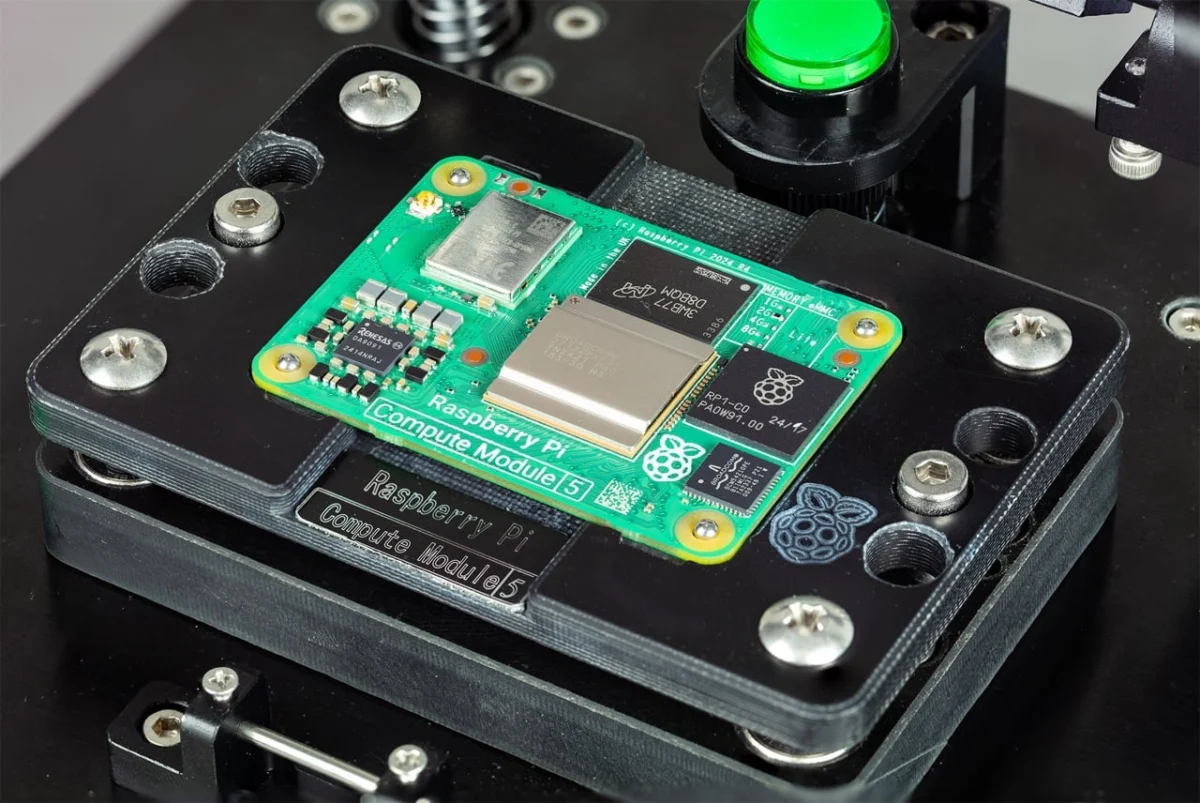
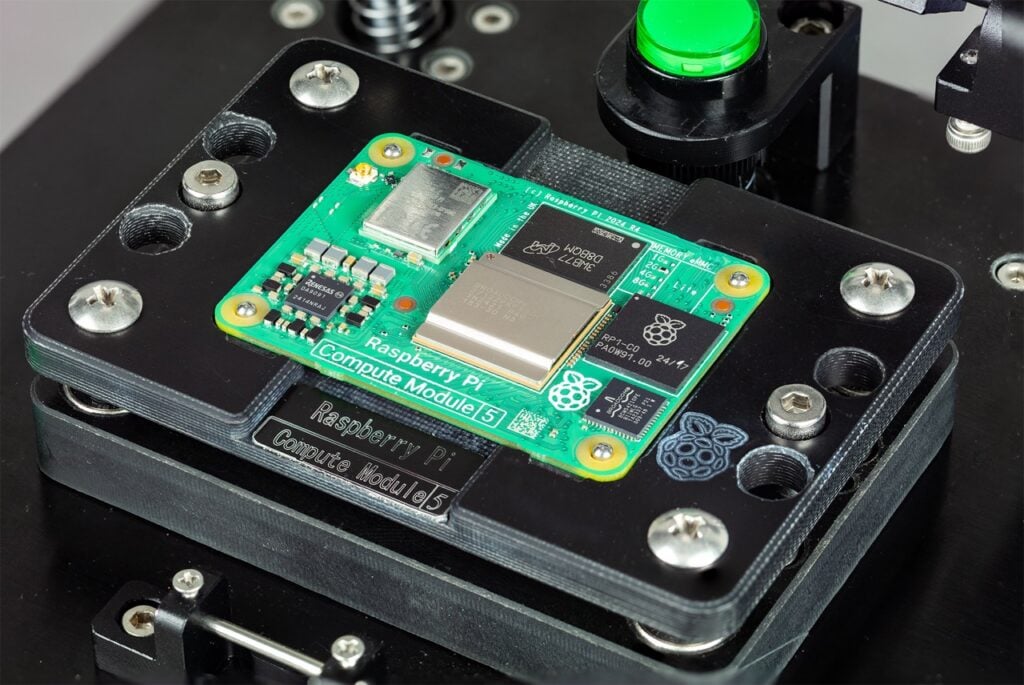
CAMBRIDGE, UK – Raspberry Pi has announced a significant milestone in its evolution from a hobbyist favorite to an industrial powerhouse. With the release of version 2.3 of its secure boot provisioning software, rpi-sb-provisioner, the organization has introduced a suite of features designed to streamline the deployment of encrypted, secure, and remotely manageable devices at an industrial scale.
The update marks a pivotal shift in how the Raspberry Pi ecosystem handles security and device lifecycle management, integrating three core technologies: Raspberry Pi Connect for Organizations, Image Description Provisioning (IDP), and the new rpi-fw-crypto framework. For engineers who have long struggled with the complexities of ARM-based secure boot, this update promises to make the "boring and predictable" deployment of secure systems a reality.
1. Main Facts: A Triple-Threat Update for Industrial IoT
The release of rpi-sb-provisioner 2.3 is not merely a patch; it is a fundamental expansion of the Raspberry Pi software stack. The update focuses on three primary pillars of modern hardware deployment:
Automated Enterprise Connectivity
The headline feature is the deep integration with Raspberry Pi Connect for Organizations. Previously, associating a device with a remote management account required manual intervention—a bottleneck for companies deploying hundreds or thousands of units. Version 2.3 utilizes a new "device identity" support system, allowing each Raspberry Pi to be assigned an immutable identity during the manufacturing process. This ensures that even after factory resets or OS updates, the device remains tied to the organization’s management portal.
Programmable Image Provisioning
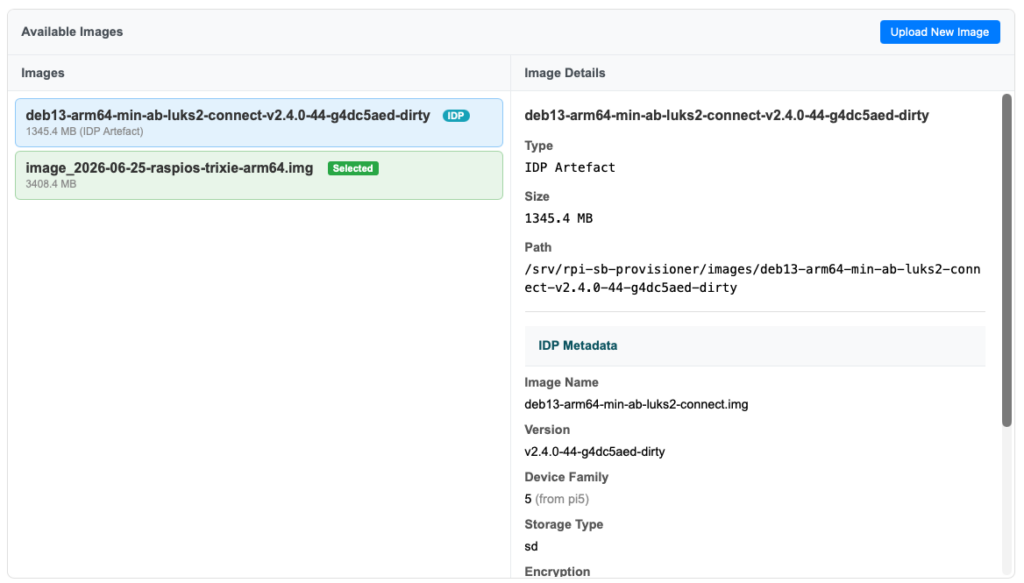
Moving beyond the limitations of standard OS images, the update introduces Image Description Provisioning (IDP). By integrating with rpi-image-gen, the provisioner now allows developers to define complex partition layouts, custom file systems, and specific attribute sets through code. This transforms the tool from a "one-size-fits-all" flasher into a fully programmable manufacturing system.
Advanced Hardware Cryptography
Security is bolstered by the inclusion of rpi-fw-crypto. This utility leverages the Raspberry Pi’s hardware-level security features to manage asymmetric cryptography. It allows for the use of device-unique private keys—written during the provisioning phase—without exposing them to the application layer. This significantly reduces the risk of private key theft in the event of a software-level breach.
2. Chronology: From Shell Scripts to Manufacturing Databases
The journey toward version 2.3 reflects Raspberry Pi’s broader strategy to capture the "Edge AI" and industrial automation markets. Understanding the timeline of this development reveals the growing pains of secure boot on the platform.
- Pre-2024: The "Wild West" of Security: For years, implementing secure boot on Raspberry Pi was a manual, often arcane process. Developers had to manually sign bootloaders and manage keys through a series of disconnected tools. This complexity acted as a barrier to entry for smaller firms looking to secure their intellectual property on the platform.
- Early 2024: The Birth of
rpi-sb-provisioner: Recognizing the friction, Raspberry Pi released the first iteration of the provisioner. Its goal was simple: provide a "boring" way to enable Secure Boot and Full Disk Encryption (FDE). Initially, it was a collection of shell scripts designed to automate the signing process. - Mid-2024: Evolution of Infrastructure: As user feedback poured in from the industrial sector, the tool evolved. It transitioned from simple scripts to a robust system featuring a dedicated manufacturing database, audit logs for compliance, and a Web UI to allow factory-floor operators to monitor provisioning status without needing command-line expertise.
- Late 2024 / Early 2025: The Integration Era: The focus shifted from "just security" to "security at scale." Raspberry Pi realized that security could not exist in a vacuum; it needed to play nicely with remote management tools (Connect) and custom image builders (
rpi-image-gen). - Present: Version 2.3 Release: The current release represents the culmination of these efforts, creating a unified workflow that spans from the initial code commit to the final device rolling off a production line.
3. Supporting Data: The Technical Architecture of Scalable Security
To understand the impact of version 2.3, one must look at the technical hurdles it overcomes. Secure boot on ARM platforms typically involves a Chain of Trust (CoT). If any link in that chain—the bootloader, the kernel, or the root filesystem—is compromised, the entire system is at risk.
The IDP Advantage
Previously, rpi-sb-provisioner was largely tethered to images created via pi-gen, the standard Raspberry Pi OS builder. However, industrial users often require non-standard layouts, such as dual-root partitions for A/B updates or dedicated encrypted data partitions.
The new Image Description Provisioning (IDP) metadata allows the provisioner to "understand" the image it is flashing. According to technical documentation, IDP artifacts include extended metadata that allows the provisioner to verify assumptions about the partition table before a single byte is written to the eMMC or SD card. This reduces manufacturing waste caused by misconfigured images.
Cryptographic Isolation via rpi-fw-crypto
The integration of rpi-fw-crypto addresses a long-standing vulnerability in embedded systems: key exposure. By using asymmetric cryptography, the system can verify the authenticity of updates using a public key, while the device-unique private key remains locked in the hardware’s secure enclave.
- Key State Verification: The new Web UI shows the hash and encryption state of keys, allowing quality control teams to confirm that the correct security parameters are active on a per-device basis.
- Immutable Identity: By tying the cryptographic identity to Raspberry Pi Connect, the system ensures that "Device A" can never be spoofed as "Device B," even if the storage medium is swapped.
4. Official Responses: Making Security "Boring"
The philosophy behind this update is perhaps best summarized by the Raspberry Pi engineering team’s recent statements. A lead software engineer on the project noted that for too long, working with secure boot felt "more complicated than it had any right to be."
The official stance from Raspberry Pi is that security should not be a luxury or a specialized skill set. "In 2024, we released the first version of rpi-sb-provisioner: a system designed to help you provision your OS on devices with secure boot and full disk encryption enabled in a boring and predictable way," the organization stated.
This emphasis on "boring" is a deliberate choice. In the world of industrial manufacturing, excitement usually means failure. By making the provisioning process predictable, Raspberry Pi is signaling to enterprise clients that their hardware is ready for mission-critical deployments where downtime or security breaches carry significant financial and legal penalties.
Furthermore, the organization emphasized its commitment to the open-source community. Despite the enterprise-grade features, rpi-sb-provisioner, rpi-fw-crypto, and rpi-image-gen remain open source. This allows enthusiasts and smaller startups to benefit from the same security infrastructure used by large-scale manufacturers.
5. Implications: A New Standard for Edge Computing
The release of version 2.3 has far-reaching implications for several sectors:
For Industrial Manufacturers
The ability to bulk-provision devices with immutable identities directly into a management account (Raspberry Pi Connect for Organisations) solves the "Day Zero" problem of IoT. Companies can now ship devices directly from the factory to the end-user, knowing that the moment the device hits the internet, it will securely check in and be ready for remote configuration.
For the "Right to Repair" and Lifecycle Management
While secure boot is often criticized for locking down hardware, Raspberry Pi’s implementation aims for a balance. By providing clear documentation on how keys are handled and allowing for factory resets that maintain device identity, they are providing a path for long-term maintenance. This is crucial as new regulations, such as the EU’s Cyber Resilience Act, begin to mandate long-term security support for connected devices.
For the Competitive Landscape
With these updates, Raspberry Pi is moving into territory traditionally dominated by expensive, proprietary "System on Modules" (SoMs) from vendors like NXP or NVIDIA. By offering a high-level, "boring" software suite that handles the hardest parts of security, Raspberry Pi is lowering the Total Cost of Ownership (TCO) for companies building custom hardware.
Conclusion: The Future of the Provisioner
The evolution of rpi-sb-provisioner is far from over. Raspberry Pi has invited continued feedback from the community, particularly "hard-earned tales from manufacturing devices at scale." As the system continues to adapt to user needs, it is likely to become the gold standard for how ARM-based devices are secured in the field.
For now, version 2.3 stands as a robust bridge between the flexible world of the maker and the rigid, high-stakes world of industrial manufacturing. By making secure boot "boring," Raspberry Pi has made it accessible, and in doing so, has secured its place in the future of the industrial edge.