From Micro-Controllers to Croft Manor: The ESP32-P4’s Surprising Leap into Retro Gaming
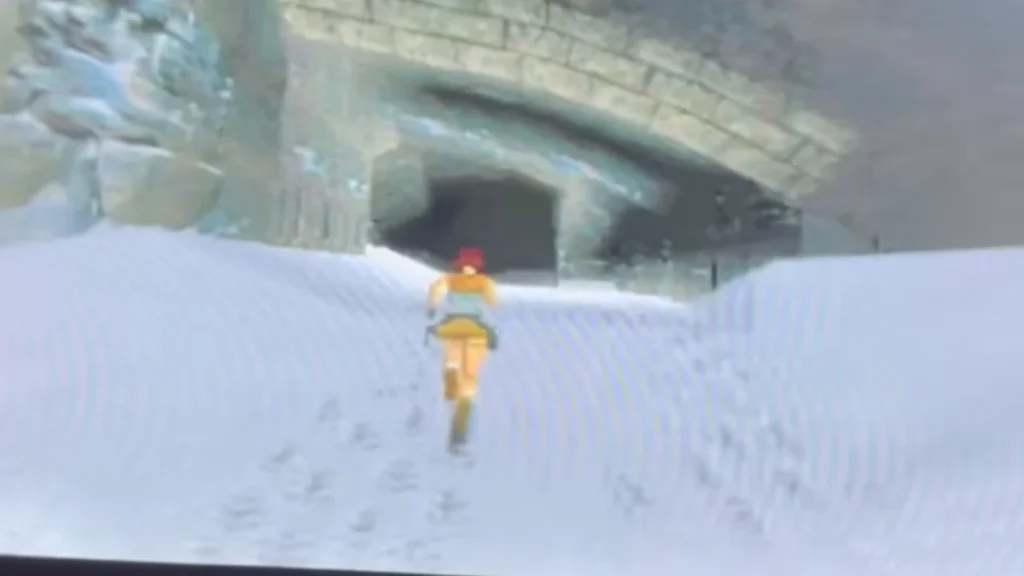
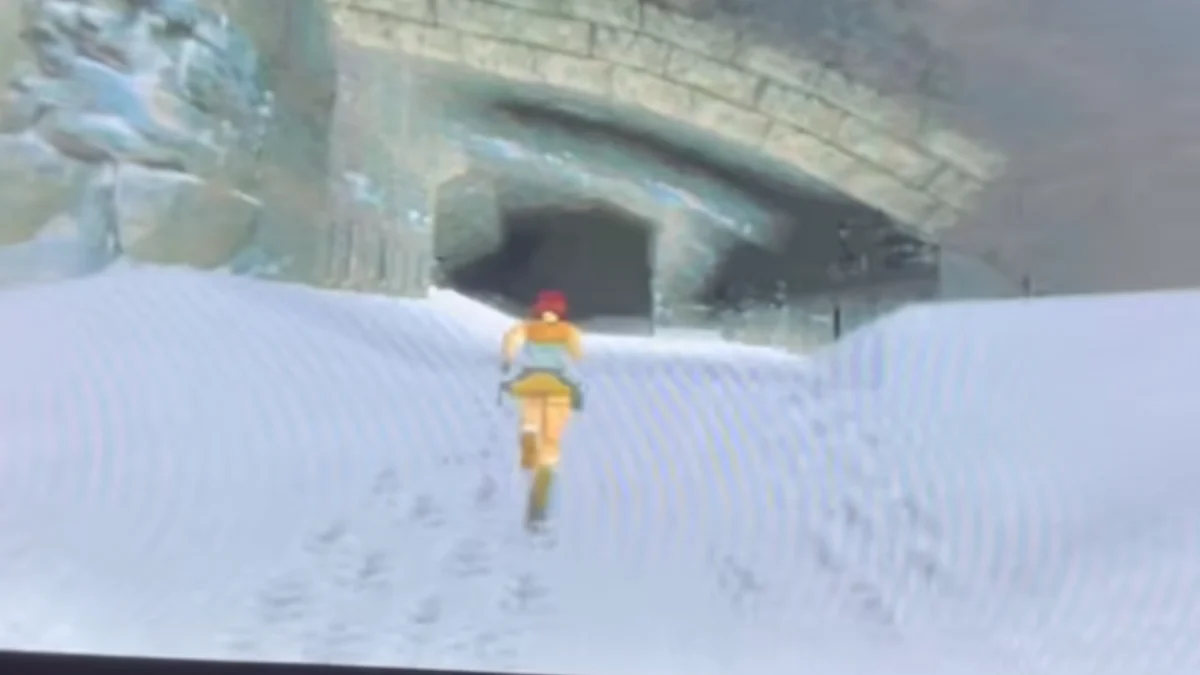
The evolution of embedded systems has long been defined by constraints. For decades, engineers working with microcontrollers were forced to operate within the strict boundaries of kilobyte-level memory and clock speeds measured in single-digit megahertz. To blink an LED was a triumph; to render 3D graphics was a fantasy.
Today, that narrative has been irrevocably altered. In a striking demonstration of modern silicon capability, developer [alexkid77] has successfully ported the iconic 1996 adventure title Tomb Raider to the ESP32-P4—a microcontroller that, despite its modest form factor, possesses the raw computational horsepower to embarrass the home consoles of the late 20th century.
The Core Facts: Lara Croft on a Microchip
The project, documented via alexkid77’s GitHub repository, does not rely on brute-force emulation of the original PlayStation hardware. Instead, it leverages the open-source OpenLara engine—a project dedicated to recreating the classic Tomb Raider engine for modern platforms.
At the heart of the experiment is the Espressif ESP32-P4. Unlike its predecessors, which were primarily designed for simple IoT tasks, the P4 features a dual-core RISC-V architecture, with each core clocked at an impressive 400 MHz. This architecture provides the necessary overhead to manage the complex geometry and texture mapping required by the OpenLara engine.
The rendering process is a masterclass in efficient resource management. The game runs using a software renderer at a native resolution of 320×240 pixels. To bring this to a modern display, the ESP32-P4 utilizes its integrated Pixel Processing Accelerator (PPA). The PPA handles the hardware scaling, blowing the image up to a crisp 1024×600 resolution without taxing the main CPU cores. Audio is handled via an external ES8311 codec, providing stereo output, while player input is managed through a standard USB HID keyboard, mimicking the original PC control scheme.
Chronology: A History of "Micro" Gaming
To understand the significance of this milestone, one must look at the trajectory of embedded computing over the last thirty years.
The Era of Optimization (1990s–2010s)
In the 1990s, gaming was the exclusive domain of dedicated hardware. The PlayStation 1, released in 1994, featured a 33 MHz R3000A CPU. At the time, this was cutting-edge technology. Meanwhile, the microcontrollers of the era were relegated to washing machines, microwave timers, and basic industrial sensors. The gap between a consumer game console and a microcontroller was an unbridgeable chasm.
The Rise of the ESP32 (2016–2020)
The introduction of the original ESP32 in 2016 began to narrow the gap. With dual-core Wi-Fi and Bluetooth capabilities, it became the gold standard for hobbyists. While it could handle simple 2D games and basic framebuffers, high-fidelity 3D rendering remained elusive.
The P4 Paradigm Shift (2024–2026)
With the release of the ESP32-P4, Espressif shifted the focus toward high-performance embedded applications. The inclusion of hardware-level accelerators for imaging and signal processing signaled that these chips were no longer just for "smart plugs." The porting of Tomb Raider in 2026 serves as a definitive benchmark: it marks the point where the distinction between a "microcontroller" and a "computer" has become purely semantic.
Supporting Data: Technical Specifications
The achievement is underpinned by the specific architectural choices made by the ESP32-P4 design team. The following technical specifications highlight why this chip succeeds where previous iterations failed:
- Processor Architecture: Dual-core RISC-V (RV32IMAFCP) running at 400 MHz.
- Memory Management: The P4 supports significant external PSRAM, allowing for the storage of the large texture maps required for Tomb Raider’s environments.
- Pixel Processing Accelerator (PPA): This is the "secret sauce" of the project. By offloading the scaling of the 320×240 buffer to 1024×600 to dedicated hardware, the CPU remains free to handle game logic, AI, and collision detection.
- I/O Versatility: The chip’s native support for USB OTG (On-The-Go) simplifies the connection of input devices, removing the need for complex signal translation layers that would typically consume CPU cycles.
When compared to the original PlayStation, the ESP32-P4 is roughly 12 times faster in raw clock speed, and because it runs modern, highly optimized open-source code rather than 1990s-era assembly, the performance feels fluid and responsive.
Industry and Community Responses
The project has sent shockwaves through the retro-gaming and embedded systems communities.
"What we are seeing here is the democratization of high-performance computing," says Marcus Thorne, a lead embedded systems architect. "Ten years ago, you needed a massive team of engineers to get a 3D engine running on silicon of this size. Now, a single developer with an open-source engine and a sub-$10 chip can achieve it in their spare time."
Espressif Systems, the manufacturer behind the ESP32 series, has largely remained quiet regarding this specific project, though they have consistently promoted the P4 as a "multimedia-capable" microcontroller. Analysts suggest that projects like [alexkid77’s] Tomb Raider port serve as the best possible marketing, demonstrating that the chip is capable of far more than just industrial automation.
Conversely, the retro-gaming community is divided. Some purists argue that the "soul" of Tomb Raider belongs on a CRT television connected to a console with moving parts. Others, however, view the ESP32-P4 as the future of archival gaming. If a simple chip can run the engine, the preservation of classic software is guaranteed, regardless of whether original hardware remains functional.
Implications: The Future of Embedded Entertainment
The successful porting of Tomb Raider to the ESP32-P4 carries profound implications for the future of consumer electronics and hobbyist engineering.
1. The End of Hardware Obsolescence
As original game consoles age, their electrolytic capacitors leak and their laser mechanisms fail. By moving games to modern, long-lasting microcontrollers, we are essentially future-proofing the history of gaming. The ESP32-P4 is cheap, power-efficient, and easily replaceable.
2. Embedded AI and Gaming
The P4’s power suggests that future hobbyist projects will not be limited to simple ports. With the extra headroom provided by the P4, developers may soon begin integrating AI-driven upscaling or even procedural generation into their embedded gaming projects. We are moving toward a world where your smart-home hub could also double as a retro-gaming console.
3. The Shift in Education
Computer science education has historically separated "low-level" programming (microcontrollers) from "high-level" application development (games/apps). The ESP32-P4 blurs these lines. Students can now learn how to manage registers and interrupts while simultaneously debugging 3D graphics engines, providing a more holistic understanding of how software interacts with hardware.
4. Cost-Effectiveness
As the article notes, it is now arguably cheaper and faster to assemble an ESP32-P4 gaming rig than it is to hunt down a working PlayStation and an original, non-scratched game disc. This economic shift will likely spur an explosion in "DIY Console" projects. We may soon see a market for pre-assembled, credit-card-sized consoles that run classic games with perfect fidelity.
Conclusion: A New Era of Micro-Performance
The image of Lara Croft navigating the tomb walls on a chip no larger than a postage stamp is a testament to the relentless march of technological progress. It reminds us that constraints are often just temporary obstacles.
While the ESP32-P4 may not be a powerhouse compared to a modern gaming PC, its ability to run a seminal title like Tomb Raider proves that we have entered an era where "micro" no longer means "limited." As developers continue to push the boundaries of what these chips can do, one thing remains clear: the future of retro gaming is remarkably small, remarkably efficient, and surprisingly powerful.
The question is no longer "Can we run it on a microcontroller?" but rather, "What will we run next?" With the performance ceiling of these devices rising every year, the only limits remain the imagination and skill of the developers who choose to build on top of them. The legacy of Tomb Raider lives on, not in a dusty console, but in the elegant, RISC-V-powered logic of the ESP32-P4.