Two Decades of the Cloud: How Amazon EC2 Redefined Global Computing and Built an Empire
By Global Tech & Infrastructure Desk
Published: August 20, 2026
Main Facts: The 20th Anniversary of Amazon Elastic Compute Cloud (EC2)
Twenty years ago, a solitary blog post by Jeff Barr fundamentally altered the trajectory of human technology. Published on August 20, 2006, the post introduced the Amazon Elastic Compute Cloud (EC2) Beta. At its inception, the service was remarkably humble: it offered resizable Linux virtual servers hosted in the cloud, billed strictly by the hour, and restricted to a single instance type (m1.small) within a solitary geographic region (US East).
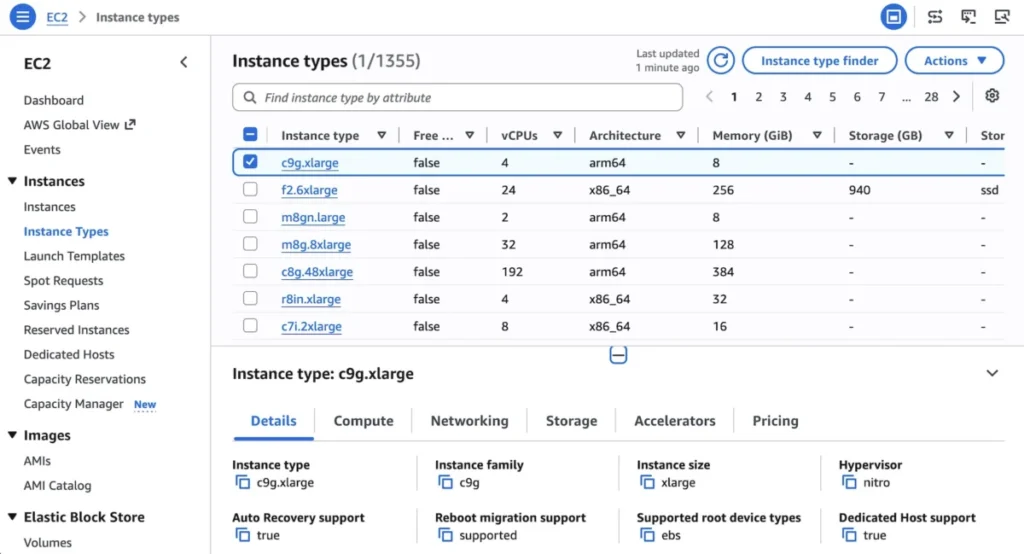
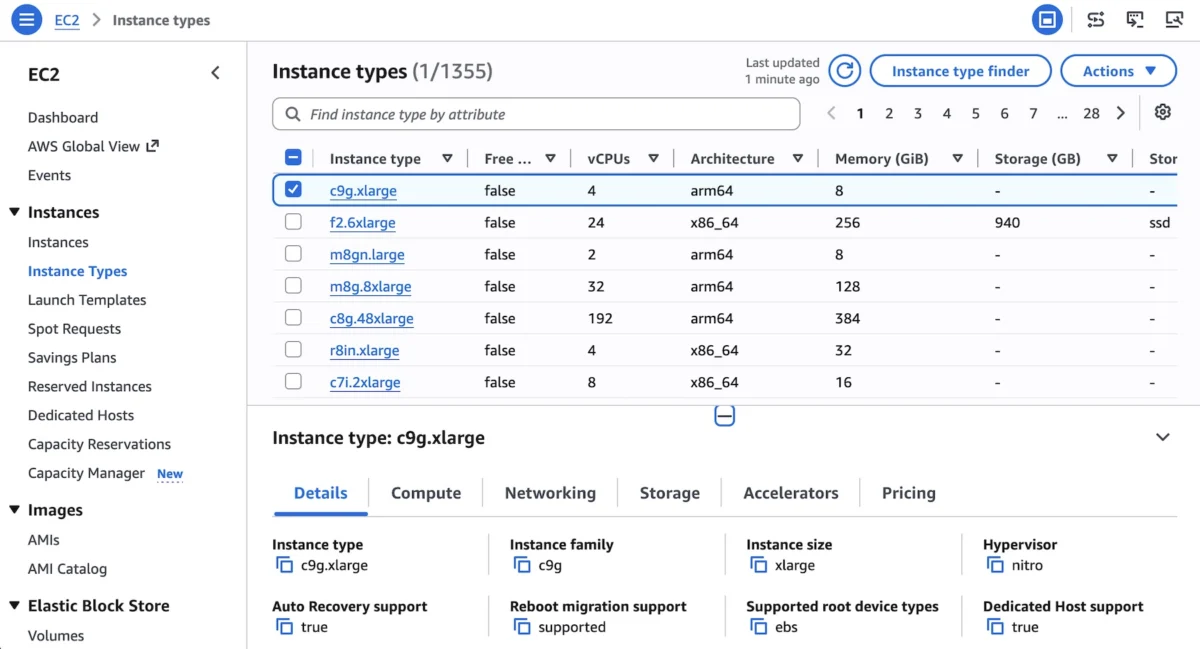
What started as a minimal, experimental utility has since blossomed into the bedrock of modern internet infrastructure. Today, Amazon EC2 supports over 1,200 distinct instance types spanning general-purpose, compute-optimized, memory-optimized, storage-optimized, accelerated computing, and high-performance computing (HPC) families. Its geographical footprint has expanded from one pioneering region to 39 AWS Regions globally.
More importantly, EC2 serves as the underlying compute engine for nearly every subsequent AWS breakthrough. Whether powering serverless architectures, Kubernetes clusters, or state-of-the-art generative AI training runs involving trillion-parameter foundation models, the modern digital economy runs on the robust, on-demand foundation first conceptualized two decades ago.
Chronology: The Evolution of EC2 (2006–2026)
To understand how Amazon EC2 scaled from a single Linux virtual machine into a global computing grid, one must examine the critical milestones that shaped its architectural journey over the past twenty years.
Phase 1: Establishing the Building Blocks (2006–2010)
- August 2006: The launch of the Amazon EC2 Beta (
m1.small), giving developers the unprecedented ability to spin up computing capacity via an API without purchasing physical hardware. - 2008: The introduction of Amazon Elastic Block Store (EBS), solving the volatility of early cloud instances by providing persistent, low-latency block storage volumes attachable to running EC2 instances.
- 2009: A monumental year for enterprise readiness. AWS rolled out Elastic Load Balancing (ELB), Auto Scaling, and Amazon CloudWatch, granting developers the tools to build highly available, self-healing, and dynamically scalable applications.
- 2009: The debut of Amazon Virtual Private Cloud (VPC), which provided customers with logically isolated, secure virtual networks bridging their on-premises datacenters to the AWS cloud.
Phase 2: Hardware-Driven Innovation and Custom Silicon (2011–2018)
- 2017: The introduction of the AWS Nitro System. By offloading virtualization, networking, and security functions from the host CPU to custom-built hardware and firmware, Nitro drastically reduced virtualization overhead, supercharged performance, and enhanced hardware-level security.
- 2018: The launch of AWS Graviton processors. Designed entirely by AWS using ARM architecture, Graviton chips delivered a paradigm shift in price-to-performance for scale-out workloads.
- 2018: The debut of AWS Outposts and AWS Local Zones, expanding the reach of EC2 beyond traditional AWS Regions directly into on-premises datacenters and metropolitan population centers.
Phase 3: The Edge, 5G, and the AI Era (2019–2026)
- 2019: The rollout of AWS Wavelength, embedding EC2 compute and storage power directly inside 5G telecommunications carrier networks to enable ultra-low-latency edge applications like autonomous driving and real-time multiplayer gaming.
- 2021: EC2 celebrated its 15th anniversary, having weathered the early waves of digital transformation and set the stage for massive containerized workloads.
- 2026: Celebrating its 20th anniversary, EC2 now orchestrates massive, GPU-accelerated and custom silicon clusters capable of training and deploying the world’s most complex artificial intelligence models.
Supporting Data: Scaling to Unprecedented Heights
The growth metrics of Amazon EC2 over the last twenty years reflect the sweeping migration of global enterprise IT from physical datacenters to cloud environments.
- Instance Variety: From 1 initial instance type (
m1.small) in 2006, the catalog has exploded to over 1,200 distinct instance types tailored for specific algorithmic, mathematical, and storage demands. - Global Footprint: From 1 Region (US East) at launch, EC2 now operates across 39 Regions globally, supported by hundreds of Availability Zones and edge locations.
- Hybrid & Edge Form Factors: Through services like AWS Outposts, Local Zones, and Wavelength, EC2 has broken past regional datacenter walls, operating right next to users on-premises, in major cities, and inside telecom 5G networks.
- The Downstream Ecosystem: Virtually every modern AWS compute paradigm traces its lineage back to EC2. Today, managed platforms such as Amazon ECS, Amazon EKS, AWS Lambda, AWS Fargate, AWS Batch, Amazon EMR, Amazon SageMaker AI, and Amazon Bedrock all rely on underlying EC2 capacity to execute workloads.
Official Responses and Reflections
Reflecting on the milestone, key architects and long-time leaders within Amazon Web Services emphasized that the core DNA of EC2 remains untouched despite exponential growth.
Channy Yun, a prominent AWS developer advocate and evangelist, noted in a retrospective article:

"While I hate to play favorites, I want to choose some of my favorite EC2 launches of the past five years… We made strong foundational decisions in 2006, and we left room for the service to grow. Twenty years later, that strategy of creating services that are minimal-yet-useful, launching quickly, and iterating rapidly in response to your feedback continues to guide how we build."
Jeff Barr, whose original 2006 blog post launched the beta, previously reflected on how the team envisioned the cloud’s potential. In the early days, nobody could accurately predict the emergence of container orchestration, serverless compute, or trillion-parameter Large Language Models (LLMs). Yet, because EC2 was designed with flexible, composable building blocks, it organically accommodated these tectonic shifts without requiring structural redesigns.
Industry analysts and early enterprise adopters echo these sentiments, frequently citing the reliability and backward compatibility of EC2 as the primary reasons legacy enterprises successfully transitioned mission-critical transactional workloads to the cloud without service degradation.
Implications: The Next Twenty Years of Cloud Computing
As Amazon EC2 enters its third decade, its implications for the global technology landscape are profound.
1. The Undisputed Foundation for Artificial Intelligence
When EC2 was launched, "Big Data" meant terabytes of relational database entries. Today, AI workloads demand exabytes of parallel processing power, ultra-fast inter-instance networking, and specialized matrix-multiplying accelerators (such as AWS Trainium and Inferentia). EC2 has successfully evolved from a web-hosting utility into the primary infrastructure layer driving the generative AI revolution. Every major foundational model training cluster originates with a command to provision high-performance EC2 nodes.
2. Pushing Compute to the Extreme Edge
Through Local Zones, Wavelength, and Outposts, EC2 has proven that the "cloud" is no longer just a remote collection of massive, centralized facilities. It is a distributed fabric. Over the coming decade, as IoT sensors, smart cities, and autonomous systems proliferate, the ability to run elastic compute nodes locally—with ultra-low latency and sovereign data control—will dictate which enterprise applications succeed.
3. Sustainability and Custom Silicon Efficiency
With energy constraints becoming a critical bottleneck for modern datacenters, AWS’s pivot toward custom silicon—such as Graviton CPUs and specialized AI accelerators—has profound implications for global energy efficiency. By designing hardware tailored precisely to software execution profiles, EC2 continues to drive down the carbon footprint per computing cycle, a vital achievement as global compute demand skyrockets.
Conclusion
Two decades ago, a single blog post invited engineers to rent a computer by the hour over the internet. Today, that experiment is the invisible operating system of the global digital economy. As AWS looks toward the future, Amazon EC2 remains the indispensable cornerstone where the workloads of today—and the unimaginable innovations of tomorrow—will run.