AWS and Open Source Communities Converge at Open Source Summit Korea and MCP DevSummit Seoul 2026
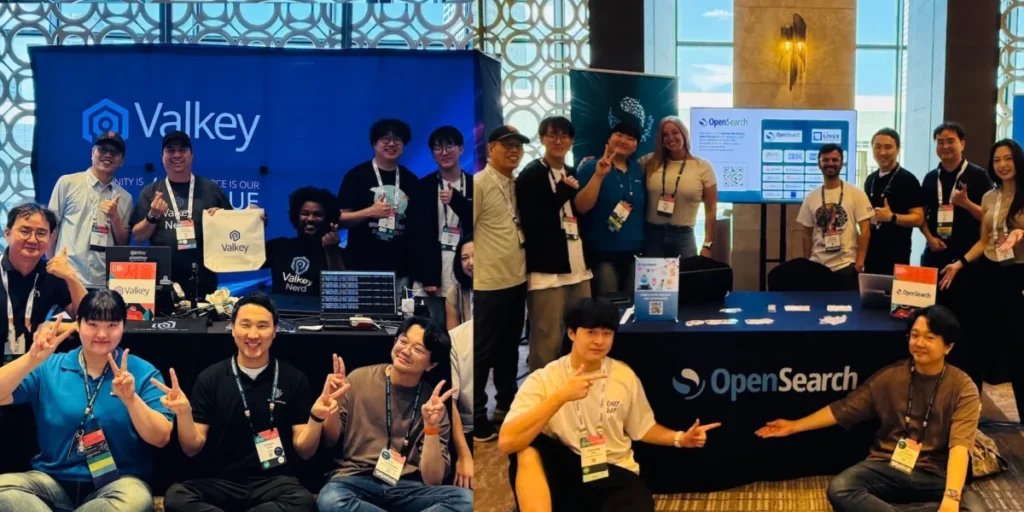
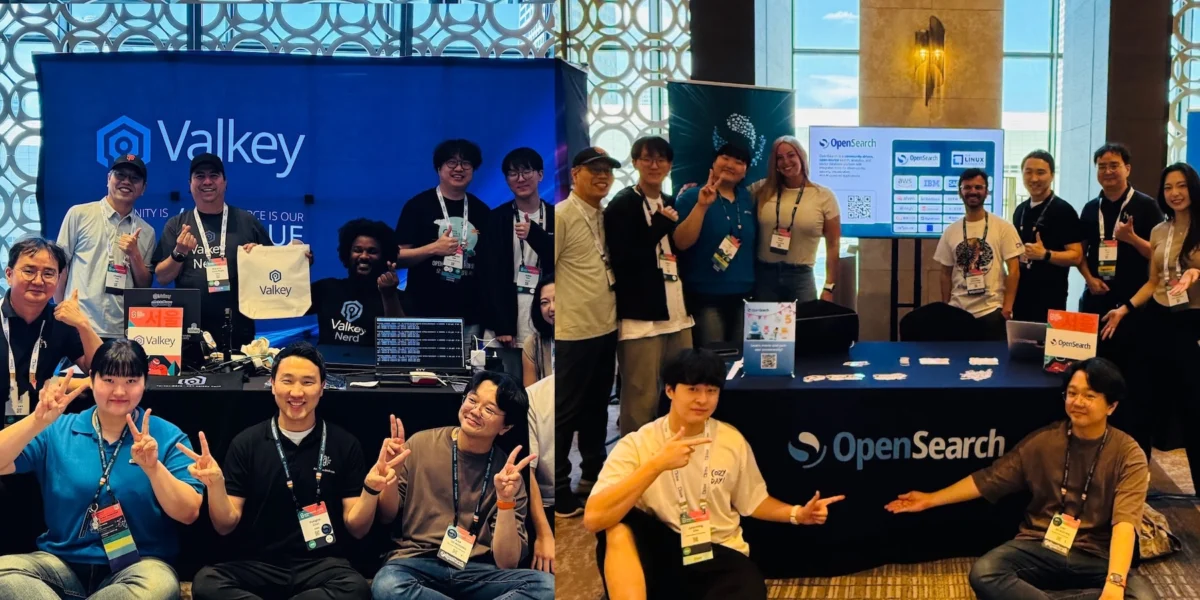
SEOUL, SOUTH KOREA — In a vibrant display of global open-source collaboration, Amazon Web Services (AWS) contributors recently joined forces with developer communities from around the world at the Open Source Summit Korea 2026 and the MCP DevSummit Seoul 2026. Spanning four dynamic days, the dual conferences served as an epicenter for Linux Foundation open-source projects, drawing thousands of developers, architects, and industry leaders.
At the center of the engagement were two foundational enterprise technologies heavily backed by cloud giants and independent contributors alike: OpenSearch and Valkey. As organizations increasingly rely on robust, scalable, and secure open-source infrastructure to power modern cloud-native applications, events like the Seoul summits provide a vital physical forum for knowledge exchange, collaborative code-crafting, and community-driven roadmap alignment.
Main Facts
The four-day collaborative gathering in Seoul brought together core maintainers, corporate contributors, and everyday users of prominent Linux Foundation projects. AWS engineering teams participated actively alongside local Korean OpenSearch community leaders, hosting interactive developer booths, sharing technical insights, and fostering grassroots engagement.
A key highlight of the gathering was the localized OpenSearch Project Seoul User Group Meetup, where regional developers discussed real-world architectures, scaling challenges, and migratory strategies for transitioning legacy monitoring and search infrastructures into modern, unified observability stacks.
The convergence in Seoul occurred against the backdrop of significant technological milestones for both OpenSearch and Valkey:
- OpenSearch 3.7 (Released June 9, 2026): Brought major paradigm shifts in unified logging, tracing, and metrics analysis alongside a staggering 5.5x speed improvement in vector retrieval performance. Amazon OpenSearch Service rapidly integrated these capabilities by late July 2026.
- Valkey 9.1 (Released May 19, 2026): Introduced a heavily overhauled I/O threading architecture, yielding up to a 17% boost in transaction throughput and slashing memory footprints for small strings by up to 20%. Amazon ElastiCache swiftly adopted Valkey 9.1 by late June 2026 to enhance multi-tenant workloads.
Chronology of Recent Milestones
Understanding the trajectory of these open-source projects reveals how rapidly community-led development cycles translate into enterprise-ready cloud services. The timeline leading up to the Seoul summits highlights a synchronized rhythm of upstream open-source releases followed closely by managed AWS integrations.
Early 2026: Foundation and Optimization
- May 19, 2026: The Valkey project officially launched Valkey 9.1. Focused on core systems performance, the release addressed enterprise pain points regarding threading overhead, memory bloat, and granular security controls.
- June 9, 2026: The OpenSearch project rolled out OpenSearch 3.7, focusing heavily on artificial intelligence (AI) and machine learning (ML) readiness through dramatic vector search optimizations, alongside tighter SLO (Service Level Objective) tracking mechanisms.
- June 23, 2026: AWS announced general availability for running Valkey 9.1 within Amazon ElastiCache, allowing node-based clusters to immediately leverage the upstream performance gains and enhanced access controls.
- July 30, 2026: AWS integrated OpenSearch version 3.7 into Amazon OpenSearch Service, empowering managed-service customers to tap into accelerated vector search algorithms and advanced Query Insights without managing the underlying cluster infrastructure manually.
- August 2026: AWS contributors, open-source maintainers, and local chapters converged in Seoul for the Open Source Summit Korea and MCP DevSummit Seoul, bridging the gap between digital codebases and human collaboration.
Supporting Data and Technical Architecture
The technical underpinnings driving the excitement at the Seoul summits revolve around tangible, benchmarked performance gains. Enterprise architectures today are strained by exploding data volumes, demanding sub-millisecond retrieval times for generative AI use cases and real-time observability.
OpenSearch 3.7: Redefining Search, Observability, and Vector Workloads
Unstructured data continues to grow at exponential rates across modern enterprises. OpenSearch acts as a scalable search and observability suite designed to bring order to this digital sprawl.
With the launch of version 3.7, developers gained access to a unified interface capable of querying, alerting, and tracking SLOs across disparate telemetry data types—namely logs, traces, and metrics. Previously, operations teams often had to stitch together multiple tools to correlate application performance monitoring (APM) metrics with underlying infrastructure logs.
Crucially, the 5.5x vector retrieval speedup represents a massive leap for Retrieval-Augmented Generation (RAG) applications and semantic search engines. By optimizing the underlying k-NN (k-nearest neighbors) search algorithms, OpenSearch 3.7 allows AI applications to query massive vector spaces with drastically lower latency. When deployed via Amazon OpenSearch Service, these enhancements translate into:
- Improved Search Relevance: Better tuning mechanisms that reduce false positives in semantic searches.
- Advanced Query Insights: Granular visibility into query performance, helping database administrators identify and optimize expensive queries on the fly.
- Seamless Scalability: The ability to handle high-throughput vector workloads alongside traditional full-text search within a single managed cluster.
Valkey 9.1: High-Performance Caching and State Management
For high-speed transactional workloads, caching, and message brokering, Valkey has established itself as a premier open-source key-value datastore. Valkey 9.1 introduced architectural refinements that target the bottlenecks typically encountered in high-concurrency environments.
The centerpiece of the 9.1 release is its redesigned I/O threading model. By decoupling network I/O handling more efficiently from the core execution engine, the datastore achieved up to a 17% increase in overall throughput. This means existing hardware footprints can handle significantly more requests per second without saturating CPU cores.
Furthermore, memory efficiency was a primary focus for the maintainer community. Valkey 9.1 optimized data structures to reduce memory usage for strings under 128 bytes by up to 20%. In large-scale caching deployments holding hundreds of millions of small keys (such as user session tokens, configuration flags, or cache fragments), this reduction translates directly into substantial infrastructure cost savings.
When integrated into Amazon ElastiCache for Valkey 9.1, these performance enhancements benefit multi-tenant workloads significantly:
- Stricter Access Control: Enhanced security features ensure robust isolation and granular permissions across shared cluster environments.
- Lower Operational Overhead: Fully managed scaling, automated patching, and high availability remove the friction of self-managing high-performance datastores.
Official Responses and Perspectives
The synergy between enterprise cloud providers and independent open-source communities is vital to the long-term sustainability of modern software development. Speaking on the collaborative ethos displayed at the Seoul events, community leaders and AWS representatives emphasized the importance of face-to-face engagement.
"Open-source projects thrive on diversity of thought, shared burdens, and collective passion," noted community organizers at the Open Source Summit Korea. "Having local chapters, global maintainers, and cloud providers like AWS in the same room accelerates innovation cycles in ways that digital pull requests alone cannot match."

AWS engineering representatives echoed this sentiment, highlighting that listening to regional user groups—such as the active OpenSearch Project Seoul user base—directly informs upstream feature requests and managed service roadmaps. By bridging the gap between open-source maintainers and enterprise cloud consumers, events like MCP DevSummit Seoul ensure that technologies like OpenSearch and Valkey remain agile, transparent, and aligned with real-world developer needs.
Implications for the Broader Developer Ecosystem
The developments showcased at Open Source Summit Korea and MCP DevSummit Seoul 2026 carry profound implications for software architects, data engineers, and enterprise technology leaders worldwide.
1. Acceleration of AI and RAG Workloads
The dramatic improvements in vector retrieval speeds within OpenSearch 3.7 signal that search engines are evolving rapidly into foundational components of the artificial intelligence stack. As companies race to deploy production-grade Large Language Model (LLM) applications, the ability to perform high-speed semantic searches over vast corporate knowledge bases without performance degradation is a game-changer. Developers no longer need to maintain separate, specialized vector databases for many standard RAG architectures, simplifying their data pipelines.
2. Economic Efficiency in Cloud Operations
With Valkey 9.1’s 20% memory reduction for small strings and 17% throughput boost, organizations facing economic pressures can achieve higher performance densities. Lower memory footprints mean fewer or smaller cache nodes are required to sustain identical workloads, directly lowering cloud computing expenditures. Managed offerings like Amazon ElastiCache make these efficiencies accessible instantly without requiring complex, manual cluster re-architecting.
3. Strengthening Community-Driven Governance
The robust participation of AWS engineers alongside independent contributors underscores the maturation of community-driven open-source projects. Enterprises increasingly demand the safety, transparency, and lack of vendor lock-in that open-source governance provides, paired with the reliability of enterprise-grade cloud management. The success of the Seoul summits demonstrates that this hybrid model—where upstream code is freely developed by a global community and downstream managed services provide enterprise polish—is scaling successfully.
Looking Ahead
As the open-source community looks toward the remainder of 2026, momentum shows no signs of slowing down. AWS contributors and project maintainers are already preparing for upcoming global events on the OpenSearch Events and Valkey Events calendars.
For developers eager to stay at the cutting edge of cloud technology, engaging with local meetups, attending upcoming AWS Summits and Community Days, and participating in the AWS Builder Center remain essential pathways for professional growth and collaborative problem-solving.
Check back next week for another comprehensive Weekly Roundup covering the latest architectural innovations, product launches, and community updates across the AWS ecosystem.