Breakthrough AI Device "LesionIQ" Uses Raspberry Pi to Revolutionize Early Skin Cancer Detection in Remote Communities
EDINBURGH — As global temperatures rise and summer months bring intense exposure to ultraviolet radiation, public health officials face an escalating crisis. Skin cancer remains the most prevalent form of cancer worldwide, according to The Skin Cancer Foundation. While diagnoses of basal cell carcinoma continue an upward trajectory, cases of melanoma—the most aggressive and deadly form of the disease—are reaching unprecedented heights.
Despite these alarming statistics, medical experts emphasize a beacon of hope: if melanoma is detected and treated at an early stage, the five-year survival rate skyrockets to an extraordinary 99%.
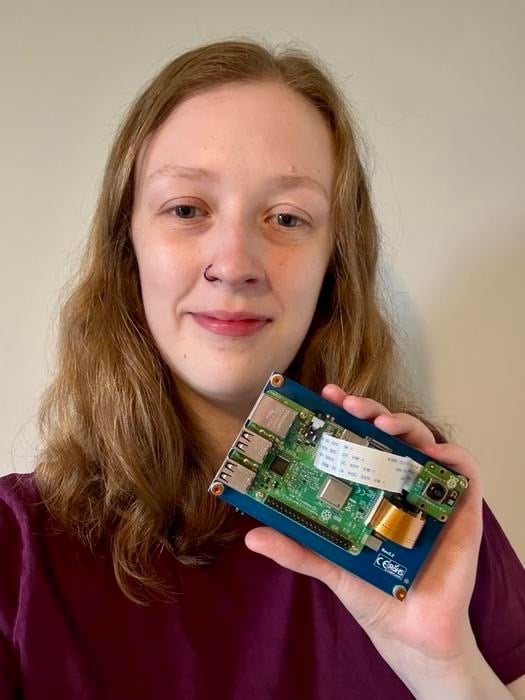
Bridging the gap between high-stakes early detection and real-world accessibility is Tess Watt, a visionary PhD candidate in the School of Mathematical and Computer Sciences at Heriot-Watt University in Edinburgh. Watt has developed "LesionIQ," an innovative, low-cost artificial intelligence system powered by a Raspberry Pi 3 Model B and a compact camera. Designed to operate completely offline, this breakthrough TinyML (Tiny Machine Learning) device aims to bring advanced dermatological triage to patients in remote, underserved, and resource-limited regions across the globe.
Main Facts: How LesionIQ Works
At its core, LesionIQ harnesses the power of edge computing to diagnose skin lesions without relying on cloud infrastructure or stable internet connections. The hardware setup is remarkably modest: a standard Raspberry Pi 3 Model B single-board computer paired with a high-resolution mini camera and a user-friendly interface.
When a user identifies a suspicious mole, freckle, or patch of skin, they use the device to photograph the affected area. The onboard machine learning model immediately processes the image, analyzing its visual characteristics in real-time. It cross-references the photo against thousands of pre-loaded skin lesion datasets stored directly on the Raspberry Pi’s local memory.
Unlike human dermatologists—who may experience fatigue or subjectivity—machine learning models excel at processing massive volumes of visual data simultaneously. "Machine learning has overcome most of the challenges faced in traditional methods of skin lesion classification by analysing many images at once, more accurately than human dermatologists," Watt explains. "Machine learning can then identify patterns that the human eye cannot and can therefore be more accurate and objective."
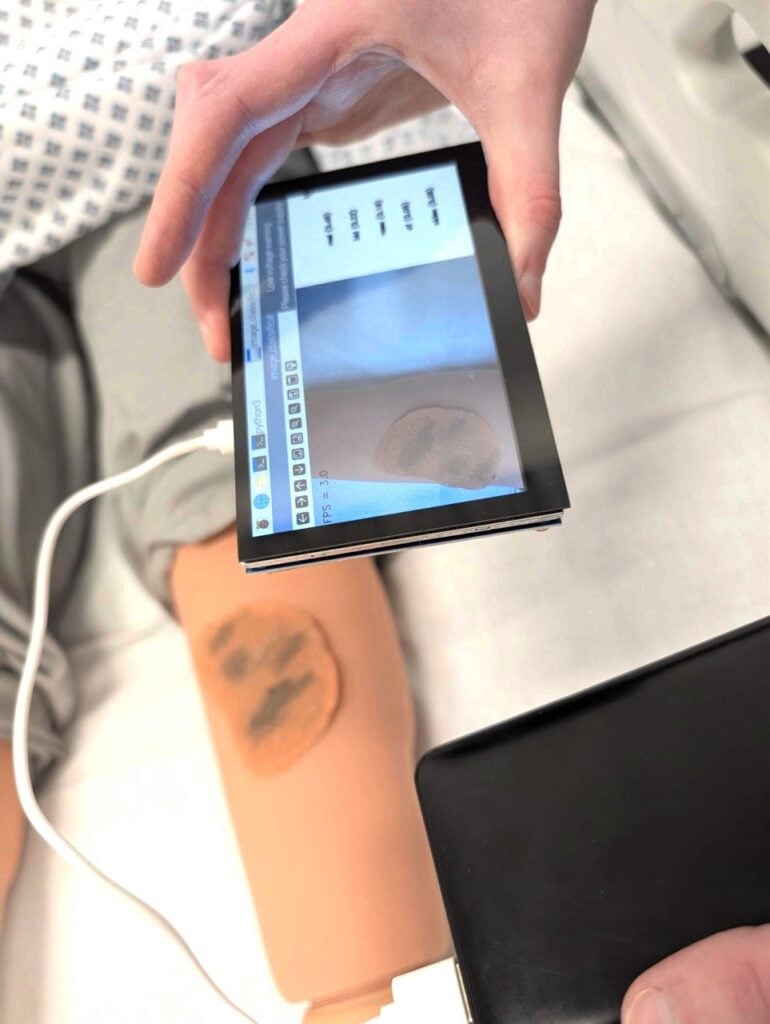
Once the local analysis is complete, the system generates a preliminary diagnostic output. In compliant medical frameworks, such as in the United Kingdom, this automated assessment is intended to be shared with a general practitioner (GP) to streamline formal clinical validation and treatment planning.
Chronology of Development: From Concept to Clinical Horizon
The journey toward LesionIQ reflects a meticulous, multidisciplinary collaboration spanning several academic institutions and years of iterative engineering.
- Foundational Research Phase: Watt began investigating the intersection of low-powered edge computing and clinical dermatology, recognizing that traditional AI models demand heavy cloud processing power that is impractical in off-grid environments.
- Hardware and Software Integration: By selecting the Raspberry Pi 3 Model B, Watt established a cost-effective development baseline. She integrated TinyML frameworks, optimizing heavy deep-learning algorithms to run efficiently on low-wattage, non-connected hardware.
- Academic Collaboration: To strengthen the project’s technical and clinical foundations, Watt partnered with researchers and academics across multiple institutions, including London South Bank University, Edinburgh Napier University, and the Foundation for Research and Technology – Hellas (FORTH) in Greece.
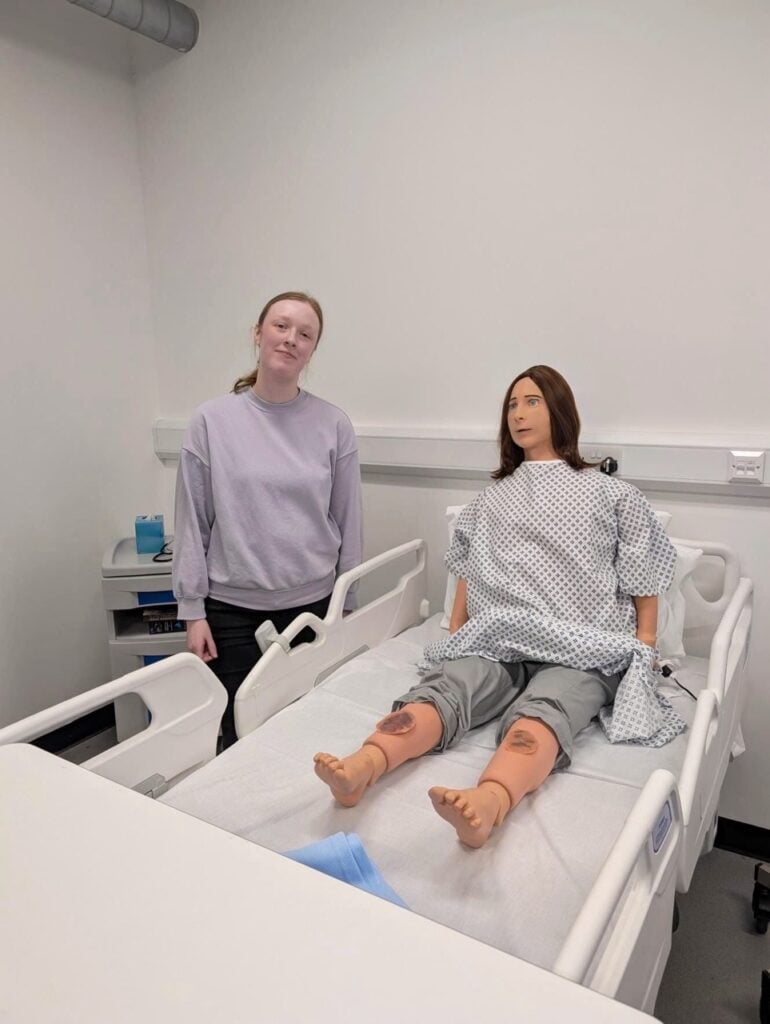
- Demonstration and Institutional Engagement: Watt recently showcased LesionIQ at Heriot-Watt University’s advanced health and care technologies suite. Simultaneously, she initiated formal discussions with NHS Scotland to navigate the complex pathways of ethical approval and clinical trials.
- Future Projections (Targeting Pre-2030): With an 85% baseline diagnostic accuracy already established, Watt is actively sourcing expanded, diverse datasets. Her roadmap culminates in rigorous real-world clinical trials, with a firm objective to clear regulatory hurdles and place the device into the hands of real-world patients before 2030.
Supporting Data and Technical Challenges
While the initial diagnostic accuracy of 85% is impressive for a prototype running on a non-connected single-board computer, Watt and her collaborators acknowledge that substantial hurdles remain before widespread clinical deployment can occur.
The primary obstacle in advancing medical AI systems like LesionIQ is the scarcity of comprehensive, high-quality, and demographically diverse training data.
+-----------------------------------------------------------------------+
|                       LESIONIQ TECHNICAL SPECIFICATIONS               |
+--------------------------+--------------------------------------------+
| Hardware Platform        | Raspberry Pi 3 Model B                     |
| Imaging Interface        | Compact high-resolution camera             |
| Computing Paradigm       | TinyML (Edge Machine Learning)             |
| Connectivity Requirement | None (100% Offline / Local Storage)        |
| Current Accuracy         | 85% (Targeting higher with new datasets)   |
| Primary Target Audience  | Rural Scotland & Developing Nations        |
+--------------------------+--------------------------------------------+
"There is a lack of diverse skin lesion data available and the landscape of clinical AI is still in its infancy," Watt notes. Most publicly available medical datasets lean heavily toward specific skin tones, which can introduce algorithmic bias and reduce diagnostic efficacy across multicultural populations. To rectify this, Watt is actively working to curate and access larger, more inclusive datasets that reflect global demographic realities.
Furthermore, developers often question why Watt chose a dedicated single-board computer over widely available smartphones. Her rationale highlights a profound understanding of global socio-economic disparities: "I am often asked why I chose not to deploy my AI model on a smartphone, and this is because smartphones are costly and not widely available/used in developing countries where access to the Internet is also limited."
By anchoring the technology to an ultra-low-cost Raspberry Pi, LesionIQ bypasses the financial barriers of smartphone ownership and the logistical nightmare of cellular or broadband dependency.
Official Responses and Regulatory Landscapes
Deploying artificial intelligence into healthcare settings requires navigating a labyrinth of regulatory frameworks, ethical clearances, and legal mandates. In the United Kingdom, strict healthcare laws govern how diagnostic tools can be implemented.
"Current legislation requires a medical professional to validate the outputted diagnosis," Watt stresses, clarifying that LesionIQ is not designed to replace human doctors. Instead, it serves as an advanced, intelligent triage assistant meant to accelerate diagnosis and ensure that patients in remote or overlooked areas receive timely referrals.
Discussions with NHS Scotland are currently underway to secure the necessary ethical approvals for pilot testing in rural Scottish communities—regions where geographic isolation and a scarcity of local dermatologists can drastically delay critical diagnoses. Beyond the UK, the modular and inexpensive nature of the Raspberry Pi architecture positions LesionIQ as an attractive model for global health organizations seeking scalable solutions for rural clinics in the Global South.
Implications for Global Health and the Future of Medicine
The implications of Tess Watt’s work with LesionIQ extend far beyond the immediate technical novelty of running machine learning on a Raspberry Pi. By democratizing access to diagnostic-grade skin cancer screening, the project touches upon several critical pillars of modern public health:
1. Bridging the Urban-Rural Healthcare Divide
Patients living in remote highlands, islands, or isolated rural provinces often face arduous journeys simply to consult a specialist. LesionIQ brings the clinic to the living room, allowing individuals to monitor suspicious lesions regularly and flag potential issues before they metastasize.
2. Cost-Effective Scalability
Advanced medical diagnostics are frequently cost-prohibitive for developing nations. Because Raspberry Pi computers are inexpensive, globally accessible, and consume minimal electrical power, the total cost of deploying a LesionIQ unit is a fraction of traditional clinical hardware. This affordability opens the door for widespread humanitarian deployment.
3. Regulatory and Ethical Evolution of Clinical AI
As tools like LesionIQ move closer to clinical reality, they force medical boards, lawmakers, and technologists to establish clearer frameworks for human-AI collaboration. Ensuring that AI systems complement rather than supplant clinical judgment is vital for maintaining patient safety and trust.
4. Inspiring the Maker and Open-Source Community
Projects like LesionIQ highlight the immense humanitarian potential of consumer-grade hobbyist hardware. By proving that powerful life-saving diagnostics can be built on accessible platforms like Raspberry Pi, Watt inspires a new generation of engineers, students, and makers to direct their technical prowess toward solving real-world global challenges.
As summer suns continue to shine and skin cancer rates challenge modern healthcare systems, innovations rooted in accessible technology offer a compelling path forward. With continued refinement of its algorithms, the acquisition of diverse global datasets, and successful navigation of clinical trials, LesionIQ could soon transform from an ingenious academic prototype into a global lifeline.
This reporting originally appeared in issue 169 of Raspberry Pi Official Magazine, available now in print and online. Readers interested in exploring more maker-driven technology projects can subscribe to the magazine to receive worldwide delivery and a complimentary Raspberry Pi Pico 2 W.