Beyond the Screen: Why the MAKERphone 2.0 is the DIY Gadget of 2026
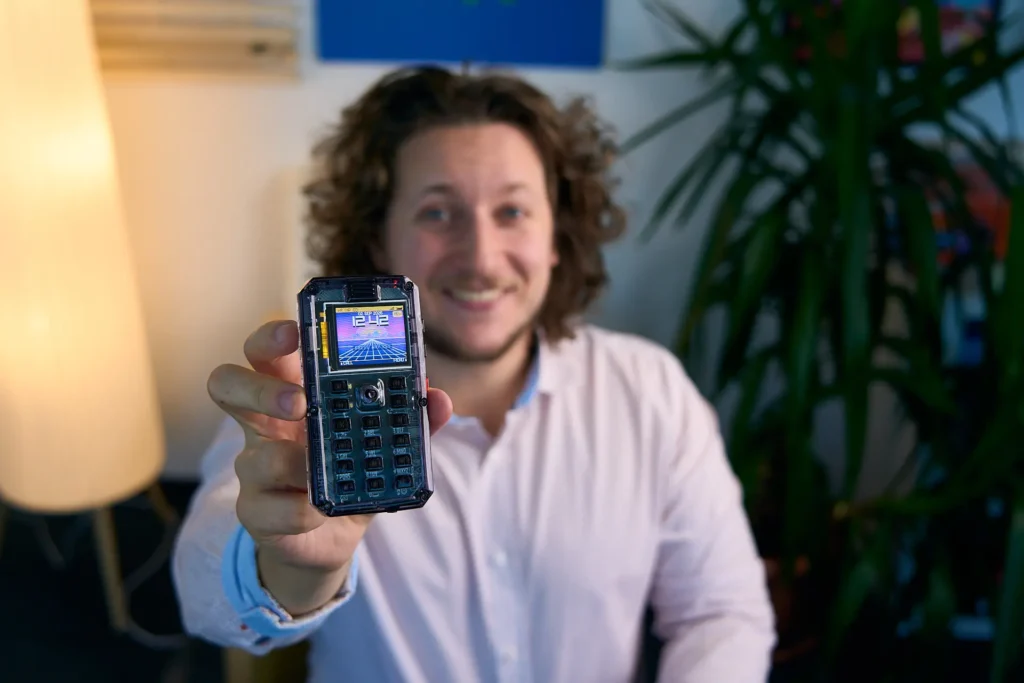
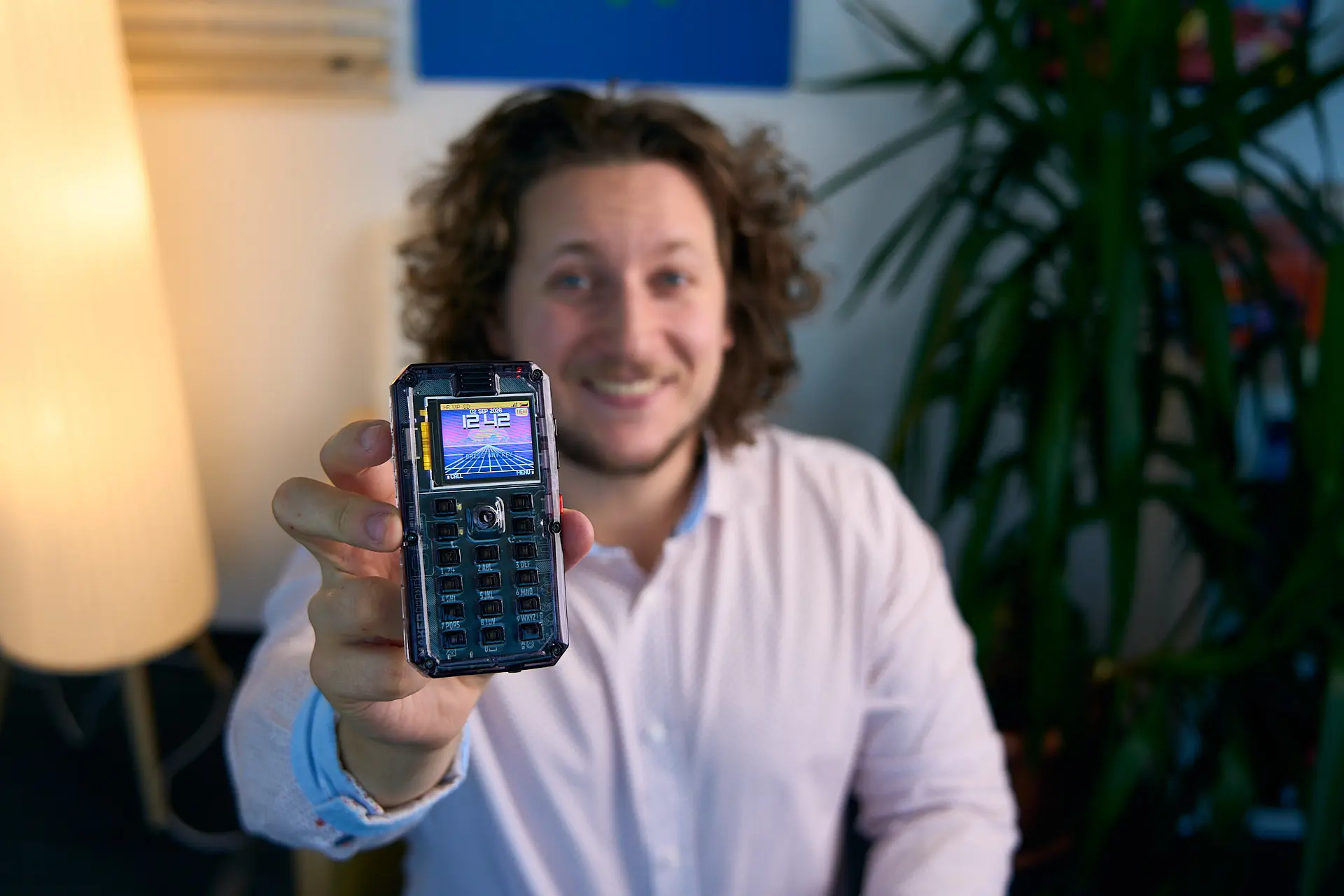
In an era where the average smartphone has become an opaque "black box"—a sealed slab of glass and metal that most users view as a magic portal rather than a piece of technology—a quiet revolution is brewing in the maker community. CircuitMess, the Croatian hardware innovator led by founder Albert Gajšak, has returned to the spotlight with its latest crowdfunding phenomenon: the MAKERphone 2.0.
Building on the success of its 2018 predecessor, which successfully demystified mobile hardware for over 6,000 enthusiasts, the new iteration aims to strip away the intimidating barriers of traditional electronics manufacturing. By removing the need for a soldering iron and integrating modern AI-assisted coding, CircuitMess is positioning the MAKERphone 2.0 not just as a gadget, but as a gateway to understanding the digital world we inhabit.
A Chronology of Connectivity: From Ringo to 2.0
The journey began nearly a decade ago. Albert Gajšak, a visionary in the STEM education space, launched the original MAKERphone on Kickstarter in 2018. It was a bold proposition: ship a box of components, including a printed circuit board (PCB) and a soldering iron, and challenge users to build their own functional mobile phone from the ground up. The project raised over $324,000, eventually evolving into the "Ringo" phone.
Ringo proved that there was a hungry market for "build-it-yourself" hardware. However, the requirement for soldering—a skill that can be daunting for novices and inaccessible for younger children—limited the demographic.
Fast forward to 2026: The MAKERphone 2.0 has arrived. The campaign launched with a revised philosophy. The goal remained the same—assemble a phone, code the software, and understand the hardware—but the "barrier to entry" was drastically lowered. By moving to a solder-free, modular design, CircuitMess has transformed a niche engineering exercise into an accessible educational experience. The market response has been emphatic, with the project sailing past its funding goals in a matter of days, signaling that the hunger for "tangible tech" is stronger than ever.
Technical Foundations: What Powers the MAKERphone 2.0?
At the heart of the MAKERphone 2.0 lies the ESP32-S3 microcontroller. While it may not challenge the performance metrics of a modern Qualcomm Snapdragon or Apple Bionic chip, the ESP32-S3 is a titan of the hobbyist world. It offers a perfect balance of low-power consumption and versatility, making it the ideal engine for a device meant to be programmed and customized.
Key Specifications:
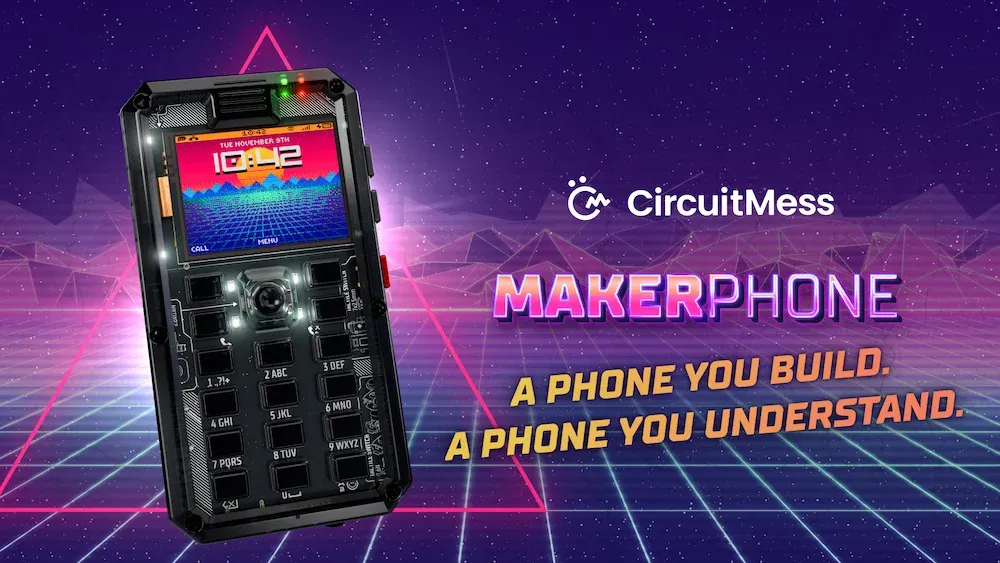
- Core: ESP32-S3 (Dual-core microprocessor).
- Connectivity: 4G LTE support (SIM card required).
- Display: 1.77-inch color display.
- Audio: 2W speaker and 3.5mm headphone jack.
- Interface: Physical keypad, modular add-on ports.
- Power: Rechargeable lithium battery with integrated power management.
The choice of 4G over 5G is a deliberate design decision. As the manufacturers note, this device is not intended to replace a daily-driver smartphone loaded with social media apps and high-bandwidth streaming services. Instead, it serves as a "functional utility" device. By limiting the connectivity to 4G, CircuitMess encourages users to view the device as a tool for communication and learning rather than a vessel for endless content consumption.
The Modular Revolution: More Than Just a Phone
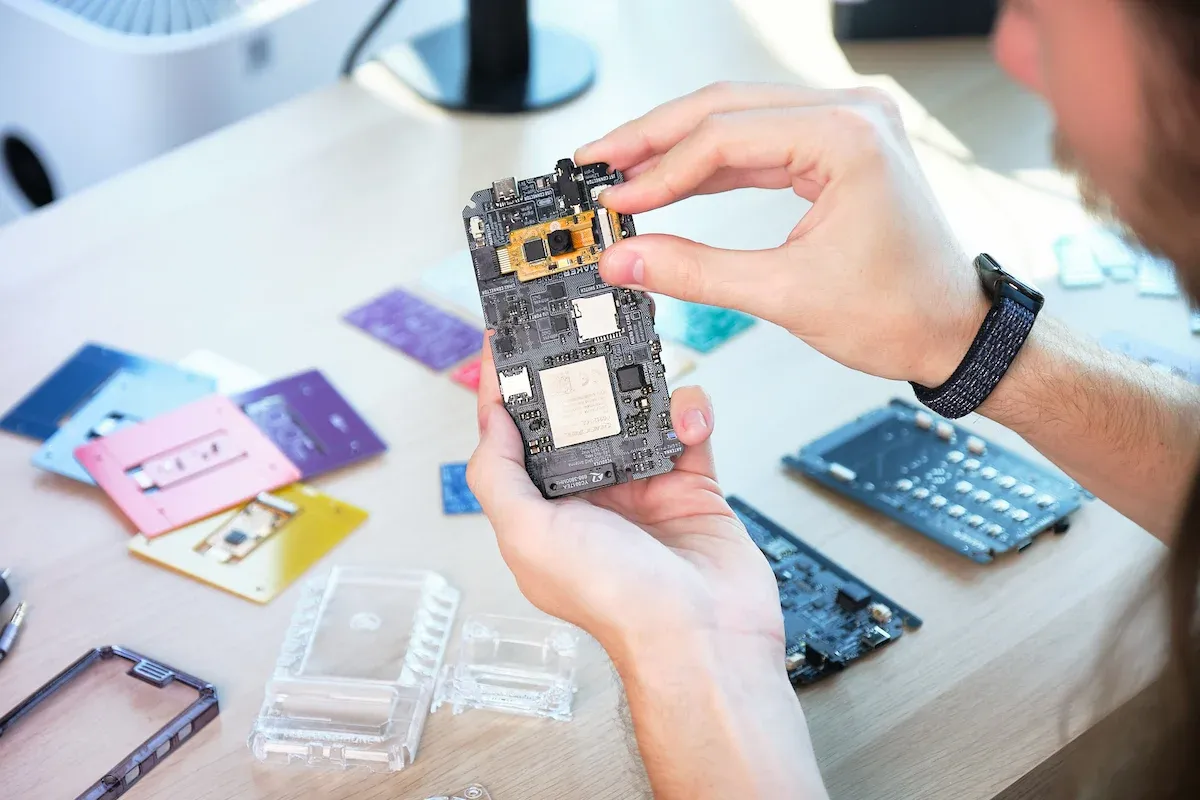
The standout feature of the MAKERphone 2.0 is its modular architecture. In the box, users find more than just the phone chassis; they receive a suite of peripherals designed to teach specific hardware concepts.

- Infrared Module: Allows the phone to function as a universal remote for legacy appliances.
- Camera Module: Enables basic photography and image processing projects.
- LED & Sensor Array: Includes temperature and humidity sensors, providing a foundation for environmental data logging.
- Perfboard: A "blank canvas" for hobbyists to solder or wire in their own custom sensors, effectively turning the phone into a mobile data acquisition unit.
This modular approach addresses the "lifecycle" problem of DIY tech. Once the assembly is complete, the project doesn’t end; it transitions into a platform for experimentation. Whether it’s adding a bespoke sensor or building a custom game, the phone adapts to the user’s growing skill set.
Coding in the Age of AI: The "VibeBoy" Integration
Perhaps the most controversial and innovative inclusion in the 2026 kit is "VibeBoy," an AI-assisted coding platform. For years, the barrier to customizing DIY hardware has been the steep learning curve of languages like C++ or MicroPython.
CircuitMess is leaning into the "vibe coding" trend—using Large Language Models (LLMs) to generate software logic. While purists might argue that this bypasses the traditional learning of syntax, the proponents of this approach argue that it lowers the barrier to creativity. By using natural language prompts, users can generate the code needed to make the phone perform specific tasks, allowing them to focus on the logic and architecture of their programs rather than debugging syntax errors. This democratizes the development process, enabling users of all skill levels to see their ideas manifest on the screen within minutes.
The "Smart" Peripheral: The MAKERband
Complementing the phone is the optional MAKERband, a programmable wearable that pairs via Bluetooth. It is not designed to track health metrics or provide notifications for your emails; rather, it is a wrist-worn development board. It allows users to experiment with wearable technology, custom watch faces, and localized Bluetooth communication, reinforcing the idea that the MAKERphone ecosystem is a comprehensive laboratory for personal electronics.
Implications: Why We Need "Anti-Smart" Devices
Why would anyone in 2026 choose a 4G-enabled, DIY-assembled brick over a sleek, ultra-fast 5G smartphone? The answer lies in the growing "digital minimalism" movement.
The MAKERphone 2.0 serves as a rebellion against the attention economy. It is a device that forces the user to be intentional. Because it is not optimized for social media feeds or high-frequency notifications, it acts as a "dumbed-down" smart device—or, more accurately, a "smarter" device. It is a phone for parents who want to keep their children connected without the baggage of addictive algorithms, and for adults who seek to reclaim their focus.
Furthermore, it addresses the "Right to Repair" and "Right to Understand" movements. When you build your phone, you know where the speaker is. You know how the screen connects. You know how the battery is secured. If something breaks, you don’t take it to a genius bar; you open the case and fix it yourself. This creates a psychological bond between the user and the tool that is completely absent in the mass-market smartphone industry.
Pricing, Availability, and the Risks of Crowdfunding
As of late 2026, the MAKERphone 2.0 is performing exceptionally well on Kickstarter, having surpassed its initial funding goals by nearly 800%.
- Early Bird Pricing: Starts at $199.
- Retail Pricing: Expected to climb to $169–$200 range depending on bundles and regional VAT.
- Timeline: Shipping is projected for mid-2027.
It is critical, however, to address the nature of the platform. Crowdfunding is not a retail store; it is an investment in a vision. Supply chain volatility, component shortages, and engineering hurdles can shift delivery dates significantly. While CircuitMess has a proven track record of fulfilling their previous campaigns, potential backers should approach the purchase as a contribution to a project they believe in, rather than a pre-order for a consumer good with guaranteed delivery timelines.
Conclusion: A Tool for the Future
The MAKERphone 2.0 is a testament to the fact that hardware is not dead; it is merely waiting for the right audience. By blending the tactile satisfaction of assembly with the power of modern AI and modular sensors, Albert Gajšak and his team have created a device that is as much a toy as it is a textbook.
For the student, it is a masterclass in electrical engineering. For the parent, it is a safe bridge to connectivity. For the hobbyist, it is an open-ended platform for innovation. In a world where our devices are increasingly mysterious, the MAKERphone 2.0 is a refreshing reminder that the most powerful technology is the kind we can understand, modify, and own—not just in name, but in its very atoms.