From postmarketOS to Nura: A New Era for Linux-on-Mobile
The landscape of open-source mobile computing has undergone a significant transformation. The project formerly known as "postmarketOS"—a Linux distribution renowned for its commitment to breathing new life into aging hardware—has officially rebranded as Nura. This transition marks the conclusion of a rigorous, year-long process to redefine the project’s identity, legal standing, and long-term vision.
For the community of enthusiasts, developers, and privacy advocates who have championed the project for years, this is more than just a name change; it is a strategic pivot intended to secure the project’s future in an increasingly crowded and litigious technological ecosystem.
The Genesis of the Rebrand: Why "postmarketOS" Had to Go
When the project first emerged, "postmarketOS" served as an accurate, descriptive moniker. It signaled exactly what the project aimed to do: provide a "post-market" operating system for devices that had been abandoned by their original manufacturers. However, as the project evolved from a niche hobbyist experiment into a serious platform—with manufacturers like PINE64 even shipping devices with the OS pre-installed—the name began to encounter structural limitations.
Linguistic and Practical Hurdles
The name "postmarketOS" was, by many accounts, a branding nightmare. Its length made it difficult to type and pronounce across diverse global languages. Furthermore, the arbitrary mid-word capitalization (“postmarketOS”) caused constant confusion, leading to widespread misspellings like "PostmarketOS," "Postmarketos," and the clunky "post-market OS."
The Trademark Liability
Perhaps more importantly, the project faced a severe legal bottleneck. Because "postmarketOS" is a descriptive term—effectively a phrase one might use to describe any software for old phones—it proved impossible to trademark. This left the project without legal recourse to protect its identity against bad actors or misrepresentation in the marketplace. For a project growing in professional significance, the inability to legally define its brand was a critical vulnerability that the core team could no longer ignore.
Chronology: A Year of Community-Driven Transformation
The journey to "Nura" was not a top-down executive decision but a democratic, community-led process that prioritized transparency and global inclusivity.
- March 2025: The project leadership officially initiated the search for a new identity. Recognizing the limitations of their current brand, they opened the floor to the community.
- Spring/Summer 2025: The "Name Change" initiative saw an influx of over 300 submissions. The project established a dedicated selection team, including notable contributors such as Pablo C. Gómez, Pan Ortiz, Ranny Bergamotte, and Sriram Ramkrishna.
- The Vetting Process: The selection team implemented a rigorous vetting protocol. They didn’t just look for a catchy name; they conducted a global linguistic review to ensure that the chosen name held no offensive or derogatory connotations in any major language or culture.
- Final Selection: From the 300+ submissions, the committee narrowed the candidates down to four finalists before the community and the selection team arrived at the consensus: Nura.
- September 2026: The official announcement was made during the project’s annual conference, marking the formal transition of all digital assets and branding to the Nura identity.
The Philosophy of Nura: Drawing from Ancient Strength
The name "Nura" is a contraction of Nuraghe—the enigmatic, millennia-old granite structures found across the island of Sardinia, Italy. These towers, dating back to 3000 BC, remain standing today, serving as a testament to durability and architectural foresight.
By adopting this name, the project draws a direct parallel between the enduring nature of these ancient stone structures and their own mission: to build software that lasts for a decade or more, resisting the planned obsolescence that defines the current smartphone industry. It is a symbolic commitment to sustainability.

The Significance of the .eco Domain
The project’s choice of the .eco top-level domain (TLD) is equally calculated. Unlike generic TLDs, the .eco domain is reserved specifically for organizations that can demonstrate a commitment to positive environmental impact. By moving to nura.eco, the project subjects itself to rigorous, enforceable policies against "greenwashing." This aligns perfectly with their mission to reduce electronic waste by keeping hardware functional long after manufacturers have ceased support.
The Current State of the Platform
As the project settles into its new identity, the team remains focused on the pragmatic, often challenging work of mobile Linux development. The current version, v26.06, emphasizes stability and community contribution.
Entry Points for New Users
The project acknowledges that Nura is currently best suited for users who are comfortable with the "learning curve"—individuals who are willing to participate in testing and development. For those looking to dive in, the team recommends starting with second-hand devices that have a high level of hardware support, specifically:
- Snapdragon 845-powered devices: (e.g., OnePlus 6 and 6T)
- Snapdragon 410/412-powered devices: (e.g., various legacy Samsung and Xiaomi models)
- Dedicated Linux hardware: The PINE64 PinePhone, PinePhone Pro, and the Purism Librem 5 remain primary targets for those seeking a more seamless experience.
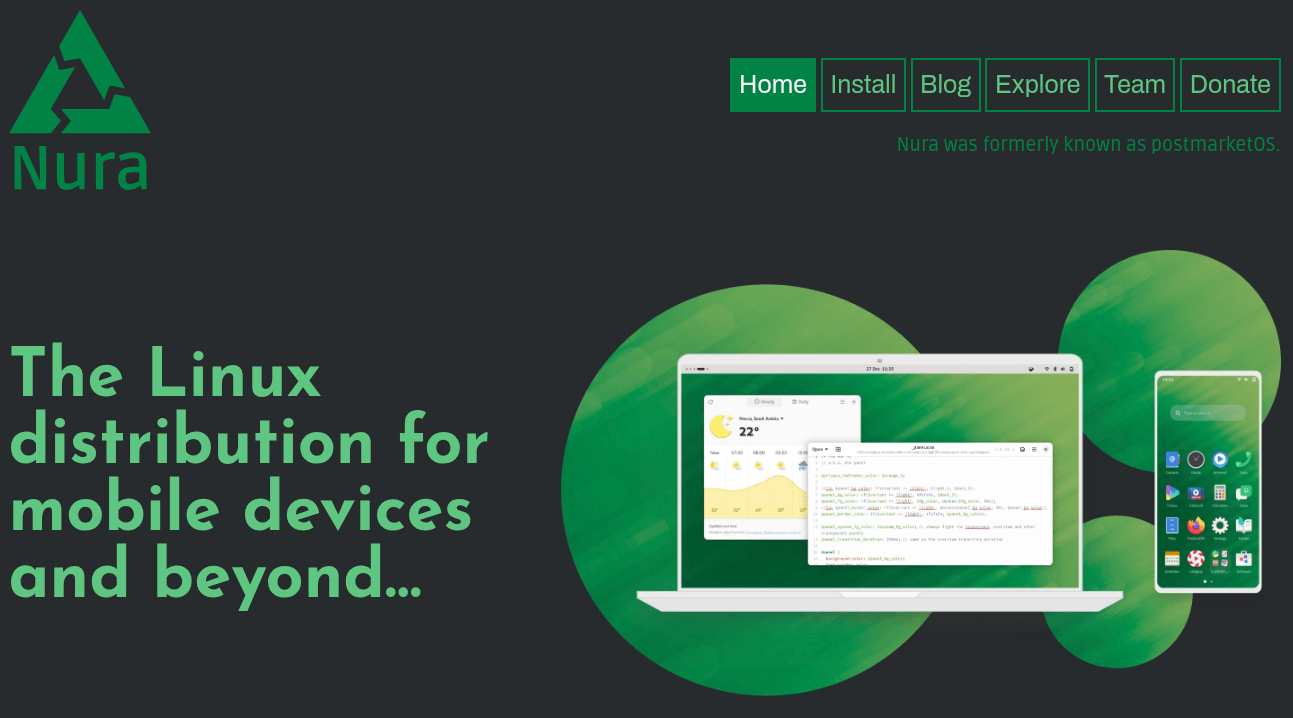
The official website now provides a streamlined dashboard, offering real-time status updates on device compatibility and development milestones.
Implications: A More Professional Future
The shift to Nura carries significant implications for the future of mobile Linux.
Legal and Commercial Viability
With a formal trademark application already filed (and currently undergoing the necessary administrative review with bodies like the USPTO and EUIPO), Nura is now on a path to becoming a protectable, professional entity. This legal grounding is vital for potential partnerships with hardware manufacturers, as it provides a stable, identifiable brand that can be legally licensed and protected.
Cultural Identity
The rebranding represents a maturation of the project. By moving away from a descriptive, functional name to an abstract, symbolic one, the project is signaling that it is no longer just a "fix for old phones," but a robust, independent operating system. It allows the developers to frame the project not just as a tool for repair, but as a movement toward digital longevity and sovereignty.
The Challenge Ahead
Despite the successful rebranding, the path forward remains complex. The fragmented nature of mobile hardware means that maintaining kernel stability across hundreds of devices is a Herculean task. The transition to Nura provides a fresh coat of paint and a clearer legal trajectory, but the project’s success will ultimately be measured by its ability to continue scaling its development team and improving the user experience for non-developers.

Conclusion: A Legacy Reborn
The transition from postmarketOS to Nura is a bold step forward for one of the most vital projects in the open-source community. By addressing the branding and legal hurdles that had begun to stifle their progress, the team has cleared the path for a new phase of growth.
As the project continues to advocate for a world where technology is built to last, the name "Nura" stands as a fitting emblem for their mission. Just as the Nuragic towers have withstood the erosion of time, the project aims to ensure that our digital tools remain functional, secure, and under the control of the user, regardless of what the original manufacturer decides to do.
For the open-source enthusiast, this is not the end of a project; it is the beginning of a more stable, legally secure, and philosophically grounded chapter in the history of Linux on mobile.