The Dawn of Mocka: GhostBSD’s Ambitious Journey Toward a Bespoke Desktop Environment
In the world of Unix-like operating systems, the BSD family has always occupied a distinct niche—prized for its stability, permissive licensing, and technical rigor. Among these distributions, GhostBSD has stood out as a user-friendly entry point into the FreeBSD ecosystem. However, a significant paradigm shift is currently underway. Eric Turgeon, the lead developer behind GhostBSD, has officially announced "Mocka," a ground-up desktop environment project intended to eventually supersede the long-standing MATE desktop integration that has defined the distribution’s visual identity for years.
This development marks a pivotal moment in GhostBSD’s history. It represents a transition from reliance on legacy desktop environments toward a modular, native ecosystem designed specifically for the needs of the modern BSD user.
Main Facts: What is Mocka?
The project, colloquially dubbed "Mocka," was born from a fortunate typographical error. Turgeon, while searching for naming inspiration related to the caffeinated beverage "Mocha," inadvertently typed "Mocka." The name stuck, and it has since become the banner under which a new suite of desktop components is being built.
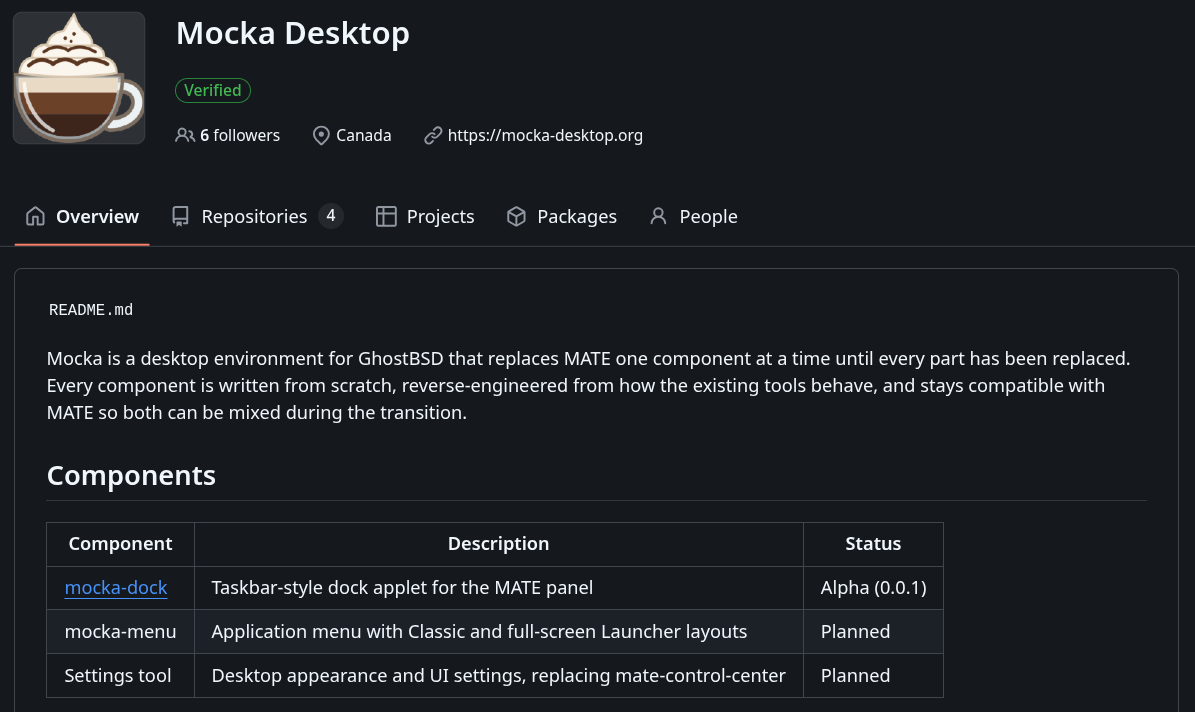
Crucially, Mocka is not a fork of an existing desktop environment. Unlike many Linux or BSD desktop projects that rely on heavy codebases from projects like GNOME or XFCE, Mocka is being constructed from the ground up. The development philosophy is strictly modular: Turgeon intends to replace GhostBSD’s MATE components one by one. This incremental approach allows the distribution to maintain stability while slowly transitioning to a native, purpose-built desktop experience.
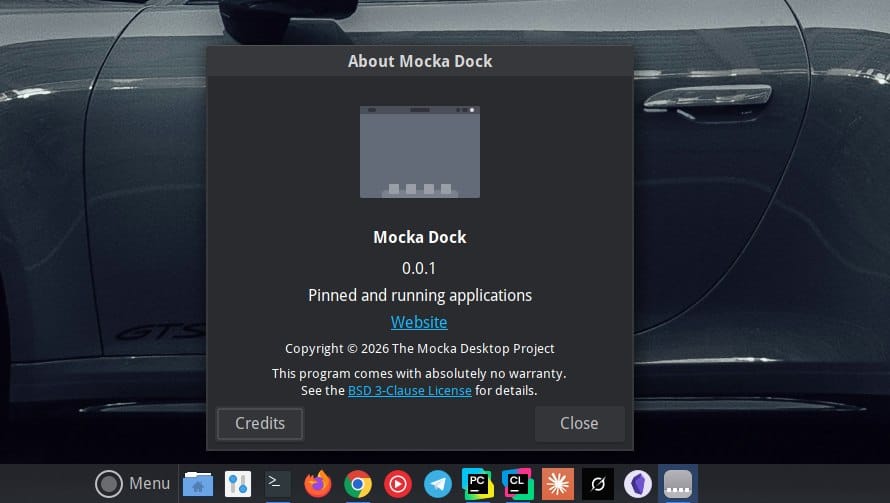
As of the current development phase, the project has released the "Mocka Dock," an alpha-stage taskbar applet. It is designed to function as a drop-in replacement for standard panel applets, offering core functionality such as application launching, thumbnail previews, focus management, and multi-window handling.
Chronology of the Transition
The seeds for this transition were sown earlier this year, driven by the broader evolution of display server technologies. In February, Turgeon faced a critical crossroads regarding GhostBSD’s graphical infrastructure. Recognizing that the MATE desktop environment—a continuation of the classic GNOME 2 paradigm—was not keeping pace with the industry’s shift toward the Wayland display protocol, Turgeon made the strategic decision to pivot to XLibre. This move ensured that GhostBSD’s X11 sessions remained robust and functional while the wider community grappled with Wayland compatibility.
This proactive stance on display infrastructure laid the intellectual groundwork for Mocka. If the distribution was already willing to customize its graphical backbone to ensure stability, it was only a matter of time before the interface layer itself would require a similar overhaul.
Following the XLibre transition, development on Mocka began in earnest. The project’s GitHub repository serves as the central nervous system for these efforts, documenting the shift from theory to code. With the recent unveiling of the Mocka Dock, the project has moved from the conceptual "whiteboard" phase into the hands of early testers, signaling that the replacement of the MATE stack has officially begun.
Supporting Data and Technical Architecture
The technical architecture of Mocka is defined by its commitment to modularity and interoperability. The project currently utilizes the Meson build system, a choice that emphasizes efficiency and cross-platform compatibility—traits essential for any project aiming to thrive within the BSD ecosystem.
Key Components Under Development:
- Mocka Dock: The first functional milestone. It is designed as an applet for the existing panel, allowing users to test the new technology without breaking their current desktop configuration.
- Mocka Menu: Currently in the planning phase, this component is designed to handle application categorization, global search, and input integration. The
PLAN.mdfile in the project repository suggests a focus on low-latency response times and clean, native integration with the dock. - Unified Settings Application: Perhaps the most ambitious goal of the project is the creation of a centralized settings hub. This application aims to consolidate network configuration, power management, appearance, and keyboard layout settings into a single, cohesive interface. Currently, these tasks are often scattered across multiple disparate utilities in traditional BSD desktop setups.
The developers have made a conscious decision to ensure that early Mocka components remain compatible with the MATE desktop environment. This "mix-and-match" strategy is a tactical masterstroke, allowing users to integrate the new dock or menu into their existing environment, thereby providing a feedback loop that will refine the software before it becomes the default experience.

Official Stance and Community Integration
Eric Turgeon has been transparent about the project’s scope. For the average GhostBSD user, there is no immediate pressure to change. The current stable releases remain unaffected, and the transition will be gradual. Turgeon’s communication emphasizes that the project is in a heavy state of iteration; the "Mocka" name itself reflects the organic, human-centric nature of this development.
The integration strategy is straightforward: as each component reaches maturity, it will be packaged and made available for manual installation via the GhostBSD package manager. Users are currently encouraged to test the Mocka Dock by adding it to their existing panels, provided they possess the technical acumen to build from source or install early-access packages.
By building from scratch, the team avoids the "technical debt" often associated with maintaining forks of aging codebases. This choice is not merely an aesthetic preference; it is a long-term sustainability play. By controlling the entire stack, the GhostBSD team can ensure that the desktop environment is optimized specifically for the FreeBSD kernel and its unique security features.
Implications for the BSD Ecosystem
The birth of Mocka carries profound implications for the future of GhostBSD and the wider BSD community.
1. Independence from Legacy Dependencies
For years, BSD desktop environments have struggled to balance the need for modern features with the burden of maintaining massive, aging codebases derived from GTK or GNOME. By choosing to build Mocka from scratch, GhostBSD is declaring independence from these legacy cycles. This allows for a leaner, more performant desktop that can be tailored precisely to the distribution’s requirements.
2. The "GhostBSD Difference"
GhostBSD has long occupied a unique space by offering a "plug-and-play" experience on top of the powerful FreeBSD foundation. Mocka reinforces this identity. It signals that GhostBSD is not content to simply be "FreeBSD with a desktop wrapper"; it is evolving into a full-fledged operating system experience where every layer—from the kernel to the GUI—is curated for the user.
3. A New Standard for Desktop Development
If Mocka succeeds, it could serve as a blueprint for other niche distributions. The project demonstrates that with a modular, component-based approach, a small team can tackle the massive task of building a desktop environment without needing the massive resources of a corporate-backed entity. The "reverse-engineering" approach to MATE’s features ensures that users do not lose functionality while moving to the new system, lowering the barrier to entry for the eventual migration.
4. Challenges Ahead
The road to a fully functional desktop environment is notoriously difficult. Challenges such as theme consistency, accessibility (a11y) support, and long-term maintenance will test the project’s resolve. The success of Mocka will ultimately depend on the team’s ability to attract contributors and maintain the momentum established by the early release of the dock.
Conclusion
The Mocka project is more than just a replacement for a taskbar; it is an assertion of agency. By reclaiming the desktop experience, Eric Turgeon and the GhostBSD community are ensuring that their distribution remains a viable, modern, and highly performant alternative to the mainstream desktop environments that dominate the Linux and BSD landscapes.
While the project is still in its infancy, the trajectory is clear. With a modular architecture, a focus on modern build tools, and a deliberate, component-by-component replacement strategy, Mocka is poised to redefine the GhostBSD user experience. For those who value the stability of BSD but have been waiting for a desktop environment that feels truly native, the development of Mocka is a story worth following closely.
As the project matures, the transition from MATE to Mocka will likely be viewed as the moment GhostBSD truly came into its own, shedding the limitations of the past to embrace a faster, more efficient, and undeniably bespoke future. Whether you are a long-time FreeBSD enthusiast or a newcomer to the world of BSD, the evolution of Mocka serves as a reminder that the most exciting innovations in open-source often happen in the quiet, persistent work of those building from the ground up.