The Evolution of AI Assistance: Inside the Philosophy of Android Skills
By Editorial Staff, based on insights from Jose Alcérreca, Developer Relations Engineer at Android.
Since the public launch of the official Android Skills repository in April, the developer community has engaged in a robust dialogue regarding the future of AI-assisted coding. As large language models (LLMs) continue to integrate into the daily workflows of software engineers, the question of how to best provide these models with domain-specific knowledge has become paramount. Jose Alcérreca, a Developer Relations Engineer at Android, recently pulled back the curtain on the project’s internal methodology, offering a roadmap for how developers should—and should not—utilize these digital assistants.
The Core Philosophy: Why "Less is More"
The most significant takeaway from the Android Skills project is the intentional constraint placed on the number of official skills released. To the uninitiated, it might seem logical to provide an AI with a comprehensive library of every possible instruction, snippet, and API reference. However, the Android team operates under a strict "Knowledge Gap" philosophy.
The Problem of Token Bloat
Modern LLMs, such as Gemini, arrive at the desktop with a baseline of world-class knowledge. When a developer installs a "skill," they are essentially injecting a set of instructions into the model’s context window. Each installed skill consumes between 100 and 200 tokens of baseline context. If that skill is triggered, the overhead can quickly balloon into the thousands of tokens.
"Hoarding basic skills is both counterproductive and expensive," notes Alcérreca. By forcing an AI to read instructions for tasks it already understands—such as basic Kotlin syntax or fundamental Compose layouts—developers are not just wasting computational tokens; they are cluttering the model’s "thought process" with redundant information, which can degrade the quality of the output.
Targeting the Cutting Edge
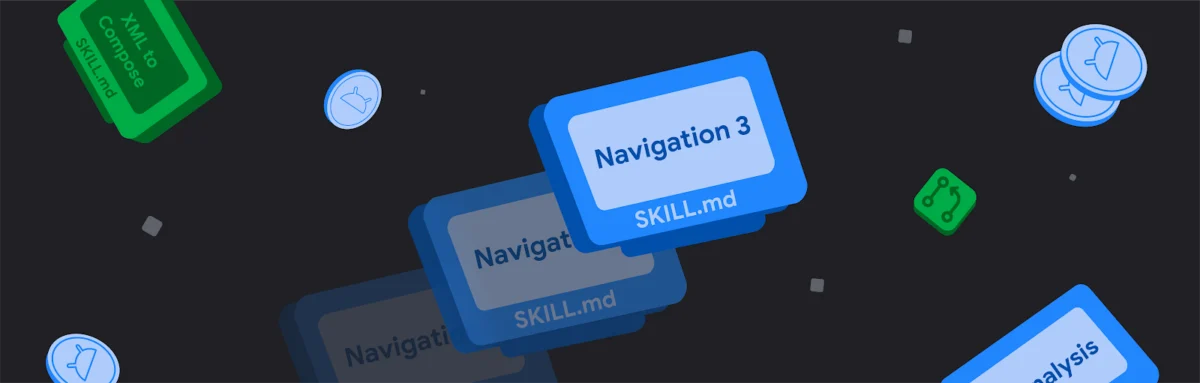
Official skills are currently reserved for the "bleeding edge"—fast-moving targets where state-of-the-art (SOTA) models have not yet been fully grounded. This includes technical frontiers like Android Gradle Plugin (AGP) 9, Navigation 3, advanced Camera APIs, and Perfetto SQL. If the information is already well-documented and widely integrated into the model’s training data, a skill is deemed redundant.
Chronology: From Launch to Maturity
- April: The Android Skills repository is officially launched on GitHub, providing a centralized location for specialized AI instructions.
- Post-Launch: The Android team observes rapid adoption and community experimentation, leading to a surge in requests for "general" skills.
- The Review Phase: Internal data collection reveals that many developers were installing excessive skills, resulting in higher latency and decreased accuracy in complex tasks.
- Present Day: The project shifts toward a refined framework of evaluation, emphasizing the use of the official Android Knowledge Base over individual, disparate skill files.
Evaluating the "Integration Test" for AI
One of the most impressive aspects of the Android Skills project is its rigorous evaluation framework. Before any skill is published, it must pass a battery of tests that effectively act as integration tests for AI behavior.
The Anatomy of an Eval
The evaluation process is designed to prove that a skill delivers tangible value. A skill is deemed successful only if the AI performs a task correctly with the skill, but fails or performs sub-optimally without it. For example, when testing a skill related to Wear OS development, the team uses a specific prompt requiring the implementation of a HorizontalPagerScaffold.
The criteria for success are precise:
- Project Buildability: The generated code must compile successfully using
./gradlew assembleDebug. - Semantic Accuracy: The code must utilize specific, modern APIs (e.g.,
AnimatedPage) rather than deprecated or generic alternatives.
These evals are conducted in Android Studio using the latest Gemini Flash and Pro models. Furthermore, because these tests have access to the official Android Knowledge Base, any skill that simply "re-states" existing documentation is immediately rejected. The philosophy is clear: if the model can find the answer in the docs, it doesn’t need a skill.

Supporting Data: The Efficiency of the Knowledge Base
The Android team strongly encourages developers to shift their reliance from custom skills to the Android Knowledge Base. Whether working through Android Studio or the Android CLI, the Knowledge Base serves as the "single source of truth."
Motivating the Model
For developers who find their AI assistants suffering from "overconfidence"—where the model hallucinates or uses outdated API patterns—the solution is not necessarily more skills, but better prompting. Alcérreca suggests adding a simple directive to your AGENTS.md file: "Always consult the official Android documentation when dealing with Android APIs." This simple instruction often yields better results than installing dozens of third-party skill files, as it forces the agent to reference verified, up-to-date documentation rather than relying on its internal, potentially stale, training weights.
Official Responses to Community Challenges
Why Pull Requests are Restricted
A common point of contention among the open-source community is the restriction on direct pull requests (PRs) for the Android Skills repository. The team has addressed this directly: the evaluation framework relies on proprietary internal infrastructure. Without this specific environment, the Android team cannot guarantee the quality or compatibility of community-submitted code.
Instead, the team encourages an open feedback loop. Developers are invited to file issues on GitHub to report bugs, request features, or suggest optimizations. This approach ensures that while the codebase remains curated, the direction of the project is guided by the real-world needs of the developers using it.
The Risks of "Skill Hoarding"
The team issued a stern warning regarding the proliferation of third-party "skill packs." Many repositories found on the internet contain hundreds of skills that appear to be AI-generated in bulk. These repositories often lack the rigorous evaluation metrics used by the Android team and may contain biased, deprecated, or even malicious instructions. "I personally wouldn’t trust repositories containing dozens or hundreds of Android skills," Alcérreca cautions.
Implications: The Future of "Deprecation-Driven" Development
The ultimate goal for the Android Skills project is, counter-intuitively, deprecation.
The Karpathy Thesis
Drawing inspiration from AI researcher Andrej Karpathy, the Android team views these skills as a temporary scaffold. As SOTA models continue to evolve, they will ingest the documentation and patterns currently found in these skills.
In this new paradigm, "skills" will eventually become obsolete. The Android team has committed to a cycle of re-evaluation: when a new model is released, they will re-test existing skills against it. If the new model can handle the task natively without the extra context, the skill will be retired.
What This Means for Developers
For the Android developer, this implies a shift in mindset. Instead of building a massive library of AI "plugins," developers should focus on:
- Deepening their understanding of LLM prompting to leverage existing knowledge bases.
- Curating a small, high-quality set of skills for truly novel or highly specific niche technologies.
- Prioritizing official, verified sources over bulk-downloaded, unverified scripts.
As we look toward the future, the integration of AI in software development will move away from the "tool-heavy" approach of today and toward a more streamlined, model-native experience. The Android Skills project serves as a crucial bridge—a disciplined, high-quality temporary measure that is actively working toward its own eventual irrelevance, ultimately resulting in a cleaner, faster, and more efficient development environment for everyone.