The Eyes of the Grid: Unlocking the Critical Role of High-Voltage Current Transformers
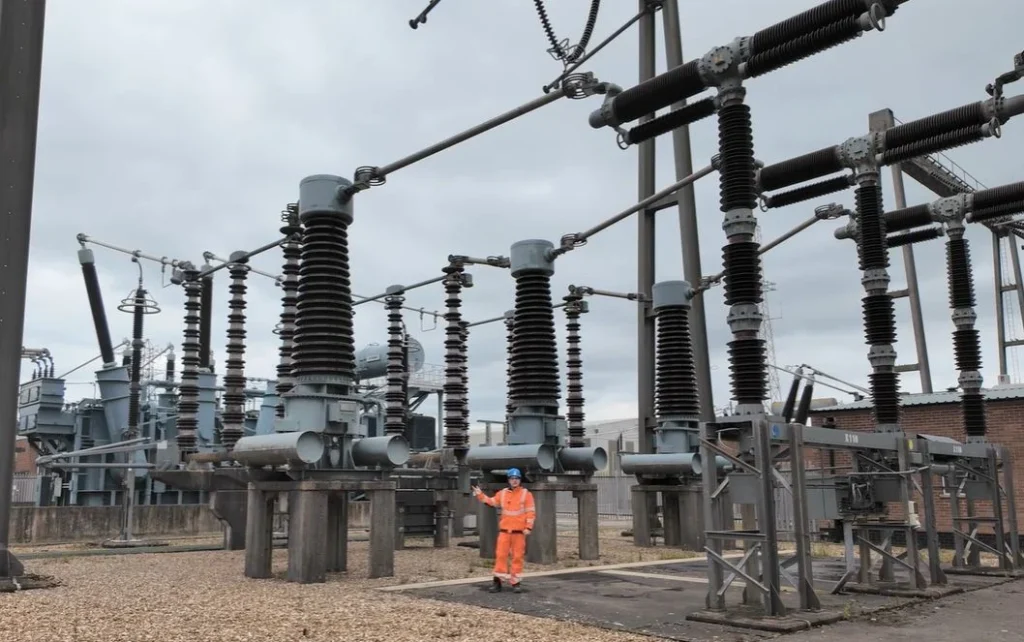
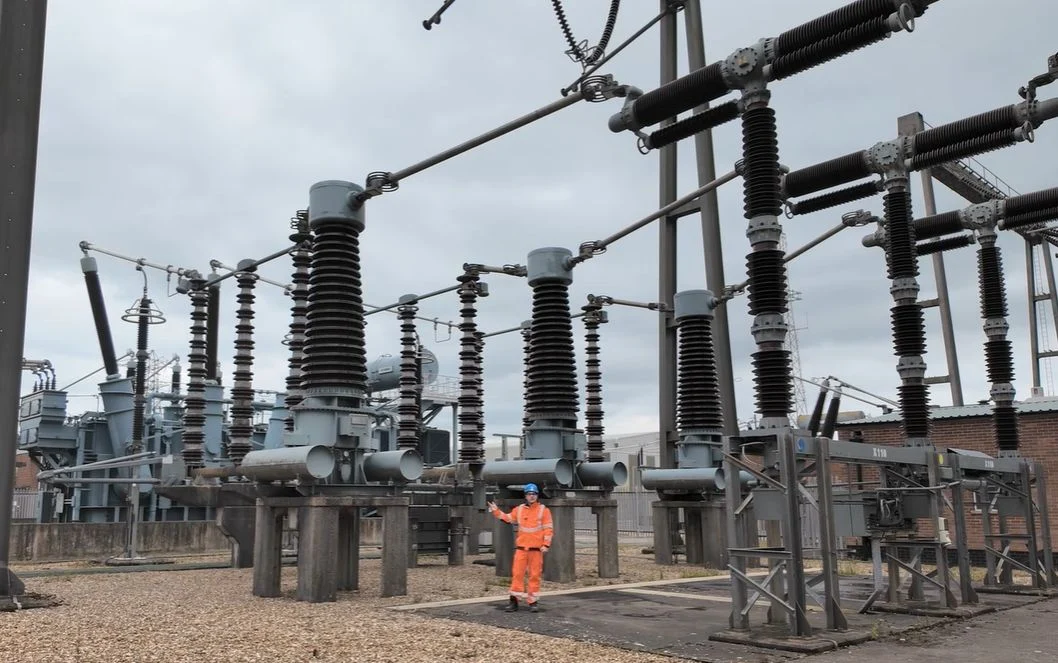
In the sprawling, interconnected web of the modern electrical grid, visibility is synonymous with stability. While the general public perceives the grid as a seamless flow of energy, engineers operate under the constant necessity of monitoring currents and voltages that defy conventional measurement techniques. At the heart of this challenge lies the Current Transformer (CT), an indispensable component that bridges the gap between high-voltage, high-amperage transmission lines and the sensitive, low-voltage control systems that govern our infrastructure.
As detailed by industry expert Jordan Taylor—widely known in technical circles as "The Electric Brit"—the complexities of grid-level current measurement extend far beyond basic induction. When dealing with currents exceeding 5,000 amperes (5 kA), the margin for error effectively vanishes. Mastering these systems is not merely an engineering exercise; it is a fundamental requirement for maintaining the reliability of modern civilization.
Main Facts: The Anatomy of Grid Monitoring
At its simplest, a Current Transformer is a measurement device designed to provide a scaled-down representation of the current flowing through a high-voltage conductor. However, at the transmission level, the CT serves a dual purpose: measurement and protection.
Galvanic Isolation and Safety
The primary objective of a CT in a high-voltage environment is galvanic isolation. By utilizing electromagnetic induction, the CT creates a secondary circuit that is physically disconnected from the high-voltage primary line. This isolation protects sensitive digital relay equipment, SCADA (Supervisory Control and Data Acquisition) systems, and, most importantly, human operators from the lethal potential of the transmission line.
Core Functions of the CT
- Over-Current Protection (OCP): CTs detect surges that could damage transformers or transmission lines, signaling breakers to isolate faulty segments.
- Over-Voltage Protection (OVP): While CTs focus on current, they work in tandem with Voltage Transformers (VTs) to ensure power quality.
- Differential Protection: This is the grid’s "security system." By comparing the current entering a zone with the current leaving it, CTs can detect minute leaks or internal faults, including damage within the CT windings themselves.
Chronology: The Evolution of Grid Instrumentation
The history of electrical monitoring is a trajectory of increasing scale. In the late 19th century, during the "War of Currents," monitoring was largely mechanical and localized. As the grid expanded to span continents in the mid-20th century, the need for centralized, automated monitoring became critical.
The Era of Electromechanical Relays (1950s–1980s)
Early protection schemes relied on heavy, electromagnetic relays. These devices were robust but limited in precision. CTs were designed with heavy iron cores, prone to saturation, meaning they could only provide accurate data within a narrow dynamic range.
The Digital Transformation (1990s–2010s)
The introduction of microprocessor-based Intelligent Electronic Devices (IEDs) revolutionized the grid. Suddenly, the signals from CTs could be digitized and processed in real-time. This allowed for "smarter" tripping decisions, where relays could distinguish between a temporary lightning strike-induced surge and a permanent short circuit.
The Modern Frontier (2020–Present)
Today, the focus is on the integration of wide-area monitoring systems (WAMS). With the massive influx of intermittent renewable energy sources, the grid has become more volatile. Modern CTs are now required to maintain high fidelity under non-sinusoidal conditions caused by power electronics, such as solar inverters and wind turbine controllers.
Supporting Data: The Physics of Precision
The engineering challenge of the CT lies in its imperfections. As Taylor highlights, no transformer is truly ideal. Several factors complicate the measurement of massive currents:
Core Saturation
A CT relies on a magnetic core to transform the primary current. If the primary current becomes too high or contains a significant DC component (a common issue in modern grids), the core may saturate. Once saturated, the secondary output no longer scales linearly with the primary input. If a relay relies on this data to make a tripping decision during a fault, a saturated CT could lead to a "blind spot," resulting in a failure to isolate a catastrophic fault.
The Burden Problem
The "burden" refers to the electrical load connected to the secondary side of the CT. This includes the resistance of the wiring and the impedance of the relays. If the burden is too high, it forces the CT to produce more voltage than its design allows, leading to distortion and potential insulation breakdown. Engineers must meticulously calculate the total impedance to ensure the CT operates within its "accuracy class."
Illicit Tapping and Fault Detection
Because CTs are so precise, they are also the primary tools for detecting electricity theft. When power is "tapped" from a line, the differential protection scheme detects an imbalance between the current sent and the current received at the destination. This loss-detection capability is a cornerstone of utility revenue protection programs worldwide.
Official Responses and Industry Standards
Regulatory bodies, such as the IEEE (Institute of Electrical and Electronics Engineers) and the IEC (International Electrotechnical Commission), provide rigorous standards for CT performance. These standards classify transformers based on their "knee-point voltage"—the point at which the CT begins to saturate.
Utility companies globally have adopted "Smart Grid" mandates, requiring the replacement of aging, analog-only CTs with advanced "Optical Current Transformers" in high-voltage substations. Unlike traditional CTs, which use copper windings and iron cores, optical sensors use the Faraday Effect—where light polarization rotates in the presence of a magnetic field—to measure current. This provides near-perfect linearity and total immunity to electromagnetic interference.
"The industry is moving toward non-conventional instrument transformers," says one industry consultant. "The goal is to eliminate the risks of core saturation and to provide data that is natively digital, allowing for seamless integration into the next generation of predictive maintenance algorithms."
Implications: The Reliability of Modern Society
The reliance on CTs is a testament to the invisible complexity of our infrastructure. When these systems function correctly, they are never noticed. When they fail, the consequences are immediate and visible—a flickering light, a localized blackout, or, in the worst-case scenario, the catastrophic failure of a multi-million dollar transformer.
The Renewable Integration Challenge
As we transition to a decarbonized energy mix, the grid is losing the "inertia" provided by large, rotating turbines. Inverter-based resources (IBR) respond to grid faults in milliseconds. If our CTs and protective relays cannot keep up with this speed, the stability of the entire grid is at risk. Ensuring that our monitoring systems have the bandwidth and resolution to interpret high-frequency transients is the primary engineering hurdle of the 2020s.
Cybersecurity and Grid Integrity
The digitization of CT data has also introduced a new attack surface. If the data from a CT is spoofed or manipulated, an attacker could potentially trick a relay into tripping, causing a widespread outage. Consequently, the industry is investing heavily in "secure-by-design" communication protocols for substation data, ensuring that the eyes of the grid cannot be deceived.
Conclusion: The Unsung Hero of the Grid
Jordan Taylor’s explainer serves as a vital reminder that our modern, high-tech society is built upon a foundation of fundamental physics. We often celebrate the massive generators and the sprawling transmission towers, yet the most critical components are the small, often unassuming transformers that tell the grid what is happening.
Without the Current Transformer, the grid would be effectively blind. It would have no way to "see" the energy moving through its veins, no way to protect itself from internal injury, and no way to ensure the safe, reliable delivery of power to our homes and businesses. As we push toward a more complex, decentralized, and electrified future, the art and science of current monitoring will remain the silent, steady heartbeat of the national power grid.
In the final analysis, the reliability of our power supply is directly proportional to our ability to measure it. Through the precise, disciplined application of electromagnetic induction, we continue to keep the lights on—not just through brute force, but through the sophisticated, constant oversight provided by the humble Current Transformer.