Beyond the Proprietary: The Rise of Open-Source Biometric Hardware
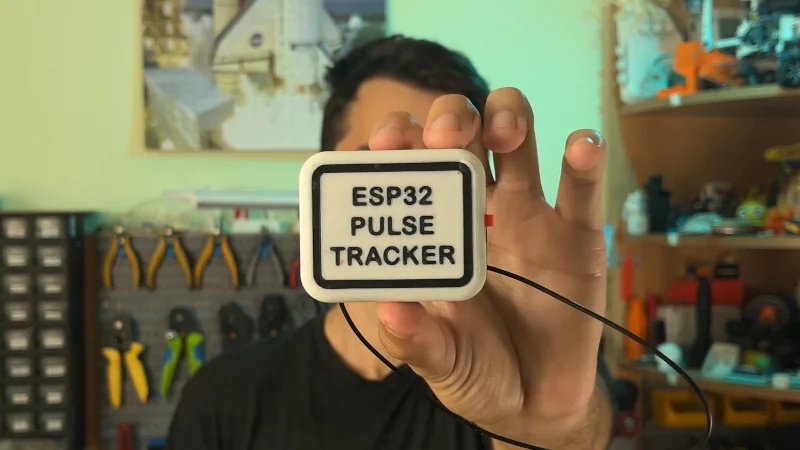
In the modern era of fitness, the quantified self has moved from the fringes of hobbyist experimentation to the mainstream. Millions of gym-goers rely on chest-mounted heart rate monitors, sleek devices that track cardiac performance with clinical precision. Yet, for all their utility, these devices are almost exclusively “black boxes”—proprietary ecosystems that lock data behind manufacturer-specific apps and opaque firmware.
A significant shift is occurring, however, championed by developers like Milos Rasic. His recent project, the OpenHRStrap, represents a pivotal moment in the intersection of fitness technology and open-source hardware. By providing a fully transparent, DIY-accessible alternative to commercial monitors, Rasic is not merely building a gadget; he is challenging the monopoly that private corporations hold over our most intimate physiological data.
Main Facts: The OpenHRStrap Architecture
The OpenHRStrap is a masterclass in minimalist engineering. At its core, the device is designed to replicate the functionality of high-end Bluetooth heart rate monitors while remaining entirely reproducible by an enthusiast with basic soldering skills.
The hardware architecture relies on two primary components:
- Signal Acquisition: The system utilizes the AD8232, a specialized single-lead heart rate monitor front-end. This integrated circuit is designed to extract, amplify, and filter small biopotential signals in the presence of noisy conditions—an essential requirement for the high-motion environment of a gym.
- Processing and Connectivity: The data is processed by a Seeed Studio XAIO ESP32 board. This micro-controller provides the necessary Bluetooth Low Energy (BLE) capabilities to transmit heart rate data to external loggers, smartphones, or dedicated sports watches.
Power management is handled by a 3.7V lithium-ion cell, boosted to a stable 5V output. While the current design intentionally omits an onboard charge controller—a decision aimed at keeping the hardware footprint small and the complexity manageable—the software ecosystem is built on the Arduino IDE, allowing for rapid iteration and broad community support.
Chronology: From Concept to Open-Source Reality
The development of the OpenHRStrap did not happen in a vacuum. It is the culmination of years of iterative work in the medical hardware space.
- Early 2024: Initial prototyping began as an exploration into the limitations of commercial wearables. Rasic identified that most proprietary devices were difficult to repair and nearly impossible to modify for custom research applications.
- Late 2024: The shift from custom PCB designs to the XAIO ESP32 allowed for a significant reduction in size, moving the project from a "benchtop experiment" to a "wearable form factor."
- Early 2026: Rasic participated in the Hackaday Europe conference, where he presented his research on the inaccuracies of mass-market blood pressure monitors. This presentation galvanized his commitment to creating open-source medical devices, highlighting the need for transparency in health-tracking technology.
- Mid-2026: The official release of the OpenHRStrap repository on GitHub marked the transition from a personal project to a community-driven initiative. The documentation now serves as a blueprint for developers to contribute their own modifications, such as adding advanced data filtering or integrating alternative sensor modules.
Supporting Data: Why "Open" Matters in Biometrics
The market for heart rate monitors is saturated with low-cost, mass-manufactured options. Critics often ask: Why build one when you can buy one for twenty dollars? The answer lies in the data.
The Problem of Proprietary Data
When a user wears a proprietary chest strap, the data transmitted is often encrypted or formatted in a way that necessitates the use of the manufacturer’s app. These apps act as gatekeepers, often pushing users toward subscription-based cloud services. If a company decides to shut down its servers or update its firmware to block third-party access, the user’s hardware effectively becomes an electronic brick.
The Technical Advantage
The OpenHRStrap provides raw access to the heart rate signal. For researchers, coaches, or data enthusiasts, this is invaluable. It allows for:
- Raw HRV Analysis: Heart Rate Variability (HRV) is a vital metric for recovery and stress, yet many consumer apps apply heavy smoothing algorithms that obscure the raw data.
- Custom Integration: Because the code is open, users can integrate the strap into custom projects—such as a smart home system that adjusts gym lighting based on the user’s intensity or a specialized research study tracking heart rate during sleep without privacy concerns.
Official Responses and Industry Reception
The response from the open-source community has been overwhelmingly positive, though the traditional industry remains predictably silent.
In his keynote at Hackaday Europe, Rasic emphasized that "the goal isn’t to put Garmin or Polar out of business, but to ensure that the patient—the user—remains the ultimate owner of their physiological data." Experts in the open-hardware community have praised the project for its accessibility, noting that the choice of the Arduino IDE makes the project approachable for undergraduate engineering students and hobbyists alike.
Some industry analysts have noted that the lack of an integrated charge controller might deter "casual" users, but proponents argue this is a feature, not a bug. By forcing the user to understand the power system, the project serves an educational purpose, demystifying the electronics that we carry on our bodies every day.
Implications: The Future of Wearable Medicine
The implications of the OpenHRStrap extend far beyond the gym. We are entering an age where health tracking is moving from "optional lifestyle accessory" to "essential diagnostic tool."
Democratizing Medical Hardware
If we can trust an open-source project to track our heart rate, could we eventually trust open-source devices to monitor glucose, blood oxygenation, or even EKG signals? The work being done by Rasic and his peers suggests that the answer is yes. By lowering the barrier to entry, these projects encourage a level of scrutiny that proprietary devices rarely receive. When a community of thousands can inspect the code, security vulnerabilities and data-privacy loopholes are discovered and patched at a rate that private corporations cannot match.
Sustainability and the Right to Repair
The current model of "throwaway fitness tech" is environmentally unsustainable. Most proprietary chest straps are sealed units; when the battery dies or a small sensor fails, the entire device is discarded. The OpenHRStrap, with its modular design, inherently promotes the "Right to Repair." Users can swap out the battery, replace the sensor module, or re-case the electronics in a 3D-printed housing, significantly extending the lifespan of the device.
Ethical Data Ownership
Perhaps the most profound implication is ethical. In an age of data brokerage, where fitness data is increasingly commodified and sold to insurance companies or advertisers, owning the hardware that generates the data is the first line of defense. By choosing an open-source monitor, the user ensures that their heartbeat—a uniquely private biological rhythm—remains their own.
Conclusion
The OpenHRStrap is a modest project by design, but a radical one by intent. It asks us to look at the devices we strap to our chests not as passive accessories, but as technological partners in our own health journeys. As Milos Rasic continues to push the boundaries of what is possible with open-source medical hardware, he reminds us that transparency is not just a software ideal—it is a physiological necessity.
Whether you are a software developer looking to contribute to the repository, a student eager to understand how a heart rate sensor filters noise, or simply a privacy-conscious athlete, the OpenHRStrap provides a path forward. It is a testament to the idea that when we build our tools together, we gain more than just data; we gain agency over our own biology. In the landscape of future technology, the most powerful tool isn’t the one that is most expensive, but the one that is most understood.