The State and Future of the Global Software Testing Services Market: Growth, Trends, and Career Outlook
As the digital economy continues to expand at a relentless pace, the software underpinning modern business operations has grown increasingly complex. In response, the technology sector has undergone a profound paradigm shift regarding how quality is measured, managed, and executed. Long gone are the days when software testing was viewed as an afterthought—a final, reactive hurdle before a product launch. Today, software testers and quality assurance (QA) analysts are foundational pillars of cross-functional product teams.
This comprehensive analysis explores the explosive growth of the global software testing services market, the technological trends reshaping the industry, and the evolving landscape of career opportunities for QA professionals worldwide.
Main Facts: A Billion-Dollar Growth Trajectory
Recent market research underscores a booming era for the software testing industry. Driven by the rapid proliferation of mobile applications, the demand for rigorous security protocols, and the integration of advanced technologies, the global market is experiencing unprecedented financial expansion.
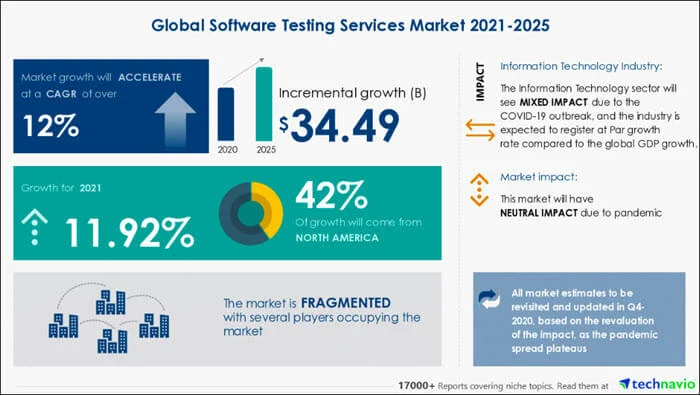
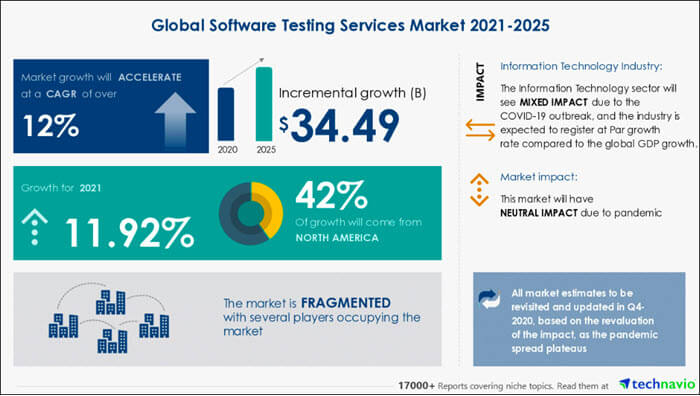
According to projections highlighted by PR Newswire, the global software testing services market is anticipated to grow by an astounding $90 billion between 2021 and 2030, expanding at a robust Compound Annual Growth Rate (CAGR) of 12.39%. Complementing this outlook, data from Global Market Insights notes that the market already surpassed the $40 billion threshold in 2020 and is projected to maintain a steady 7% CAGR through 2030.

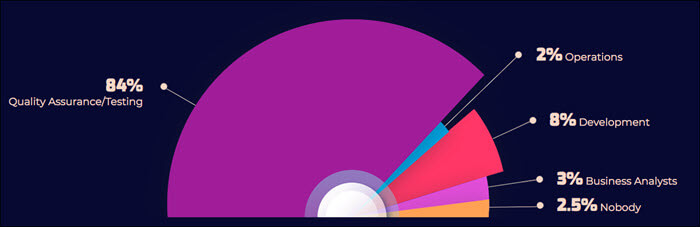
Furthermore, organizational behaviors reflect this valuation. Surveys conducted by Tricentis reveal that in over 80% of organizations, dedicated testers and QA personnel execute functional test automation. This high rate of ownership highlights the specialized nature of modern software validation and the undeniable value companies place on automated accuracy.
Chronology: The Evolution of Quality Assurance
To understand where the software testing industry stands today, it is essential to trace its evolution over the past decade, moving from manual validation to intelligent, continuous automation.
- Early 2010s (The Manual Era): Software testing was predominantly manual, time-consuming, and siloed from the core development cycle. Testing occurred late in the software development lifecycle (SDLC), often creating bottlenecks.
- Mid-2010s (The Rise of Agile and DevOps): As organizations transitioned to Agile and DevOps methodologies, the need for speed forced a reevaluation of testing. Continuous integration and continuous delivery (CI/CD) made manual testing unsustainable, sparking the mass adoption of test automation frameworks like Selenium and JUnit.
- Late 2010s (The Automation Boom): Automated testing became mainstream. Organizations began shifting left—introducing testing earlier in the development process. Testing budgets formally integrated into broader software engineering allocations.
- 2020–2021 (The Intelligent Automation Era): The COVID-19 pandemic accelerated digital transformation globally. Artificial Intelligence (AI) and Machine Learning (ML) began penetrating the QA space, leading to intelligent automation, predictive analytics, and advanced cybersecurity testing frameworks.
- 2021 and Beyond (The Current Horizon): Quality assurance has evolved into a strategic business driver. Modern QA focuses heavily on codeless automation, Internet of Things (IoT) testing, blockchain verification, and AI-driven performance engineering.
Supporting Data: Key Insights and Industry Benchmarks
Industry reports from prominent technology and research groups offer a granular look at the tools, methodologies, and financial commitments shaping the modern testing landscape:
Market Investments and Enterprise Goals
- Budget Integration: According to the World Quality Report by Micro Focus, 90% of businesses are experiencing growth in AI capabilities. The widespread adoption of DevOps and continuous testing has made testing budgets an indivisible, protected component of overall software engineering expenditures.
- Quality Benchmarks: The same report indicates that 69% of businesses are successfully meeting their internal quality goals, proving that increased investments in QA yield measurable improvements in software reliability.
- Cybersecurity Focus: With cyber threats multiplying, large enterprises are heavily increasing security spending. Data from Amzur notes that 68% of major companies report rising cybersecurity threats, with global cybersecurity spending projected to reach $133.7 billion.
Tooling and Technology Preferences
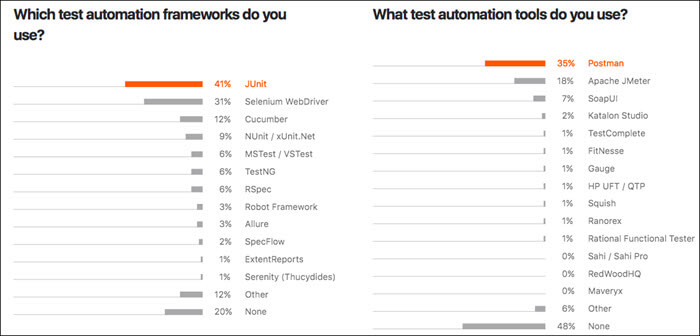
Research compiled by JetBrains highlights the dominant technologies utilized by testing professionals:
- Programming Languages: Java remains the undisputed frontrunner for test automation scripting.
- Frameworks: JUnit and Selenium WebDriver continue to dominate the test automation framework landscape.
- Tools: Postman and Apache JMeter stand out as the leading tools for API and performance testing, respectively.
Automation Maturity
According to research from the Forte Group, test automation is experiencing impulse growth:
- 12% of QA practitioners report that their testing pipelines are fully automated.
- 35% state that they are halfway through their automation journey.
Official Responses and Industry Perspectives
Industry leaders and global organizations have increasingly voiced their perspectives on the critical importance of robust software testing protocols.
Enterprise software executives emphasize that in an era where software downtime directly translates to severe financial loss and reputational damage, quality assurance is no longer a luxury—it is an operational necessity. According to insights synthesized by the Digital Group, the sheer volume of applications managed by modern enterprises is expanding exponentially, forcing executive leadership to reallocate capital toward comprehensive safety, security, and functional validation measures.
Furthermore, HR and recruitment analysts point out that the democratization of software development has created an overwhelming need for specialized validation. Because end-users now demand flawless, instantaneous digital experiences across a fragmented array of devices and operating systems, organizations can no longer rely on developers to test their own code effectively. Independent, highly trained QA teams provide the objective oversight required to safeguard enterprise software ecosystems.
Implications: What This Means for the Future
The massive expansion of the software testing market carries profound implications for businesses, technology stacks, and labor markets alike.
For Businesses and Enterprises
Organizations must recognize that technical debt and software bugs are direct threats to market competitiveness. As AI and machine learning become omnipresent—projected by Katalon to reach a $200 billion market valuation by 2030—companies that fail to adopt intelligent automation will lag behind. Leveraging AI and Robotic Process Automation (RPA) in QA allows enterprises to achieve seamless end-user experiences, optimize test scenarios, and significantly mitigate the risk of catastrophic system failures.
For the Global Labor Market and Career Seekers
For individuals asking, "Should I consider software testing as a career option?" the data provides an emphatic affirmative. Research from QA Lead indicates that the global average per capita density of software testers stands at approximately 5.2 per 100,000 people, highlighting a persistent talent gap.
Furthermore, the data illustrates how professionals enter and succeed in the field:
- 56% of testers utilize self-directed book learning and independent study.
- 44% complete formal classes, bootcamps, and professional certifications.
When it comes to essential competencies, employers place a premium on a balanced skill set. Approximately 75% of surveyed organizations emphasize strong communication skills as vital for cross-functional collaboration, while 63% require robust scripting and automation skills.
With cybersecurity testing, codeless testing automation, IoT-driven testing, and performance engineering dominating the current landscape, trained IT specialists entering the QA sector will find a dynamic, high-paying, and secure career path.
Conclusion
The global software testing services market is transitioning into a golden age of innovation and financial growth. Propelled by billions in market expansion, rising enterprise budgets, and the integration of artificial intelligence, quality assurance has cemented its status as the bedrock of modern software engineering. For enterprises, investing in automated, intelligent testing is the key to maintaining consumer trust. For professionals, the burgeoning job market offers boundless opportunities for those equipped with the right technical and collaborative skills.