The Evolution and Economic Boom of the Global Software Testing Services Market
Main Facts
The global software testing services industry is undergoing a monumental transformation, cementing its status as an indispensable pillar of modern software engineering. No longer viewed as a mere afterthought or the final, rushed hurdle before a product launch, Quality Assurance (QA) and software testing now sit at the very heart of product development lifecycles.
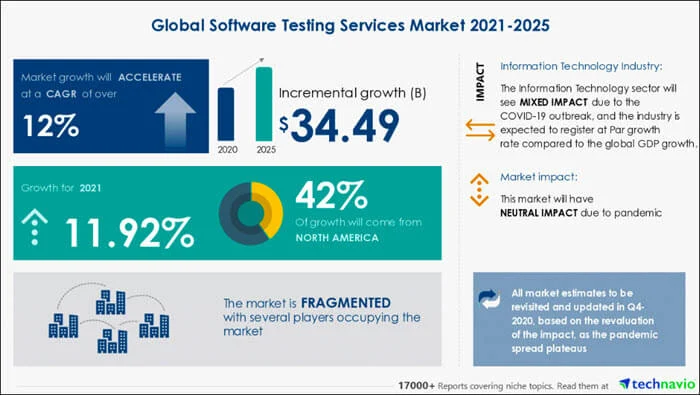
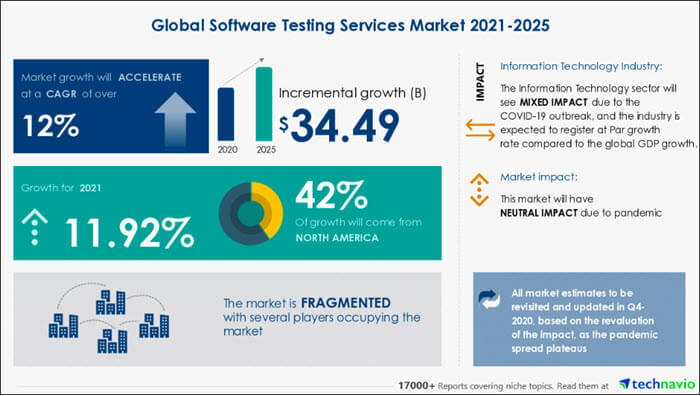
Driven by the explosive proliferation of mobile applications, enterprise digital transformation, and the relentless demand for flawless user experiences, market analysts project unprecedented financial growth. According to data compiled by PR Newswire, the global software testing services market is expected to expand by a staggering $90 billion between 2021 and 2030, progressing at a robust Compound Annual Growth Rate (CAGR) of 12.39%. Complementary research from Global Market Insights notes that the sector comfortably surpassed the $40 billion valuation threshold in 2020 and continues on a steady upward trajectory with an anticipated 7% CAGR through 2030.
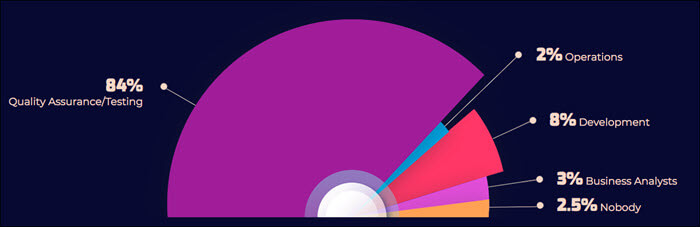
At the operational level, testing responsibilities have shifted dramatically. Industry surveys, such as those conducted by Tricentis, reveal that in over 80% of modern organizations, dedicated testers and QA professionals spearhead functional test automation. As enterprises embrace agile methodologies, DevOps, and continuous testing, software testing has successfully transitioned from manual check-listing to a high-tech, automated, and intelligence-driven discipline.
Chronology of Market Growth and Technological Adoption
To understand how the software testing landscape reached its current boom, it is helpful to trace its evolution over the past decade alongside key technological milestones:

- Pre-2020 (The Manual-to-Automation Transition): For years, software testing was heavily reliant on manual execution, which created bottlenecks in fast-paced development environments. Organizations began recognizing that traditional testing models could not keep pace with frequent software releases.
- 2020 (The Catalyst of Digital Shifts): As global enterprises rushed to digitize operations during the COVID-19 pandemic, the reliance on secure, high-performing applications skyrocketed. The World Quality Report 2020–2021 highlighted that QA budgets became an indivisible part of engineering expenditures, with 69% of businesses successfully meeting their strict quality goals.
- 2021 (Market Projections and AI Integration): Major research firms released bullish long-term forecasts predicting a $90 billion market expansion by 2030. Concurrently, artificial intelligence (AI) and machine learning (ML) began moving from experimental concepts to practical applications within test automation frameworks.
- 2022–Present (Intelligent Automation and Cybersecurity Focus): The maturation of Robotic Process Automation (RPA) and AI-driven testing tools allowed organizations to scale testing coverage dramatically. Furthermore, escalating cybersecurity threats pushed companies to integrate automated security testing directly into their CI/CD pipelines, driving global cybersecurity spending to new heights.
Supporting Data and Industry Statistics
A deep dive into industry reports from leading technology and research entities paints a clear picture of how tools, methodologies, and workforce dynamics are shaping the market:
Test Automation and Tooling
Research by the Forte Group indicates that test automation is experiencing rapid, impulse-driven growth. Approximately 12% of QA practitioners report that their operations are fully automated, while 35% state they are halfway toward complete automation.
When examining the technical stack behind these efforts, JetBrains’ developer ecosystem research highlights clear industry standards:
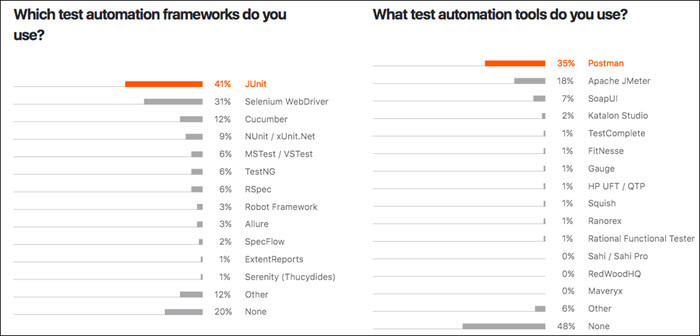
- Frameworks: JUnit and Selenium WebDriver remain the undisputed leaders for test automation frameworks.
- Tools: Postman and Apache JMeter dominate API and performance testing categories.
- Languages: Java continues to reign as the most widely adopted programming language for test automation scripts.
Quality Assurance Workforce and Demographics
According to insights from QA Lead, the global density of software testers averages roughly 5.2 professionals per 100,000 people. Educational backgrounds among these specialists are diverse: 56% of testers rely heavily on self-directed learning through books and industry literature, while 44% have completed formal training classes and professional certifications.
Furthermore, employer expectations have shifted toward a dual-threat skill set. In recent surveys, 75% of respondents emphasized that strong communication skills are vital for modern testers (especially when collaborating within cross-functional Agile teams), while 63% stressed the necessity of technical scripting and automation capabilities.
Official Responses and Enterprise Perspectives
Industry leaders and corporate stakeholders are increasingly vocal about the strategic value of quality assurance. Far from viewing testing as a cost center, modern executives recognize QA as a primary driver of customer retention and brand reputation.
According to Micro Focus’s World Quality Report, 90% of businesses are currently experiencing organizational growth driven by AI integration. As companies lean further into DevOps and continuous delivery, leadership teams are ensuring that testing budgets scale proportionally with overall software development investments.
Major enterprises are also responding to rising digital threats by expanding their cybersecurity mandates. Amzur research indicates that 68% of large corporations view cybersecurity threats as an escalating operational risk. Consequently, executive boards are allocating substantial resources toward intelligent security testing, ensuring that applications withstand sophisticated cyber-attacks before ever reaching production environments.
Implications for the Future of Software Engineering
The rapid expansion of the software testing market carries profound implications for technology professionals, business leaders, and the broader tech ecosystem:
1. Career Prospects and Professionalization
For individuals wondering whether software testing is a viable long-term career path, the data provides an emphatic "yes." The historic question of whether testing has a future has been decisively answered by market demand. As automation, AI, and complex software architectures proliferate, the demand for skilled, adaptable QA engineers will outpace supply. Professionals equipped with coding skills, AI literacy, and strong communication abilities will find themselves in high demand across every vertical, from fintech to healthcare.
2. The Rise of Intelligent and Codeless Testing
The integration of Artificial Intelligence and Machine Learning into testing suites—often referred to as intelligent automation—is redefining efficiency. AI-driven testing tools can autonomously generate test scripts, self-heal when user interfaces change, and predict high-risk areas of code based on historical data. Coupled with the rise of codeless testing platforms, QA processes are becoming more accessible to non-technical stakeholders, democratizing quality control across product teams.
3. Heightened Focus on Security and IoT Integration
As the Internet of Things (IoT) connects billions of devices worldwide, and blockchain technologies redefine secure transactions, the surface area for potential software bugs has expanded exponentially. Future testing strategies must go beyond functional validation to encompass rigorous performance engineering, IoT-driven environmental testing, and automated vulnerability assessments.
Conclusion
The global software testing services market stands at a golden crossroads of innovation and economic expansion. Propelled by double-digit growth rates, widespread AI adoption, and an unyielding corporate commitment to digital excellence, quality assurance has evolved into a sophisticated, highly valued engineering discipline. For organizations striving to maintain a competitive edge, investing in robust testing infrastructure is no longer optional—it is the ultimate safeguard of digital success.