The Digital Preservation of Automotive Legends: How One Enthusiast Saved the Jaguar XJ220’s Brain
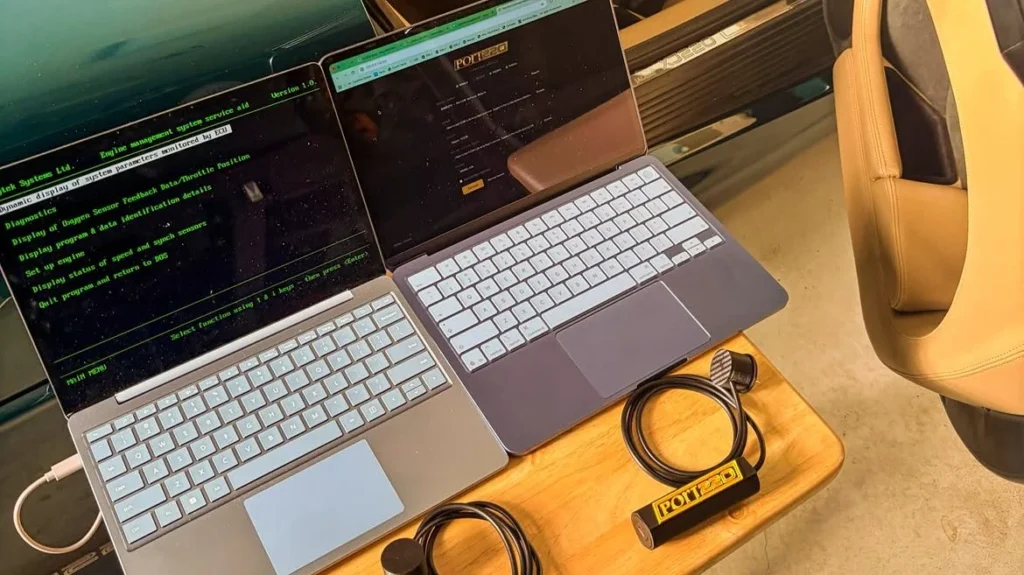
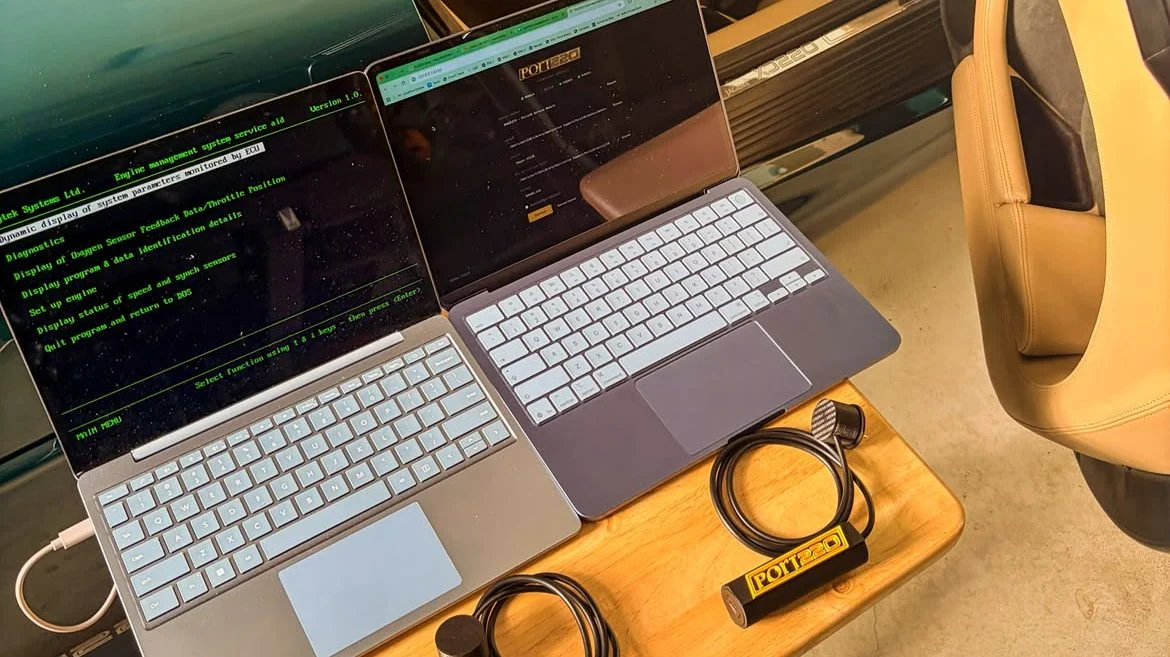
For the elite cadre of collectors who own a Jaguar XJ220 or the even more elusive XJR-15, the experience of ownership is a delicate balance between awe-inspiring performance and the creeping anxiety of obsolescence. These 1990s supercars, once the fastest production vehicles on the planet, are now facing an existential threat: the slow, inevitable failure of their proprietary, long-discontinued electronic infrastructure. Specifically, the Zytek Engine Control Unit (ECU)—a masterpiece of its time—has become a "black box" that few can access.
When a "check engine" light flickers on in one of these multi-million-dollar machines, the owner isn’t just looking at a repair bill; they are looking at a potential bricking of a legendary automotive icon. However, thanks to the ingenuity of Tom Radom, a Jaguar enthusiast and software architect, these machines have been granted a digital lease on life. By reverse-engineering the interface required to speak with the Zytek ECU, Radom has effectively saved a generation of hypercars from being relegated to the status of static museum displays.
The Challenge of 1990s Supercar Electronics
The Jaguar XJ220 and its track-focused sibling, the XJR-15, were technological marvels of the early 1990s. At their heart sat the Zytek ECU, a sophisticated engine management system that was revolutionary for its era. While modern vehicles utilize highly standardized OBD-II protocols—allowing any local mechanic with a generic scanner to diagnose faults—the Zytek system is a closed-source, proprietary relic.
For decades, the only way to interface with these cars was via the SPD-1039 diagnostic interface. These hardware units were produced in extremely limited quantities, designed specifically for the factory-trained technicians of the 1990s. As the years turned into decades, these interfaces began to disappear. They were lost, damaged, or simply degraded by time. For the average owner, a malfunctioning ECU meant finding an increasingly rare, factory-sanctioned technician or hoping that a surviving SPD-1039 would surface on the collector market at an exorbitant price.
Chronology of a Heroic Engineering Effort
The project began not as a commercial venture, but as a necessity. Tom Radom, the custodian of XJ220 chassis #50, found himself in a predicament that every classic supercar owner dreads: a warning light that signaled a deep-seated electronic issue. Without a diagnostic interface, Radom was flying blind.
The Failed Autopsy
Initially, Radom attempted the most straightforward path: opening an original SPD-1039 interface to understand its architecture. His goal was to clone the device. However, he quickly encountered a significant hurdle: the internal components were "potted." Potting is a process where electronic components are encased in a solid or gelatinous compound, usually silicone or epoxy, to protect them from vibration and moisture. While effective for military or aerospace applications, it is a nightmare for reverse engineering. Attempting to extract the circuitry resulted in irreversible damage to the hardware.
The Logic Analyzer Breakthrough
Undeterred, Radom shifted his strategy from hardware cloning to traffic analysis. He utilized a logic analyzer—a tool used to capture and display signals from digital circuits—and connected it between the original SPD-1039 interface and the Jaguar’s ECU. By recording the handshake and data exchange that occurred when the diagnostic software queried the engine computer, Radom began to map the "language" of the Zytek system.
He discovered that the hardware complexity was actually quite manageable. The original SPD-1039 acted as a bridge, translating between the proprietary electrical signals of the car and the RS-232 serial communication standard of 1990s-era PCs.
Modernizing the Bridge
With the data captured, Radom set out to recreate the bridge using modern, off-the-shelf components. He settled on the FT232RNL, a reliable USB-to-serial bridge chip that allows modern laptops to communicate with legacy hardware. Crucially, Radom decided not to attempt to rewrite the diagnostic software itself. The original DOS-based software, while antiquated, was stable and functional. By running this software through a modern emulator, he could bridge the gap between a 2024 operating system and a 1992 engine management system.
Supporting Data: Why the Zytek Matters
The significance of the Zytek ECU cannot be overstated. In the 1990s, the move from mechanical fuel injection to digital engine management was the single largest leap in performance for road-going cars. The Zytek system in the XJ220 controls fuel mapping, ignition timing, and idle air control—parameters that define the car’s legendary 212 mph top speed.
When the ECU detects an anomaly, it enters a "limp home" mode or shuts down entirely to protect the twin-turbocharged V6. Without the diagnostic interface, even a simple sensor failure—a $50 part—could result in a total loss of functionality.
Radom’s project demonstrates the efficacy of "black box" reverse engineering:
- Protocol: Proprietary serial communication.
- Hardware Interface: USB-to-Serial bridge (FT232RNL).
- Software Compatibility: Original DOS binaries running via DOSBox or similar emulation.
- Reliability: High; the modern bridge chip provides better voltage regulation and signal integrity than the original 1990s circuitry.
A Gift to the Community: The "Port220" Initiative
Perhaps the most surprising aspect of Radom’s work is his refusal to monetize the discovery. Rather than trademarking the interface or selling the kits at a premium, Radom has established "Port220," a project dedicated to providing these diagnostic tools to the XJ220 and XJR-15 community at no charge.
Radom operates under a philosophy of "automotive preservation." He views the XJ220 as a cultural asset. By ensuring that every owner has access to a diagnostic tool, he is protecting the long-term viability of the entire fleet. If these cars become impossible to maintain, their value and their history will inevitably degrade. By providing the tools for free, he is essentially subsidizing the health of the entire model line.
"I believe simply having a viable diagnostic tool available will increase the value of these classic cars by more than the costs I incurred to develop the interface," Radom noted in his documentation. It is a rare instance of altruism in the high-stakes world of supercar collecting.
Implications for the Future of Classic Cars
Radom’s success with the Jaguar XJ220 is a case study for the broader automotive restoration community. As vehicles from the late 80s, 90s, and early 2000s—the "Radwood" era—enter the collector market, they bring with them a unique set of challenges. These cars are no longer just mechanical objects; they are software-defined entities.
The "Right to Repair" for Classics
The XJ220 saga highlights the critical importance of the "Right to Repair" movement, even for vintage vehicles. Manufacturers often abandon support for legacy systems, leaving owners in a state of digital limbo. When companies like Jaguar (or their suppliers, like Zytek) move on, they leave behind "orphan" technologies.
Radom’s work proves that dedicated enthusiasts, equipped with modern tools like logic analyzers, open-source software, and high-quality PCB fabrication, can reverse the tide of obsolescence. This approach has implications for:
- Classic ECU Remapping: Owners can now monitor engine health without relying on factory-locked systems.
- Preventative Maintenance: By identifying sensor drift before it leads to a catastrophic engine failure, owners can save their original, numbers-matching engines.
- Community Knowledge: The Port220 project encourages the sharing of diagnostic data, which helps build a database of "known good" values for the XJ220’s engine sensors.
Conclusion: Bridging the Digital Divide
The Jaguar XJ220 was once a symbol of the future, a car that pushed the boundaries of what was physically possible on a public road. Today, it stands as a symbol of the fragility of the digital age. Thanks to Tom Radom, that future is no longer a ticking time bomb.
By deconstructing the digital wall that separated the owner from the machine, Radom has ensured that these supercars will remain on the road, firing on all six cylinders, for decades to come. His project serves as a beacon for other owners of technologically complex vehicles: when the factory support ends, the community’s ingenuity is just beginning. As more hobbyists take up the mantle of reverse engineering, we are witnessing the birth of a new kind of classic car restoration—one where the soldering iron is just as important as the wrench.