The PHP Renaissance: WordPress 7.0 Simplifies Custom Block Development
For over seven years, the WordPress community has operated under a singular, uncompromising mandate: if you want to build custom blocks for the block editor, you must master React, navigate the complexities of NPM, and maintain a rigorous build pipeline. This barrier to entry has created a significant divide between professional JavaScript-fluent developers and the vast majority of PHP-centric WordPress practitioners.
With the release of WordPress 7.0, that era of gatekeeping has come to an end. The platform has officially introduced a streamlined, PHP-only method for registering blocks, effectively bypassing the need for JavaScript compilation. But as the community celebrates this accessibility, the industry is left with a critical question: is this a long-overdue bridge for developers, or a functional shortcut that compromises the integrity of the modern WordPress editing experience?
The Chronology: From Gutenberg to 7.0
The journey to this moment began in late 2018 with the launch of WordPress 5.0 and the introduction of the Gutenberg editor. The project was built entirely on React, a decision that fundamentally altered the WordPress developer ecosystem. While the move provided immense power for building dynamic, complex interfaces, it alienated many traditional developers who had built their careers on PHP, themes, and hooks.
For years, the "two-step" registration process remained the industry standard: developers were required to register a block in PHP for server-side handling and in JavaScript for the editor-side interface. This dual-registration approach necessitated complex build tools—like @wordpress/scripts—to transpile modern JSX and JavaScript into formats the browser could digest.
The pressure to simplify this process reached a boiling point as the "Block Theme" era dawned. Developers attempting to migrate legacy sites to Full Site Editing (FSE) often found themselves stalled by the sheer complexity of converting existing PHP widgets, shortcodes, and template parts into native blocks. WordPress 7.0 serves as the culmination of years of feedback, providing a "server-side first" approach that finally honors the language that built the CMS.
The Mechanism: How PHP-Only Blocks Work
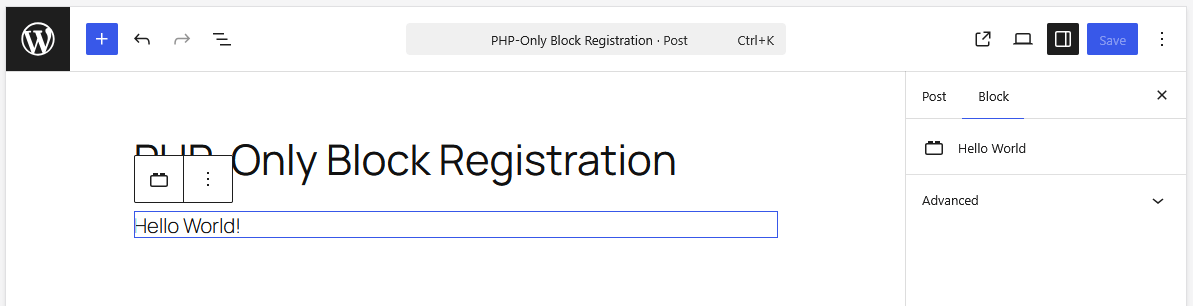
The core innovation in WordPress 7.0 is the autoRegister flag. By setting this to true within the register_block_type function, WordPress essentially "borrows" the server-side definition to automatically generate the necessary client-side bridge.
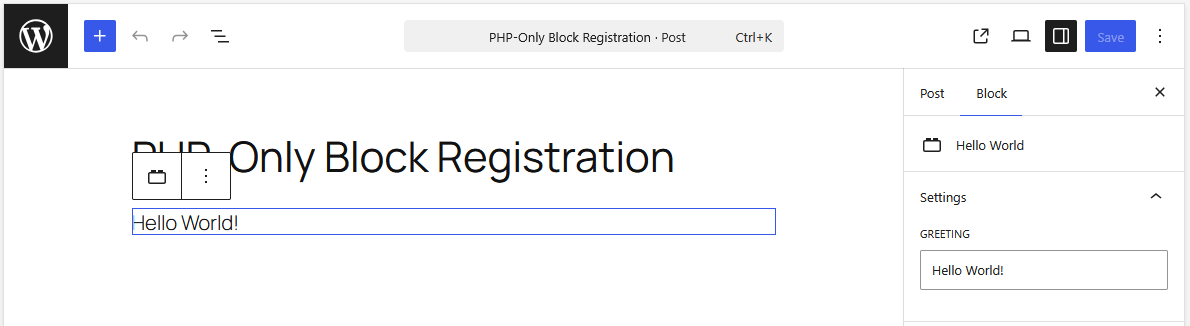
The "Hello World" Benchmark
To understand the radical shift, consider the simplicity of registering a block now:
function custom_hello_world_block()
  register_block_type(
    'my-plugin/hello-world',
    [
      'title' => 'Hello World',
      'render_callback' => function ()
        return sprintf(
          '<div %s>Hello World!</div>',
          get_block_wrapper_attributes()
        );
      ,
      'supports' => [
        'autoRegister' => true,
      ],
    ]
  );

add_action('init', 'custom_hello_world_block');
This code snippet replaces what previously required multiple files, a package.json file, and a build terminal command. The render_callback handles the output, while the autoRegister flag ensures the block is visible, draggable, and configurable within the editor’s inserter.
Implications for the Ecosystem
The implications of this update are profound, particularly for agencies managing large-scale legacy migrations.
Bridging the Legacy Gap
The most immediate beneficiary of this update is the "legacy site." Thousands of WordPress websites are effectively trapped in classic themes, unable to transition to modern block-based architectures because the cost of rewriting custom widgets into React components is too high.

By using PHP-only blocks, developers can now wrap legacy PHP functions, custom post type displays, and shortcodes into "container" blocks. This allows for a hybrid approach: the content area and footer can be fully block-based, while complex, data-heavy header or dynamic features remain in their native PHP, wrapped in a block container.
The "Good Enough" UX
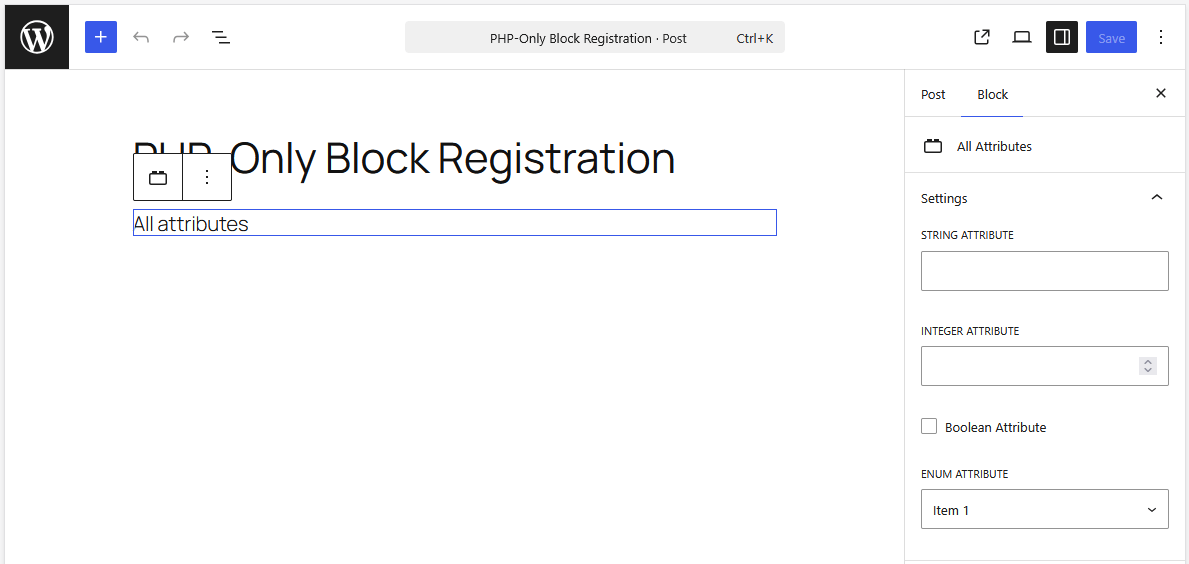
Critics argue that this approach leads to a diminished user experience. Because the editor preview is rendered by the REST API, it lacks the real-time, fluid interactivity of native React-based blocks. Features like "in-place editing"—where a user clicks text to change it—are technically unavailable. Instead, users are relegated to the sidebar for all attribute adjustments.

However, professional developers are reframing this as a "pragmatic UX." For many internal corporate tools or content-heavy sites, the priority is not a hyper-animated editor, but rather a functional, maintainable codebase that allows content managers to assemble pages without breaking the site.
Limitations and Architectural Constraints
Despite the excitement, the PHP-only approach is not a silver bullet. Developers must contend with several hard architectural limitations that stem from the stateless nature of the REST API:

- Lack of Client-Side Interactivity: Because these blocks are essentially HTML fragments rendered by PHP, they cannot interact with the editor’s global JavaScript store. If a post title is changed in the editor, the PHP block will not update until the post is saved and the editor reloads.
- State Isolation: The editor cannot "see" into the block’s internal DOM to attach event listeners. This means developers cannot use standard JavaScript to manipulate elements inside the block preview.
- Attribute Restrictions: As of version 7.0, only basic types (strings, integers, booleans) are supported. There is no support for complex objects or array-based data structures, which limits the complexity of the settings you can provide in the sidebar.
Official Responses and Strategic Direction
The WordPress core team has been transparent about the intent behind this feature. It is not designed to replace React for plugin development. Rather, it is a tool for theme authors.
In recent discussions, core contributors emphasized that the "Block API" is maturing. While there are no current plans to resolve the "no-refresh" data sync issue, the focus is on stability. The goal is to make the "iframed" editor the standard by WordPress 7.1, which will further improve how these PHP-only blocks are isolated and rendered, preventing the styling conflicts that often plagued earlier versions of the editor.

The Future of WordPress Development
As we look beyond version 7.0, the industry must recognize that we are entering a dual-track development cycle.
For high-end, consumer-facing blocks where interactivity and real-time feedback are essential, JavaScript and React will remain the dominant technologies. However, for the foundational architecture of websites—the headers, footers, custom template parts, and legacy integrations—PHP has reclaimed its throne.
This change is a testament to the fact that WordPress is listening to its developer community. By acknowledging that not every feature requires a complex React build, the platform has lowered the barrier to entry, ensuring that the next generation of theme developers can adopt modern block-based standards without needing to be full-stack JavaScript engineers.
Ultimately, the wait for this feature was worth it. Not because it changed the way we build all blocks, but because it finally cleared the path for the thousands of developers who were ready to modernize their sites but were held back by the complexity of the previous paradigm. The PHP Renaissance in WordPress isn’t about moving backward; it’s about providing the right tool for the right job, and in the world of CMS architecture, that is a massive victory.